
The 2026 AI Landscape for Search

Search engines are undergoing a radical transformation as AI overviews and generative snippets become the primary way users interact with online information. The shift from simple keyword matching to understanding conversational, multi-modal queries means that search results are now more predictive and interactive than ever before.
Organizations must prioritize LLM-friendly content structures to ensure their data is easily parsed and cited by generative models. This evolution requires a move toward providing comprehensive, direct answers that satisfy user intent within the search interface itself.
| Feature | Traditional SERP | AI-Enhanced SERP |
|---|---|---|
| User Action | Clicking through blue links | Interacting with generative summaries |
| Ranking Signal | Backlinks and keyword density | Contextual relevance and citation authority |
| Content Type | Static articles | Multi-modal, conversational responses |
Core Implications for SEO Teams
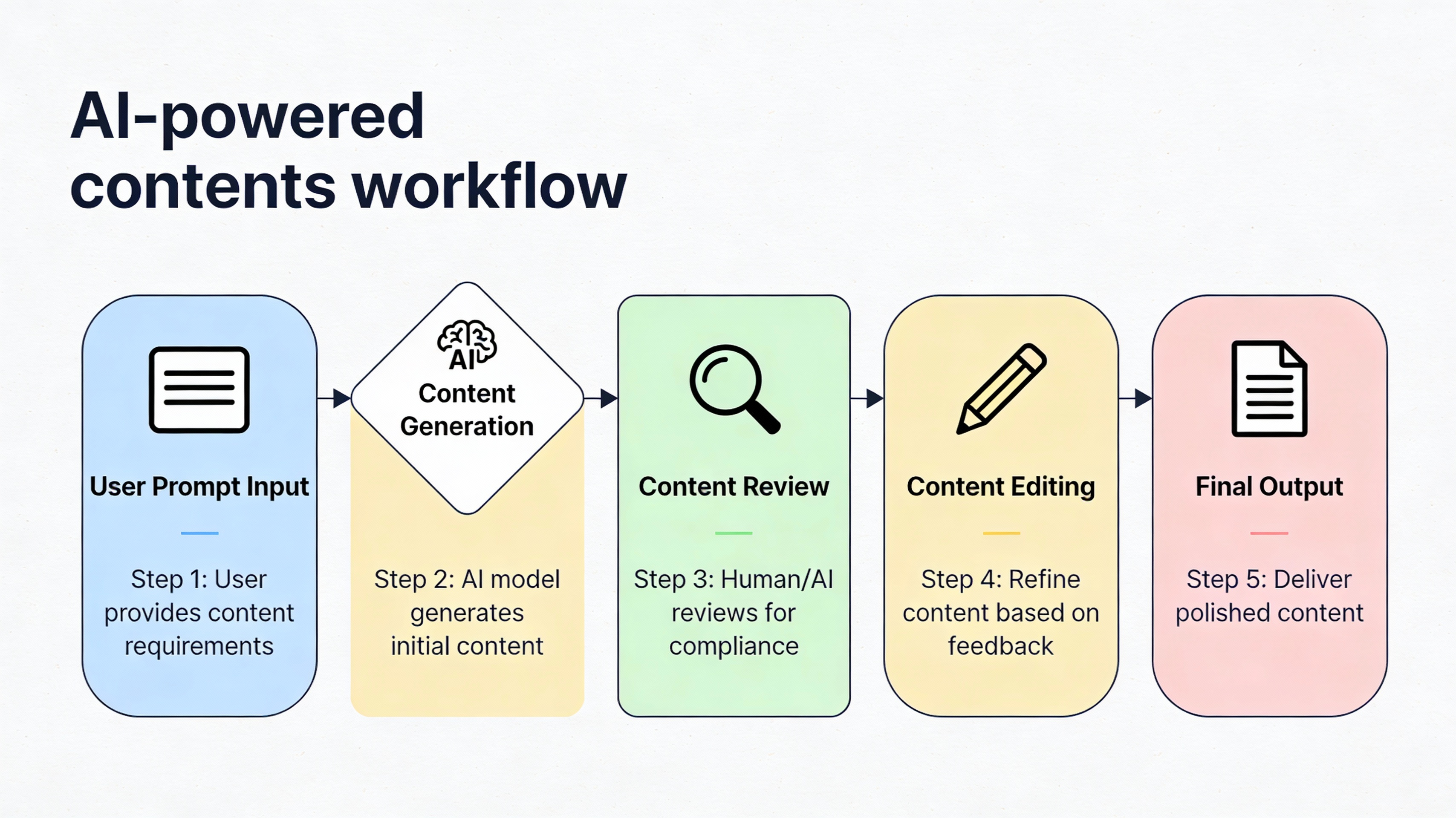
Operational workflows within SEO teams must adapt to include automated drafting and real-time intent mapping to keep pace with changing search behaviors. Leveraging AI allows for sophisticated topic clustering and faster production cycles without compromising the unique brand voice required for modern audiences.
Technical SEO requirements are also expanding to include schema specifically designed for AI agents and enhanced crawlability for large language models. Optimizing page speed and structured data is now essential for maintaining visibility in automated search modules and answer engines.
Measuring performance now involves tracking new KPIs such as AI-visibility scores and citation frequency within search overviews. Traditional traffic metrics are being supplemented with data on how often a brand is used as a source for generative answers and AI-driven snippets.
- Content Creation: From manual drafting to AI-assisted topic clustering and automated intent mapping.
- Technical SEO: From standard metadata to advanced schema for AI agents and LLM indexing.
- Performance: From simple click-through rates to AI-visibility scores and citation frequency.
Communicating AI Strategy to Leadership
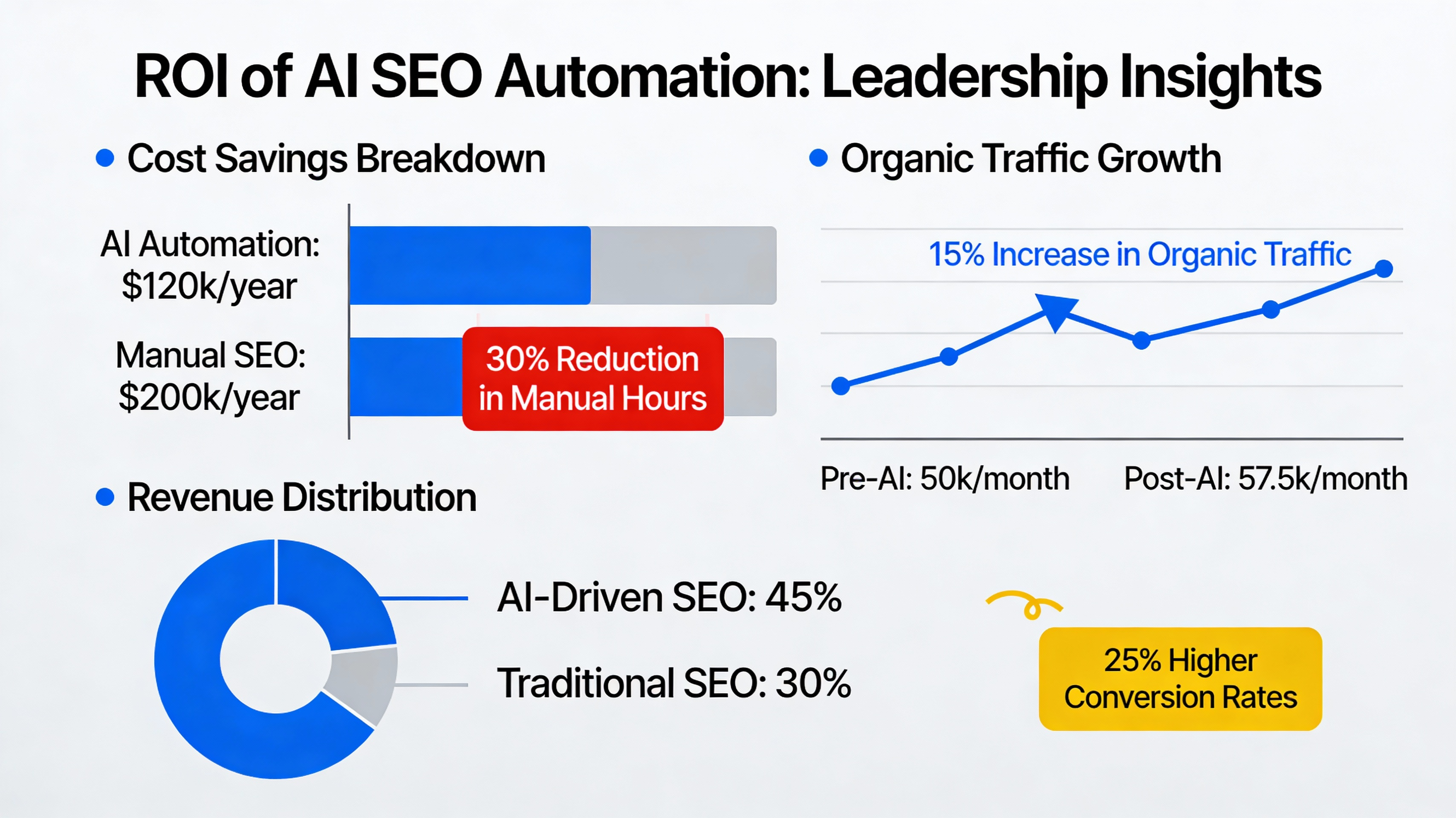
Aligning AI initiatives with revenue goals is the most effective way to secure budget and resource approval from non-technical stakeholders. Highlighting how automation leads to significant time savings and a faster time-to-publish helps build a compelling business case for leadership teams.
When presenting ROI, focus on the potential traffic uplift and the efficiencies gained through end-to-end automated content workflows. Demonstrating a clear framework for measuring success ensures that decision-makers understand the tangible value and competitive advantage of the investment.
Addressing concerns regarding data privacy and quality control is vital for mitigating risks associated with rapid AI adoption. Providing a roadmap for model transparency and human-in-the-loop quality control helps build trust and long-term support across the executive team.
| Leadership Concern | AI Strategic Solution |
|---|---|
| Cost of Implementation | Reduced cost per article and significant time savings |
| Brand Consistency | Custom prompt engineering and brand-specific AI models |
| Data Privacy | Secure, enterprise-grade AI environments and governance |
Actionable Roadmap for SEO Teams
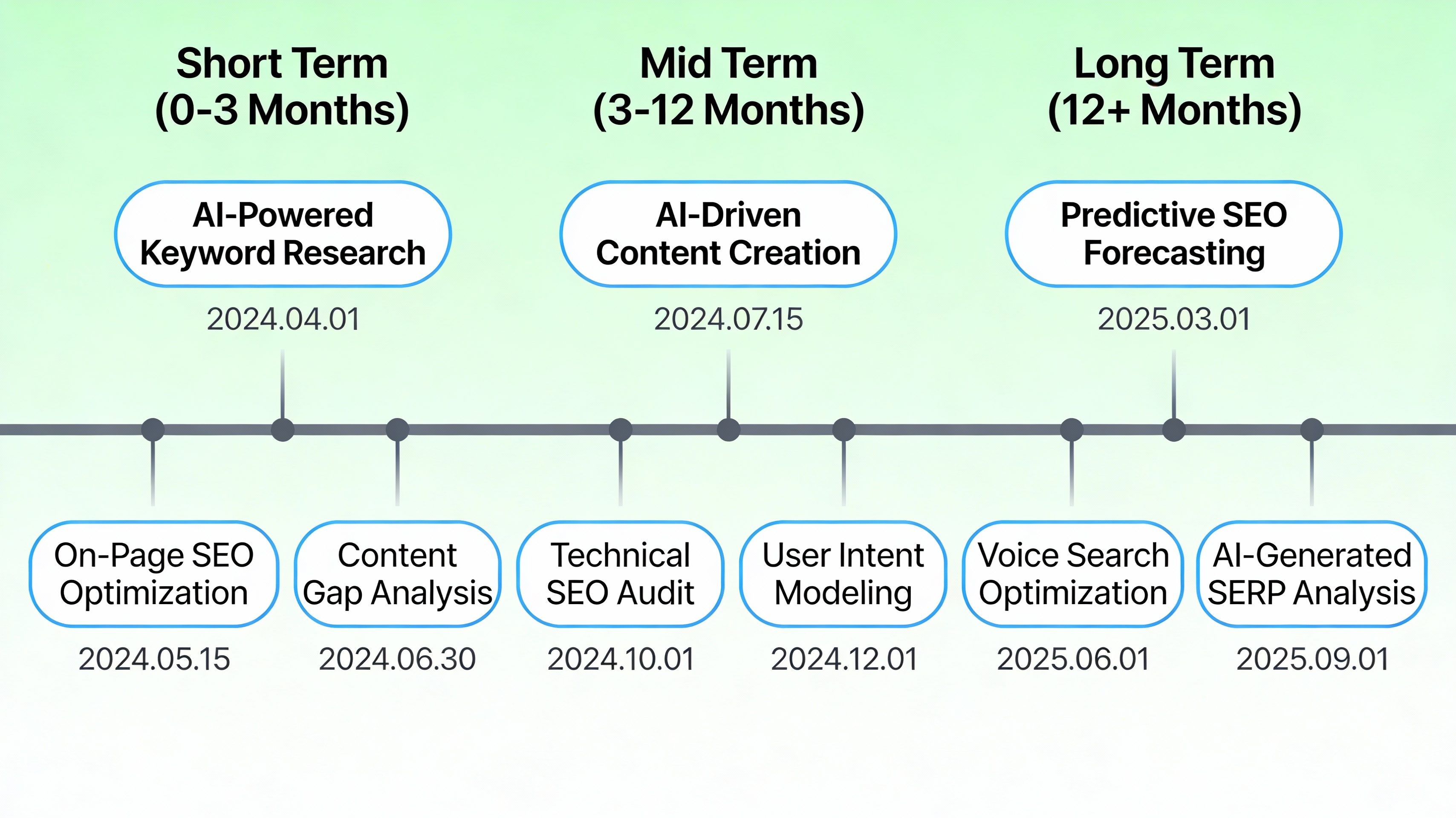
Implementing a phased implementation plan ensures that the SEO team can achieve short-term wins while building toward a long-term vision of search dominance. Starting with AI-assisted content briefs and pilot programs for automated blog posts allows the team to refine their internal processes before scaling.
Mid-term initiatives should focus on integrating AI-optimized schema and training the team on advanced prompt engineering techniques. These steps help establish a robust foundation for more complex automation and the deployment of AI-visibility dashboards to track performance accurately.
In the long term, organizations should aim for a full end-to-end AI workflow that incorporates continuous model fine-tuning. This stage allows brands to expand their presence across AI-first search platforms and maintain a consistent competitive edge in the evolving digital landscape.
Key Takeaways

Artificial intelligence has become a core ranking factor that dictates how content is discovered, interpreted, and prioritized by modern search engines. Embracing automation provides significant time savings and allows teams to scale their content efforts with higher consistency and lower overhead costs.
Securing executive support depends on a clear communication of ROI and a well-defined plan for risk mitigation and quality governance. Teams that act now to integrate AI into their core strategy will be best positioned for the search landscape of 2026 and beyond.
Frequently Asked Questions
How quickly can AI automation replace manual content drafting?AI automation can begin assisting with content drafting immediately, allowing teams to move from idea to first draft in minutes. While manual review remains important for brand nuance, the drafting process is significantly accelerated from the first day of implementation.
Will AI-generated content be penalized by search engines?Search engines prioritize high-quality, helpful content that satisfies user intent regardless of how it was created. By focusing on E-E-A-T principles and human-in-the-loop editing, AI-generated content can rank effectively and avoid penalties.
What metrics should I track to prove AI value to leadership?Key metrics include the reduction in cost per article, total time saved during production, and new KPIs like citation frequency in AI overviews. Tracking the volume of keywords captured by AI-generated content also provides tangible proof of growth.
How does Articfly ensure brand voice consistency?The platform uses proprietary AI systems that analyze existing content to mirror specific tone and brand identity. This ensures that every automated article feels authentic to the brand while following the latest SEO best practices.
What training does my team need to work with AI tools?Teams should focus on prompt engineering, AI-specific technical SEO, and data analysis for AI-visibility. Training emphasizes how to manage the AI workflow rather than just manual writing, shifting the team's role toward strategy and quality control.
Next steps for the 2026 AI shift
The transition to AI-driven SEO starts with testing the right tools and frameworks for your specific business needs. Take the first step today to transform your content strategy and stay ahead of the competition.
- Sign up for a free 14-day trial to experience AI-driven blog planning.
- Schedule a demo to see a live content creation workflow.
- Download our AI SEO Presentation Kit to impress leadership.