What Happens When You Publish 30 Blog Posts in 30 Days
Key Takeaways
- Content velocity acts as a direct signal to search engines, encouraging more frequent crawling and faster indexation of new pages.
- Publishing daily establishes topical authority more rapidly by covering a wide array of subtopics within a short timeframe.
- The indexation bottleneck is often solved by high-frequency posting, as XML sitemaps are updated and pinged daily.
- Significant organic traffic growth typically requires a three-to-six month stabilization period, even if initial spikes occur during the experiment.
- Maintaining editorial standards through automated SEO scoring and brand voice alignment is non-negotiable to avoid the risks of thin content.
The Mechanics of Content Velocity
Content velocity refers to the rate at which a website produces and publishes new articles over a specific period. In a high-frequency environment, such as a 30-day publishing challenge, the goal is to shift from sporadic updates to a consistent, daily output. This acceleration does more than just fill a content calendar; it changes how search engine algorithms perceive the site’s relevance and freshness.
When a site publishes once a week, search engine bots establish a predictable, slow crawl cadence. By contrast, a daily publishing schedule forces a tighter feedback loop. As new URLs are generated and added to the sitemap, the site signals to crawlers that the domain is an active, evolving source of information. This proactive approach helps in securing a larger share of the search landscape before competitors who stick to traditional, slower cycles can react.
High velocity also allows for a broader internal linking structure. Each new post serves as a potential hub or spoke in a topical cluster. By creating 30 interconnected pieces of content in a month, a blog can map out an entire niche, providing the search engine with a comprehensive understanding of the site’s expertise. This technical density is difficult to achieve when production is throttled by manual bottlenecks.
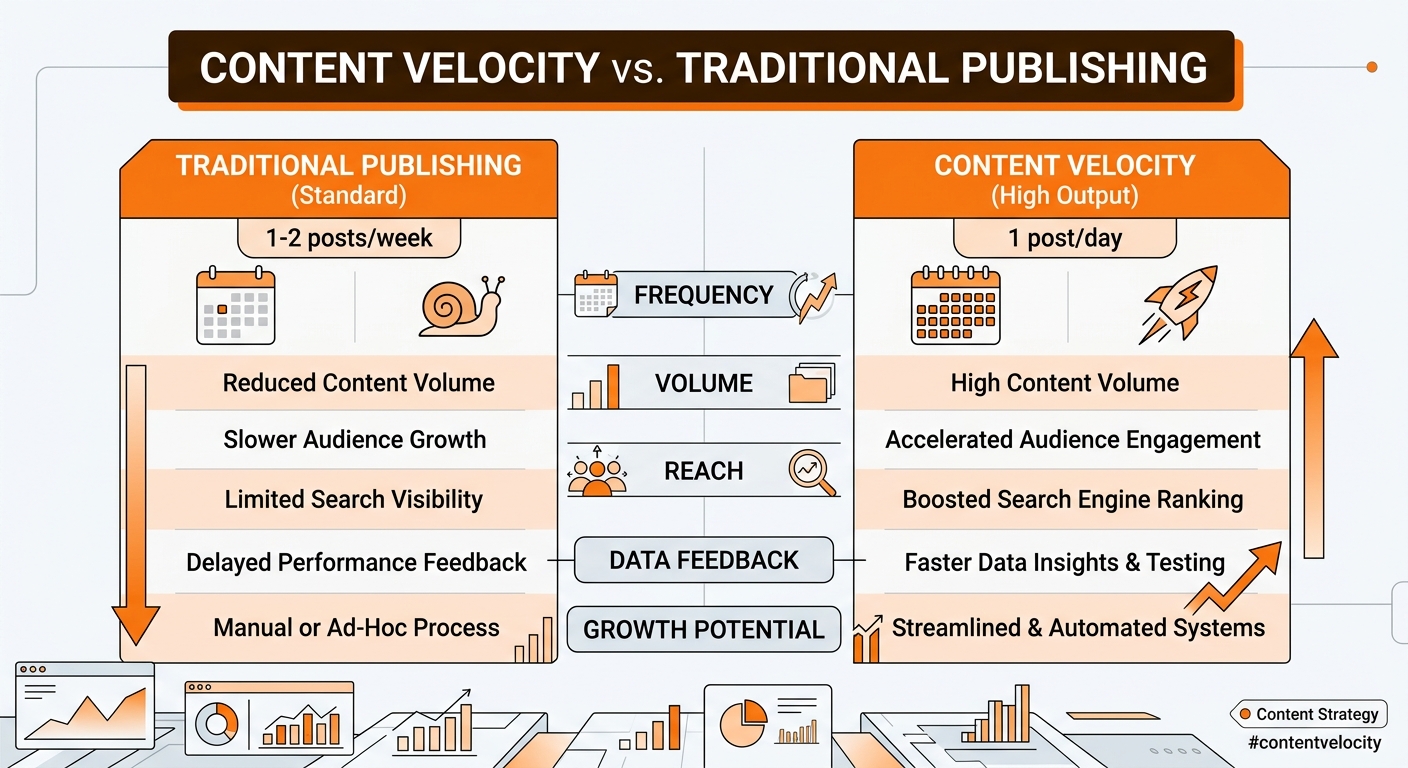
| Metric | Low Velocity (1-2 Posts/Week) | High Velocity (7 Posts/Week) |
|---|---|---|
| Crawl Frequency | Periodic/Weekly | Daily or Near-Constant |
| Indexation Speed | 3-10 Days | Under 24 Hours (often) |
| Topical Coverage | Incremental | Aggressive Cluster Building |
| Authority Signal | Steady/Slow | Accelerated Momentum |
Solving the Indexation Bottleneck
Search engine indexation is the primary hurdle for any new piece of content. Even the best-written article is invisible until it is crawled and added to the search index. In a standard publishing environment, a new post might sit for days or weeks before a bot discovers it through a sitemap update or an external link. A 30-day publishing experiment effectively solves this by creating a state of constant activity that demands attention from search infrastructure.
By updating the XML sitemap every 24 hours, you create a pattern of reliability. Google and other search engines prioritize sites that demonstrate consistent freshness. When the crawler realizes that every visit yields new, high-quality data, it allocates more of the site's "crawl budget" to that domain. This ensures that not only are the new posts indexed quickly, but older posts are also re-evaluated more frequently for updates and refreshes.
Optimizing this process requires attention to the technical health of the WordPress installation. Clean URL structures, proper schema generation, and a lack of crawl errors are essential. If the site is bogged down by technical debt, the increased frequency might actually highlight existing issues rather than solving them. Therefore, the infrastructure must be as sharp as the content itself to handle the increased load.

Traffic Trends: What the Data Actually Shows
Organic traffic patterns during a 30-day experiment rarely follow a straight line. Instead, the data usually shows a series of small steps followed by a more substantial shift after the experiment concludes. Initial traffic spikes are often driven by direct visitors, social shares, or newsletter clicks if the content is promoted. However, the true SEO value lies in the "long tail" growth that emerges once the articles settle into the SERPs.
Quantitative observations from similar trials indicate that while a 55% traffic increase is a common benchmark, the qualitative shift is more interesting. There is typically a noticeable trend where the site begins to appear for a much wider variety of search queries. Because 30 posts cover more ground, the site starts capturing impressions for niche phrases that a more limited content strategy would have missed.
It is also common to see a shift in the ratio of organic to direct traffic. As the site becomes a daily destination, recurring visitors may increase. However, from an SEO perspective, the compounding effect of 30 new, optimized pages creates a much larger "surface area" for the site. This increased visibility builds the foundation for more sustainable traffic growth that persists long after the initial 30-day sprint is over.
"The most significant finding in high-frequency publishing trials is the dramatic compression of the feedback loop. Instead of waiting months to see what works, publishers get real-time data on keyword resonance and user engagement within weeks, allowing for rapid strategy adjustment." - Technical Content Analysis Summary
Quality vs. Quantity: The 30-Day Reality Check
Maintaining quality standards is the biggest challenge when increasing volume. The "thin content" trap is real; if a site publishes 30 low-value, generic articles, it risks a manual penalty or a decline in overall domain authority. Search engines are adept at identifying a "wall of text" that offers no unique value or fails to answer the user's search intent. Quantity should never be an excuse for poor readability or factual inaccuracies.
To succeed, each post must meet a set of non-negotiable criteria. This includes proper internal link mapping to ensure the new content supports existing pages, and the use of specific, concrete language. High-volume publishing requires a structured approach to SEO scoring, where every draft is checked against readability, keyword density, and structural requirements like H2-H4 hierarchy and meta-descriptions before it goes live.
Avoiding the "AI-generated look" is critical. This means using a system that can be trained on a specific brand voice to ensure the tone remains consistent. A blog that sounds like a different person wrote every post will struggle to build a loyal audience. The goal is to produce content that feels human and editorial, even if the production workflow is heavily assisted by technology.
5 Non-Negotiable Quality Checks
- Intent Alignment: Does the article directly answer the primary search query?
- Structural Integrity: Are H2, H3, and H4 tags used logically to organize information?
- Data Accuracy: Are all qualitative and quantitative claims grounded in logic?
- SEO Readiness: Does the post include optimized meta tags and schema?
- Internal Connectivity: Does the post link to at least 2-3 other relevant pages on the site?
Scaling Production Without Manual Burnout
Automated content systems are the only practical way to sustain a daily publishing schedule without hiring an entire editorial team. The manual effort required to research, write, edit, and publish 30 high-quality posts in a month would easily exceed 200 hours for a single person. This is where a tool-first approach becomes a competitive advantage, allowing small teams or solo operators to mimic the output of a large agency.
The workflow for high-frequency publishing should be sequential and intentional. It starts with ideation-using AI to plan a 30-day editorial roadmap based on topical gaps. From there, an "Advanced Mode" writing process can take over, where the system is fed specific brand guidelines and tone requirements. This ensures the output isn't just generic text, but a specific asset that fits the site's existing identity.
Finally, the publishing phase must be seamless. A native WordPress integration allows for direct syncing, meaning the transition from a completed draft to a live post happens with a single click. This eliminates the "copy-paste" friction that often slows down production. By automating the mechanical tasks-formatting, link mapping, and scheduling-the content manager can focus on strategy and final review, ensuring the 30-day experiment remains high-impact and low-stress.
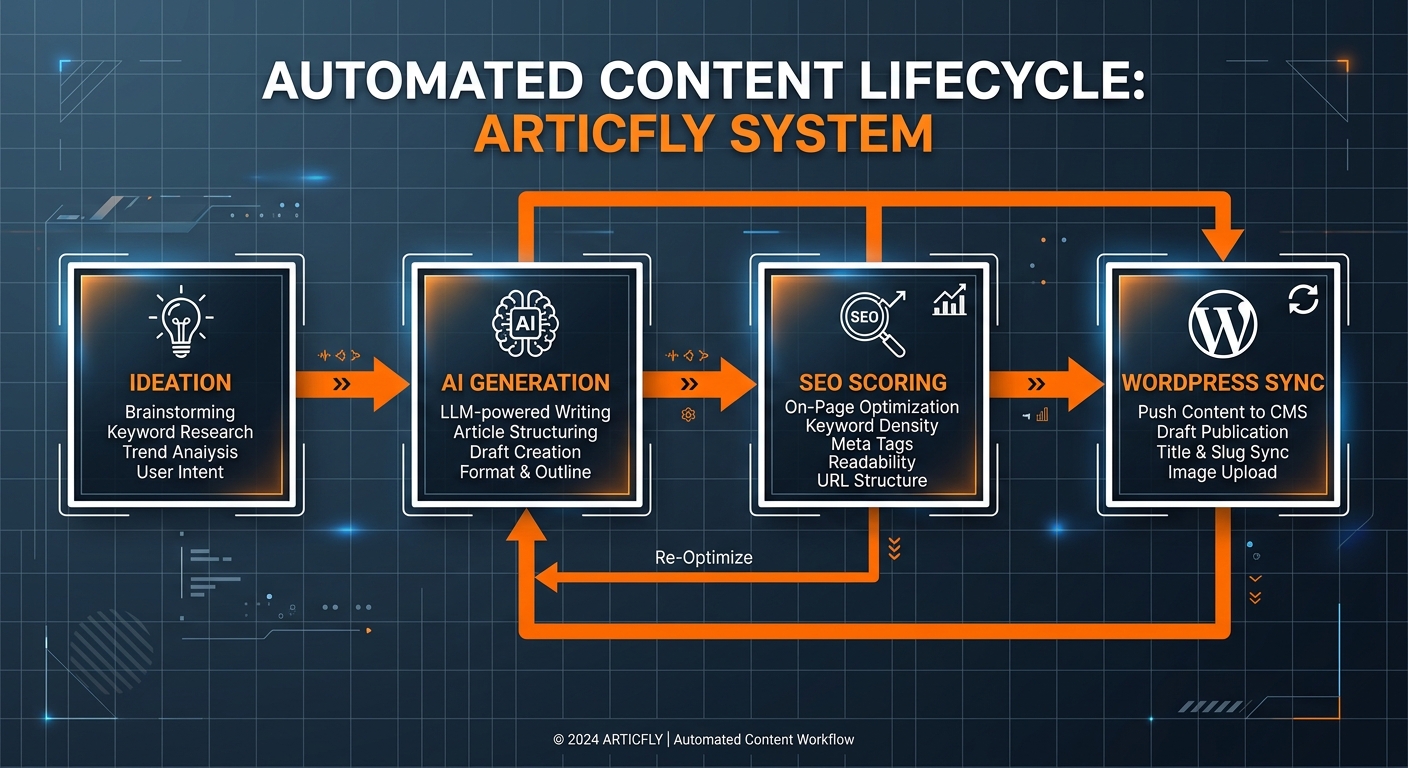
The 4-Step Automated Workflow
- Ideation: Generate a month's worth of topics based on keyword analysis and topical authority needs.
- Advanced Generation: Produce full-length drafts trained on your specific brand voice and vocabulary.
- SEO Scoring: Run every draft through a readability and optimization check to ensure it meets SERP standards.
- WordPress Sync: Push the finalized content directly to the site, including all metadata and images, for immediate publication.
FAQ
Does publishing daily hurt my SEO if the posts are short?The primary focus should always be on value and intent rather than just word count. While thin content-text that offers no real information-is a risk, publishing shorter, high-value posts that answer specific questions can actually improve SEO by capturing long-tail traffic and increasing internal link density.
How long does it take to see results from a 30-day experiment?Indexation usually happens within days, and you may see early impressions for new keywords within a week. However, significant organic traffic growth and stable rankings usually take 3-6 months to fully manifest as the search engine gains confidence in your new topical authority.
Can I use AI to write all 30 posts?Yes, provided the AI is trained on your specific brand voice and the output is passed through rigorous SEO and readability scoring. Tools like Articfly ensure that the generated content isn't just a wall of text but a structured, optimized article ready for a WordPress environment.
Will my crawl budget be exhausted?For most WordPress sites, daily posting actually improves crawl frequency rather than exhausting resources. Search engines prioritize sites that update often. Unless your site has millions of pages and severe technical issues, a daily publishing schedule is highly beneficial for crawl health.
Next steps for content velocity
Transitioning from reading to doing requires a shift in your content infrastructure. Instead of attempting to manually write 30 posts, begin by running a 7-day pilot to test your workflow. Audit your current WordPress performance and ensure your sitemap is functioning correctly. Setting up a dedicated content engine like Articfly can handle the heavy lifting of generation and optimization, allowing you to scale your SEO efforts without a corresponding increase in headcount. Start with a clear plan, define your brand voice, and begin the process of building your topical authority today.
Want the system behind this content?
Join the top 1% of SEOs generating programmatic, high-converting organic traffic completely on auto-pilot.
DEPLOY ARTICFLYMore Articles
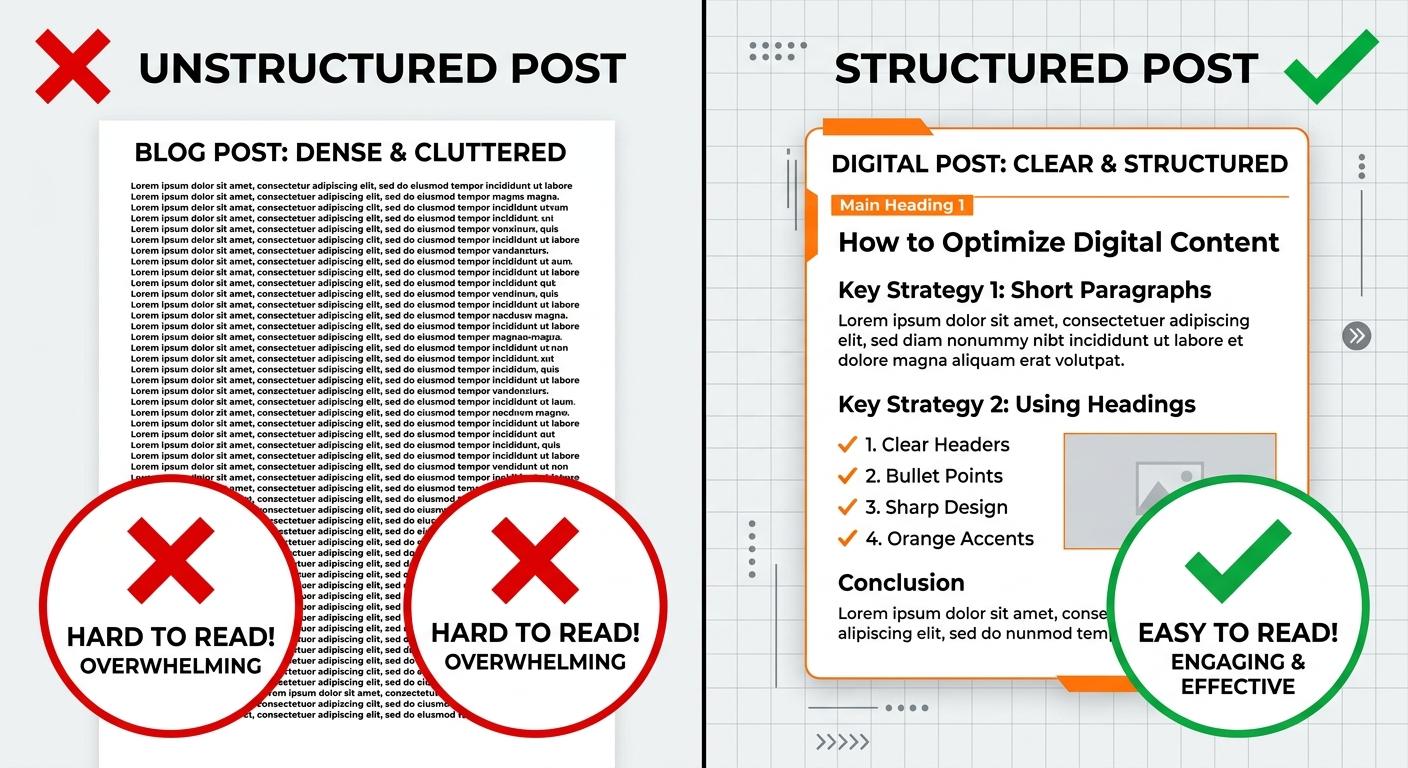
Why People Stop Reading Your Blog Post After 30 Seconds (and How to Fix It)
Most readers decide to stay or leave a blog post within the first 30 seconds. If your bounce rates are high, it's likely due to structural friction, poor hooks, or a lack of immediate value. Learn how to diagnose engagement killers and use AI-driven optimization to keep readers scrolling.
READ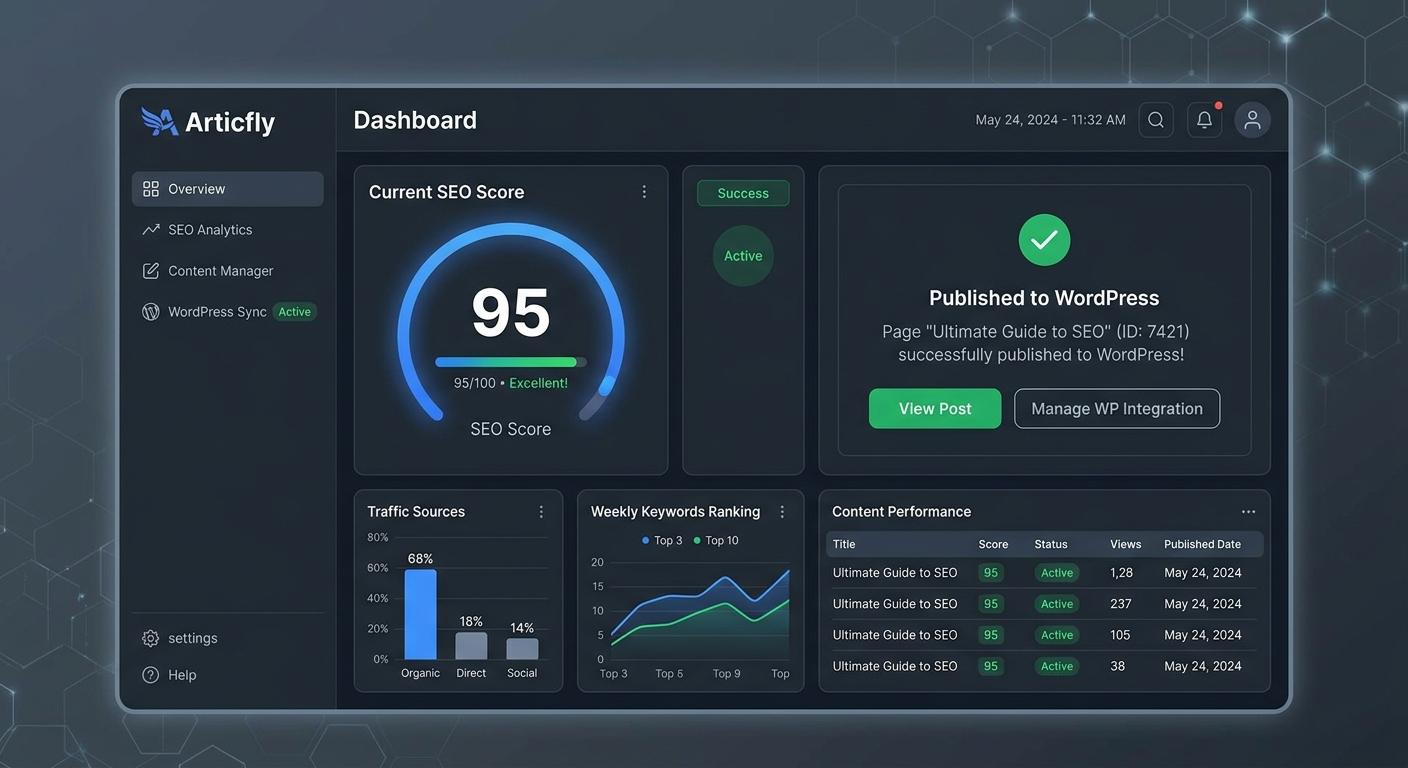
The $15 Blog Post That Brings in $2,000/Month: How AI Content Delivers 130x ROI
Discover the unit economics of high-scale AI publishing. Learn how to leverage Articfly to produce $15 blog posts that generate $2,000 in monthly recurring revenue through SEO optimization, automated publishing, and strategic content refreshing.
READ
Brand Voice in AI Content: How to Stop Your Blog from Sounding Like a Robot
Generic AI content is killing brand authority. Learn how to use Articfly’s Brand Voice Analyzer and Advanced Mode to produce high-scale, SEO-optimized content that sounds like your team, not a machine.
READ