
Understanding Executive Priorities in 2026
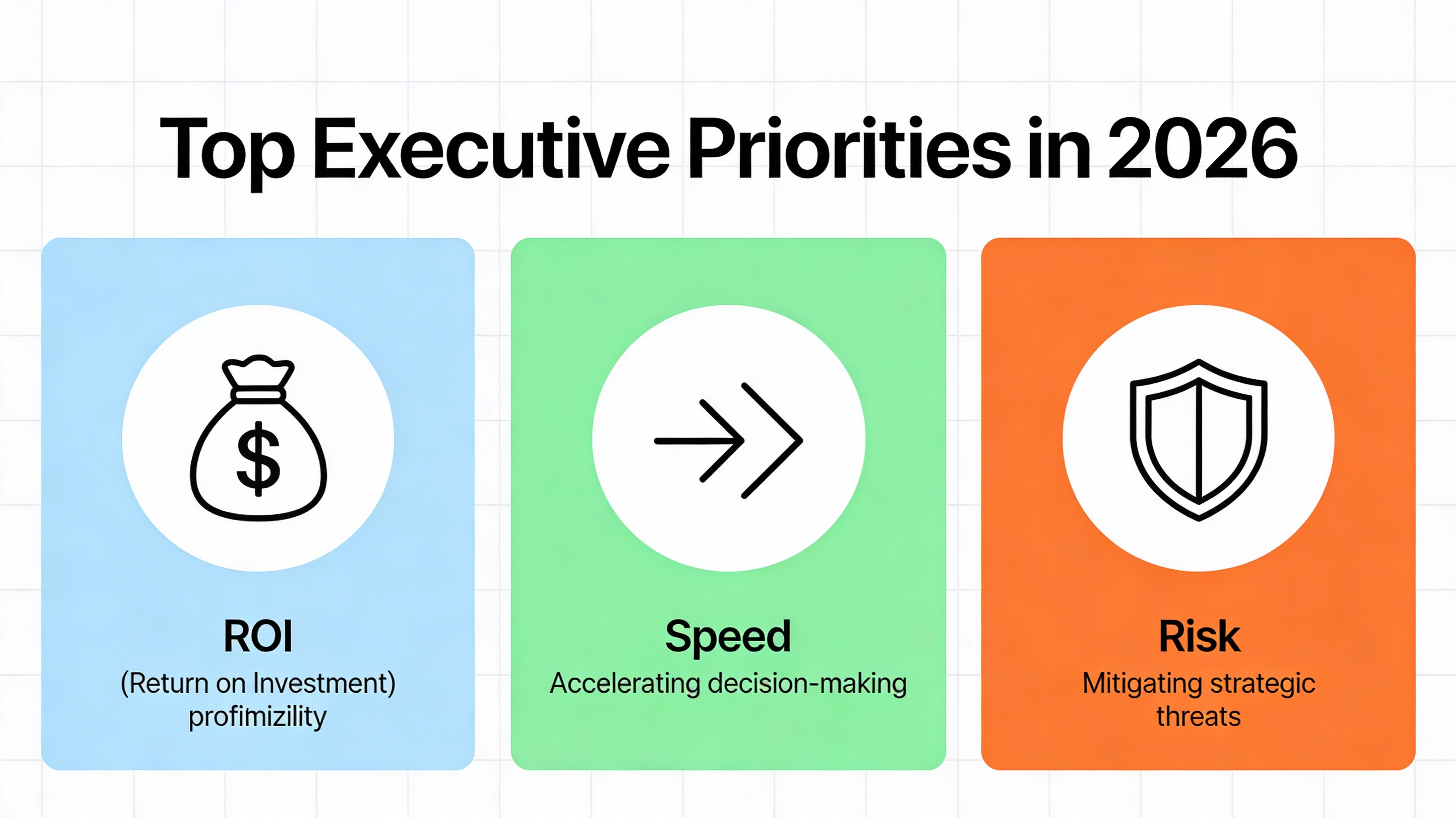
Understanding executive priorities is the first step for content marketers and SEO managers who need to secure budget and support for their initiatives. In 2026, leadership teams are primarily focused on ROI, risk mitigation, and the speed of impact when evaluating digital marketing performance. Aligning your content strategy with these business objectives ensures that your efforts are viewed as a growth driver rather than a cost center.
Modern AI-powered content creation fits perfectly into this framework by offering cost-reduction and scalability. When content teams can produce high-quality, SEO-optimized articles quickly, they reduce the time-to-market and build brand authority faster than traditional methods. This efficiency is exactly what C-suite executives expect in a data-driven business environment.
| Executive Priority | Typical SEO Metric | Business Alignment |
|---|---|---|
| ROI & Profitability | Conversion Rate / CPA | Direct revenue impact |
| Speed of Impact | Time to Rank | Reduced production cycles |
| Risk Mitigation | Brand Authority / Safety | Consistent, reliable quality |
| Scalability | Content Volume | Market reach expansion |
What execs care about: ROI, risk, speed
Executives prioritize financial stability and competitive advantage. By focusing on how SEO reduces customer acquisition costs and mitigates the risk of losing market share, you speak their language. Speed is equally important; they want to see that AI-driven efficiency leads to faster results compared to manual writing processes.
Aligning SEO goals with business objectives
Your SEO goals should never exist in a vacuum. Instead of just reporting on keyword rankings, connect your data to broader company milestones like lead generation or market expansion. Utilizing Articfly’s blog on AI‑driven SEO efficiency can help demonstrate how modern tools bridge the gap between technical search metrics and business growth. McKinsey article on 2026 executive priorities provides further context on shifting leadership expectations.
Identifying High‑Impact SEO Quick Wins
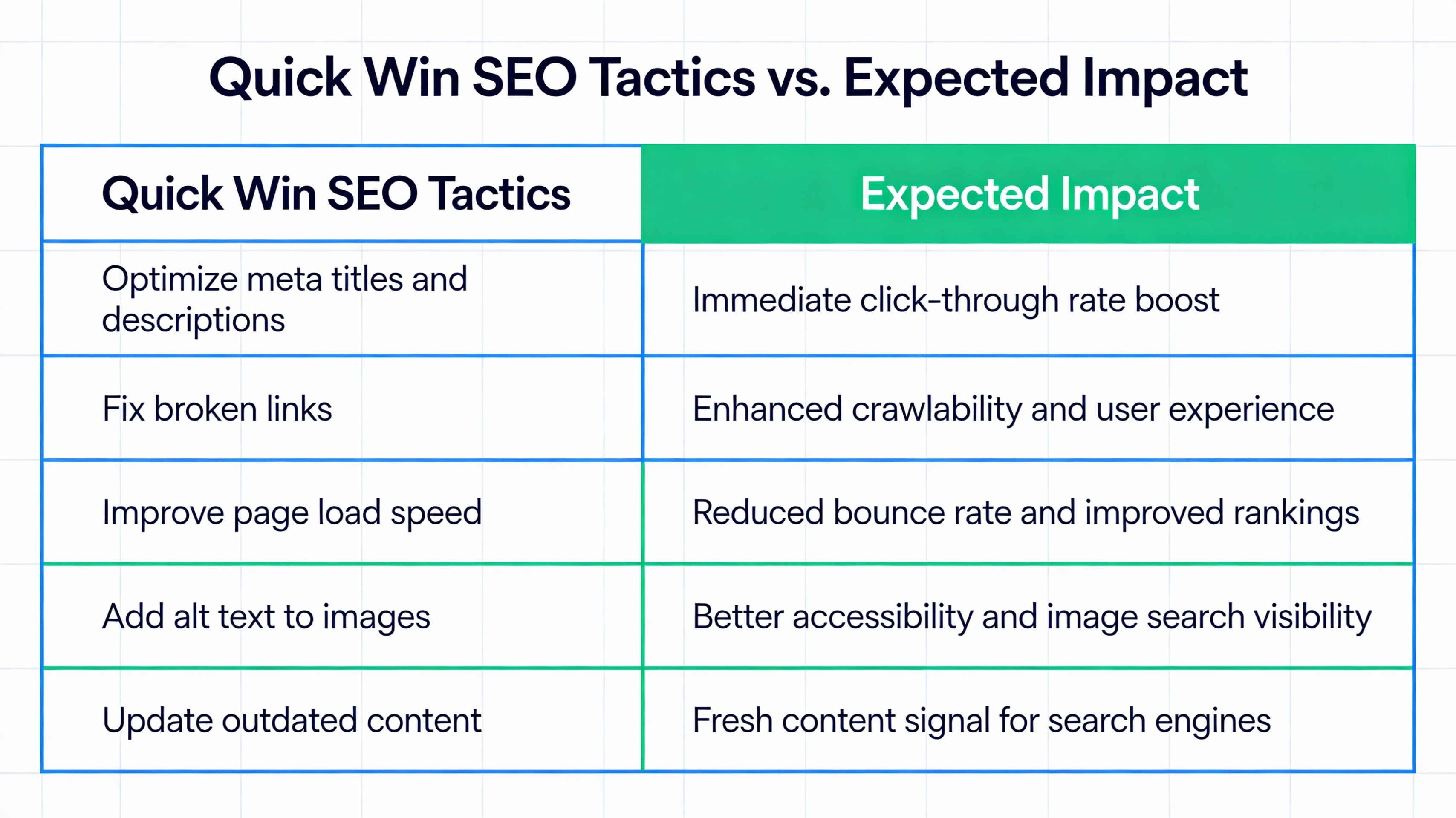
Identifying high-impact SEO quick wins allows you to generate visible results early in a project, building the momentum needed for larger investments. These wins often come from a combination of technical optimizations and strategic content updates. By focusing on low-hanging fruit, you can demonstrate the potential of your SEO strategy within weeks rather than months.
Technical fixes like improving site speed and implementing correct schema markup provide a foundation for better visibility. Simultaneously, refreshing existing content to target low-competition, high-intent keywords can lead to a significant boost in rankings without the need for entirely new assets. This balanced approach ensures both the infrastructure and the content are working together.
- Check site speed and mobile-friendliness (1-2 days).
- Implement schema markup for critical pages (1-2 days).
- Identify content for refreshes using Articfly’s feature page on automated content refresh (3-5 days).
- Optimize internal linking structure (3 days).
- Update meta descriptions and titles for high-click-through potential (2 days).
Technical fixes that boost rankings fast
Technical health is the backbone of any successful SEO campaign. Improving site speed and ensuring your mobile experience is flawless are non-negotiable requirements for search engines in 2026. These updates signal to crawlers that your site is reliable, often resulting in a noticeable uplift in organic performance shortly after implementation.
Content refreshes targeting low‑competition keywords
Updating old content is one of the most efficient ways to regain lost traffic. By analyzing low-competition keywords where you already have some visibility, you can use AI to update facts, improve readability, and better satisfy search intent. Moz’s guide on quick SEO wins highlights this as a top strategy for rapid ranking improvements.
Leveraging internal linking for authority
Internal linking is a powerful but often overlooked tool for distributing page authority throughout your site. By connecting high-authority pages to newer or underperforming content, you help search engines discover and index your most important assets. This simple structural change can significantly improve the ranking potential of your key landing pages.
Planning a 30‑Day SEO Sprint
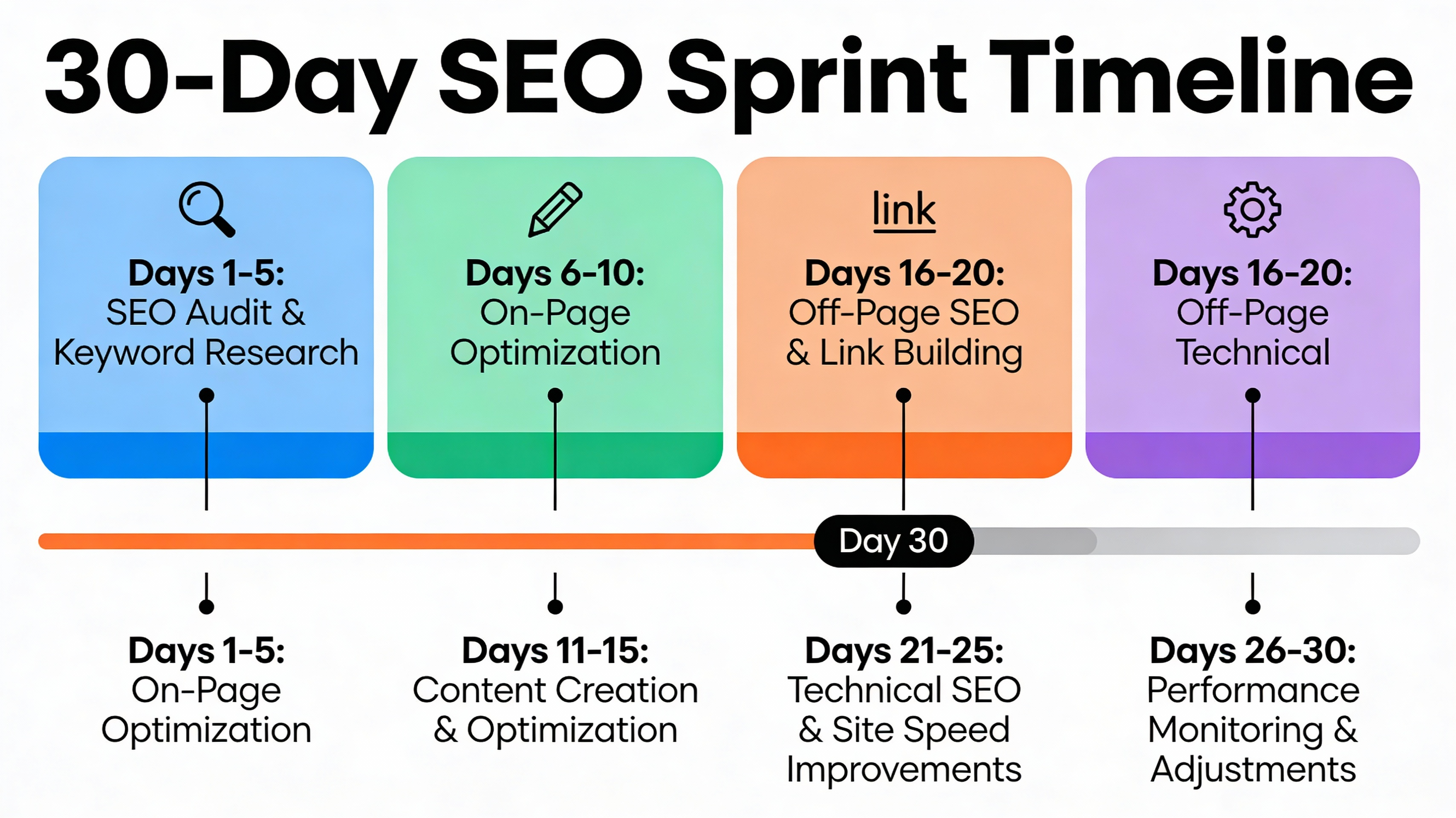
Planning a 30-day SEO sprint provides the structured timeline necessary to execute quick wins and report back to executives. A sprint framework forces the team to focus on high-priority tasks and measurable goals, preventing the project from getting bogged down in minor details. This approach is ideal for testing the efficacy of AI-powered content creation at scale.
During the first week, the focus is on auditing and goal setting, followed by two weeks of intensive implementation. The final week is dedicated to measuring the impact and preparing a report for the leadership team. This clear cadence ensures that everyone involved knows their responsibilities and the timeline for delivery.
- Week 1: Audit and Goal Setting – Define 2-3 measurable goals like +10% organic traffic.
- Week 2-3: Implementation – Execute content refreshes and technical fixes.
- Week 4: Reporting and Analysis – Compile results into an executive dashboard.
Setting measurable goals and KPIs
Success in a short-term sprint requires specific, measurable KPIs. Whether you are aiming for a certain percentage increase in organic traffic or moving five key phrases into the top three search results, these goals must be realistic and data-backed. Using Articfly’s sprint‑template download can help you structure these objectives from day one.
Creating a sprint calendar and task board
A visual calendar keeps the team aligned and ensures that deadlines are met. Utilizing collaboration tools and a task board allows for real-time tracking of progress, which is essential when working on a tight 30-day schedule. For more on this methodology, see reputable project‑management articles on sprint planning.
Assigning responsibilities and resources
Every task in the sprint needs a clear owner to ensure accountability. From the SEO manager overseeing the strategy to the content creators using AI tools, everyone must understand their role in the workflow. Assigning resources effectively prevents bottlenecks and ensures that technical and creative tasks move forward simultaneously.
Executing and Measuring Results
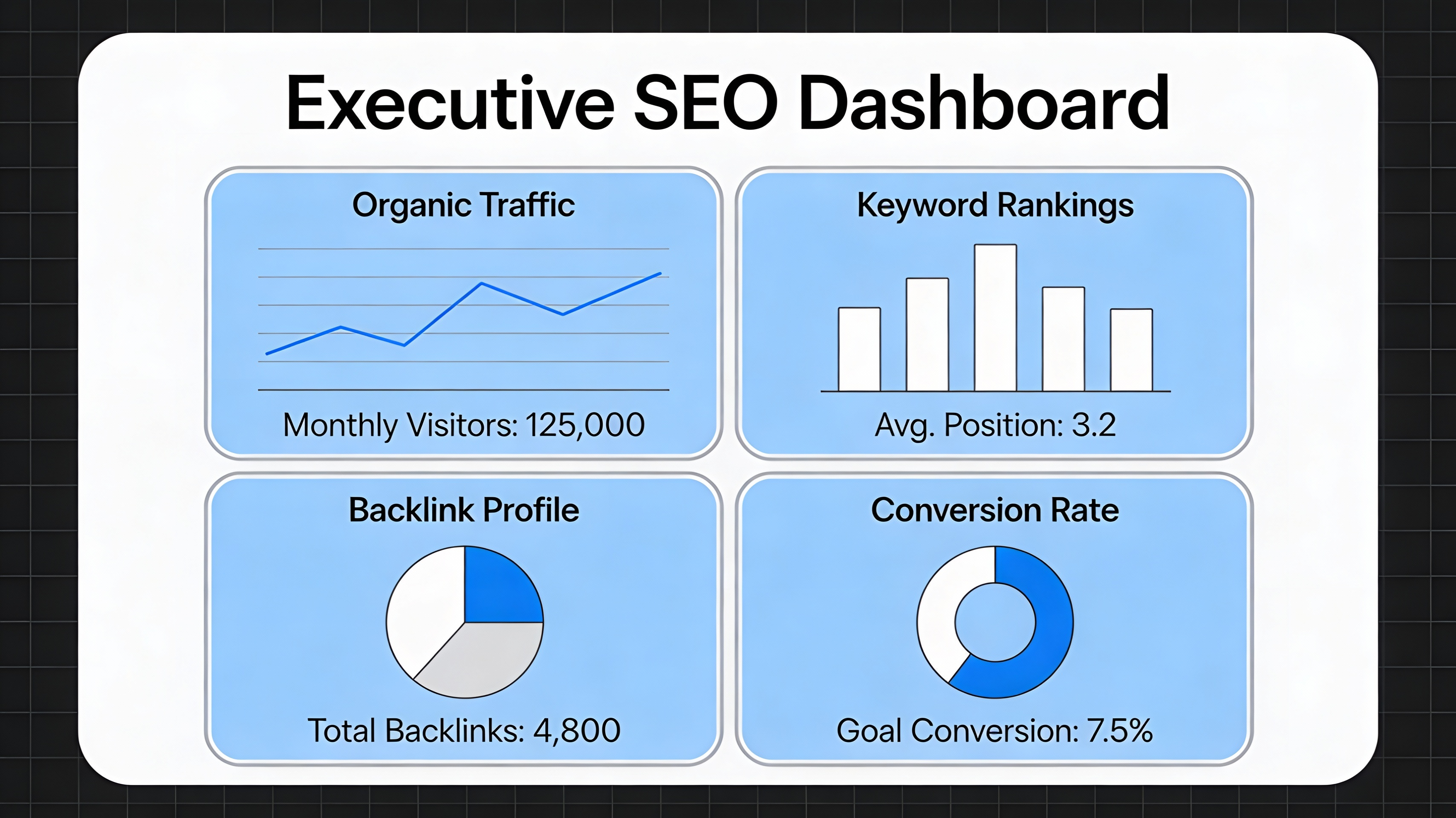
Executing and measuring results is where the hard work of the sprint is validated through data. By using a suite of analytics tools, you can monitor how your technical fixes and content updates are impacting search visibility in real time. It is important to look beyond just traffic and evaluate how these changes influence user behavior and conversion goals.
Google Search Console and Google Analytics are the primary sources for tracking keyword movement and organic growth. For a more comprehensive view, AI-powered rank-tracking tools can provide insights into how your content is performing against competitors. Capturing this data regularly allows you to build a persuasive narrative for your final executive brief.
Data without context is just numbers; data with a narrative is a business case.
Search Engine Journal article on SEO reporting best practices
Using analytics tools to track traffic, rankings, conversions
Regular monitoring of your analytics platforms is crucial during the 30-day sprint. Focus on metrics that show immediate movement, such as impressions in Search Console or a decrease in bounce rates on refreshed pages. Articfly’s analytics integration guide provides specific steps for connecting AI content performance to your existing reporting suite.
Reporting templates for executive dashboards
A concise executive dashboard should highlight three main areas: traffic lift, keyword movement, and conversion impact. Executives do not need to see every technical detail; they need to see how the sprint moved the needle on key business objectives. Screenshots of ranking improvements and traffic charts are the most effective way to visualize success.
Communicating Wins to Secure Buy‑In
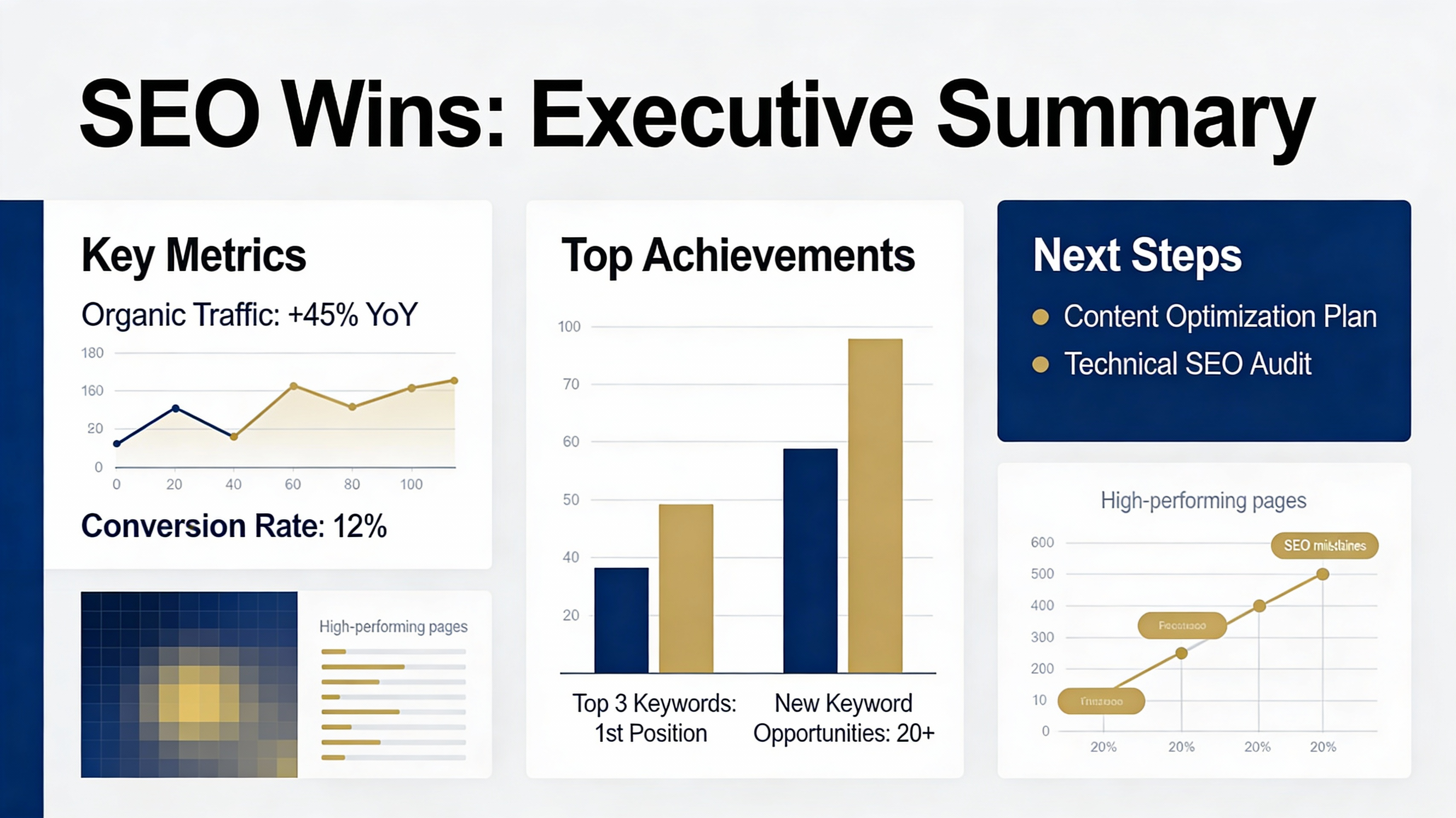
Communicating wins to secure buy-in requires translating technical SEO success into a narrative that resonates with decision-makers. The goal of this phase is to turn a 30-day experiment into a long-term, scalable content strategy. By presenting a one-page executive brief, you provide a clear summary of what was achieved and what the next steps should be.
Visual storytelling is your greatest asset during this presentation. Use before-and-after screenshots, ROI calculations, and simple charts to illustrate the progress made during the sprint. A well-structured brief doesn't just show that you succeeded; it proves that the process is repeatable and worth further investment.
Executive Brief Structure:
- Situation: The initial challenge or gap in SEO performance.
- Action: The 30-day sprint and the use of AI tools for content.
- Result: Measurable traffic, ranking, and conversion growth.
- Next Steps: Plan for scaling the strategy.
Crafting a data‑driven executive brief
An effective brief is short, punchy, and backed by evidence. Start with the most impressive result to capture attention immediately, then explain the methodology used to achieve it. For guidance on professional documentation, refer to the Harvard Business Review article on data‑driven executive communication.
Visual storytelling: charts and one‑pager
Visuals help executives quickly digest complex information. Contrast your initial "baseline" data with the "post-sprint" results to make the impact undeniable. Including case studies, like those found on Articfly’s case studies page, can add additional credibility to your proposal by showing similar success in other contexts.
Proposing next phase based on early success
The final part of your communication should focus on the future. Use the positive results of the 30-day sprint to argue for a broader rollout of AI-generated content and technical optimizations. Proposing a plan to scale allows you to capitalize on the momentum you have built and secures the resources needed for ongoing growth.
Key Takeaways
Focusing on quick-win tactics and a structured framework ensures that your SEO efforts deliver measurable value to the organization. By following the 30-day sprint model, you can prove the efficiency of AI-powered content and secure executive support for future projects.
- Prioritize ROI, speed, and risk mitigation to align with executive goals.
- Implement technical fixes and content refreshes for the fastest ranking gains.
- Use a 30-day sprint calendar to maintain focus and accountability.
- Translate data into a visual executive brief that tells a clear success story.
- Access the Articfly sprint template to begin your project immediately.
FAQ
Can I achieve measurable SEO gains in just 30 days?Yes, by focusing on technical quick wins and content refreshes for keywords where you already have some visibility, you can see noticeable improvements in rankings and traffic within a 30-day window.
What tools are needed for the quick‑win audit?At a minimum, you will need Google Search Console, Google Analytics, and a reliable rank-tracking tool. AI content creation platforms like Articfly help speed up the execution phase.
How do I convince a risk‑averse executive?Focus on data, ROI, and risk mitigation. Showing that AI-generated content can be produced at a lower cost while maintaining quality is a persuasive argument for cautious leaders.
Is AI‑generated content safe for SEO?Yes, when produced with high standards for quality and search intent. You can learn more by visiting Articfly’s AI content safety page.
What’s the next step after the sprint?The next step is to use your results to secure buy-in for scaling the strategy, allowing you to move from quick wins to long-term authority building.
Ready to take action?
Start your 30‑day SEO sprint with Articfly’s AI writer – free trial today.