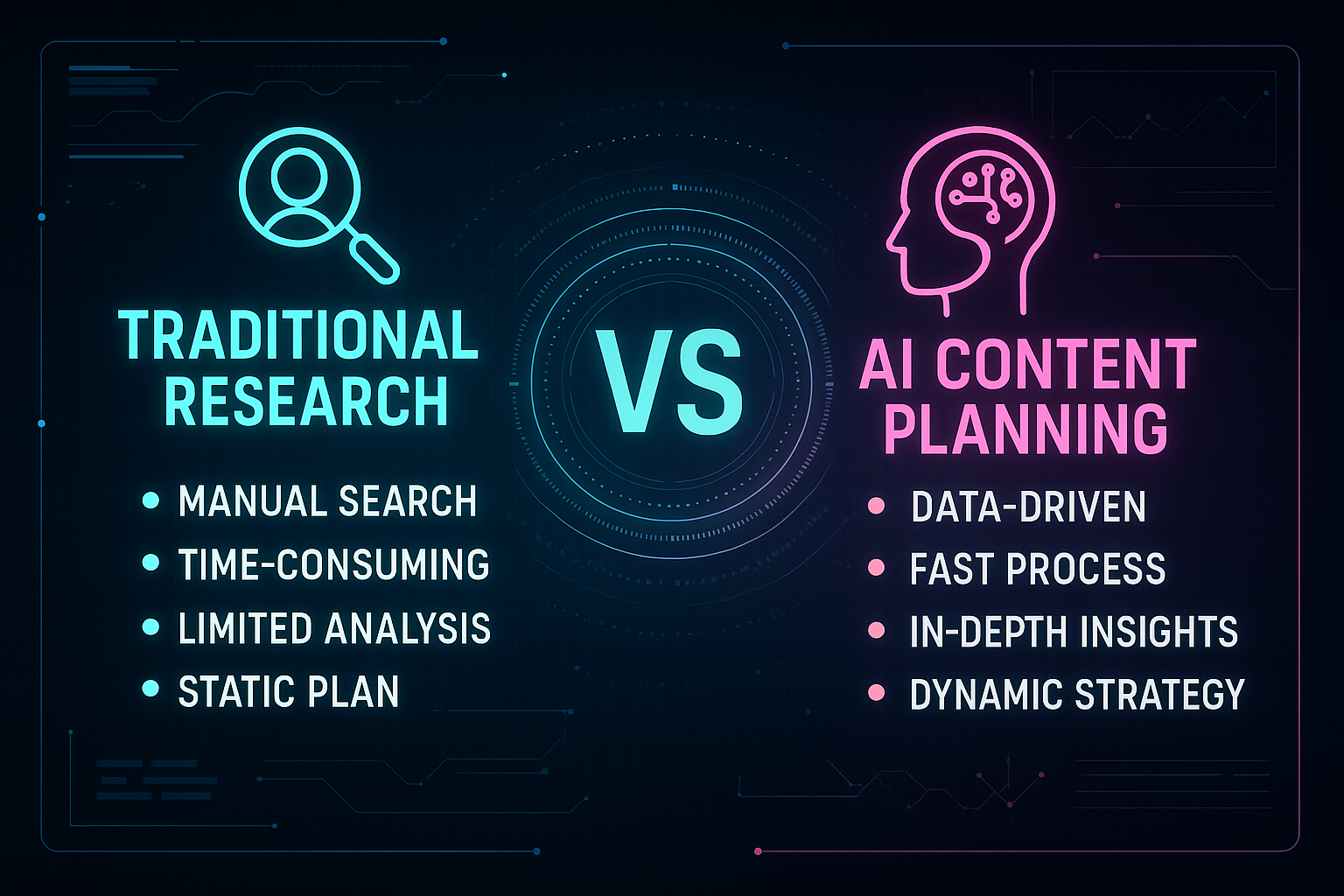
TL;DR: Traditional keyword research, while foundational, is increasingly insufficient for modern SEO. AI article planning, as offered by Articfly, moves beyond keywords to analyze search intent, build topic clusters, and conduct comprehensive competitor analysis, leading to superior SEO performance, significant time and cost savings, and scalable content production. This approach integrates human creativity with AI efficiency for a truly future-proof content strategy, transforming content creation from a manual chore into an effortless, data-driven process.
Table of Contents
- Introduction: The Evolving Landscape of Content Strategy
- The Foundation: Traditional Keyword Research and Its Limits
- Beyond Keywords: The Critical Role of Search Intent
- AI Article Planning: A Holistic and Predictive Approach
- The Articfly Advantage: Why AI Planning is Superior
- Bridging the Gap: The Synergy of AI and Human Expertise
- Conclusion: Embrace the Future of Content with AI Planning
Introduction: The Evolving Landscape of Content Strategy
The digital marketing landscape is in a constant state of flux, with search engine algorithms becoming increasingly sophisticated and user behavior evolving rapidly. In this dynamic environment, content strategy is no longer a static discipline but a continuously adapting art and science. For years, traditional keyword research served as the bedrock of SEO and content planning, guiding creators on what terms to target to attract audiences. However, as search engines move beyond simple keyword matching to understand deeper context and user intent, the limitations of a purely keyword-centric approach are becoming evident.
Today, success hinges not just on identifying popular search terms, but on truly understanding the underlying motivations behind a user's query and crafting comprehensive content that addresses their complete journey. This shift necessitates a more advanced, nuanced approach to content planning. Enter AI article planning, a new paradigm that leverages artificial intelligence to unearth insights far beyond what manual methods can achieve.
Articfly is at the forefront of this transformation, offering an AI-powered platform designed to redefine how content is planned, created, and optimized. This article will provide a comprehensive comparison between traditional keyword research and innovative AI article planning, illustrating why the latter represents the future of effective content strategy and how Articfly empowers businesses, agencies, and creators to thrive in the modern digital ecosystem.
The Foundation: Traditional Keyword Research and Its Limits
Traditional keyword research has long been the cornerstone of SEO and content marketing. At its core, it is the process of identifying popular words and phrases people use when searching for information, products, or services online. The goal is to discover terms relevant to your business that possess sufficient search volume and manageable competition, enabling your content to rank higher in search engine results pages (SERPs).
Methodologies typically involve using tools such as Google Keyword Planner, Ahrefs, SEMrush, or Moz Keyword Explorer. These platforms provide data on search volume (how many times a keyword is searched per month), keyword difficulty (how hard it is to rank for that term), and competitive analysis (who else is ranking for it). Content strategists often build lists of primary and secondary keywords, then attempt to weave these terms naturally into articles, product pages, or landing pages.
The benefits of this established practice are undeniable: it provides a structured starting point for content creation, helps target specific search queries, and can be effective for straightforward informational or transactional searches. For basic targeting and understanding common phrases, it remains a useful initial step.
However, the limitations of traditional keyword research are increasingly apparent in a modern SEO context:
- Time-Consuming: Manual research across multiple tools, sorting through thousands of keywords, and identifying patterns is an arduous, labor-intensive process.
- Misses Deeper User Intent: A keyword-centric approach often overlooks the underlying 'why' behind a user's search. Two people typing the same keyword might have vastly different needs.
- Siloed Content Approach: Focusing on individual keywords can lead to isolated articles that don't build comprehensive topical authority, failing to address a user's entire journey around a subject.
- Reactive, Not Proactive: Traditional methods primarily respond to existing search queries, offering limited insights into emerging trends or future user needs.
- Limited Competitive Insight: While tools show who ranks, they don't fully explain *how* or *why* that content succeeds, beyond surface-level keyword usage.
- Prone to Keyword Stuffing: Without a strong emphasis on contextual relevance and user experience, there's a risk of over-optimizing for keywords, leading to unnatural-sounding content that can harm SEO and readability.
Traditional keyword research, while foundational, is akin to navigating with a compass in an age of GPS. It points you in a direction, but lacks the intricate detail and real-time insights required for optimal navigation.
In essence, relying solely on keywords can lead to a narrow view, where content is optimized for machines rather than tailored to deeply satisfy human curiosity and needs.

Beyond Keywords: The Critical Role of Search Intent
In today's SEO landscape, search intent has emerged as a paramount factor for content success. Search intent refers to the underlying goal or purpose a user has when typing a query into a search engine. It's not just about *what* people type, but *why* they type it. Understanding and addressing search intent is crucial because search engines prioritize content that best satisfies a user's needs, leading to higher rankings and more engaged audiences.
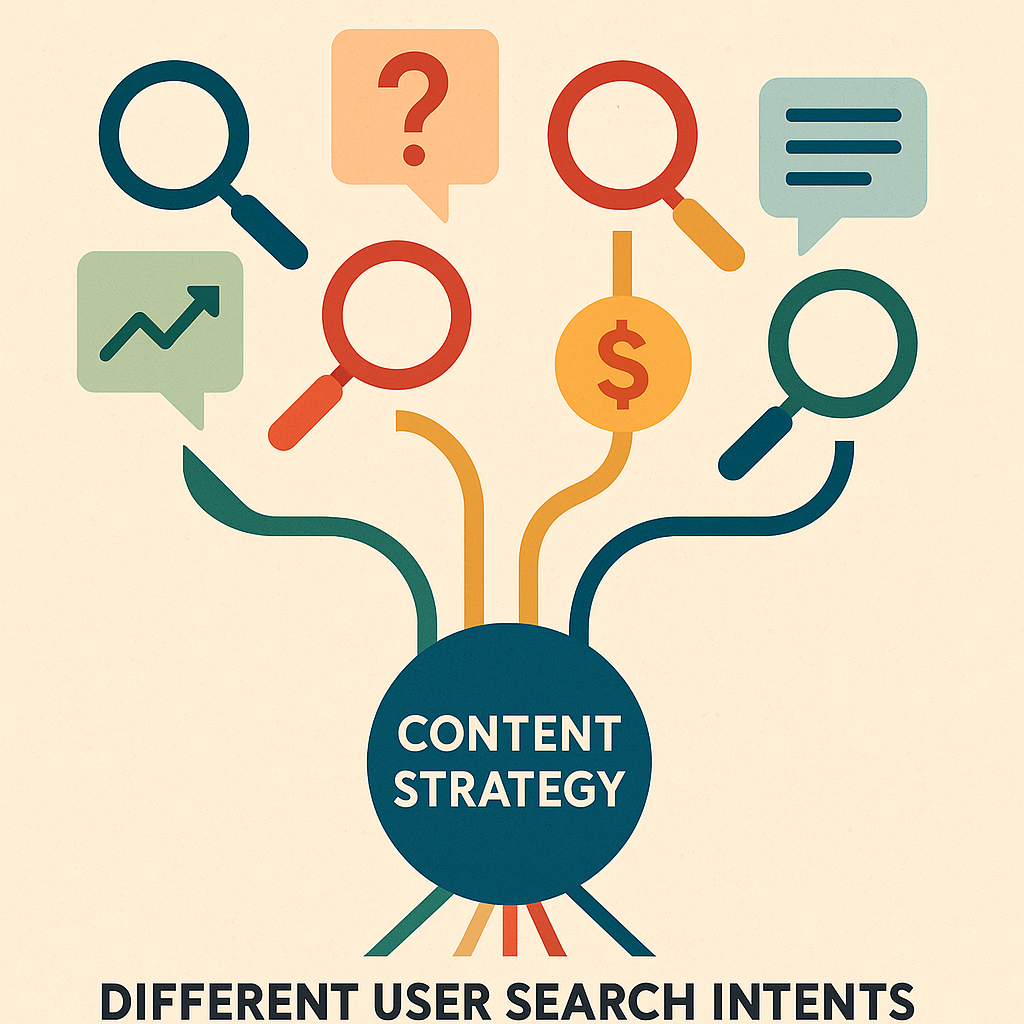
There are generally four main types of search intent:
- Informational Intent: Users seeking answers to questions or general information (e.g., "how to bake sourdough," "history of Rome").
- Navigational Intent: Users trying to find a specific website or page (e.g., "Articfly login," "Facebook").
- Transactional Intent: Users looking to complete an action, often a purchase (e.g., "buy running shoes online," "best CRM software deal").
- Commercial Investigation Intent: Users researching before making a purchase, comparing options (e.g., "Articfly vs. competitor X," "reviews of electric cars").
The primary reason keywords alone are insufficient to capture intent is their inherent ambiguity. A single keyword can carry multiple intents depending on context or the broader user journey. For example, "apple" could mean the fruit (informational), Apple Inc. (navigational or commercial investigation), or a recipe for apple pie (informational/transactional). Without understanding the intent, content creators risk producing irrelevant material.
Misinterpreting intent with traditional methods leads to significant problems. If a user searches "best running shoes" (commercial investigation), but your content is purely informational about shoe materials, you've missed the mark. The user isn't ready to buy *that moment*, but they are evaluating options. Your content should compare products, highlight features, and guide them towards a decision. Conversely, if a user searches "running shoe laces come undone" (informational), a product page trying to sell them new shoes won't be helpful.
This misalignment results in high bounce rates, low engagement, and ultimately, poor search engine performance. Search engines are continually refining their algorithms to deliver content that precisely matches user intent. Therefore, a successful content strategy must shift its focus from merely optimizing for keywords to deeply understanding and satisfying the user's underlying goal. It's about moving beyond the surface-level query to anticipate and fulfill the complete needs of your target audience, establishing your content as truly valuable and authoritative.
AI Article Planning: A Holistic and Predictive Approach
AI article planning represents a monumental leap forward from traditional keyword research, transforming content strategy into a holistic, data-driven, and predictive discipline. By leveraging advanced machine learning algorithms and natural language processing (NLP), AI tools go far beyond surface-level keywords to uncover deep insights that drive superior content performance. Articfly's proprietary AI system is engineered to excel in this new era of content creation, offering unparalleled capabilities across several key areas:
Advanced Intent Analysis
Unlike traditional methods that rely on explicit keyword phrasing, AI identifies nuanced user intent by analyzing context, semantics, and vast patterns of user behavior. Articfly's system delves into the queries' implicit meaning, scrutinizing related searches, SERP features (like featured snippets and 'People Also Ask' boxes), and the overall structure of top-ranking content. This deep analysis allows for precise recognition of whether a user is seeking information, comparison, a specific product, or navigational guidance. For example, it can differentiate between "best CRM" (commercial investigation) and "what is CRM" (informational) with high accuracy, ensuring your content directly addresses the user's exact need, even when the keywords are similar.
Content Clustering & Topical Authority
One of the most significant advancements is the shift from isolated keywords to interconnected topic clusters. AI meticulously maps out comprehensive content hubs, moving beyond a single article targeting one keyword to a network of related content that collectively covers an entire subject area. Articfly helps identify core topics and supporting subtopics, creating a strategic framework that establishes your domain's topical authority. This not only satisfies a broader spectrum of user queries but also signals to search engines that your site is a comprehensive and reliable resource, boosting overall organic visibility and rankings.
Comprehensive Competitor Analysis
AI's ability to rapidly analyze top-ranking competitor content is transformative. Instead of merely noting who ranks, Articfly's AI dissects their content's structure, depth, sentiment, and semantic relevance. It identifies content gaps where competitors fall short, successful strategies that can be emulated or improved upon, and untapped opportunities for differentiation. This level of competitive intelligence provides an actionable roadmap for outranking rivals, ensuring your content is not just good, but strategically superior.
Data Synthesis & Pattern Recognition
AI excels at processing and synthesizing immense volumes of data from diverse sources – SERP results, forums, social media discussions, industry reports, and proprietary user data. This allows it to uncover non-obvious connections, emerging themes, and critical insights that human analysts might miss. Articfly's platform can detect subtle shifts in user language, identify pain points discussed in niche communities, and recognize latent demands, providing a richer, more comprehensive understanding of your audience.
Predictive Analytics
A key advantage of AI article planning is its predictive capability. By analyzing historical data and current trends, Articfly can anticipate future trends and evolving user needs. This foresight allows content teams to proactively create content for topics that are on the rise, positioning them as early authorities and capturing emerging demand before competitors. This proactive approach ensures content remains fresh, relevant, and ahead of the curve.
Articfly's AI doesn't just analyze data; it synthesizes knowledge, understands intent, and predicts trends, transforming content planning from guesswork to a strategic science.
Personalization & Tone Matching
Articfly further enhances content strategy by tailoring article planning to specific brand voices and target audiences. Its AI learns and adapts to your desired tone, style, and messaging guidelines, ensuring that every planned article aligns seamlessly with your brand identity. This personalized approach guarantees consistency across all content, strengthening brand recognition and resonance with your audience.
The Articfly Advantage: Why AI Planning is Superior
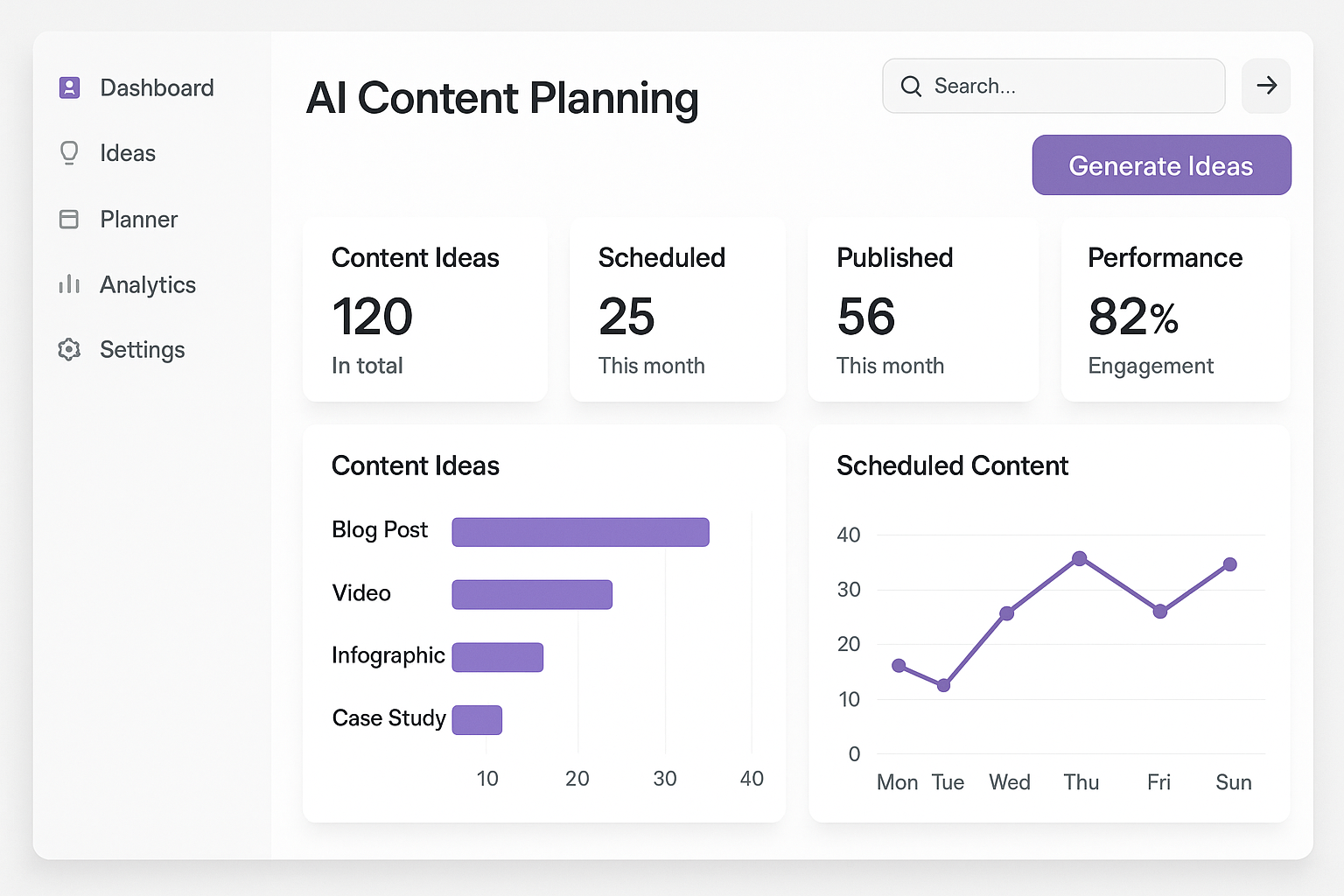
Articfly's AI-powered article planning offers a decisive advantage over traditional methods, translating into tangible benefits for businesses, agencies, and individual creators. The platform streamlines the entire content creation workflow, providing efficiencies and performance improvements that are otherwise unattainable.
Unparalleled Time Savings
Manual keyword research, topic ideation, outlining, and content gap analysis are notoriously time-consuming tasks. Articfly automates these laborious processes, drastically reducing the hours spent on preliminary research. What once took days or weeks can now be accomplished in minutes, freeing up valuable time for strategic thinking and creative execution.
Significant Cost Reduction
By minimizing the need for extensive manual labor and optimizing resource allocation, Articfly helps businesses achieve substantial cost savings. Fewer hours dedicated to research mean lower operational expenses and a more efficient content budget. This allows for reinvestment into other vital areas of marketing or expanded content production.
Superior SEO Performance
The core of Articfly's superiority lies in its ability to drive better SEO results. Through precise intent matching, comprehensive topical coverage via content clusters, and data-driven insights from in-depth competitive analysis, articles planned with Articfly achieve higher rankings and greater organic visibility. This leads to increased website traffic, improved lead generation, and stronger brand authority in search engines.
Scalability & Volume
One of the biggest challenges in content marketing is maintaining quality at scale. Articfly solves this by enabling the production of high-quality, SEO-optimized content at an unprecedented volume. The AI's ability to rapidly plan and structure multiple articles simultaneously means businesses can expand their content output without compromising on depth, relevance, or effectiveness.
Consistent Quality & Brand Voice
Articfly ensures that every article planned aligns perfectly with your brand identity and maintains high editorial standards. By learning your preferred tone, style, and brand guidelines, the AI system helps to produce content ideas that resonate authentically with your audience, fostering trust and consistency across all your published material.
Data-Driven Decision Making
With Articfly, guesswork is eliminated. Every content strategy decision is backed by objective, analytical insights derived from vast datasets. This allows for informed choices about topics, angles, and optimization tactics, leading to predictable and measurable results.
Focus on Strategy, Not Drudgery
By taking over the heavy lifting of research and initial planning, Articfly empowers content teams to shift their focus from repetitive drudgery to higher-level strategic thinking, creative storytelling, and audience engagement. This fosters a more innovative and fulfilling environment for content professionals, allowing them to concentrate on what humans do best: adding unique perspectives and creative flair.
Bridging the Gap: The Synergy of AI and Human Expertise
While AI article planning offers groundbreaking advancements, it's crucial to acknowledge that it augments, rather than entirely replaces, human input. The most effective content strategies today embrace a powerful synergy between artificial intelligence and human expertise, combining the strengths of both worlds.
There are indeed situations where traditional methods, or at least a human-led initial approach, still hold value. For instance, in highly niche markets with extremely limited data, or for initial brainstorming around obscure, emerging topics where AI models may not yet have sufficient training data, a human touch can provide valuable foundational insights. Similarly, for highly localized SEO efforts targeting very specific geographic queries, human understanding of local nuances can be critical.
However, even in these scenarios, AI can quickly take over once initial parameters are established. The true power lies in how AI can augment human expertise. By automating the laborious and repetitive tasks of data gathering, intent analysis, and competitive auditing, AI tools like Articfly free up content strategists to focus on refinement, creativity, and high-level strategic oversight. Instead of spending hours sifting through spreadsheets, humans can dedicate their time to crafting compelling narratives, developing unique brand angles, and injecting emotional intelligence that only a human can provide.
The ideal scenario for modern content creation is a collaborative ecosystem: AI-powered tools like Articfly handle the heavy lifting of research, planning, and optimization, providing a robust, data-backed framework for content. Human experts then step in to apply their unique insights, refine the strategic direction, add creative flourishes, ensure brand authenticity, and provide the ultimate quality control. This partnership positions AI as an invaluable co-pilot for content teams, enabling them to produce superior content more efficiently and effectively than ever before, elevating the entire content creation process.
Conclusion: Embrace the Future of Content with AI Planning
The evolution of content strategy demands a shift from the foundational, yet increasingly insufficient, methods of traditional keyword research to the sophisticated, data-driven approach of AI article planning. We have journeyed through the limitations of relying solely on keywords, highlighted the critical importance of understanding search intent, and explored the comprehensive capabilities that AI brings to the planning process.
AI article planning transforms content creation by offering unparalleled efficiency, effectiveness, and scalability. It moves beyond simple query matching to understand complex user intent, builds robust topical authority through content clusters, and provides deep competitive insights. This results in content that not only ranks higher but genuinely resonates with and serves the needs of your target audience.
Articfly stands at the forefront of this revolution, providing the leading solution for businesses, agencies, and creators seeking to produce effortless, data-driven, and high-quality content. By integrating advanced AI with human strategic input, Articfly empowers you to overcome the challenges of content production, reduce costs, save time, and achieve superior SEO performance.
Ready to transform your content strategy and unlock unprecedented efficiency? Embrace the future of content creation with Articfly. Explore Articfly today and effortlessly build engaging, SEO-optimized articles in minutes.