
The Rise of AI-Generated Blog Content

The Rise of AI-Generated Blog Content represents a fundamental shift in digital marketing and professional publishing. Generative AI for writing utilizes advanced algorithms to produce human-like text based on specific input parameters. From early experimental tools to modern enterprise SaaS platforms, the technology has reached a point where it now supports major content strategies.
Current market momentum indicates that AI adoption is accelerating across all sectors. According to McKinsey's report on the state of AI, organizations are increasingly integrating these tools to stay competitive. This transition allows teams to maintain a high publishing frequency without the traditional overhead of manual production.
| Feature | AI-Generated Blogs | Manual Writing |
|---|---|---|
| Production Speed | Minutes | Hours or Days |
| Cost per Article | Low/Scalable | High (Freelance/Staff) |
| Consistency | Algorithmic Accuracy | Variable Quality |
How Generative AI Works for Writing
Generative AI works for writing by leveraging large language models that have been trained on vast datasets of diverse text. These models understand linguistic patterns, allowing them to construct coherent and contextually relevant articles. Through sophisticated prompt engineering, these tools can capture specific search intent and user requirements.
Modern platforms also incorporate automated SEO optimization directly into the writing process. This includes the strategic placement of keywords and the generation of essential meta tags. By streamlining these technical tasks, the technology ensures that the content is ready for search engine indexing immediately upon creation.
The standard AI writing workflow follows a specific logical path: User Input > Intent Analysis > Large Language Model Processing > SEO Optimization > Final Article Output.
Key Benefits Over Manual Writing
Key benefits over manual writing include a drastic reduction in the time required to move from an idea to a finished post. While traditional writing can take several hours or even days, AI can produce a comprehensive draft in minutes. This speed allows marketing departments to respond to trends in real-time.
- Production Speed: Turn briefs into articles in a fraction of the time.
- Cost Efficiency: Significant reduction in hourly rates for content creation.
- Voice Control: Maintain a consistent brand identity using tone presets.
Why Companies Are Shifting Away From Manual Blogs

Shifting away from manual blogs is often driven by the increasing pressure to publish high volumes of SEO-friendly content. Search engines reward consistency and depth, making it difficult for manual teams to keep pace. Companies now require rapid iteration and testing to see what resonates with their audience.
Scaling content across different languages and formats is another primary driver for this technological shift. Manual translation and localization are often cost-prohibitive for growing brands. AI platforms provide a scalable solution that maintains quality across diverse global markets.
AI content is rapidly becoming the new engine of online sales, providing the volume and precision needed for modern digital dominance.Industry Analyst Insight
Cost and Time Efficiency
Cost and time efficiency are the most immediate advantages noticed by businesses adopting AI workflows. Organizations can see production speeds that are up to 80% faster than traditional methods. This efficiency directly translates to a lower cost per article, freeing up budget for other strategic marketing initiatives.
By reducing the reliance on extensive freelance networks, companies can manage their content more predictably. The ability to generate multiple drafts simultaneously means that content calendars stay full without the usual bottlenecks. This reliability is essential for maintaining long-term organic growth.
[Bar Chart: Manual Writing (10 hours) vs AI-Assisted Writing (1.5 hours) per week]
Consistency and Brand Voice Control
Consistency and brand voice control ensure that every piece of content aligns with the company's established identity. Tone presets and style guides are programmed into the AI to prevent variations that often occur with different human writers. This centralized control is vital for building trust with a loyal audience.
Automated tools also handle the technical aspects of quality assurance, such as proofreading and plagiarism checks. This ensures that the output is not only stylistically correct but also original and safe for publication. Content managers spend less time on basic editing and more on high-level strategy.
Content Quality Checklist- Tone alignment verified via presets
- Automated grammar and syntax check complete
- Plagiarism scan confirmed unique
- Keyword density optimized for search
Scalability and Volume Production
Scalability and volume production allow businesses to expand their reach without a linear increase in costs. A single content brief can be transformed into multiple articles targeting different segments or keywords. This multi-language capability opens up international markets that were previously difficult to enter.
| Input | Traditional Output | AI-Powered Output |
|---|---|---|
| 1 Content Brief | 1 Blog Post | 10 Variations/Languages |
| Weekly Capacity | 2-3 Articles | 20+ Articles |
Overcoming Common Concerns About AI Blogs
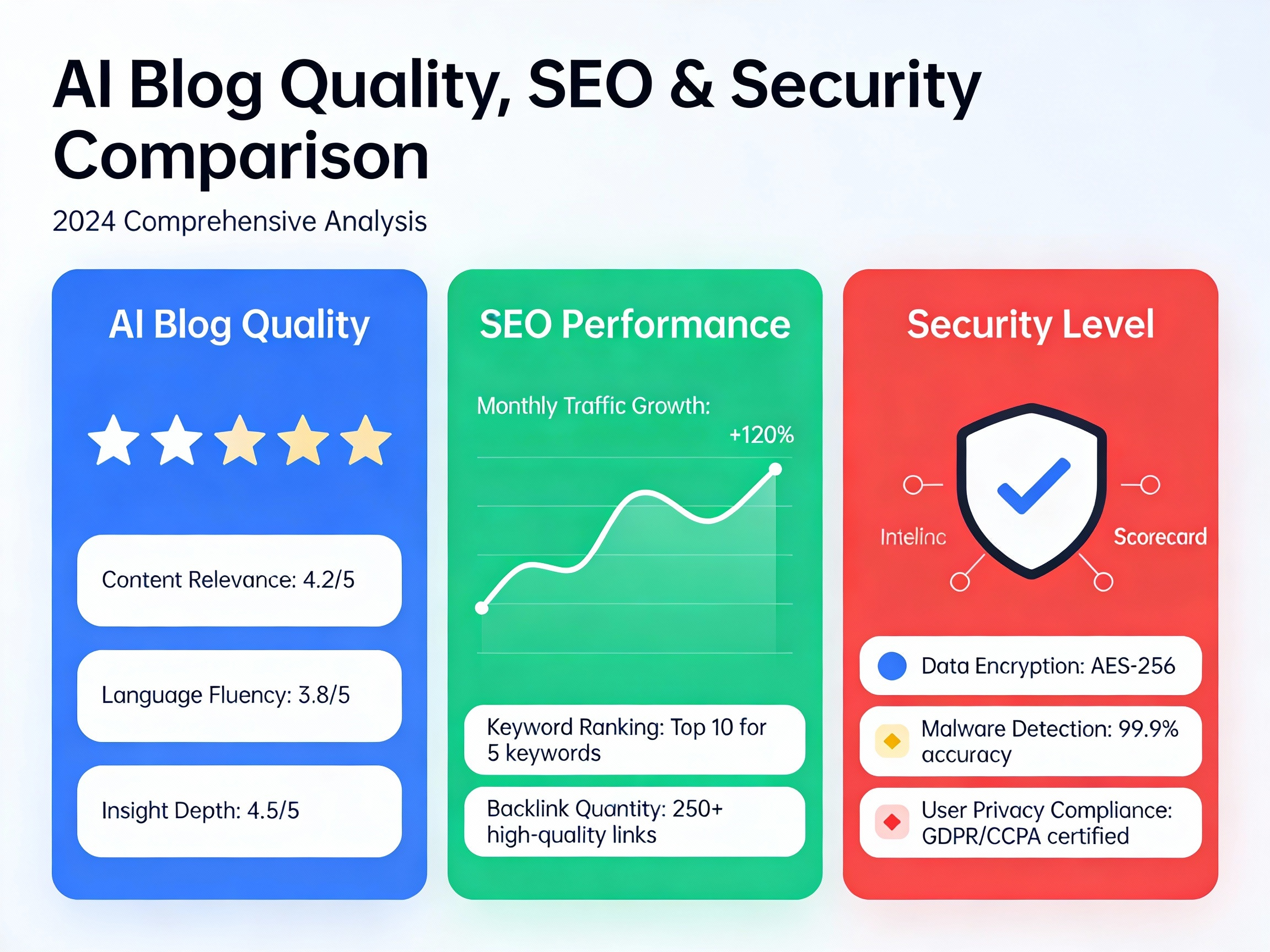
Overcoming common concerns is a necessary step for organizations looking to modernize their content workflow. Many leaders worry about the balance between technical efficiency and human nuance. However, modern platforms are designed to address these objections through sophisticated quality controls and data security measures.
Reliability in terms of SEO performance and data privacy are also top priorities for content strategists. Understanding how these platforms handle data and search engine requirements can alleviate most concerns. The goal is to view AI as a powerful assistant rather than a complete replacement for human insight.
Comparison Matrix
| Concern | AI Strength | Mitigation Strategy |
|---|---|---|
| Quality | Data-driven logic | Human-in-the-loop editing |
| SEO | Built-in optimization | Regular performance audits |
| Privacy | Encrypted sessions | Strict data retention policies |
Quality and Human Touch
Quality and the human touch are maintained by keeping expert editors involved in the final review process. A human-in-the-loop workflow ensures that the AI's efficiency is balanced with the strategic depth that only a person can provide. This collaborative approach results in content that is both data-driven and engaging.
Continuous model fine-tuning allows the system to learn from brand-specific data and previous successful articles. Over time, the AI becomes better at mimicking the specific nuances of a company's unique voice. This evolution ensures that the content remains relevant as the brand grows.
The combination of AI speed and our team's editorial oversight has doubled our traffic while cutting our production time in half.Content Marketing Manager
SEO Reliability
SEO reliability is built into the core of professional AI writing platforms. These systems analyze search intent and suggest keywords based on real-time data to ensure visibility. Beyond just text, the AI generates structured data and meta tags to help search engines understand the content's relevance.
Common SEO Questions:
- How does AI handle keywords? (It analyzes high-ranking pages to determine optimal density.)
- Is meta data included? (Yes, titles and descriptions are automatically generated.)
Data Security and Privacy
Data security and privacy are managed through robust end-to-end encryption protocols. Professional platforms like Articfly ensure that your proprietary information and content briefs are protected throughout the generation process. Many systems do not retain data beyond the active session to further minimize risk.
- End-to-end encryption for all data transfers.
- No long-term storage of proprietary briefs.
- Compliance with international data protection standards.
Choosing the Right AI Blog Platform
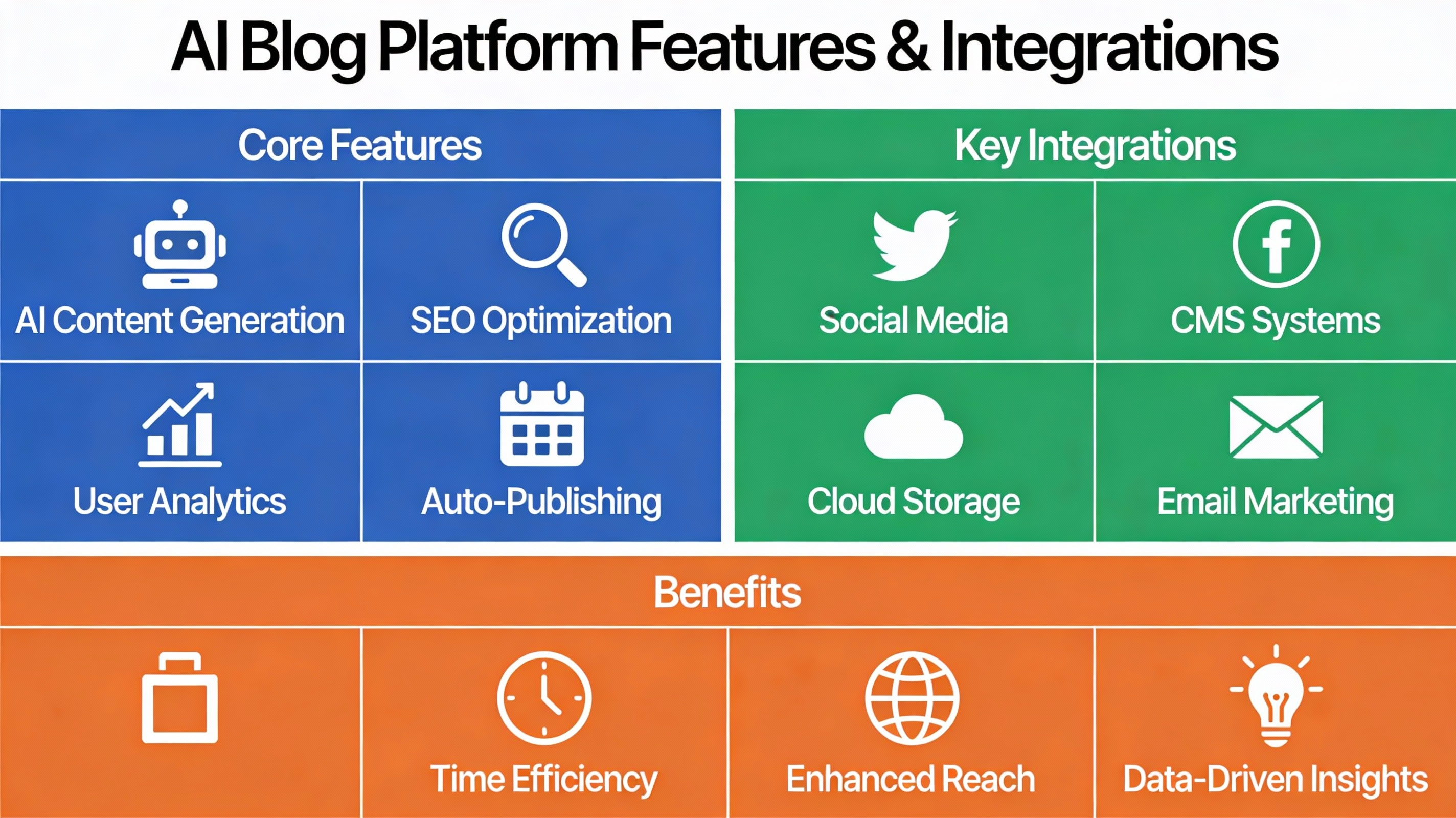
Choosing the right AI blog platform requires a careful evaluation of features, integrations, and ROI potential. Not all tools are created equal; some are generic text generators while others are purpose-built for SEO-driven blogging. It is essential to look for platforms that offer granular control over tone and structure.
Integration with your existing content management system (CMS) and digital asset management (DAM) tools is another critical factor. A tool that fits seamlessly into your current workflow will see much higher adoption rates among your team. Evaluating the long-term ROI will help justify the investment to stakeholders.
| Feature | Articfly | Generic AI Tools |
|---|---|---|
| SEO Scoring | Real-time analysis | Basic or None |
| Tone Control | Advanced Presets | Limited |
| Integrations | Full CMS Sync | Manual Copy-Paste |
Core Features to Look For
Core features to look for include a robust prompt library and templates designed for various article types. Real-time SEO scoring helps writers understand how well an article will rank before it is even published. Multi-language generation is also a must-have for brands with a global footprint.
An intuitive interface that allows for easy editing and formatting can save hours of work for the editorial team. Look for tools that provide structured output, including headings, lists, and tables, ready for the web. These features ensure that the AI output is as close to publish-ready as possible.
Integration with Existing Workflows
Integration with existing workflows is achieved through API access and dedicated plugins for popular platforms like WordPress or HubSpot. This connectivity allows for a smooth transition from generation to approval and finally to publication. Content approval pipelines can be automated to ensure that the right eyes see every draft.
By connecting the AI tool to your analytics and project management software, you can track the performance of AI-generated content alongside manual posts. This holistic view is necessary for making data-driven decisions about your future content strategy. Seamless workflows reduce friction and increase overall productivity.
Evaluating ROI
Evaluating ROI involves comparing the cost per article of the AI platform against your traditional freelance or in-house spend. You should also measure the "time-to-publish" metrics to see how much faster your team is operating. A significant increase in organic traffic is the ultimate indicator of success.
- Article Cost: Compare software subscriptions to per-word rates.
- Publication Speed: Measure the reduction in days from brief to live post.
- Traffic Impact: Monitor organic search growth over 3-6 months.
Implementing AI-Generated Blogs in Your Organization

Implementing AI-generated blogs is most successful when approached as a strategic rollout rather than an overnight switch. Start by designing a pilot program to test the technology on a small subset of your content calendar. This allows your team to familiarize themselves with the tool and refine the editorial process.
Establishing human-in-the-loop best practices from the start will ensure high quality and team buy-in. Clearly define the success metrics and reporting structures so that the impact of the AI can be measured accurately. This structured approach helps in scaling the technology across the entire organization effectively.
- Design a pilot program with specific goals.
- Identify human-in-the-loop checkpoints.
- Define KPIs for traffic and engagement.
- Scale production based on pilot results.
Pilot Program Steps
Pilot program steps involve defining a clear set of target topics that represent your usual content output. Generate a small batch of articles and have your existing team review and edit them to match your brand voice. Publishing and monitoring these first few pieces will provide the necessary data to refine your prompts.
This phase is also the time to identify any bottlenecks in the new workflow. You might find that the AI needs more specific instructions regarding your industry's technical jargon. Use this feedback to improve the system's performance before moving to full-scale production.
Human-in-the-Loop Best Practices
Human-in-the-loop best practices require setting up editorial review checkpoints for every AI-generated draft. A brand voice audit ensures that the content resonates emotionally with your audience and reflects your values. Continuous feedback to the AI model or your prompt library will help improve the quality of future drafts.
Editorial Standards Checklist- Fact-check all specific claims and data points.
- Ensure natural transitions between AI-generated sections.
- Verify that the call-to-action is relevant and clear.
- Check formatting for web accessibility standards.
Measuring Success
Measuring success requires a look at both production metrics and audience engagement. Track your publication frequency to see how the volume has changed since adopting AI. Organic traffic growth and engagement metrics like time on page and social shares will tell you if the content is truly valuable.
| KPI | Measurement Method | Target Outcome |
|---|---|---|
| Volume | Articles per month | Significant increase |
| Traffic | Organic sessions | Consistent monthly growth |
| Efficiency | Hours per article | Up to 80% reduction |
Key Takeaways
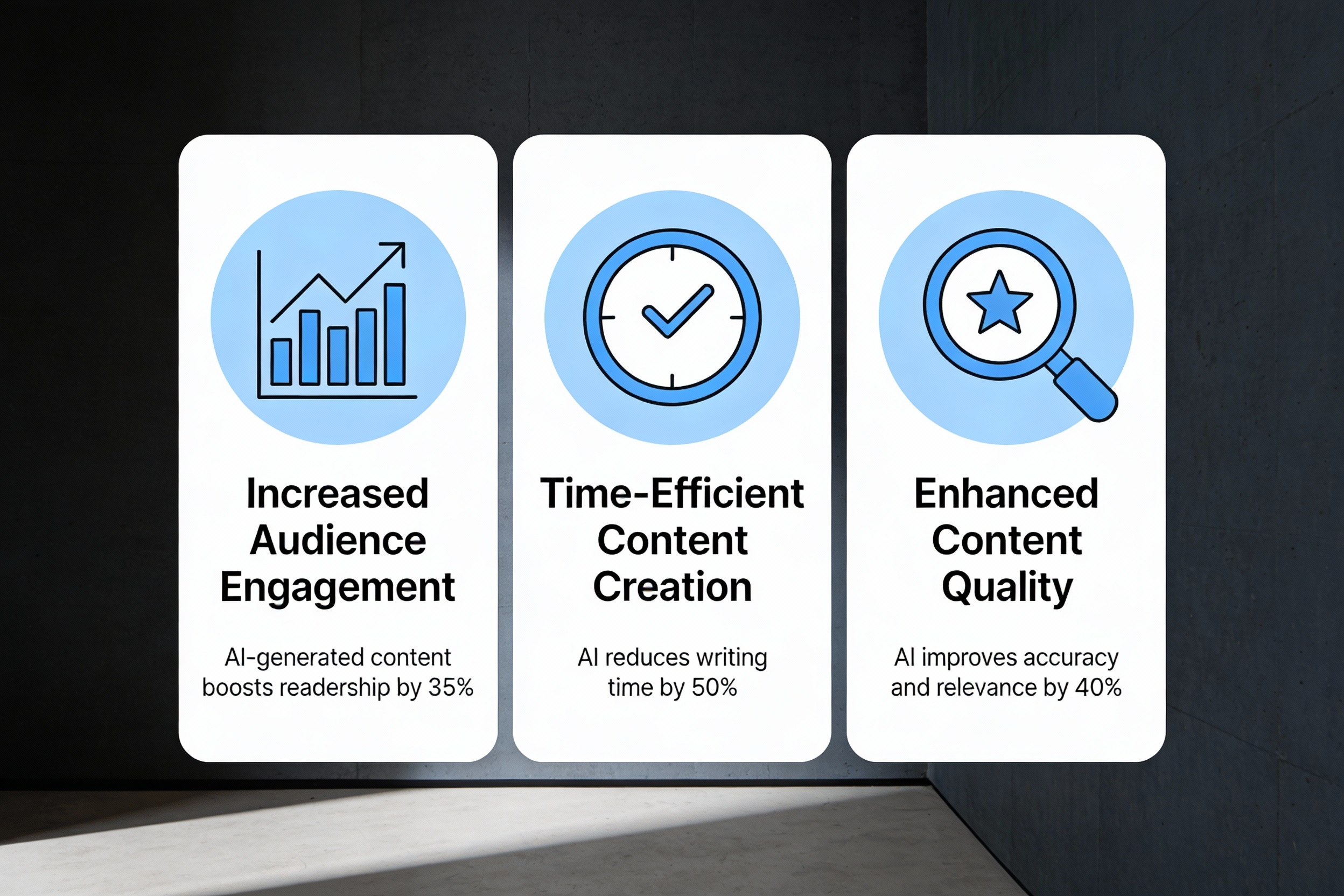
Key takeaways from the transition to AI blogging center on efficiency and scalability. AI-generated blogs dramatically cut the time and financial investment required for high-quality content. By choosing a platform like Articfly, businesses can maintain brand consistency while reaching new SEO heights.
- Automation significantly reduces cost and production time.
- Human oversight remains a vital part of the quality assurance process.
- Platform choice dictates the level of SEO and CMS integration.
- Scalability is the primary driver for long-term organic success.
Frequently Asked Questions
Frequently asked questions regarding AI blog content often focus on the relationship between technology and human creativity. Understanding how these tools function helps teams integrate them more effectively. Below are some of the most common inquiries from content strategists.
Can AI replace my content team?AI is designed to augment your team by handling research and first drafts, while humans focus on strategy, emotional depth, and final refinement.
How does AI ensure SEO best practices?The platform analyzes search intent and competitor data to suggest keywords and automatically optimize headings and meta tags for better rankings.
Is the generated content unique and plagiarism-free?Yes, advanced language models generate original text based on patterns rather than copying, and integrated plagiarism checkers verify uniqueness.
What about data privacy?Articfly uses end-to-end encryption and strict data protocols to ensure that your proprietary information is never stored or misused.
How quickly can I start producing AI blogs?Onboarding typically takes less than an hour, after which you can begin generating full, SEO-optimized articles in just a few minutes.
Next steps for AI-Generated Blogs
Implementing AI-generated blogs is a strategic move that can transform your brand's digital presence. To begin your journey, you can sign up for a free trial on the Articfly platform or book a personalized demo to see the system in action. For those who want to prepare their team first, downloading the AI Blog Starter Kit provides a clear roadmap for adoption. Taking these initial steps will help you move from manual bottlenecks to a scalable, automated content engine.