
TL;DR: The Future of Content Creation
In 2025, AI is not replacing human creativity but augmenting it. While AI excels in efficiency, data processing, and high-volume content, human writers remain indispensable for emotional depth, nuanced storytelling, and authentic brand voice. The most effective strategy involves a collaborative approach, where AI handles research and drafting, and humans provide creative direction, critical editing, and emotional intelligence. This synergy enhances content performance, creates new job roles, and ensures a future where both machines and humans contribute their unique strengths to content creation.
The Great Writing Debate: AI and Human Creativity in 2025
As we navigate 2025, a critical question resonates across the content landscape: Can artificial intelligence truly replicate the intricate tapestry of human creativity in writing, or will human ingenuity forever hold an irreplaceable edge? The debate over "man vs. machine" in content creation is no longer theoretical; it is a tangible reality shaping the industry.
The rapid adoption of AI writing tools has transformed workflows. Current trends indicate that approximately 80% of bloggers are now incorporating AI into their content creation processes. This widespread integration underscores AI's undeniable utility in generating text, optimizing for search engines, and streamlining production.
However, this surge in AI adoption also brings a core tension to the forefront: the pursuit of efficiency versus the preservation of emotional depth. While AI promises unparalleled speed and scalability, concerns persist regarding its capacity to capture the subtle nuances of human emotion, cultural context, and authentic storytelling. This article explores the evolving dynamics of AI writing and human creativity, examining where each excels and how their strategic collaboration is defining the future of content in 2025.
AI's Dominance: Where Machines Excel in Content Creation
The ascendancy of artificial intelligence in content creation is not merely a trend; it is a fundamental shift driven by clear, measurable advantages. AI's capabilities in speed, efficiency, data processing, and cost reduction have made it an indispensable tool for businesses and creators aiming to scale their content output without compromising quality or budget.
One of the most compelling arguments for AI integration is its immediate impact on operational costs. Businesses leveraging AI tools report an average cost saving of $480 per blog post. This significant reduction stems from AI's ability to automate tedious, time-consuming tasks that previously required extensive human effort. For instance, AI can rapidly generate multiple drafts, summarize complex information, and create variations of content, drastically cutting down the hours spent on preliminary writing.
Beyond cost savings, AI dramatically boosts productivity. Content teams utilizing AI assistance save an average of 12.3 hours weekly. This reclaimed time can be redirected towards higher-value activities such as strategic planning, creative oversight, and deep editorial review, ultimately enhancing the overall quality and impact of content campaigns. The capacity of AI to generate high volumes of content quickly means brands can maintain a consistent publishing schedule, an essential factor for audience engagement and search engine visibility.
AI's analytical prowess allows for the optimization of content to an extent that is virtually impossible for a human to achieve manually.
Furthermore, AI's data-driven approach offers a significant competitive edge in SEO. AI algorithms excel at analyzing vast datasets to identify high-performing keywords, user search intent, and topical authority clusters. By integrating these insights directly into content generation, AI tools like Articfly can produce SEO-optimized articles from the outset, leading to tangible improvements in online presence. Data indicates that AI-assisted content can result in a 31% increase in organic traffic, underscoring its effectiveness in improving search engine rankings and attracting relevant audiences.
Specific tasks where AI demonstrates superior performance include:
- **Keyword Optimization**: Identifying and strategically placing relevant keywords to enhance search visibility.
- **Content Structuring**: Generating outlines, headings, and subheadings that improve readability and SEO.
- **Grammar and Style Correction**: Ensuring linguistic accuracy and adherence to specific style guides.
- **Bulk Content Generation**: Producing numerous articles, product descriptions, or social media updates quickly.
- **Data Synthesis**: Extracting key information from large documents or datasets to create concise summaries.
- **Multilingual Content Creation**: Translating and generating content in multiple languages with consistent quality.
These capabilities demonstrate that AI is not just a helper; it is a powerful engine for efficient, data-informed, and scalable content production. For routine, factual, or high-volume content, AI offers an unparalleled solution that streamlines operations and delivers measurable results.

The Human Edge: Emotional Storytelling and Nuance in Writing
While AI demonstrates undeniable prowess in efficiency and data-driven content generation, there remains an irreplaceable core of human creativity that machines cannot fully replicate: the capacity for emotional storytelling, nuanced understanding, and authentic voice. These elements are not merely embellishments; they are fundamental to creating content that truly connects, persuades, and resonates with human audiences.
Consider the performance metrics in advertising: human-written Google ads have been shown to outperform AI-generated counterparts by 45.41% more impressions. This significant difference highlights that while AI can construct grammatically correct and keyword-rich ad copy, it often lacks the subtle psychological triggers and emotional resonance that drive engagement and recall in real people. Human intuition allows for a deeper understanding of target audience desires, fears, and aspirations, enabling the creation of messages that strike a chord on an emotional level.
Emotional storytelling is inherently human. It draws upon lived experiences, empathy, cultural context, and a deep understanding of the human condition. A story crafted by a human writer can evoke genuine emotion – joy, sadness, inspiration, or urgency – precisely because it is informed by personal experience and the ability to imagine and convey complex feelings. AI, by contrast, operates on patterns and data; it can mimic emotional language but cannot genuinely feel or understand the impact of those emotions on an audience.
Authenticity and brand voice are not merely linguistic constructs; they are reflections of a company's values, culture, and personality, meticulously crafted through human insight.
The development of a distinct brand voice is another domain where human creativity remains paramount. A brand's voice is its personality, a unique blend of tone, style, and perspective that differentiates it in a crowded marketplace. Establishing and maintaining this voice requires a nuanced understanding of brand identity, target audience demographics, and market positioning. While AI can be trained on a brand's existing content to mimic its style, the initial conception and ongoing evolution of that voice demand creative intuition and human judgment to ensure it remains authentic, consistent, and resonant.
Examples of writing that unequivocally demand human emotional intelligence and personal experience include:
- **Deep Investigative Journalism**: Requires critical thinking, ethical judgment, and the ability to understand complex human motivations and societal impacts.
- **Personal Essays and Memoirs**: Dependent on individual perspective, introspective thought, and the vulnerable sharing of personal experience.
- **Creative Fiction and Poetry**: Driven by imagination, metaphorical language, and the ability to invent compelling narratives and emotional landscapes.
- **Empathy-Driven Marketing Campaigns**: Designed to connect with audiences on a profound emotional level, often addressing sensitive topics or fostering community.
- **High-Stakes Persuasive Copy**: Such as fundraising appeals or political speeches, where understanding human psychology and moral reasoning is crucial.
- **Cultural Commentary and Satire**: Requires a deep grasp of societal norms, irony, and contextual subtleties that AI struggles to process without explicit programming.
In these scenarios, the ability to read between the lines, infer unspoken meanings, and connect dots based on an intricate understanding of human behavior is invaluable. These are not tasks that can be relegated solely to algorithms, as they require the unique cognitive and emotional faculties that define human creativity.

The Collaboration Advantage: Achieving the Best of Both Worlds
The most effective strategy in the evolving landscape of content creation is not about choosing between AI and human writers, but rather fostering a collaborative synergy that leverages the strengths of both. This "best of both worlds" approach is increasingly proving to be the most potent formula for generating high-performing, engaging, and scalable content.
Empirical evidence supports the power of this collaboration. Data indicates that human-edited AI content yields a 26% performance boost compared to content generated solely by AI or exclusively by humans in certain contexts. This statistic highlights that combining AI's efficiency with human refinement results in a superior end product, one that capitalizes on speed while maintaining quality and emotional resonance.
In this collaborative model, AI takes on the role of an invaluable assistant, handling the heavy lifting of research, data synthesis, and initial drafting. For example, a platform like Articfly can rapidly generate comprehensive outlines, conduct keyword research, identify search intent, and produce first drafts of articles based on specific topics and keywords. This automation frees human writers from repetitive, time-consuming tasks, allowing them to focus on more complex, creative, and critical aspects of the writing process.
Human writers then step in as creative directors, editors, and strategic thinkers. Their role involves:
- **Providing Creative Direction**: Guiding the AI with specific prompts, tone requirements, and desired angles.
- **Injecting Emotional Depth**: Weaving in personal anecdotes, evocative language, and persuasive narratives that resonate with the target audience.
- **Ensuring Brand Voice Consistency**: Refining AI-generated text to perfectly align with the brand's unique personality and messaging.
- **Adding Nuance and Cultural Context**: Adjusting content to reflect specific cultural sensitivities, current events, or implicit understanding that AI might miss.
- **Fact-Checking and Accuracy**: Verifying information generated by AI, which can occasionally produce inaccuracies or outdated data.
- **Ethical Oversight**: Ensuring the content is unbiased, inclusive, and adheres to ethical guidelines.
This hybrid workflow model transforms content creation into a highly efficient yet deeply human-centric process. AI can churn out the structural framework and factual backbone of an article, while the human writer layers on the critical thinking, emotional intelligence, and distinctive voice that elevate it from mere information to compelling communication. This approach is particularly beneficial for businesses and agencies aiming to produce a high volume of SEO-optimized content without sacrificing the authenticity and connection that only a human touch can provide.
Specific collaboration strategies and tools facilitate this synergy:
- **Iterative Prompting**: Human writers provide initial prompts, AI generates content, and then writers refine prompts for subsequent iterations, guiding the AI toward desired outcomes.
- **AI as a Research Assistant**: Utilizing AI to rapidly gather information, identify key themes, and summarize sources, which humans then synthesize and interpret.
- **Content Augmentation**: Employing AI to expand on human-written ideas, suggesting additional points, statistics, or alternative phrasing.
- **Drafting and Editing Tools**: Using AI to generate initial drafts and then employing human editors for comprehensive review, stylistic adjustments, and adding the 'human sparkle.'
- **Personalized Content Generation**: AI can generate variations of content tailored to different audience segments, with human oversight ensuring relevance and sensitivity.
By embracing these collaborative methodologies, content teams can achieve unprecedented levels of productivity and quality. The human writer, empowered by AI, transcends the role of a mere word assembler to become a strategic content architect, harnessing technology to amplify their creative potential.
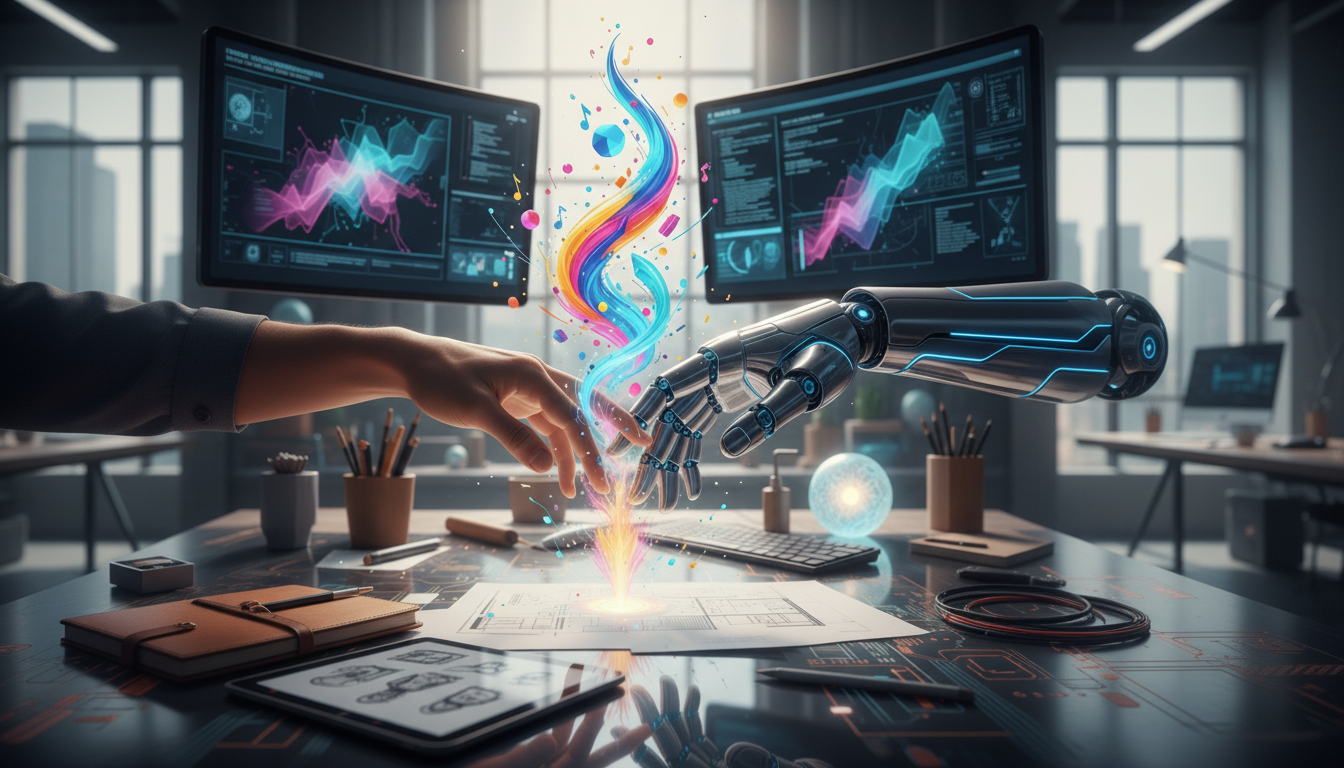
Industry Impact: Writing Jobs in the AI Era
The rise of AI in content creation has naturally sparked questions about its impact on writing jobs. While fears of widespread displacement are understandable, the reality is more nuanced, pointing towards a transformation of roles rather than outright elimination. The industry is witnessing a recalibration, where certain tasks are being automated, while new, high-value opportunities are emerging for skilled professionals.
Indeed, there has been a noticeable shift in the job market. Since 2023, entry-level writing roles have seen a decline of approximately 27%. This reduction is largely attributable to AI's ability to handle basic content generation, copy editing, and repetitive content tasks with speed and accuracy. For tasks requiring minimal creativity or specialized knowledge, AI can fulfill the demand, leading to fewer junior positions requiring manual execution of these functions.
However, this trend does not signify the end of the writing profession. Instead, it underscores an evolution, compelling writers to adapt and upskill. The new landscape requires a transition from purely manual content production to roles that demand strategic thinking, creative oversight, and technical proficiency in AI tools. Many writers are successfully transitioning into new capacities, such as:
- **Creative Directors**: Guiding content strategy, defining brand voice, and providing the overarching vision for AI-generated campaigns.
- **AI Supervisors/Content Strategists**: Overseeing AI outputs, ensuring quality, accuracy, and alignment with strategic objectives.
- **Prompt Engineers**: Developing sophisticated and precise prompts to elicit the best possible results from AI models, effectively "speaking the language" of AI.
- **Editors and Fact-Checkers**: Specializing in refining AI-generated content, adding nuance, verifying facts, and ensuring emotional resonance.
- **Specialized Content Creators**: Focusing on areas where human expertise is irreplaceable, such as investigative journalism, thought leadership, and deeply empathetic storytelling.
The growing importance of prompt engineering skills cannot be overstated. As AI models become more sophisticated, the ability to craft effective prompts – clear, detailed instructions that guide AI towards specific, high-quality outputs – becomes a critical differentiator. Writers who master this skill can harness AI as a powerful extension of their own capabilities, transforming their role into one of a conductor rather than a solo performer.
Ultimately, the AI era is repositioning writers from content generators to content architects and strategists. It is less about being replaced by a machine and more about learning to collaborate with one, using automation to elevate human creativity and focus on the aspects of writing that truly require a human touch.
Future Outlook: The Evolution of Creative Writing
The trajectory of creative writing in the age of artificial intelligence points towards an exciting, complex future defined by augmentation and hybrid workflows. As we look beyond 2025, the relationship between human writers and AI tools is expected to deepen, fundamentally reshaping how content is conceived, created, and consumed.
Research into the impact of AI on creativity suggests intriguing dynamics. While AI tools demonstrably enhance individual creativity by providing new ideas, overcoming writer's block, and generating diverse starting points, studies also indicate that an over-reliance on AI can reduce collective creative diversity. This means that while individual users may find their output boosted, the overall range of unique creative expressions across a group might narrow if everyone relies on similar AI models without sufficient human differentiation. This highlights the crucial need for human oversight to maintain originality and prevent homogeneity in content.
Companies like Articfly are at the forefront of this evolution, shaping the future of content creation by developing proprietary AI systems that plan, write, and structure complete blog posts. These platforms empower content teams by automating the laborious initial stages of content production, allowing for scalable, high-quality output tailored to specific brand identities and SEO requirements. The focus for such tools is not to replace human thought but to make high-quality content production effortless and scalable, freeing human creators to concentrate on strategic input and creative refinement.
The integration of AI will increasingly lead to more sophisticated hybrid workflows. Imagine AI not just drafting text, but also suggesting narrative arcs based on audience sentiment analysis, personalizing content for individual readers in real-time, or even generating multimedia elements to accompany written pieces. Human writers will operate at a higher level, interpreting complex data, ensuring ethical considerations, and imbuing content with the unique spark of human insight that resonates deeply.
However, public perception also plays a critical role in this evolution. A significant portion of the population remains cautious; 53% of Americans express concern about AI's impact on creative thinking. Addressing these concerns will involve transparent development, ethical AI guidelines, and a continuous demonstration of how AI can serve as a powerful creative partner, rather than a competitor.
The future of creative writing will not be about AI writing independently, but about how humans and AI co-create. It will be a landscape where writers are equipped with powerful AI co-pilots, allowing them to achieve creative feats previously unimaginable, pushing the boundaries of what engaging and impactful content can be.
The Winning Partnership: A Collaborative Future
In the dynamic world of content creation, 2025 unequivocally marks a turning point where the question is no longer "man vs. machine," but "man with machine." The analysis presented herein reinforces a clear conclusion: while AI offers unparalleled advantages in efficiency, data-driven optimization, and scalability, the human element remains indispensable for emotional connection, authentic brand voice, and nuanced storytelling.
AI's capacity to streamline research, generate initial drafts, and optimize for SEO frees human writers from tedious tasks, enabling them to focus their unique cognitive and emotional strengths on strategy, refinement, and creative direction. The statistics are compelling: AI saves time and money, boosts organic traffic, and enhances content performance when paired with human oversight. Conversely, content that demands deep empathy, cultural understanding, or a distinct narrative voice still requires the irreplaceable touch of human experience and intuition.
The optimal path forward for businesses, agencies, and individual creators is strategic collaboration. By embracing AI tools like Articfly to handle the mechanics of content production, and simultaneously leveraging human talent for critical thinking, emotional intelligence, and creative finesse, organizations can achieve a powerful synergy. This partnership does not diminish human creativity; it augments it, pushing the boundaries of what is possible in content creation and ensuring outputs are both efficient and profoundly impactful.
To future-proof your content strategy, commit to integrating AI responsibly. Embrace these transformative tools, empower your team with prompt engineering skills, and continue to champion the unique power of the human voice. The winning partnership in content creation is not about one victor, but a strategic alliance where AI and human ingenuity collaboratively thrive.