
Introduction
Comparing AI writing tools can be overwhelming given the rapid pace of innovation in the digital marketing world. While many tools promise to handle all your writing needs, the reality is that different platforms excel at different stages of the content lifecycle. Copy.ai often stands out for quick, short-form tasks, whereas Articfly is designed for structured, scalable long-form content production.
When I needed a tweet versus a 1500-word article, the difference between these two tools became immediately apparent. Using the wrong tool for the job can lead to frustration and wasted time. This comparison explores which platform fits your specific content strategy and how to implement it effectively.
Copy.ai Overview

Copy.ai provides a streamlined experience for marketers who need to generate copy quickly and efficiently. Its user-friendly interface allows even beginners to start producing content within minutes without a steep learning curve. The platform is built around templates that help users tackle repetitive ad-hoc tasks with ease.
The core strengths of the platform lie in its ability to generate high-quality marketing assets such as headlines, email subject lines, and social media updates. It is particularly effective for those who need to overcome writer's block for short, punchy text. Many users find it indispensable for daily social media management and ad copy creation.
- Marketing copy and headlines.
- Product descriptions for e-commerce.
- Quick social media content.
- Email bodies and subject lines.
Articfly Overview

Articfly focuses on long-form content and structured publishing workflows for growing blogs and content teams. It is designed for those who need to manage complex blog calendars while maintaining consistency across multiple articles. The platform emphasizes the structure of the content, ensuring that layout and depth remain high-quality at scale.
One of the primary advantages of Articfly is its focus on content outline management and batch publishing. This makes it an ideal choice for teams that are scaling their content production without sacrificing editorial oversight. It integrates into the workflow by helping manage the transition from ideation to a fully published piece.
| Feature Focus | Articfly Capability |
|---|---|
| Outline Management | Structured hierarchy for long-form articles |
| Consistency | Maintains tone across multi-article projects |
| Workflow | Integrations for batch publishing and teams |
Direct Comparison
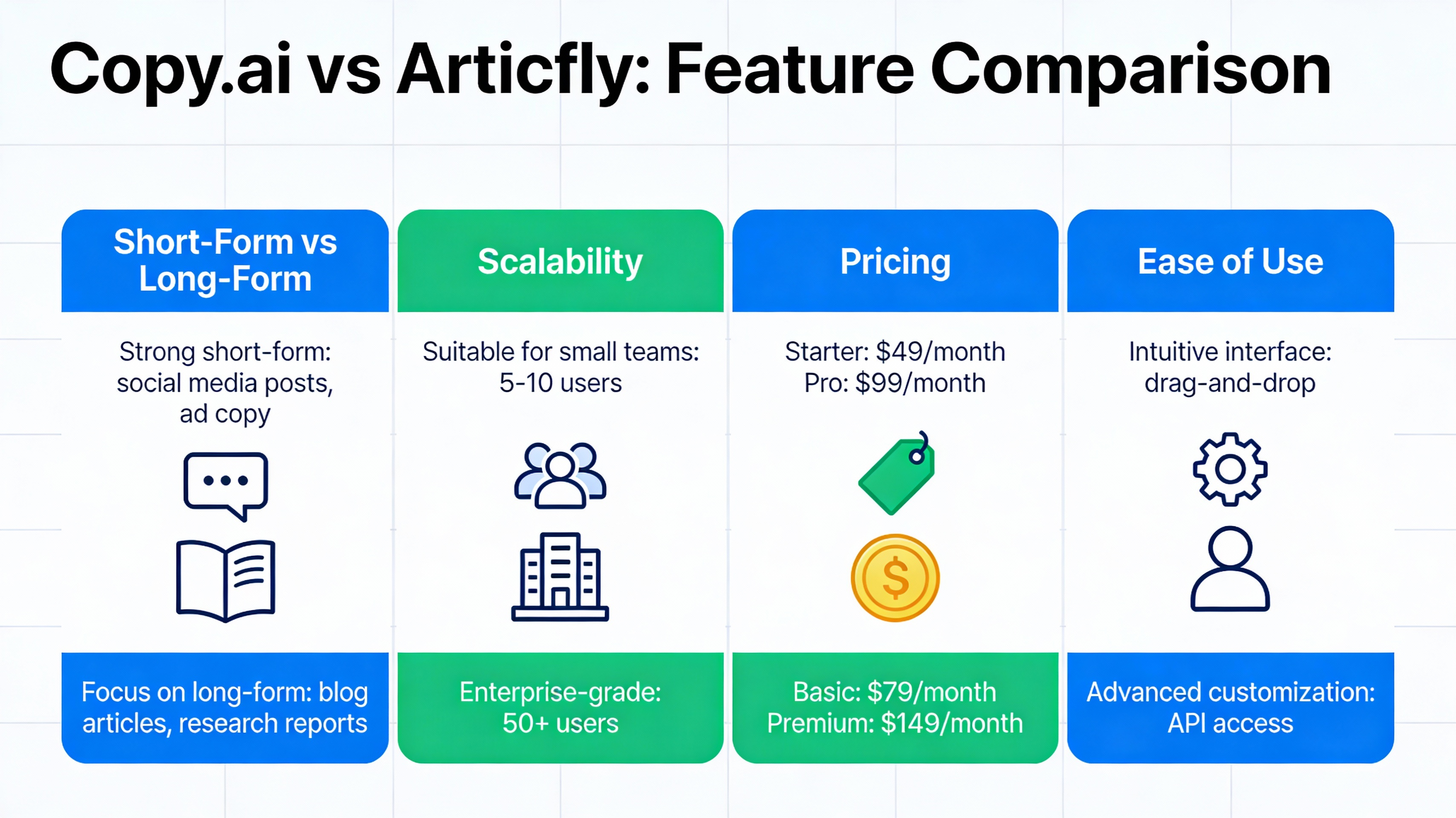
Evaluating these tools side-by-side reveals distinct differences in how they handle various content types. Copy.ai offers a massive variety of templates for short copy, focusing on speed and immediate output for digital ads. In contrast, Articfly provides deeper customization for long articles, making it better suited for editorial pipelines.
Consistency and scaling are also handled differently by each platform. Many users report that Articfly makes managing multi-article projects simpler due to its dedicated organization tools. Copy.ai remains the more accessible option for individuals or small business owners needing one-off marketing assets without complex project management.
Choosing the Right Tool for Your Blog

Mapping your specific content needs to the right tool is the final step in your evaluation process. If your priority is short-form marketing copy and quick social media ads, Copy.ai is likely the more efficient choice for your workflow. However, if you are building a long-form content pipeline for a blog, Articfly offers the structural tools necessary for success.
Consider your team size and the complexity of your typical editorial process. Teams managing a high volume of articles might find the workflow integrations of Articfly more valuable for their long-term growth. Beginners or those with tight budgets may prefer starting with the templates provided by Copy.ai for immediate results.
Success with AI writing depends more on choosing the right tool for the specific content length than on the AI model itself.
Key Takeaways
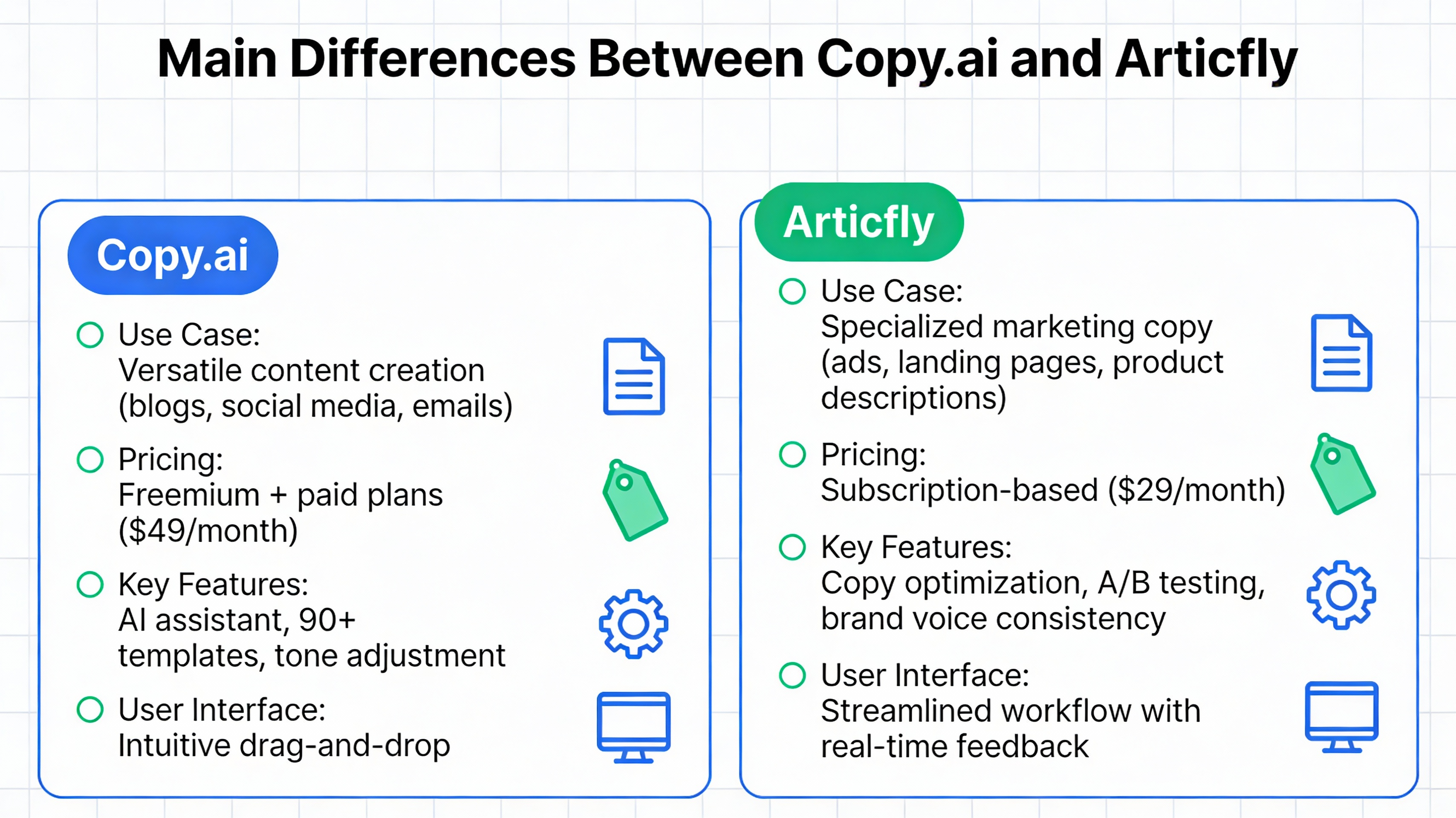
The most important distinction between these platforms is the intended length and complexity of the output they produce. Copy.ai is the leader for short, punchy marketing assets, while Articfly is the preferred choice for systematic long-form publishing. Your final recommendation depends on your current content calendar and long-term scaling goals.
- Copy.ai is best for marketing copy, headlines, and social media.
- Articfly is best for blog posts, long-form articles, and team workflows.
- Both tools offer unique features that can coexist in a comprehensive marketing stack.
FAQ
Can I use both tools together?Yes, many content marketers use Copy.ai for social media promotion and Articfly for creating the core long-form blog content.
How does SEO integration differ?Articfly typically offers more robust fields for managing SEO metadata and article structure compared to the short-form focus of Copy.ai.
Which tool offers better collaboration features?Articfly is specifically designed with editorial workflows in mind, making it better for teams managing a collaborative blog calendar.
Is there a free version of Articfly?Users should check the official Articfly pricing page for the most current information regarding free trials or entry-level tiers.
How steep is the learning curve for each?Copy.ai has a very low learning curve due to its template-based system, while Articfly may take a moment longer to set up for complex workflows.
Next steps for choosing the right tool
Ready to take action with your AI writing strategy? You can start by exploring the free trials offered by both platforms to see which interface aligns best with your daily workflow. Comparing the output quality for your specific niche will help you make a final decision.
To further assist your decision-making process, you can download the AI Tool Comparison Checklist. This resource will help you and your team map out specific requirements before committing to a paid plan. Taking the time to test both tools ensures you select the platform that will truly scale your results.