7 Blog Introduction Formulas That Stop the Scroll
Key Takeaways
Writing blog introductions is an engineering task that determines whether your visitor reads your content or bounces back to the search results. Most editorial teams spend hours on the body of an article but treat the opening as an afterthought, leading to high bounce rates and wasted SEO effort.
- /// Intros must bridge the gap between the reader’s search intent and your solution within seconds.
- /// Effective hooks rely on psychological triggers-like curiosity or agitation-rather than creative flair.
- /// Using repeatable formulas allows content teams to maintain high quality without reinventing the wheel for every post.
- /// Success is measured by dwell time; if the first 50 words fail, the remaining 2,000 words are essentially invisible.
- /// Structured frameworks like PAS and the Agreement Ladder provide a logical path for the reader to follow.
The High Stakes of the First 50 Words
The first 50 words of your article act as a filter. Modern readers do not read; they scan. They arrive at your page with a specific problem or question, and they are looking for immediate confirmation that you have the answer. If your opening is bogged down by vague "what is" definitions or generic filler, the reader will leave.
"The objective of the first sentence is to get the reader to read the second sentence. The objective of the second sentence is to get them to read the third. If that chain breaks at any point, your content has failed its primary mission."- Editorial Standards Guide
Low engagement at the top of the page sends a negative signal to search engines. If a user clicks your link and immediately exits, it indicates that your content did not satisfy their intent. By focusing on the technical structure of your hook, you improve dwell time and signal to both the reader and the algorithm that your page is the definitive resource.
7 Proven Formulas for Engaging Blog Openings
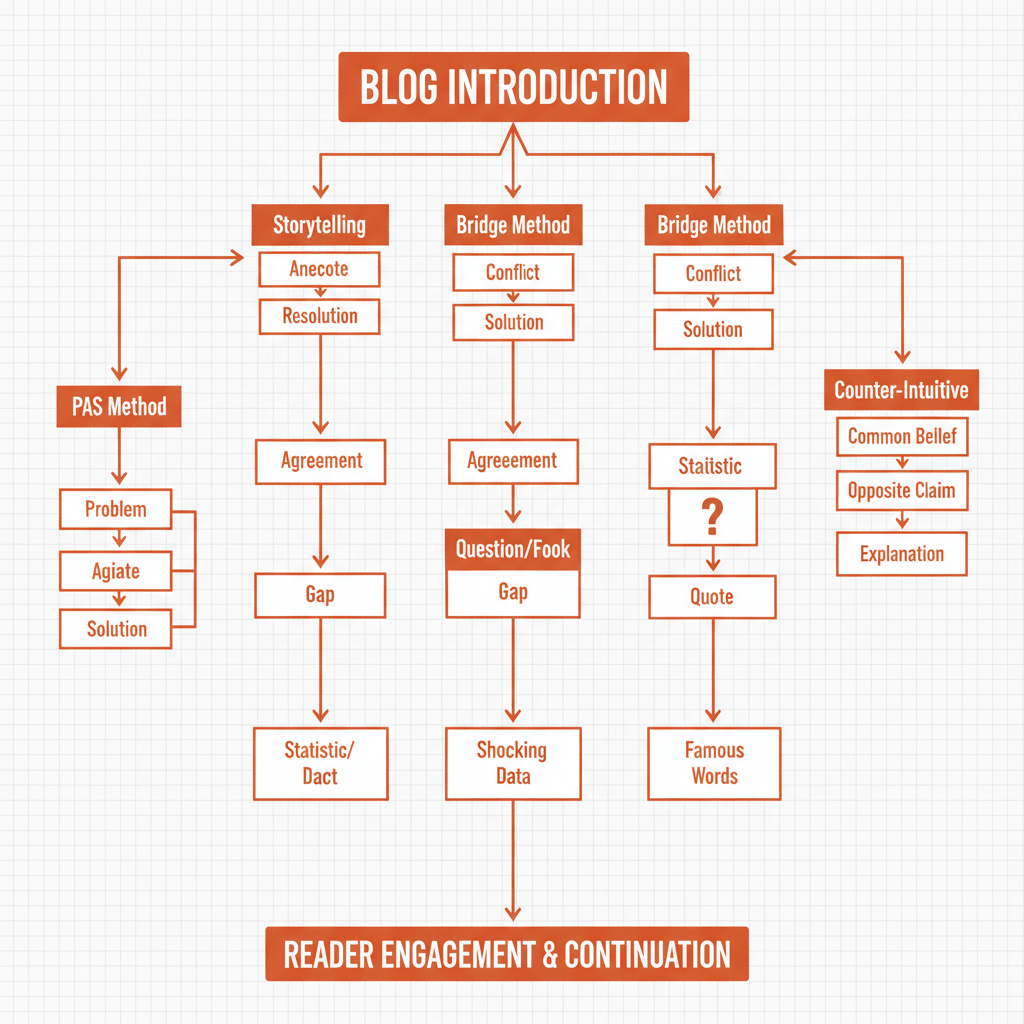
Proven intro formulas remove the guesswork from content production. Instead of waiting for inspiration, writers can select a framework that matches the specific goal of the article. This structural approach ensures that every post starts with a high-impact hook that aligns with the user's psychological state.
| Formula Name | Core Mechanism | Best For |
|---|---|---|
| PAS | Problem-Agitation-Solution | Troubleshooting and How-to guides |
| The Bridge | Before vs. After | Case studies and transformation stories |
| Counter-Intuitive | Pattern Interruption | Thought leadership and controversial topics |
| Data-Driven | Authority and Proof | B2B, whitepapers, and technical deep-dives |
| In Media Res | Immediate Action | Narrative-driven posts and personal essays |
| Agreement Ladder | Shared Values | Opinion pieces and educational content |
| Direct Challenge | Accountability | Motivational or strategy-focused articles |
1. The PAS Formula (Problem, Agitation, Solution)
The PAS framework is a staple in direct-response copywriting because it addresses the reader's pain point immediately. You start by identifying a problem they are currently facing. Then, you "agitate" that problem by explaining the consequences of not fixing it. Finally, you present your article as the solution.
This method works because it shows the reader you understand their struggle. When a reader feels understood, they are more likely to trust the advice that follows. It moves them from a state of frustration to a state of focus.
2. The Bridge Model (Current vs. Ideal State)
The Bridge Model creates a vivid contrast between where the reader is now and where they want to be. It highlights the "gap" in their current situation. The first part describes the "Before"-the struggle or inefficiency. The second part describes the "After"-the success or ease of the ideal state.
The "Bridge" is your content. You are promising to show them exactly how to get from point A to point B. This formula is highly effective for articles that promise a specific transformation or a technical upgrade.
3. The Counter-Intuitive Statement
Counter-intuitive hooks work by challenging a commonly held belief in your industry. By starting with a statement that seems "wrong" or surprising, you force the reader to stop scanning and start reading to understand your logic. It breaks the autopilot mode that most readers are in while browsing.
For example, instead of saying "SEO is important," you might start with "Why 90% of your SEO effort is a waste of time." This creates a curiosity gap that can only be closed by reading the rest of the article.
4. The Data-Driven Hook
Data-driven openings use a specific fact or trend to establish immediate authority. This is particularly effective in B2B environments where readers value evidence over opinion. By leading with a concrete figure, you anchor the article in reality and demonstrate that your insights are based on more than just intuition.
When using this formula, ensure the data is relevant to the reader's primary concern. The goal isn't just to share a number, but to use that number to illustrate the scale or urgency of the topic you are discussing.
5. The 'In Media Res' Technique
Starting in media res means dropping the reader right into the middle of the action. You skip the "Today we are going to talk about..." throat-clearing and begin with a specific moment, conversation, or event. This creates an immediate narrative momentum that pulls the reader forward.
This technique is excellent for long-form guides or case studies where you want to humanize a technical topic. It makes the content feel less like a manual and more like a shared experience, which can significantly increase engagement for complex subjects.
6. The Agreement Ladder (The 'Yes' Method)
The Agreement Ladder focuses on building a series of "small wins" by making statements that the reader is guaranteed to agree with. By getting the reader to say "yes" in their mind to two or three consecutive points, you build a sense of alignment and rapport.
Once that rapport is established, the reader is more likely to accept your core premise or solution. It is a subtle way of lowering their defensive barriers and making them more receptive to your editorial perspective.
7. The Direct Challenge
The direct challenge confronts the reader with a question or a statement that demands a response. It is often a blunt assessment of their current performance or strategy. This isn't about being rude; it’s about being a trusted advisor who tells the truth even when it’s uncomfortable.
This formula works best for high-level strategy content aimed at experienced professionals. It positions you as an authority who isn't afraid to challenge the status quo, which helps build long-term brand credibility.
Essential Elements of a High-Converting Hook

High-converting hooks share three specific characteristics regardless of which formula you choose: clarity, curiosity, and relevance. If any of these elements are missing, the hook will feel incomplete or misleading. Clarity ensures the reader knows what the post is about; curiosity gives them a reason to continue; and relevance ensures they feel the content is for them.
To ensure your introduction hits these marks, verify that it meets these criteria:
- /// Specificity: Avoid broad generalizations. Use specific nouns and active verbs.
- /// Economy: Say as much as possible in as few words as possible. Every sentence must have a job.
- /// Alignment: The hook must match the tone and promise of your H1 title and meta description.
- /// Benefit-Oriented: The reader should clearly see "what's in it for them" before they reach the first H2.
Consistency is key when scaling content production. A common failure point for growing blogs is that different writers use different styles, leading to a fragmented brand voice. By establishing these elements as mandatory requirements, you ensure every piece of content published under your brand meets a baseline standard of quality.
5 Mistakes That Kill Reader Interest Instantly

Reader interest is fragile and easily lost through common editorial pitfalls. Many writers fall into these traps because they are trying to meet word counts or are following outdated academic writing styles. In the context of a blog, these habits act as friction that prevents the reader from reaching your core value proposition.
Avoid these 5 common mistakes to keep your bounce rates low:
- /// The Dictionary Definition: Never start with "Webster’s defines [Topic] as..." It is a signal that you have nothing original to say.
- /// The Mega-Paragraph: A wall of text is intimidating. Break your intro into short, punchy paragraphs of 2-3 sentences.
- /// The Late Arrival: Taking 400 words to get to the point. If the reader doesn't know the value proposition in the first 15 seconds, they are gone.
- /// Too Much "I": Unless it's a personal narrative, focus on "You" (the reader). The content should be about their problem, not your process.
- /// The Empty Hype: Using words like "ultimate," "revolutionary," or "game-changing" without immediate proof makes your brand look untrustworthy.
Leveraging Articfly for Consistent Brand Voice
Scaling content production without losing your unique brand voice is one of the most difficult challenges for agencies and high-growth bloggers. As you move from writing every post yourself to managing a team or using AI tools, the risk of "generic voice" increases. This is where technical structure meets AI efficiency.
In a typical workflow, you can use these formulas to guide your content roadmap. For example, if you are refreshing an old post that has high impressions but low dwell time, you can use the Article Refresher to swap a generic opening for a PAS-based hook. By monitoring the performance directly inside your WordPress dashboard, you can see in real-time which formulas resonate most with your specific audience.
Frequently Asked Questions
How long should a blog introduction be?Ideally, an introduction should be between 100 and 150 words. It needs to be long enough to establish the problem and the solution, but short enough to keep the reader moving toward the main body of the article. Focus on quality and density rather than length.
Should I write the introduction first or last?Many professional writers find it easier to write the introduction last. Once the body of the article is complete, you have a clearer understanding of the specific value you are delivering, making it easier to craft a hook that accurately promises what the rest of the post provides.
Can I use the same formula for every blog post?While you could, it is better to vary your approach based on the content type. For example, use the Data-Driven hook for technical reports and the Agreement Ladder for opinion pieces. This keeps your content from feeling repetitive for long-term subscribers.
Do these formulas work for B2B and B2C content?Yes. While the tone might change-B2B is often more formal and data-focused while B2C might be more emotive-the underlying psychological triggers like curiosity and pain-point agitation remain the same across all audiences.
Next steps for blog openings
To improve your results, start by auditing your current content performance. Identify your top 5 pages with the highest bounce rates and evaluate their introductions against the 7 formulas provided in this guide. Often, a simple structural change to the first 100 words can significantly improve how long readers stay on the page.
Next, choose one formula to test on your very next draft. If you are struggling with consistency, use the Articfly dashboard to analyze your brand voice and apply these frameworks systematically. Refreshing old, underperforming intros is one of the fastest ways to see a boost in your SEO performance without having to write entirely new content from scratch.
Want the system behind this content?
Join the top 1% of SEOs generating programmatic, high-converting organic traffic completely on auto-pilot.
DEPLOY ARTICFLYMore Articles
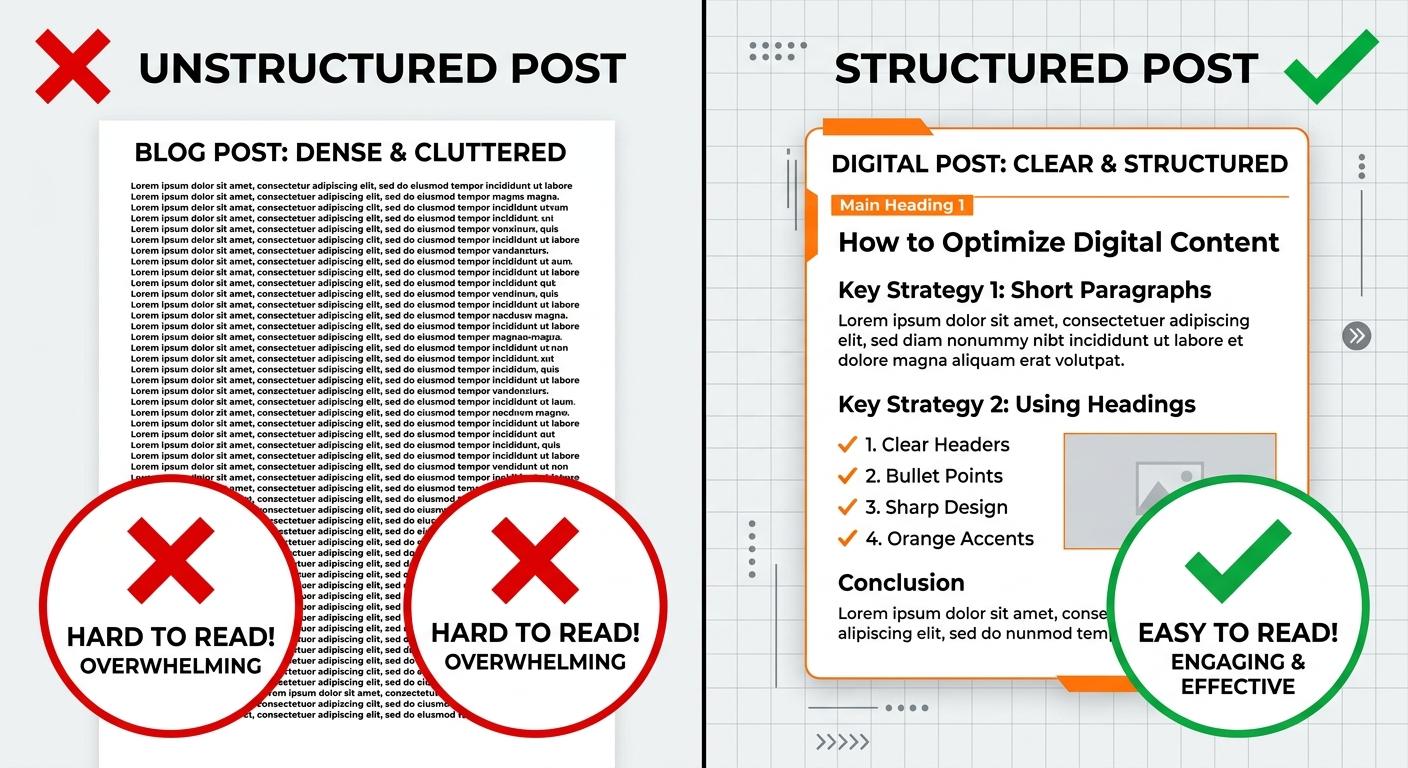
Why People Stop Reading Your Blog Post After 30 Seconds (and How to Fix It)
Most readers decide to stay or leave a blog post within the first 30 seconds. If your bounce rates are high, it's likely due to structural friction, poor hooks, or a lack of immediate value. Learn how to diagnose engagement killers and use AI-driven optimization to keep readers scrolling.
READ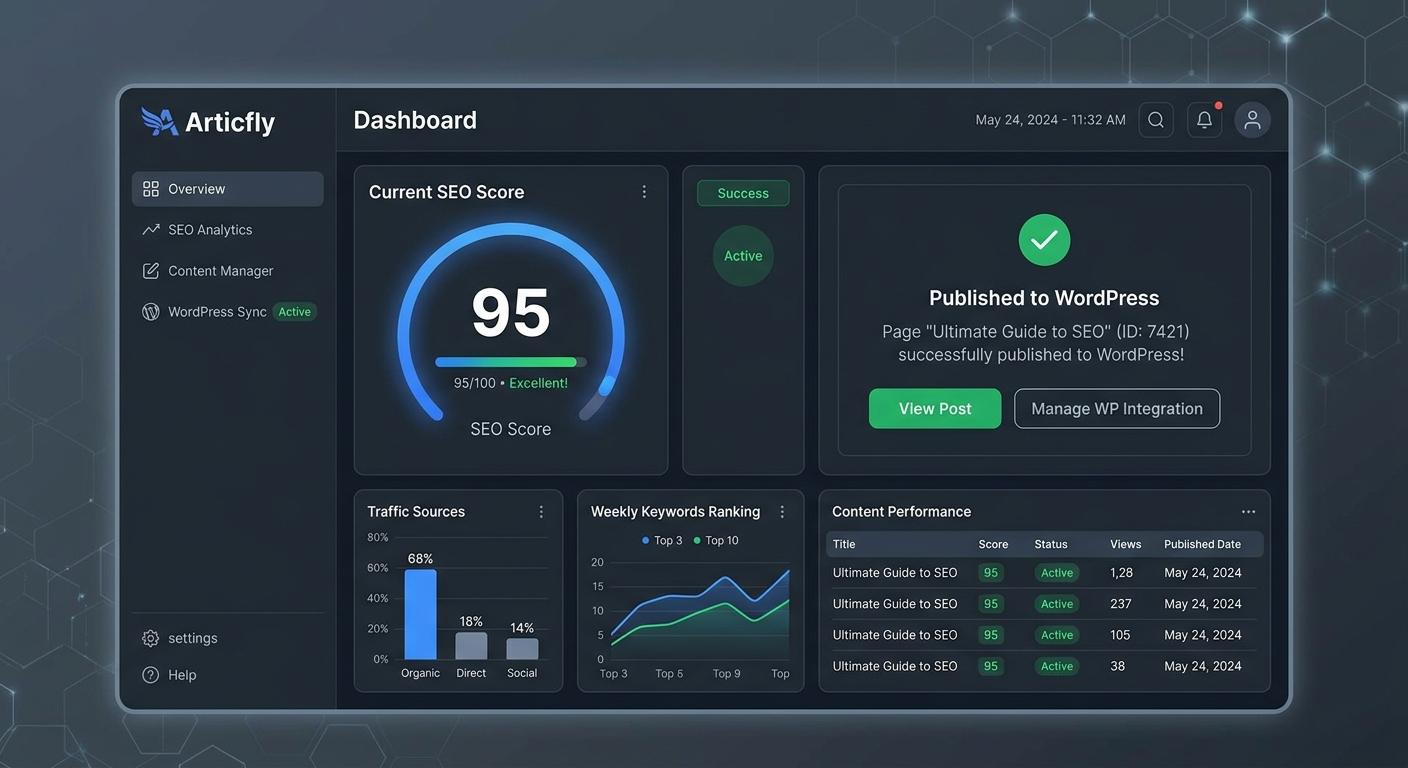
The $15 Blog Post That Brings in $2,000/Month: How AI Content Delivers 130x ROI
Discover the unit economics of high-scale AI publishing. Learn how to leverage Articfly to produce $15 blog posts that generate $2,000 in monthly recurring revenue through SEO optimization, automated publishing, and strategic content refreshing.
READ
Brand Voice in AI Content: How to Stop Your Blog from Sounding Like a Robot
Generic AI content is killing brand authority. Learn how to use Articfly’s Brand Voice Analyzer and Advanced Mode to produce high-scale, SEO-optimized content that sounds like your team, not a machine.
READ