TL;DR: Blogging in 2025
Despite the content overload and rise of short-form media, blogging remains a critical component of a robust digital strategy in 2025. It is essential for SEO, establishing authority, and driving leads. While traditional blogging faces challenges like time and resource intensity, Artificial Intelligence (AI) acts as a powerful enabler, mitigating these cons and significantly amplifying the existing pros. Leveraging AI for content creation, research, and optimization makes high-quality, scalable blogging not just feasible but imperative for businesses aiming to cut through the noise and maintain a competitive edge. Human oversight remains key to ensuring unique value and brand alignment.
Table of Contents
- Introduction: The 2025 Content Conundrum
- The Evolving Digital Landscape: Why Content Still Reigns
- The Enduring Pillars: Core Benefits of Blogging in 2025
- The 'Cons' of Blogging: Navigating the Traditional Challenges
- The AI Advantage: Transforming Blogging for 2025 and Beyond
- Revisiting the Pros: Enhanced Value with AI-Powered Blogging
- Strategic Blogging in the AI Era: Keys to Success
- Conclusion: Blogging's Resurgence in 2025
Introduction: The 2025 Content Conundrum
The digital realm in 2025 is a buzzing, often overwhelming, landscape. With an endless stream of TikToks, Reels, and short-form updates, many businesses and creators are asking a pivotal question: Is long-form content, specifically blogging, still a worthwhile investment? Skepticism is natural when platforms prioritizing fleeting attention spans dominate social feeds. The perceived saturation of online content leads some to believe that the golden age of blogging is long past.
However, beneath the surface of ephemeral trends, a foundational truth persists: the demand for in-depth, authoritative information remains stronger than ever. Users continue to seek comprehensive answers, detailed guides, and trusted insights. This article will definitively answer whether blogging is still worth it in 2025, dissecting both the enduring pros and the traditional cons. We'll unveil a nuanced perspective, revealing why blogging isn't just relevant but more vital than ever, particularly when empowered by the strategic integration of Artificial Intelligence.
Join us as we explore how the right approach, leveraging cutting-edge AI technology, transforms blogging into an indispensable asset for modern businesses, ensuring that your content not only exists but thrives and delivers tangible results.
The Evolving Digital Landscape: Why Content Still Reigns
The digital environment of 2025 is characterized by both rapid evolution and steadfast constants. While short-form video and instant social updates capture immediate attention, user behavior data consistently shows a continued reliance on search engines for detailed, problem-solving information. When a consumer needs to understand a complex product, research a service, or find a definitive guide, they turn to search engines like Google, which prioritize well-structured, comprehensive long-form content.
Google’s unwavering emphasis on E-E-A-T (Experience, Expertise, Authoritativeness, and Trustworthiness) principles has become even more critical. In a world saturated with information, search algorithms are increasingly sophisticated at identifying and rewarding content that demonstrates genuine knowledge and credibility. This means that generic or thinly veiled promotional content struggles to rank, while thoughtful, well-researched blog posts from trusted sources rise to the top. Businesses that invest in producing high-quality, E-E-A-T compliant content position themselves as leaders in their respective niches.
We live in an "attention economy," where the most valuable commodity is a user's focus. Informative, valuable content acts as a powerful magnet, cutting through the constant digital noise. Unlike fleeting social media posts, a blog post provides a dedicated space for deep engagement, allowing readers to absorb information at their own pace and return to it whenever needed. Furthermore, blogging represents an investment in "owned media." Social media platforms are "rented land"; their algorithms, reach, and even existence can change without warning. A blog, hosted on your own domain, is an asset you control entirely, free from external platform whims, making it a stable foundation for your digital presence.

The Enduring Pillars: Core Benefits of Blogging in 2025
Beyond fleeting trends, certain fundamental advantages of blogging remain timeless and incredibly powerful for businesses in 2025. These benefits form the bedrock of a robust digital marketing strategy.
- SEO & Organic Traffic: Blogging is arguably the single most effective strategy for boosting Search Engine Optimization (SEO) and driving organic traffic. Each new, well-optimized blog post acts as a new entry point for search engines to discover your website. By consistently publishing relevant, keyword-rich content, you signal to Google and other search engines that your site is active, authoritative, and a valuable resource. Targeting long-tail keywords (e.g., "best project management software for small businesses" rather than just "project management software") allows you to capture highly specific search intent, attracting users who are closer to making a purchasing decision.
- Thought Leadership & Authority: A blog serves as your digital soapbox to establish expertise within your niche. By sharing insights, industry analysis, practical guides, and opinions, you position your brand or yourself as a knowledgeable leader. This builds trust and credibility, differentiating you from competitors and making your audience more likely to seek your advice and solutions. Consistent, high-quality content reinforces your authority over time.
- Lead Generation & Conversion: Blogging is a powerful tool for attracting potential customers and nurturing them through the sales funnel. Informative blog posts can address pain points, answer common questions, and provide solutions that align with your products or services. By including clear Calls-to-Action (CTAs) within your content—such as signing up for a newsletter, downloading an ebook, or requesting a demo—you can convert interested readers into valuable leads. These leads are often more qualified because they've already engaged with your helpful content.
- Customer Engagement & Relationship Building: A blog offers a platform to engage with your audience beyond direct sales pitches. By providing value, answering their questions, and discussing topics relevant to their interests, you foster a sense of community and loyalty. This creates a stronger relationship, turning casual readers into advocates for your brand. Comments sections, if enabled, can also facilitate direct interaction and gather valuable feedback.
- Content Library for Repurposing: Each blog post is a foundational piece of content that can be repurposed across numerous other marketing channels. A detailed blog article can be broken down into multiple social media posts, serve as the basis for an email newsletter, inspire video scripts, be condensed into an infographic, or even form chapters of an e-book. This maximizes the return on your content investment and ensures consistent messaging across your digital presence.
Blogging in 2025 isn't just about writing; it's about building a digital asset that consistently attracts, informs, and converts your ideal audience.
The 'Cons' of Blogging: Navigating the Traditional Challenges
While the benefits of blogging are significant, it's equally important to acknowledge the traditional challenges that often deter businesses and creators. These pain points are valid and often lead to inconsistent publishing or abandonment of blogging efforts altogether. Understanding these "cons" is the first step toward effective solutions.
- Time Consumption: The process of creating a high-quality blog post is notoriously time-consuming. It involves extensive research to ensure accuracy and relevance, drafting compelling and coherent content, meticulous editing for grammar and style, optimizing for SEO, sourcing or creating visuals, and finally, publishing and promotion. This entire cycle can take many hours, if not days, for a single article.
- Resource Intensity: Beyond time, blogging traditionally demands significant human resources. A typical content team might include a researcher, a writer, an editor, an SEO specialist to ensure discoverability, and potentially a graphic designer for visual elements. For smaller businesses or solopreneurs, juggling these roles can be a daunting and expensive endeavor, often requiring outsourcing or stretching limited internal staff.
- Maintaining Consistency: The digital landscape rewards consistency. Search engines favor websites that regularly publish fresh, relevant content, and audiences expect a steady stream of updates. However, maintaining a consistent publishing schedule (e.g., weekly or bi-weekly) while upholding quality standards is a constant battle against competing priorities, creative blocks, and resource limitations. This often leads to erratic publishing, which can undermine SEO efforts and audience engagement.
- Measuring ROI: For some businesses, particularly those with complex sales cycles or indirect conversion paths, directly attributing sales or significant ROI to specific blog posts can be challenging. While analytics can track traffic and engagement metrics, demonstrating a clear, immediate financial return on investment for every article requires sophisticated tracking and often a longer-term perspective. This perceived lack of immediate, measurable ROI can make it difficult to justify continued investment in blogging.
- Content Saturation: The sheer volume of content available online is staggering. This leads to a fear among creators that their efforts will be lost in a "sea of similar content." Standing out requires not just quality but also uniqueness, a strong brand voice, and excellent distribution, all of which can feel overwhelming in a crowded marketplace.
The traditional hurdles of blogging—time, resources, and consistency—often overshadow its immense potential, but the right tools can redefine these challenges.

The AI Advantage: Transforming Blogging for 2025 and Beyond
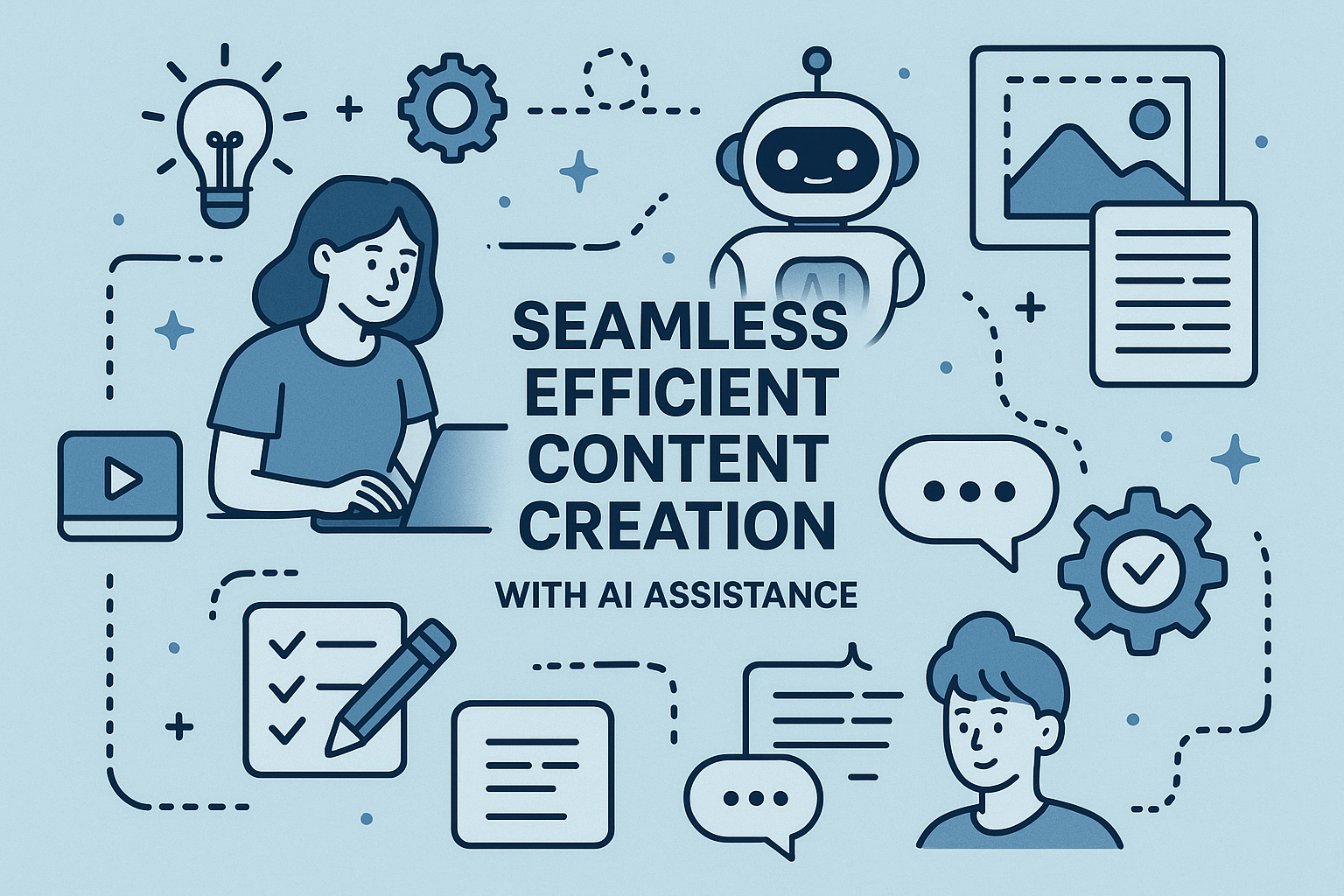
The landscape of content creation is undergoing a monumental shift, and Artificial Intelligence (AI) stands at the forefront of this transformation. For blogging in 2025, AI is not merely a tool; it's a game-changer that directly addresses the traditional challenges while significantly amplifying the core benefits. Companies leveraging AI-powered blog content creation platforms are redefining what’s possible.
- AI for Research: The most tedious and time-consuming part of content creation, extensive research, is dramatically expedited by AI. Advanced AI systems can quickly analyze vast amounts of data, identify current trends, gather statistics, and pull relevant information from diverse sources. This capability allows content creators to quickly understand a topic, validate facts, and build a robust knowledge base in minutes, rather than hours.
- AI for Content Generation: AI models are now capable of drafting comprehensive outlines, writing full articles, generating compelling headlines, and optimizing content for SEO at an unprecedented speed. For specific tasks like keyword integration, readability checks, meta-description generation, and even crafting calls-to-action, AI excels. It can analyze search intent and integrate target keywords naturally throughout the text, ensuring that content is not only informative but also highly discoverable. This means less staring at a blank page and more time refining AI-generated drafts.
- AI for Scalability: The ability to produce more content with fewer resources is perhaps AI's most profound impact on blogging. Businesses can generate a high volume of SEO-optimized articles consistently, without the need to continuously expand their internal writing teams or outsource extensively. This scalability is crucial for agencies managing multiple client accounts, growing brands needing to dominate diverse niches, and startups looking to establish authority quickly.
- Maintaining Quality & Brand Voice: Modern AI platforms are sophisticated enough to be trained on specific brand guidelines, tone of voice, and stylistic preferences. This ensures that the generated content aligns seamlessly with a company's existing identity, maintaining consistency across all publications. AI can learn and adapt, producing professional, high-quality output that feels authentic to the brand, requiring minimal human intervention for stylistic adjustments.
- Focus on Strategy, Not Just Production: By automating the labor-intensive aspects of content creation, AI frees up human marketers, strategists, and subject matter experts to focus on higher-level tasks. Instead of spending hours on drafting, they can dedicate their time to refining content strategy, conducting deeper competitive analysis, engaging with their audience, exploring new market opportunities, and adding unique human insights that AI cannot replicate. This strategic shift allows for more impactful and innovative content initiatives.
Revisiting the Pros: Enhanced Value with AI-Powered Blogging
With AI seamlessly integrated into the blogging workflow, the core benefits of maintaining a blog are not just retained but significantly magnified. AI transforms traditional advantages into hyper-optimized, highly effective strategies for 2025 and beyond.
- Hyper-Optimized SEO: AI's analytical capabilities extend far beyond basic keyword integration. It can analyze competitor content, identify semantic gaps, predict search intent more accurately, and suggest optimal content structures for superior ranking. This leads to articles that are not just keyword-rich but also contextually relevant and highly appealing to search engine algorithms, drastically improving organic visibility and traffic. AI-powered platforms can even track performance and suggest real-time optimizations, ensuring your content stays competitive.
- Accelerated Thought Leadership: Establishing expertise traditionally takes considerable time and consistent output. With AI, businesses can rapidly produce a larger volume of authoritative content across various sub-topics within their niche. This accelerated content velocity means you can solidify your position as a thought leader much faster, disseminating expert insights and valuable information at a pace previously unattainable.
- Smarter Lead Nurturing: AI can analyze user behavior and tailor content generation to specific stages of the sales funnel. From top-of-funnel educational articles designed to attract broad interest, to middle-of-funnel comparison guides that address specific needs, and bottom-of-funnel content that highlights product benefits—AI ensures each piece is precisely crafted to nurture leads effectively. This targeted content strategy results in more qualified leads and improved conversion rates.
- Deeper Customer Engagement: By leveraging AI to understand audience demographics, common questions, and pain points, you can produce highly relevant and personalized content that genuinely resonates with your readers. AI helps identify trending topics and critical information gaps, enabling you to create articles that precisely address user needs. This hyper-relevance fosters deeper engagement, builds stronger relationships, and reinforces brand loyalty by consistently providing value.
- Effortless Content Repurposing: AI significantly streamlines the process of repurposing content. A single long-form blog post can be automatically summarized for social media captions, converted into bullet points for an infographic, restructured into an email newsletter segment, or even outlined for a podcast episode. This automation maximizes the utility of every piece of content, ensuring your message reaches diverse audiences across multiple platforms with minimal additional effort.
Strategic Blogging in the AI Era: Keys to Success
While AI offers unprecedented power for content creation, its effectiveness is maximized when integrated into a well-defined strategy. The future of successful blogging isn't about replacing human input, but enhancing it. Here's how to thrive in the AI era:
- Human Oversight is Crucial: AI is a powerful assistant, not a standalone solution. Human editors and subject matter experts are essential for fact-checking, ensuring accuracy, refining the nuance of language, and adding unique insights that only human experience can provide. AI generates drafts; humans provide the soul and final polish.
- Focus on Unique Value: Even with AI-generated content, the goal should always be to offer unique value. This could be through proprietary research, distinctive case studies, a fresh perspective on a familiar topic, or an exceptionally engaging narrative. AI can handle the heavy lifting, allowing humans to focus on injecting that differentiating factor.
- SEO Best Practices Remain Essential: While AI can optimize for SEO, fundamental SEO principles still apply. This includes technical SEO (site speed, mobile-friendliness, secure protocols), a strong internal linking structure, and excellent user experience (UX). AI can assist with these, but they require a holistic approach.
- Integrate with Overall Marketing Strategy: Blogging should not exist in a silo. Integrate your blog content with your email marketing campaigns, social media strategy, PR efforts, and sales enablement materials. AI can help ensure consistency and efficiency across all channels.
- Embrace Analytics: Data-driven decisions are more critical than ever. Utilize analytics tools to monitor blog performance—traffic, bounce rate, time on page, conversion rates, and keyword rankings. Use this data to refine your content strategy, understand what resonates with your audience, and continuously improve your AI prompts for better output.
Conclusion: Blogging's Resurgence in 2025
The question "Is blogging still worth it in 2025?" can be answered with an emphatic yes. Far from being an outdated marketing tactic, blogging is an invaluable, ever-evolving component of a successful digital presence. It remains the most potent tool for driving organic traffic, establishing thought leadership, and nurturing leads.
The power of AI has transformed blogging's traditional challenges into unprecedented opportunities. By automating research, accelerating content generation, ensuring scalability, and maintaining quality, AI platforms like Articfly empower businesses to produce high-impact, SEO-optimized content with unparalleled efficiency. The synergy between human strategic insight and AI's processing capabilities creates a formidable content engine.
In 2025, brands that adapt, embrace, and strategically leverage AI for their content initiatives will not only survive the content conundrum but will lead the market, connecting with their audiences more effectively and driving sustainable growth. Blogging is not just alive; it's thriving, smarter, and more essential than ever before.
Ready to revolutionize your content strategy? Discover how AI-powered blog content creation can save you time, reduce costs, and scale your content efforts effortlessly.
Explore Articfly today and turn your ideas into engaging, data-driven articles in minutes.