
Understanding Revenue-Driven SEO
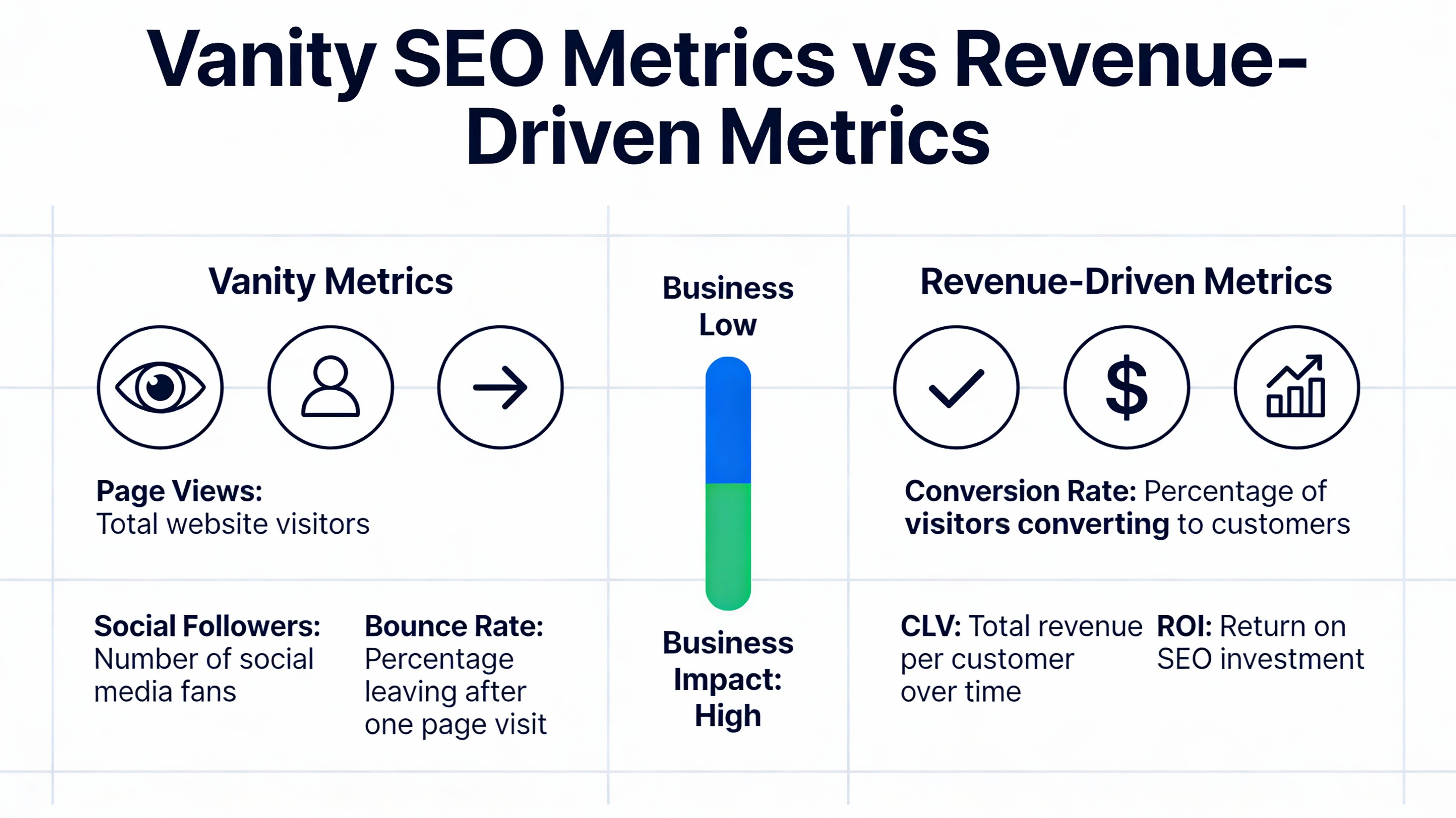
Revenue-focused SEO differentiates between vanity metrics and those that directly impact the bottom line. While traffic and rankings are common indicators of visibility, they do not always translate into sales or lead value. In 2026, the competitive landscape requires a shift toward measuring lead value and customer acquisition cost recovery.
| Vanity Metrics | Revenue Metrics |
|---|---|
| Total Impressions | Lead Value |
| Keyword Rankings | Sales Conversions |
| Raw Sessions | Customer Acquisition Cost (CAC) |
Defining Revenue vs Vanity Metrics
Vanity metrics often include numbers like total page views and social shares that look impressive on a report but lack a direct link to profit. In contrast, revenue-centric metrics focus on factors like CAC-recovered traffic and revenue per keyword. Monitoring these figures allows marketing teams to see which organic efforts are actually fueling business growth.
Quick Tip: Transition your reporting from "total clicks" to "qualified leads generated" to better align with executive expectations.
Aligning SEO Goals with Business Objectives
Mapping business goals, such as ARR growth, to specific SEO objectives ensures that every piece of content has a commercial purpose. By using an alignment worksheet, teams can trace high-level targets down to the individual topic level. This creates a cohesive strategy where search efforts support broader organizational success.
SEO is no longer just about visibility; it is about building a sustainable pipeline that the finance department can actually verify.
CFO Perspective on Digital Strategy
Setting Measurable Revenue‑Focused SEO Goals
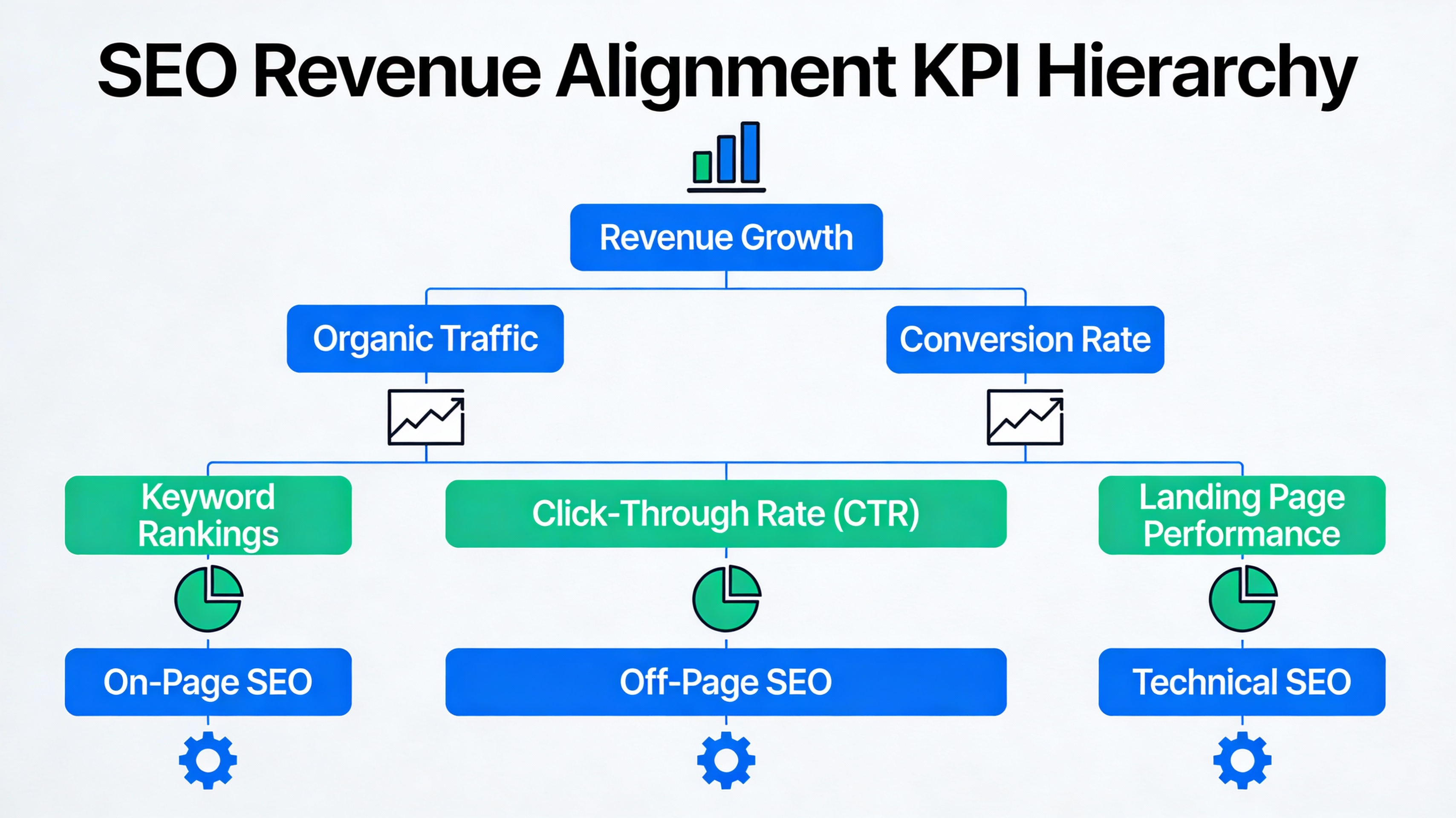
Translating business objectives into concrete SEO goals ensures that every content effort serves a financial purpose. Establishing baseline data and realistic targets allows growth leaders to track how organic search contributes to ARR growth. Marketers should focus on a 12-month planning horizon to account for seasonality and market shifts.
- Revenue-per-visitor monitoring
- Organic conversion rate tracking
- Keyword ROI analysis
- Lead quality scoring
Selecting the Right KPIs
Choosing KPIs like revenue-per-visitor and organic conversion rates provides a much clearer picture of performance than ranking positions alone. Weighting each KPI based on its closeness to the transaction helps teams prioritize their optimization efforts. This ensures that resources are allocated to the pages most likely to drive financial returns.
Establishing Baselines & Targets
Using historical data and seasonality adjustments is essential for setting achievable targets for 2026. A 12-month planning horizon allows for the gradual compounding effect of SEO to manifest in revenue reports. By comparing current performance against these benchmarks, marketers can identify gaps early and adjust their tactics accordingly.
Leveraging AI‑Powered Content Creation for 2026

Articfly’s AI content engine accelerates the process of creating revenue-aligned articles by automating search intent analysis. The platform maps keywords to specific stages of the buyer journey, ensuring that content targets high-value clusters effectively. This automation reduces costs while maintaining the consistent quality needed to scale content operations.
How Articfly Automates SEO
The platform streamlines the planning, writing, and structuring steps to produce ready-to-publish articles in minutes. By automating the technical aspects of SEO optimization, Articfly allows content teams to focus on strategy rather than manual drafting. This approach ensures that every article is built on a foundation of data-driven search intent.
Integrating Search Intent with Revenue Goals
Mapping intent types like informational or transactional to specific funnel stages is vital for lead generation. Prioritizing topics that drive qualified leads ensures that the content library serves as a revenue engine. When AI handles the intent mapping, the resulting content naturally aligns with the user’s likelihood to convert.
Building a Data‑Driven SEO Roadmap
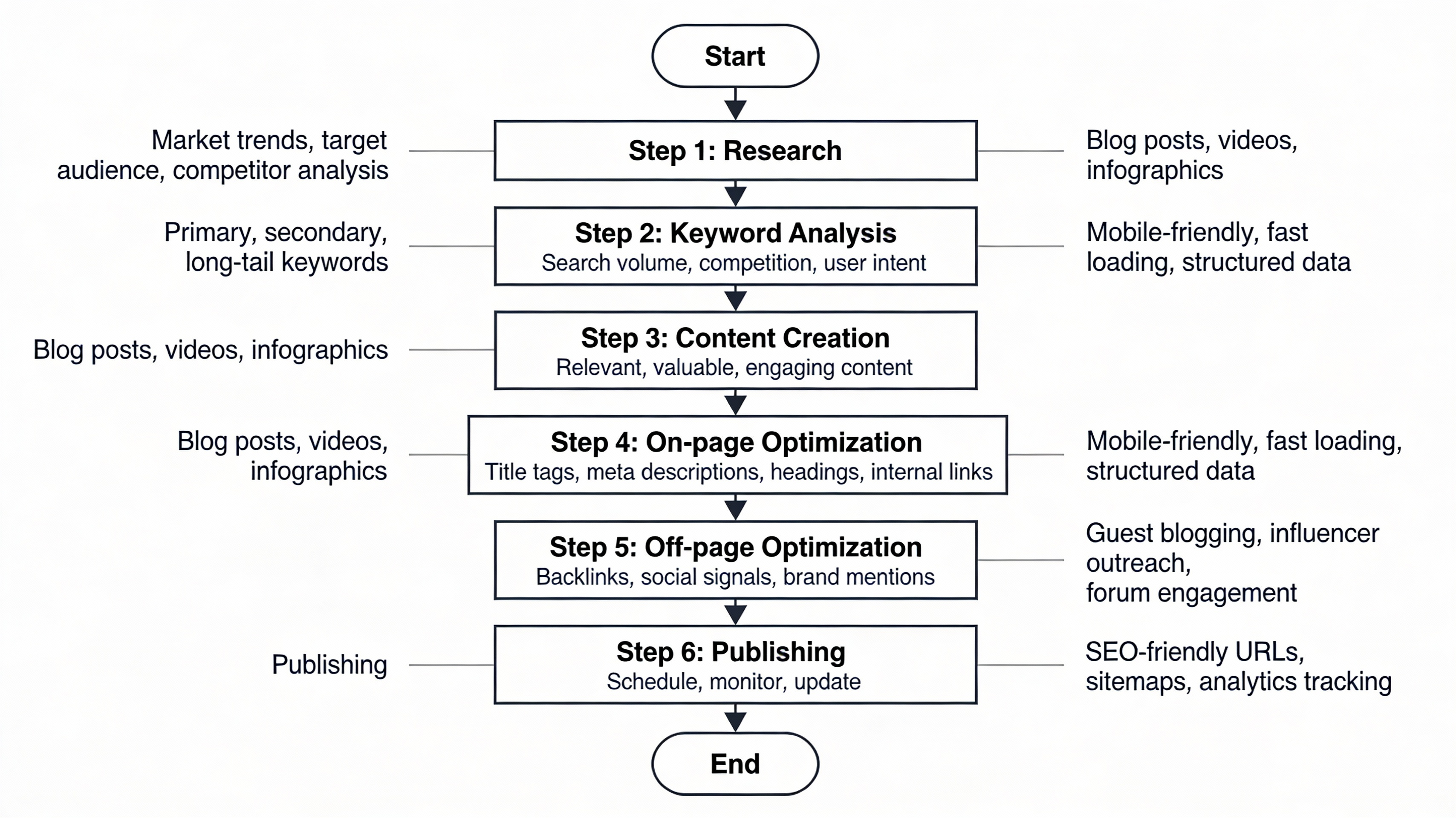
A data-driven SEO roadmap ties performance to revenue by prioritizing keywords with high commercial intent and historical conversion data. By conducting a content gap analysis, teams can identify missing pieces in the funnel that are preventing qualified leads from converting. This structured approach helps protect the conversion flow through technical optimization.
Roadmap Timeline Phases
- Phase 1: High-intent keyword research and tiering.
- Phase 2: Content gap identification and AI brief generation.
- Phase 3: Technical conversion audit and schema implementation.
- Phase 4: Scaling production with AI-powered drafts.
Keyword Prioritization by Revenue Potential
Utilizing CPC data and commercial intent metrics helps in creating a tiered keyword list that focuses on profit. Keywords with high historical conversion rates should always take precedence over those that only offer high volume. This ensures that the roadmap is built on topics that have a proven track record of driving business outcomes.
Content Gap Analysis for High‑Value Topics
Identifying missing content that could capture potential revenue is a critical step in any roadmap. AI-generated briefs can quickly fill these gaps by outlining the specific information needed to satisfy search intent. This proactive approach prevents competitors from capturing leads that your brand is currently overlooking.
Technical SEO Checklist for Conversions
Technical elements like site speed and secure checkout signals are fundamental to protecting the conversion flow. Implementing schema for products and maintaining a clean site structure ensures that search engines can easily index high-value pages. A quick audit template can help identify technical friction points that might be costing the business sales.
Monitoring, Reporting, and Optimizing for Revenue

Monitoring revenue-impacting SEO signals through real-time dashboards provides the visibility needed for continuous optimization. Attribution models, such as first-click or data-driven models, help credit organic touchpoints accurately across the user journey. Regular testing of headlines and internal links ensures that the strategy remains effective as search engines evolve.
Real‑Time Revenue Dashboards
Visualization types that highlight revenue-per-session and conversion drift are essential for modern SEO reporting. Setting up alerts for KPI changes allows teams to respond quickly to fluctuations in organic performance. These dashboards transform raw data into actionable insights that can be shared with stakeholders to justify SEO spend.
Attribution Models for Organic Revenue
Implementing data-driven or multi-touch attribution in tools like Google Analytics 4 provides a more accurate view of SEO's impact. These models account for the multiple interactions a user may have before making a final purchase. By understanding the full path to conversion, marketers can better value the informational content that starts the customer journey.
Continuous Testing & Optimization
A/B testing headlines, schema, and internal linking structures helps squeeze more value out of existing traffic. AI can be used to generate variant content quickly, allowing for rapid experimentation without manual labor. This cycle of testing and refinement ensures that the SEO strategy continues to improve its ROI over time.
Key Takeaways
Successful SEO in 2026 requires a focus on financial outcomes rather than just search visibility. By following a revenue-driven framework, businesses can turn their blog into a scalable growth engine.
- Prioritize lead value and CAC-recovery over raw traffic metrics.
- Align every SEO objective with specific business goals like ARR growth.
- Use AI to automate intent analysis and map content to buyer journey stages.
- Establish a 12-month roadmap based on high-intent keyword tiering.
- Conduct regular content gap analyses to identify revenue opportunities.
- Implement multi-touch attribution models to credit organic touchpoints.
- Continuously test headlines and CTAs to optimize conversion rates.
FAQ
How do I measure SEO’s direct impact on revenue?Measure direct impact by tracking organic conversion rates and revenue-per-visitor in your analytics platform. Use attribution models to see how organic search contributes to the customer journey before a final sale.
Can AI replace my current SEO team?AI is designed to empower content teams by automating repetitive tasks like drafting and intent analysis. It allows your current team to focus on higher-level strategy and revenue alignment rather than manual production.
What’s the difference between a vanity metric and a revenue metric?Vanity metrics like impressions and rankings show visibility but not profit. Revenue metrics like lead value and sales conversions show the actual financial return on your SEO investment.
How often should I revisit my SEO roadmap?While a 12-month horizon is recommended for planning, you should revisit and adjust your roadmap quarterly. This allows you to account for new data, market shifts, and emerging high-value keywords.
Which tools integrate best with Articfly for revenue tracking?Articfly works best alongside analytics platforms like Google Analytics 4 and search performance tools like Google Search Console. These integrations allow you to tie AI-generated content directly to performance data.
Next steps for revenue-focused SEO
Ready to transform your content strategy into a predictable revenue driver? Articfly provides the AI-powered tools you need to plan, write, and optimize articles that rank well and convert visitors. Start scaling your organic growth today by exploring our automated content engine and data-driven reporting features through our free trial or a personalized demo.