
Why CEOs Should View SEO as an Asset

Viewing SEO as a capital-grade asset allows executives to shift their perspective from short-term spending to long-term value creation. Unlike traditional advertising where visibility ceases once the budget stops, SEO builds a digital property that compounds in value. By investing in content and authority, businesses create a durable advantage that continues to generate traffic and leads for years. CEOs who understand this distinction can better justify seo-basics and align their digital strategy with the broader financial goals of the organization, as noted in a Single Grain article on SEO as an asset.
| Feature | SEO (Asset) | Paid Ads (Expense) |
|---|---|---|
| Cash Flow Impact | Initial investment with compounding returns | Immediate cost for immediate visibility |
| Longevity | Persistent rankings and traffic | Ends when payment stops |
| Scalability | Cost per lead decreases over time | Cost per lead often remains static |
| Risk | Algorithm shifts (managed via quality) | Market price fluctuations and ad fatigue |
The fundamental difference between assets and expenses
Financial assets produce future economic benefits, whereas expenses are consumed within a single reporting period. In the digital landscape, high-quality content and a healthy backlink profile function as property that attracts customers without requiring a per-click fee. This transition from rental to ownership is the hallmark of a mature digital strategy.
Long‑term ROI evidence
Industry insights suggest that the most successful brands prioritize organic search to ensure market resilience. Qualitative findings often include:
- Enhanced brand credibility through consistent organic presence.
- Reduction in customer acquisition costs as organic traffic scales.
- Higher quality lead generation from users searching with specific intent.
- Creation of evergreen content that serves the sales cycle repeatedly.
The 2026 SEO Framework for Sustainable Growth
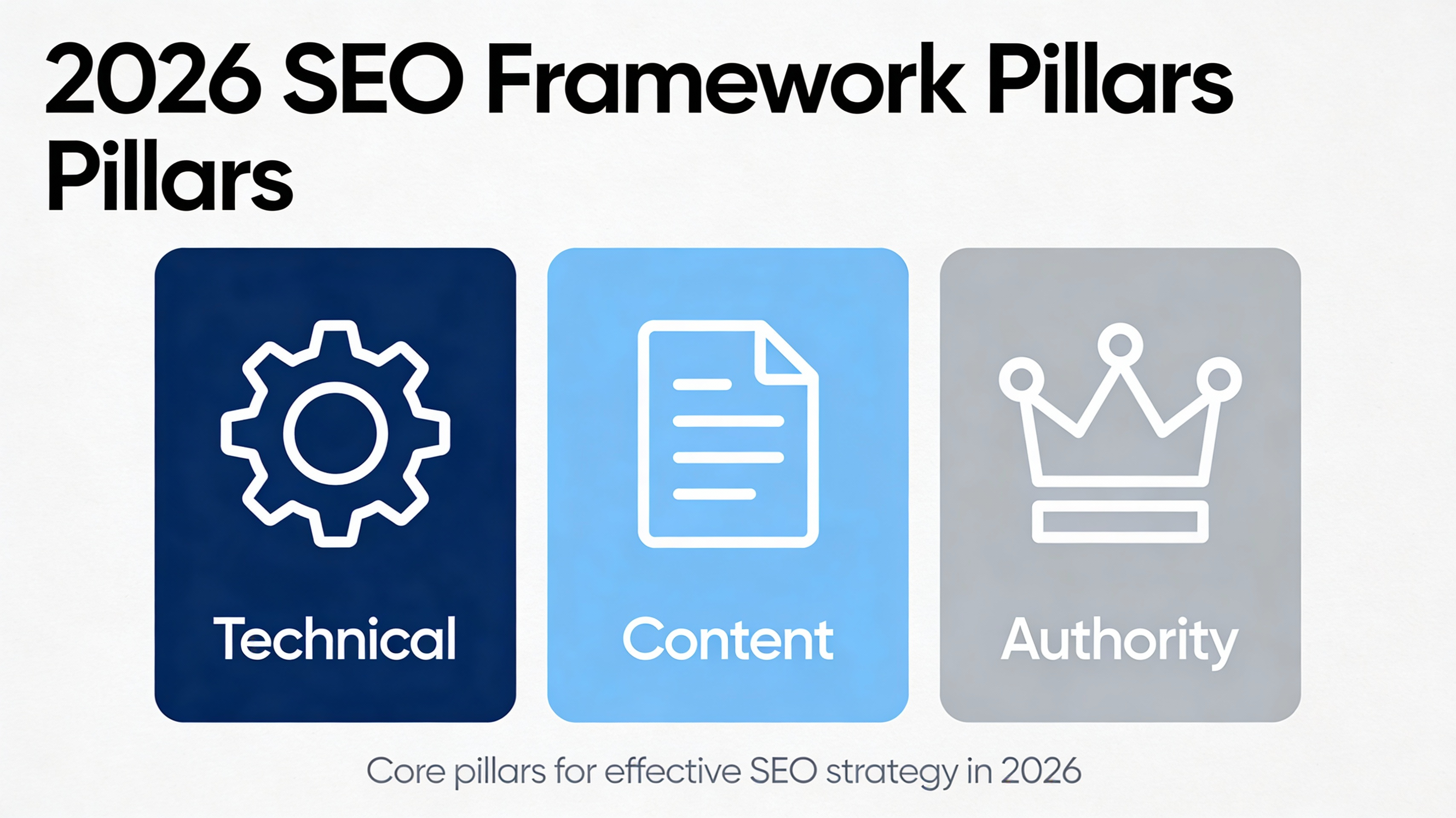
Sustainable organic growth in 2026 requires a holistic framework that balances technical precision with high-value content. This roadmap is designed to withstand algorithm updates by focusing on user experience and information depth. By following a structured approach, leadership can ensure that every SEO initiative contributes to a technical-seo-checklist and adheres to Digital Triumphs 2026 SEO trends.
Framework Checklist:- Pillar 1: Establish a healthy technical foundation and optimize for core web vitals.
- Pillar 2: Deploy content as a growth engine using topic clusters and AI automation.
- Pillar 3: Build authority through genuine brand mentions and sustainable backlink strategies.
Pillar 1 – Technical Foundations
Site health & Core Web Vitals
Ensuring that a website loads quickly and functions smoothly is no longer optional for ranking success. Search engines prioritize sites that provide a seamless user experience across all device types.
Structured data & crawl budget
Organizing site data helps search engines understand the context of your content more efficiently. Proper use of structured data ensures that your assets are accurately indexed and showcased in rich search results.
Pillar 2 – Content as a Growth Engine
AI‑driven content creation
Utilizing Articfly allows businesses to scale their content production without sacrificing the tone or quality required by the brand. This efficiency enables teams to cover more topics and maintain a consistent publishing schedule.
Topic clusters & evergreen assets
Building clusters of related content helps establish your domain as an authority on specific subjects. Evergreen assets serve as the foundation of these clusters, providing value to readers long after the initial publication date.
Pillar 3 – Authority & Link Building
Sustainable backlink strategies
Acquiring links from reputable sources remains a cornerstone of search engine trust. Focusing on quality over quantity ensures that your backlink profile remains a strong indicator of industry relevance.
Brand mentions as authority signals
Natural mentions of your brand across the web signal to search engines that your business is a recognized leader. These signals reinforce your E-E-A-T (Experience, Expertise, Authoritativeness, and Trustworthiness) scores.
Aligning SEO Investment with Business Objectives

Mapping SEO performance to revenue is essential for maintaining executive support and securing long-term seo-budgeting. When SEO is treated as a capital expenditure (CAPEX), the focus shifts to how these investments improve the overall valuation of the company's digital presence. This alignment ensures that every dollar spent contributes directly to the bottom line, as discussed in the ColumnContent article on SEO ROI.
| Executive KPI | SEO Tactic | Business Outcome |
|---|---|---|
| Lead Quality | Intent-based keyword targeting | Higher sales conversion rates |
| CAC Reduction | Scaling organic content volume | Lower blended marketing costs |
| Revenue Lift | Conversion rate optimization (CRO) | Increased lifetime customer value |
Leveraging AI Automation to Accelerate Asset Building
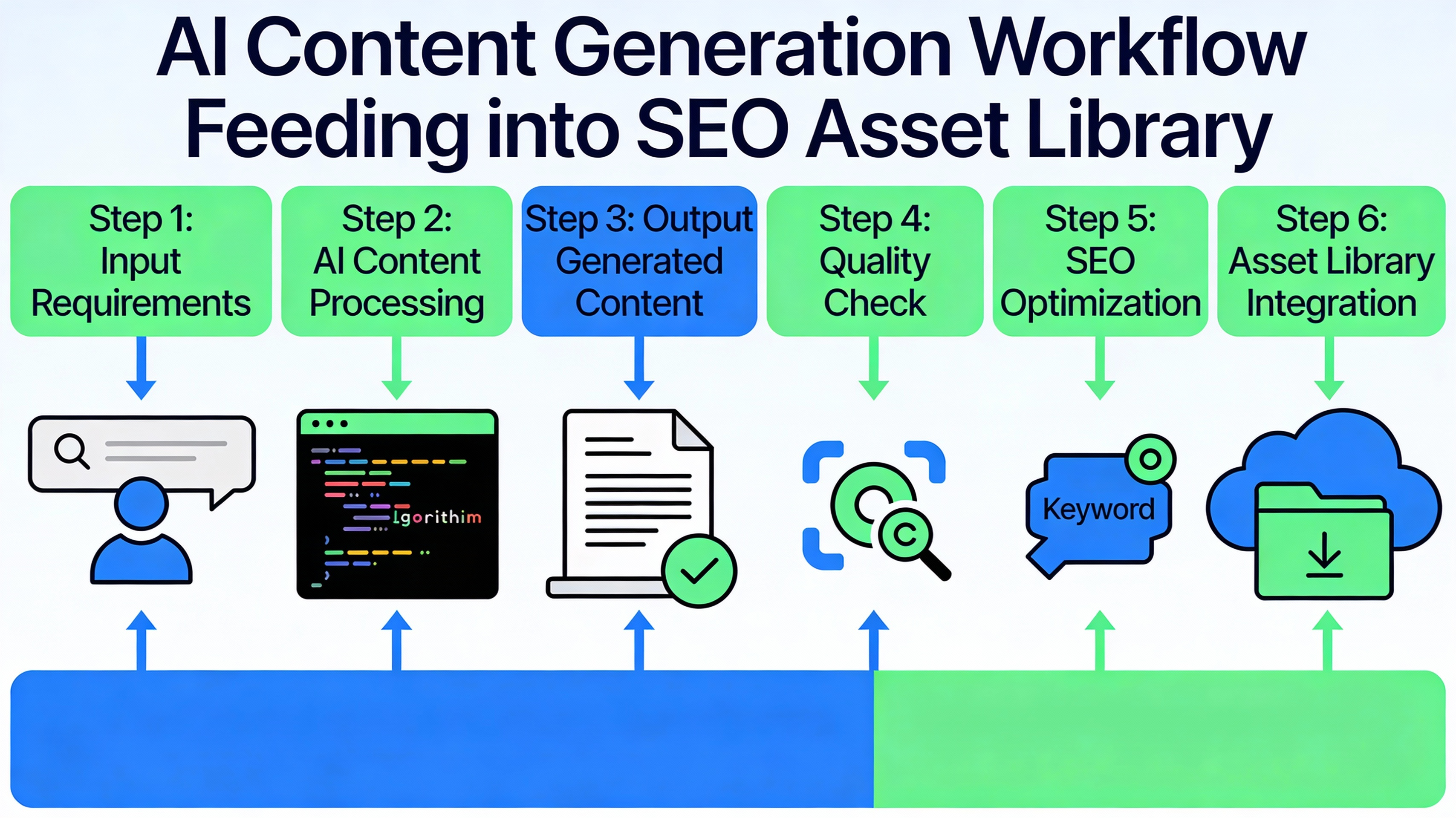
AI-powered content automation tools like Articfly transform how agencies and brands approach asset creation. By automating the research and drafting phases, content teams can focus on strategy and editorial refinement. This acceleration allows for more frequent content refresh cycles, ensuring that your digital assets remain relevant and competitive, which is a key component of ai-content-automation and modern AI-SEO case study findings.
Articfly’s mission is to empower content teams with automation, making high-quality content production effortless and scalable. Whether for startups, agencies, or growing brands, Articfly transforms the way blogs are built.
Articfly Mission Statement
Measuring Success Over Time

Tracking the growth of digital assets requires looking beyond surface-level traffic numbers. Executives should monitor how organic presence evolves over several quarters to understand the true impact on brand authority. Utilizing an seo-dashboard and following Moz article on SEO metrics helps in visualizing how these digital properties appreciate in value through consistent effort.
Year-Over-Year Growth Visualization:Imagine a bar chart where Year 1 represents the baseline traffic from initial content seeding. Year 2 shows a significant increase as topic clusters mature, and Year 3 demonstrates an exponential curve as authority signals and content volume compound to dominate market share.
Key Takeaways
Transitioning to an asset-based SEO strategy requires a fundamental shift in how leadership evaluates digital marketing success.
- SEO should be treated as a capital investment (CAPEX) that builds long-term equity.
- The 2026 framework prioritizes technical health, content depth, and brand authority.
- AI automation tools like Articfly significantly reduce the time and cost of scaling content assets.
- KPIs must be directly linked to business outcomes like CAC reduction and lead quality.
- Consistent reporting and measuring compound traffic trends are vital for executive buy-in.
FAQ
Is SEO really worth the upfront cost?
Initial investments in SEO build a foundation that generates "free" traffic over time, unlike paid channels. While the upfront costs may seem higher, the long-term cost per lead is typically much lower than traditional advertising.
How long before I see ROI?
Visible results from SEO typically manifest within 6 to 12 months, depending on industry competition and site history. However, once the momentum builds, the returns continue to grow without a proportional increase in spend.
Can AI replace my content team?
AI automation enhances human teams by handling the heavy lifting of research and drafting. This allows your editors and strategists to focus on brand voice, high-level creative direction, and complex industry insights.
What metrics should I report to the board?
Focus on business-centric metrics such as organic lead volume, share of voice in key markets, and the reduction in customer acquisition costs. These figures resonate more with the board than technical details like bounce rates or individual keyword rankings.
Next steps for SEO as a business asset
Turning SEO into a measurable, compounding asset starts with the right tools and strategy. Executive leadership can begin this transformation by integrating advanced automation into their content workflow. To see how our proprietary AI system can scale your organic growth and maintain consistent brand quality, explore the options for a demo-schedule.
Book Your Executive Demo