
Common CEO Misconceptions About SEO in 2026
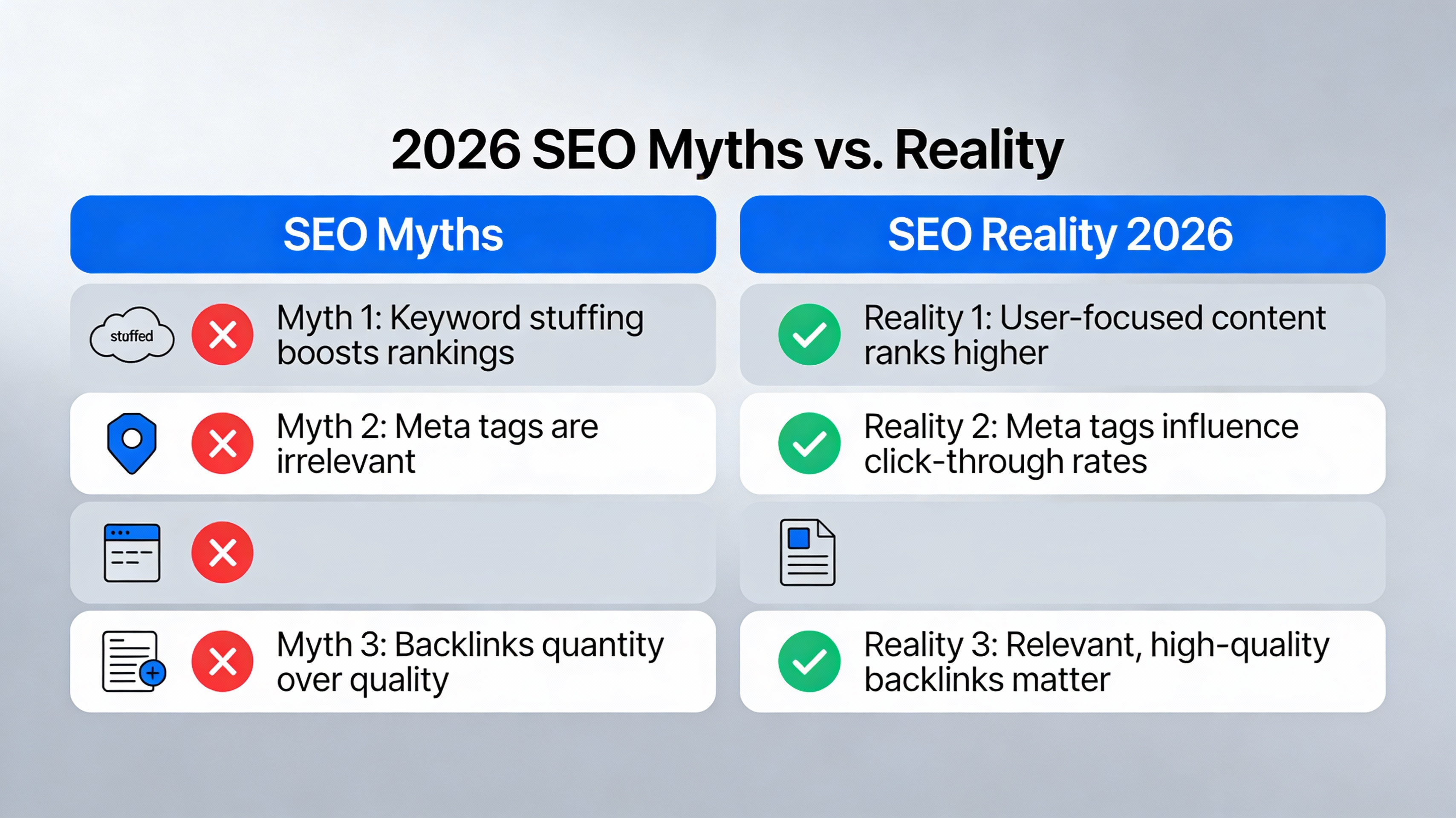
Common SEO misconceptions continue to influence boardroom decisions in 2026, often leading to outdated strategies that fail to deliver sustainable growth. Many leadership teams still prioritize ranking for single keywords rather than focusing on how modern search engines and AI assistants actually retrieve information. Shifting this perspective is essential for staying competitive in an automated landscape.
| Myth | Reality |
|---|---|
| SEO is only about ranking #1 for keywords. | SEO is about visibility across AI answers and brand signals. |
| AI will replace all SEO work tomorrow. | AI acts as an accelerator for human-led strategy. |
| More content automatically equals more traffic. | High-E-E-A-T, intent-aligned content drives results. |
Leadership often views search optimization as a one-time technical fix rather than a continuous business investment. This leads to friction between marketing departments and the C-suite when results do not align with antiquated expectations. Organizations must adopt the Articfly AI Content Automation feature page approach to harmonize these views with 2026 SEO trends.
SEO is Just About Rankings
Rankings alone no longer serve as the definitive metric for digital success because search engines have evolved into intent fulfillment engines. CEOs must recognize the importance of featured snippets, AI generative answers, and strong brand signals that dictate visibility. True impact is now measured by how effectively a brand answers the specific needs of its target audience.
- SERP Feature Share of Voice
- AI Answer Citations
- Branded Search Growth
- Intent Satisfaction Rate
Focusing on visibility-first SEO helps businesses capture traffic that actually converts into revenue. Marketing teams should share case studies on visibility-first SEO to demonstrate how broad presence outweighs a single top-ranking position.
AI Will Replace Human SEO Work
Dispel the fear that automation renders SEO specialists redundant, as the human element remains critical for brand identity. AI serves as a powerful partner that handles the heavy lifting of data analysis and content scaling, while humans provide the oversight for E-E-A-T. Preserving a unique brand voice is something machines cannot yet fully replicate without expert guidance.
AI should be viewed as a partner that enables teams to focus on strategy rather than just an engine for output.
Neil Patel
By using AI as an accelerator, content teams can produce more work while maintaining higher standards of quality. This synergy is explored deeply in various AI SEO articles that highlight the evolving role of the strategist.
More Content = Better Results
Quantity without relevance can actually harm a website's authority and lead to content cannibalization. Search algorithms in 2026 are highly sensitive to intent alignment and the perceived expertise of the creator. Flooding a site with low-quality pages dilutes the ranking power of existing high-performing articles.
Content Quality vs. Quantity Impact:
- Low Quality + High Volume = High Risk of Dilution
- High Quality + Strategic Volume = Accelerated Authority
- Intent-Aligned Content = Maximum ROI
Using AI tools allows teams to focus on producing fewer, higher-quality pieces that satisfy specific user queries. For more on this, consult the Articfly blog on Quality over Quantity.
Why These Misunderstandings Hurt Business Growth
Strategic misunderstandings regarding search visibility can lead to significant business consequences, including lost market share in AI-driven results. When CEOs fixate on raw traffic numbers, they often overlook the importance of intent satisfaction and brand authority. This disconnect wastes budget on low-ROI activities that fail to move the needle on revenue.
| Traditional KPI | Modern KPI |
|---|---|
| Raw Traffic Volume | Search Visibility Index |
| Page 1 Rankings | Intent Satisfaction Score |
| Session Count | AI Answer Presence |
Failing to adapt to modern search standards means missing out on brand authority opportunities that are now captured by more agile competitors. Industry leaders often reference the Search With Sean article to explain how generative search changes buyer behavior.
Missed Opportunities in AI-Driven Search
Generative answers and AI agents are increasingly bypassing traditional search results to provide direct solutions to users. If a company's data is not structured or machine-readable, it will be invisible to these new discovery methods. This evolution requires a shift toward technical precision and clear content hierarchy.
- Voice assistant answer optimization
- Generative AI product citations
- Automated agent discovery signals
Technical teams must utilize the Articfly guide on structured data to ensure their brand remains a primary source for AI answers. Ignoring these signals effectively shuts a brand out of the fastest-growing search segments.
Neglecting Technical Foundations
Technical SEO remains the bedrock of online visibility, even as content creation becomes more automated. Factors like site speed, crawlability, and core web vitals are essential for building trust with both users and search crawlers. Poor technical health can erode even the most sophisticated AI trust signals.
Site performance and user experience signals are foundational to how we evaluate the quality and reliability of a web property.
Google 2026 Core Web Vitals update
Maintaining a healthy technical foundation ensures that AI-generated content can be properly indexed and served to the right users. Refer to official Google documentation for the latest standards in site health.
Inefficient Resource Allocation
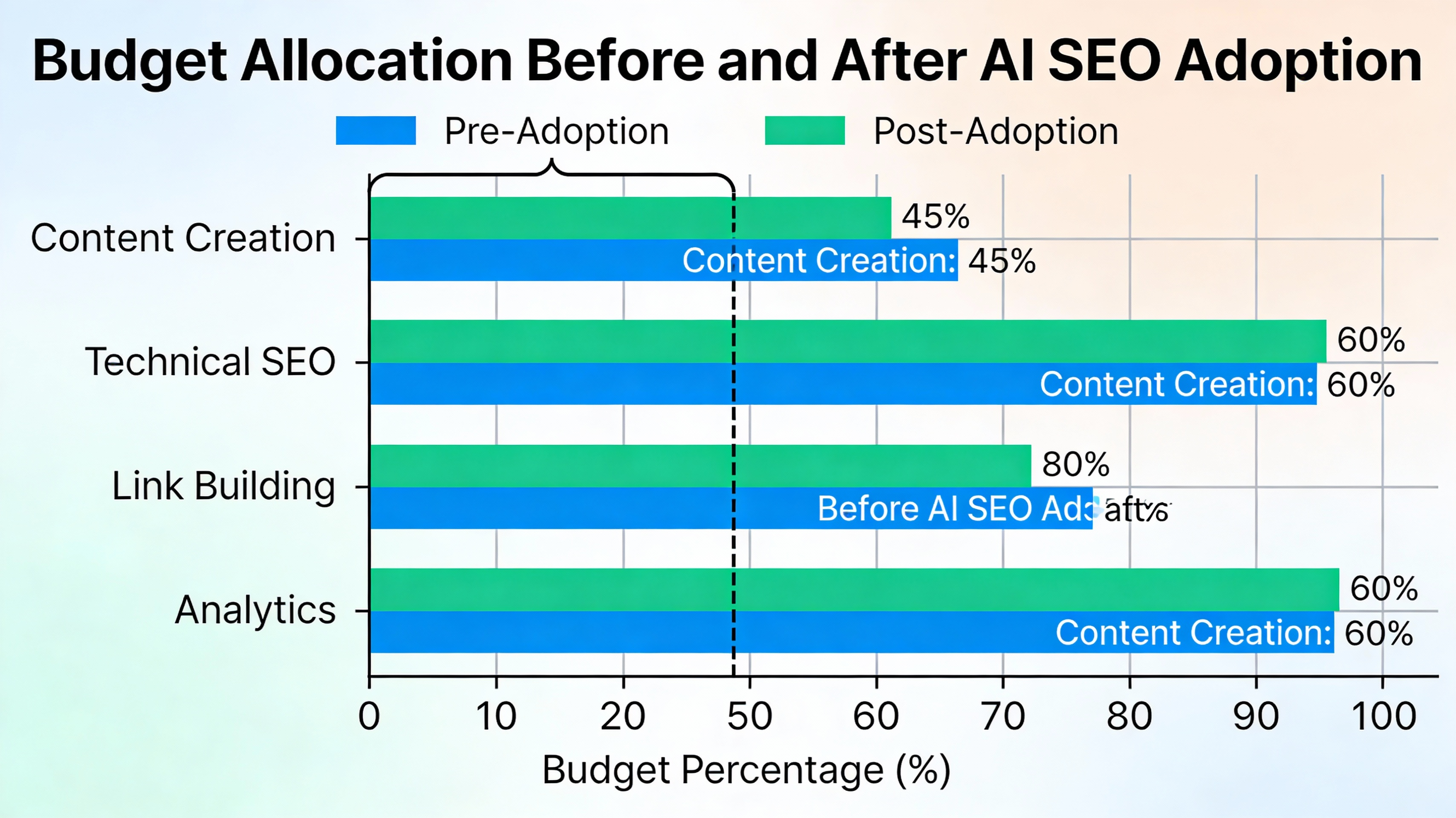
Overinvestment in volume-first content factories often leads to a poor return on investment and high technical debt. Many organizations spend their budgets on manual processes that could be automated, leaving no room for strategic data analysis. This imbalance prevents companies from scaling their marketing efforts effectively.
Budget Allocation Shift:
- Pre-AI: 80% Production / 20% Strategy
- Post-AI: 30% Production / 70% Strategy and Analysis
By streamlining production, teams can reallocate funds toward growth-oriented experiments and high-level strategy. Review the Articfly pricing page to see how automation scales with business needs.
How Marketing Teams Can Correct the Misconceptions

Marketing teams can successfully bridge the knowledge gap by presenting SEO as a direct contributor to business outcomes rather than a technical silo. Educating leadership on how AI content pipelines function allows for better alignment between organic growth and high-level revenue targets. Using data to demonstrate the ROI of modern search strategies is the most effective way to gain executive buy-in.
- Host monthly data-driven SEO education sessions.
- Demonstrate live AI-enabled content workflows.
- Present quarterly reports linking visibility to revenue.
- Clarify the difference between "vanity metrics" and "growth metrics."
Strategies for this transition can be found in the webinar replay on Selling SEO to the C-suite. Clear communication is the key to shifting organizational culture.
Educate Leadership with Data-Driven Insights
Concrete numbers are the only language that effectively resonates with senior leadership in a high-stakes environment. Showing how a lift in visibility directly correlates with lead generation provides a compelling case for modern SEO investments. Comparing the costs of manual versus AI-driven production further emphasizes the efficiency gains.
| Metric Category | Previous Value | New Visibility Model |
|---|---|---|
| Content ROI | [Standard ROI] | [Accelerated AI ROI] |
| Time to Publish | [Weeks] | [Hours] |
| Audience Reach | [Limited] | [Expanded via AI SERPs] |
Third-party research, such as Gartner studies on AI content ROI, can provide the external validation needed to support these internal claims. Data-driven education builds the trust necessary for long-term strategic changes.
Implement AI-Powered Content Automation
Articfly provides the tools necessary to transform these theoretical strategies into a functional reality. The platform automates the creation of briefs, outlines, and full articles while ensuring every piece is optimized for current search intent. This consistency allows brands to maintain a high-quality presence without expanding their headcount.
Articfly Dashboard Overview: A central hub displaying real-time search intent trends, content performance health, and automated workflow triggers that allow teams to manage hundreds of articles from a single interface.
Automation ensures that brand voice remains consistent across all published materials, regardless of volume. Explore these capabilities on the Articfly product page.
Align SEO Strategy with Business Goals
Revenue impact should be the ultimate goal of any SEO campaign, which requires mapping content to specific stages of the buyer journey. Visibility KPIs must be reported in the context of how they assist in moving prospects toward a purchase. This alignment ensures that search strategy is never viewed as an isolated marketing expense.
SEO Activity -> User Intent Satisfaction -> Brand Trust -> Revenue Outcomes
Case studies where visibility drove leads illustrate how this alignment works in practice for high-growth companies. When SEO goals match business objectives, leadership is more likely to provide the necessary resources for expansion.
Practical Steps to Modernize SEO in 2026
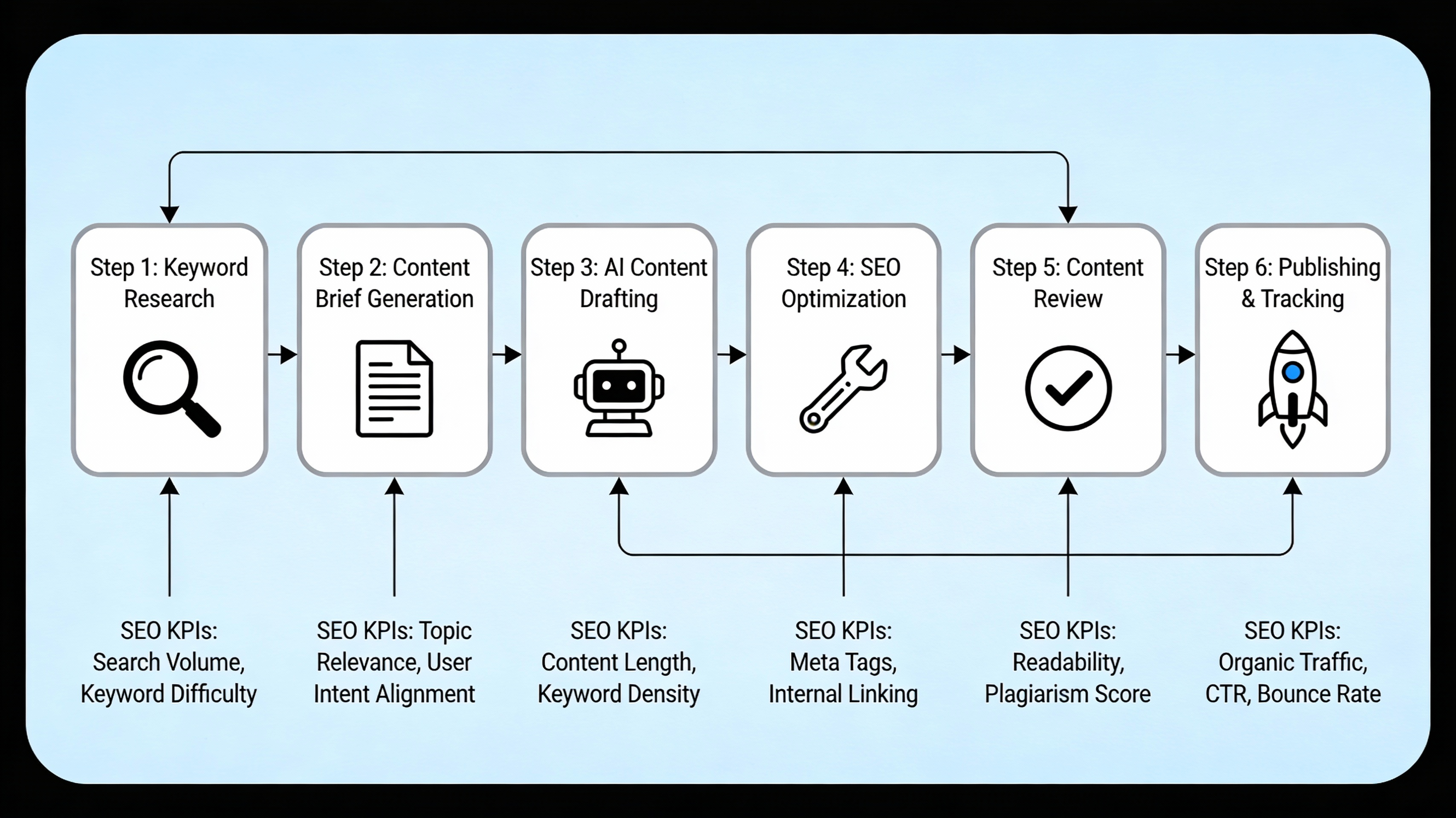
Modernizing your SEO strategy requires a shift from manual, volume-based production to a data-driven, AI-enabled approach. By prioritizing technical foundations and E-E-A-T, brands can ensure their content remains authoritative in both traditional and generative search environments. Actionable steps taken today will determine a brand's visibility in the search landscapes of tomorrow.
- Adopt AI tools like Articfly for content scaling.
- Audit existing content for intent alignment.
- Implement robust structured data across the site.
- Transition reporting from traffic to visibility metrics.
- Pilot AI-generated content on specific topic clusters.
- Verify author expertise for all high-stakes content.
- Set quarterly visibility targets for AI-driven SERP features.
Each of these steps is detailed in various guides accessible through the Articfly platform. Starting small with a pilot program is often the best way to prove the concept to stakeholders.
Adopt AI Tools Like Articfly for Scalable Content
Scalable content production is no longer a luxury but a requirement for competing in 2026. Setting up a content brief template within Articfly allows for immediate consistency in how topics are approached. Running a pilot on a low-stakes topic cluster can demonstrate the speed and quality of AI generation before a full-scale rollout.
Case Snapshot: An article generated by AI showing optimized headings and meta-data vs. a manually written piece that lacks intent clustering and structural depth.
The onboarding guide provides a step-by-step path for teams to integrate these tools into their daily workflows. Automation removes the bottlenecks that traditionally slow down content marketing efforts.
Focus on Search Intent and E-E-A-T
Search intent clustering is the process of grouping keywords based on the user's ultimate goal. Ensuring that content is created by or verified by experts adds the necessary E-E-A-T (Experience, Expertise, Authoritativeness, Trustworthiness) that search engines demand. Transparency about how content is produced and who is behind it builds long-term brand equity.
| Intent Category | Content Type |
|---|---|
| Informational | How-to guides, AI explanations |
| Navigational | Brand portals, feature pages |
| Commercial | Comparison tables, product reviews |
Following the Google E-E-A-T guidelines ensures that your site remains in good standing during core algorithm updates. Authority is built through consistent, expert-level contributions to your niche.
Measure Visibility, Not Just Traffic
Visibility metrics provide a more accurate picture of a brand's health in an AI-driven search world. Monitoring branded search volume and the presence of your content in SERP features helps you understand how often you are being recommended by AI. Quarterly targets should reflect these visibility goals rather than just raw session counts.
KPI Dashboard Mock-up: A visual interface showing the percentage of AI-generated answers where the brand is cited as a source, alongside traditional organic traffic growth curves.
The Articfly analytics overview helps marketers present these complex metrics in a way that is easily digestible for leadership. Shifting the reporting mindset is the final step in a successful SEO modernization strategy.
Key Takeaways

The landscape of SEO has shifted fundamentally, requiring CEOs to abandon outdated notions of keyword rankings in favor of comprehensive visibility. High-performing teams now leverage AI not as a replacement for human talent, but as a strategic force multiplier. Successful organizations align their search strategies with broader business objectives to drive measurable revenue growth.
- CEOs must move beyond chasing #1 rankings to focus on AI visibility and intent fulfillment.
- AI tools augment human SEO expertise, allowing teams to focus on strategy and E-E-A-T.
- Content volume is secondary to intent alignment and authority in 2026.
- Marketing teams must educate the C-suite using data-driven insights and clear ROI metrics.
- Modernizing SEO requires adopting scalable tools like Articfly to maintain a competitive edge.
For a deeper dive into any of these points, refer back to the major sections of this guide on Common CEO Misconceptions, Business Growth Impact, and Implementation Playbooks.
FAQ
Will AI make my SEO team obsolete?No, AI serves as a partner that handles manual tasks, allowing your team to focus on high-level strategy, brand voice, and E-E-A-T. Human oversight is essential for ensuring that automated content meets brand standards and maintains trust with users.
How fast can we see visibility improvements after adopting AI tools?While SEO is a long-term game, many organizations see initial shifts in visibility and AI citations within the first few months. The timeline depends on your existing technical foundation and the speed at which you deploy intent-aligned content.
What metrics should I report to the board in 2026?Focus on visibility metrics such as SERP feature share, AI answer citations, and intent fulfillment scores. These should always be linked back to revenue-driven KPIs like lead quality and conversion rates.
Do I need to overhaul my technical SEO before using AI?You can take an incremental approach, but having a strong technical foundation ensures your AI-generated content performs at its best. Focus on site speed and crawlability as you begin your automation journey.
Can Articfly handle multilingual content for global brands?Yes, Articfly is designed to support the content needs of global brands by providing scalable solutions across different languages and markets. This ensures a consistent brand presence regardless of geographical location.
Turn this into results
Start a free 14-day trial of Articfly and transform your SEO strategy today. By automating your content pipeline, you can bridge the gap between leadership expectations and modern search realities. Visit our pricing page to find the plan that fits your growth goals or book a strategy call with an SEO specialist to discuss your roadmap. Elevate your brand visibility and ensure you remain a leader in the age of AI search.