
Understanding Leadership Concerns About SEO Scaling
Executive decision-making processes often prioritize budget efficiency and risk mitigation when evaluating new marketing technologies. Leadership teams are frequently concerned about the cost per acquisition and whether a new tool can provide a measurable return on investment. Addressing these worries requires a clear explanation of how AI-powered content creation maintains quality while reducing overhead.

Cost and Resource Constraints
Traditional content scaling often requires significant investment in full-time salaries or high freelancer rates. AI automation shifts the model from fixed overhead to a more manageable per-article cost structure. This allows companies to reallocate their marketing budget toward strategic initiatives rather than basic production tasks.
Risk of Quality Decline
A major barrier to adoption is the fear that automated tools will produce low-quality or generic content. Using established quality metrics and AI safeguards ensures that every post meets professional standards. Content directors can implement editorial checkpoints to maintain the brand's unique voice while leveraging the speed of automation.
| Feature | Traditional SEO Team | AI-Powered Automation |
|---|---|---|
| Production Speed | Slow (Days/Weeks) | Fast (Minutes/Hours) |
| Scalability | Limited by headcount | Virtually unlimited |
| Cost per Article | High (Fixed/Variable) | Low (Subscription-based) |
| Quality Control | Manual review only | AI scoring + Human review |
To better understand these dynamics, marketing managers can refer to the Articfly How It Works page or review research on executive decision-making from sources like Harvard Business Review.
Demonstrating ROI with AI-Powered Content Generation
Concrete metrics and data are essential for proving the value of AI content automation to a C-level audience. By focusing on traffic uplift potential and the reduction in cost per article, content managers can build a compelling financial case. Showing how quickly content can reach the market provides a competitive edge that traditional methods cannot match.
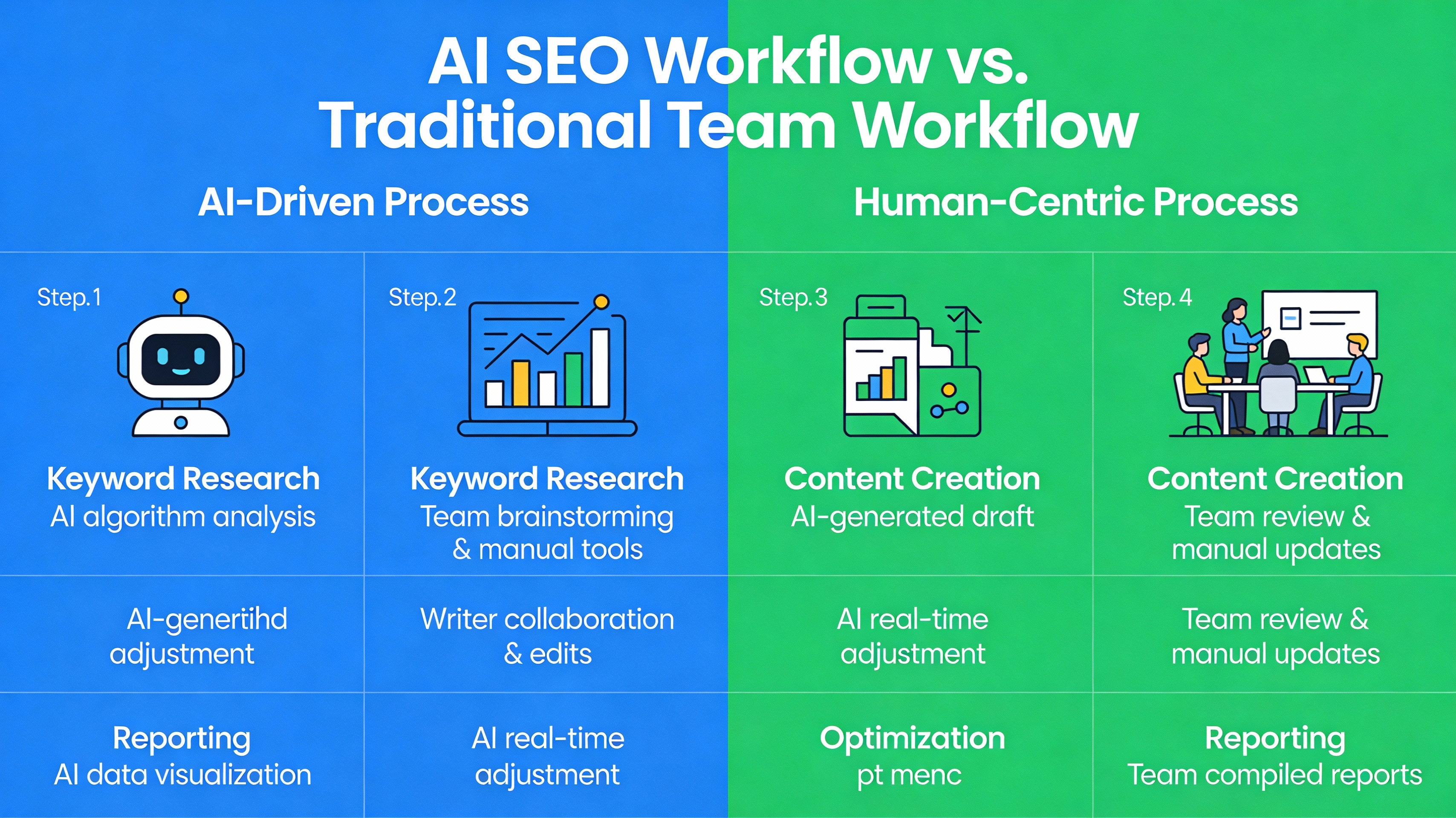
Metrics to Track (traffic, cost per article)
Tracking organic traffic growth alongside lead volume offers a holistic view of the content's impact. It is vital to define these metrics early so leadership understands exactly how performance is measured. Reducing the time-to-publish is another key KPI that directly influences the bottom line.
Case Study Snapshot
A typical success story involves a company transitioning from manual writing to an AI-enhanced workflow. By doing so, they can potentially increase their output while significantly lowering their content spend. These case studies serve as a blueprint for organizations looking to modernize their SEO strategy.
- Organic traffic growth potential
- Total lead volume generation
- Average cost savings per published article
- Reduction in production time-to-market
For more detailed evidence, teams can explore Articfly case studies or industry benchmark reports from the Content Marketing Institute.
Building a Live Demo Using Articfly
A live demonstration provides tangible proof of how an AI system handles brand voice and SEO optimization in real-time. Showing the platform in action allows executives to see the speed and quality of the output before committing to a full-scale rollout. A successful demo focuses on the ease of use and the accuracy of the final generated article.

Setting Up a Sample Project
Begin by selecting a high-impact keyword that is relevant to the business's current marketing goals. Defining the target audience and search intent ensures the AI produces content that resonates with potential customers. This preparation shows leadership that the tool is a strategic asset, not just a content generator.
Showcasing Real-Time Article Creation
During the demo, walk the audience through the user interface to highlight AI-driven suggestions and SEO scoring. Displaying the final output immediately after generation reinforces the efficiency of the platform. Executives can then review the content for brand alignment and technical accuracy.
- Select a high-volume keyword with clear search intent.
- Configure tone of voice and brand identity settings within the platform.
- Generate the initial draft and showcase real-time AI refinements.
- Review the built-in SEO score and metadata suggestions.
Detailed steps can be found in the Articfly onboarding guide or through tutorials on AI content generation at Search Engine Journal.
Crafting a Persuasive Presentation for Executives
Translating technical results into a strategic slide deck is the final step in securing executive buy-in. A successful presentation uses a clear storytelling framework to connect content production challenges with business growth opportunities. By focusing on risk mitigation and long-term scalability, the pitch becomes much more persuasive.
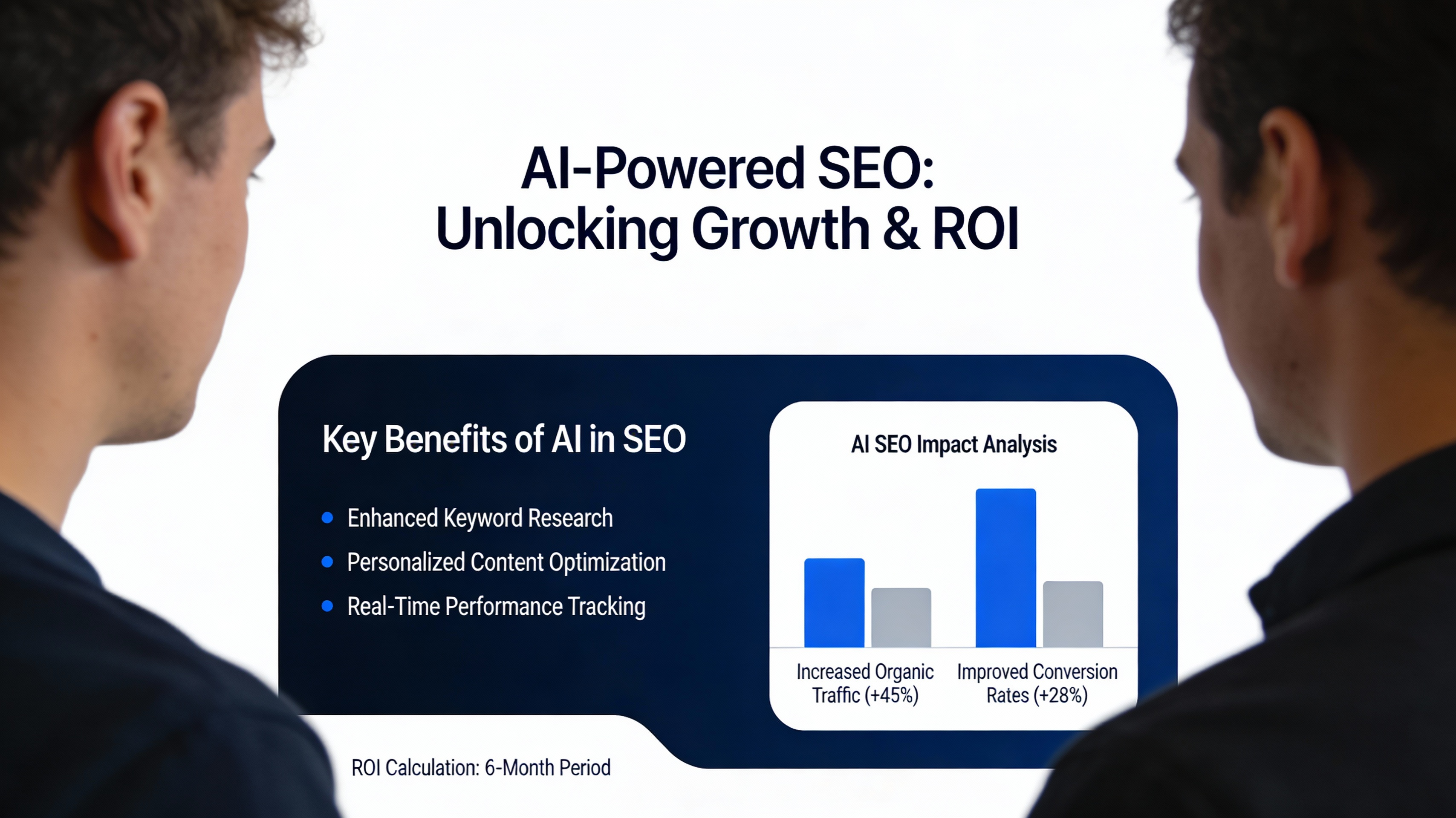
Storytelling Framework
Use a narrative flow that moves from the problem of limited content capacity to the solution of AI-driven scaling. Highlighting the benefits, such as increased market share and reduced costs, helps leadership visualize the impact. The goal is to present a logical progression that makes the adoption of Articfly the obvious next step.
Visual Aids and Data Slides
Include bar charts and line graphs to display potential KPI improvements and ROI comparisons. Visualizing data makes complex performance metrics easier for executives to digest during a brief presentation. High-quality charts provide the professional polish needed for a C-level meeting.
Sample Slide Mock-up Description
The core slide should feature a "Before vs. After" comparison. On the left, list the constraints of manual content creation, such as high costs and limited output. On the right, display the benefits of AI automation, including rapid scaling, consistent SEO scores, and significant budget reallocation.
Reference materials like Articfly’s sales deck template or guides on executive presentations from McKinsey can help refine the final slides.
Addressing Common Objections and Risk Mitigation
Pre-emptively answering objections regarding quality and security ensures that the proposal remains robust during executive scrutiny. Highlighting built-in quality assurance processes and seamless CMS integration helps alleviate fears about operational disruption. A transparent approach to risk management builds trust with the leadership team.
Quality Assurance Processes
AI platforms often include confidence scores and editorial tools to ensure high standards. Explaining how human review can be integrated with AI output shows that quality is never sacrificed for speed. These checkpoints allow for a scalable yet controlled content production pipeline.
Integration with Existing Workflows
Most enterprises require that new tools work with their current content management systems and approval workflows. Detailing API options and easy export features demonstrates that implementation will be smooth and efficient. This focus on integration minimizes the perceived technical risk of adopting a new platform.
How does the system ensure content is unique?The AI uses proprietary algorithms to generate original content based on specific keywords and intent, ensuring it passes common plagiarism checks.
Is our data secure when using AI tools?Enterprise-grade security protocols and data compliance standards are used to protect all brand information and content drafts.
Can we maintain our specific brand voice?Advanced settings allow users to define brand tone, style, and audience, ensuring the output matches existing company communications.
For more information, visit the Articfly security page or consult reputable sources on AI ethics like the IEEE.
Key Takeaways
Strategic implementation of AI allows organizations to scale their SEO efforts without the high costs associated with traditional content teams. Using data-backed demos and clear risk mitigation strategies makes the transition to automated content creation smoother for leadership. When marketing managers present a clear ROI, the path to approval becomes much simpler.
- AI tools can demonstrably scale SEO production while maintaining quality.
- A data-driven live demo is the most effective way to convince executive leadership.
- Address common objections by highlighting quality scores and security protocols.
- Focus on cost reduction and traffic uplift as primary ROI indicators.
To evaluate the financial impact for your specific organization, check the Articfly pricing page.
FAQ
How accurate is AI-generated SEO content?AI-generated content is highly accurate when guided by specific keywords and structured prompts. Platforms like Articfly use advanced models to ensure technical SEO best practices are followed. For additional details, see the support article on AI accuracy.
Can Articfly replace my current writers?Articfly is designed to empower content teams by handling the bulk of production, allowing writers to focus on high-level strategy and final editing. It acts as a force multiplier rather than a total replacement.
What is the typical implementation timeline?The platform is built for rapid deployment, often allowing teams to begin generating content within the first hour of setup. Integration with existing workflows typically takes only a few days.
How does Articfly ensure brand voice consistency?Users can input specific brand guidelines and tone preferences into the system. The AI then applies these rules across every article generated to maintain a uniform identity.
Next steps for AI-driven SEO
Taking the first step toward scaling your content strategy involves testing the platform in a real-world scenario. You can sign up for a free trial to explore the features firsthand or schedule a live demo with the Articfly team for a guided walkthrough. Starting with a pilot project is an excellent way to gather the data needed for a full executive presentation. For further industry insights, you can review the latest industry reports on AI content trends.