
TL;DR: Creating high-converting blog posts with limited resources is challenging, but achievable. This guide introduces a 3-pillar framework focusing on Efficiency, Optimization, and Automation to drive significant conversion improvements. By adopting a minimal resource mindset, leveraging AI tools like Articfly, applying smart SEO, structuring content for conversion, and using budget-friendly testing methods, even small teams can build a scalable content engine that delivers tangible results.
Spis treści:
- Introduction: The Content Conversion Challenge for Resource-Limited Teams
- Understanding Blog Conversion Fundamentals: What Actually Drives Results
- The Minimal Resource Mindset: Strategic Efficiency Over Volume
- AI-Powered Content Creation: How Articfly Transforms Efficiency
- SEO Optimization for Maximum Visibility: Getting Found Without Big Budgets
- Conversion-Focused Content Structure: Engineering Posts That Convert
- Testing and Optimization on a Budget: Data-Driven Decisions Without Expensive Tools
- Building a Scalable, Conversion-Focused Content Engine
Introduction: The Content Conversion Challenge for Resource-Limited Teams
In the competitive digital landscape, every piece of content published needs to earn its keep. For many businesses, particularly those operating with lean teams and limited budgets, the dream of creating high-converting blog content often clashes with the reality of scarce resources. The challenge isn't just about producing content, but producing content that consistently drives user action, whether that's a lead, a sale, or a subscription. Data reveals a stark contrast: while about 35% of marketers report their content achieves a modest 2-5% conversion rate, a significant 30% manage to exceed 10%. The question for resource-limited teams isn't if high conversions are possible, but how to bridge this gap effectively.
Traditional content creation methods, often demanding extensive manual research, writing, and optimization, prove unsustainable for teams without a large marketing department or a hefty content budget. These methods frequently lead to burnout, inconsistent output, and, most critically, a failure to hit ambitious conversion targets. Without a strategic approach, content becomes a drain on resources rather than a revenue-generating asset. The common pitfalls include chasing high-volume production over quality, neglecting crucial SEO factors, and failing to align content directly with specific conversion goals.
This guide introduces a powerful 3-pillar framework designed to tackle these challenges head-on: Efficiency, Optimization, and Automation. This framework is not about doing more with less, but about doing the right things, smarter. It emphasizes strategic planning, leveraging cutting-edge tools, and focusing on measurable outcomes to transform your blog into a conversion powerhouse, even with minimal resources. By adopting these principles, you can shift from a reactive content approach to a proactive, results-driven strategy.
The real-world impact of even marginal improvements in conversion rates can be profound. Consider a scenario where your blog receives 10,000 visitors per month. Improving your conversion rate from 1% to just 3% means going from 100 leads to 300 leads monthly. For businesses with even a modest customer lifetime value, this 200% increase in leads can translate directly into substantial revenue growth, justifying every strategic shift made. This guide will walk you through the practical steps to achieve such improvements, demonstrating that high-conversion content is within reach for every team, regardless of size or budget constraints.
Understanding Blog Conversion Fundamentals: What Actually Drives Results
Before optimizing for conversion, it's crucial to understand what "conversion" means in the context of a blog and what benchmarks to aim for. While every business is unique, industry data provides valuable context. The average blog visit-to-lead conversion rate typically falls between 1% and 3%. However, top-performing blogs can achieve rates exceeding 10%, showcasing the immense potential when strategies align perfectly. These figures aren't meant to discourage but to set a realistic baseline and inspire ambition for what's possible with a focused approach.
At its core, blog conversion is driven by four key elements: intent alignment, value delivery, friction reduction, and clear calls to action (CTAs). First, intent alignment means your content directly addresses the user's search query and underlying needs. If someone is looking for "how to fix a leaky faucet," they expect practical solutions, not a sales pitch for new plumbing. Second, value delivery involves providing comprehensive, accurate, and actionable information that genuinely helps the reader. This builds trust and positions your brand as an authority. Third, friction reduction ensures the user journey from consumption to conversion is seamless. This includes fast page loading times, easy navigation, and straightforward forms. Finally, clear CTAs guide the reader to the next logical step, leaving no ambiguity about what they should do after engaging with your content.
The definition of conversion can also differ significantly based on the content type. Educational blog posts, often at the top of the sales funnel, might aim for softer conversions like email sign-ups, whitepaper downloads, or social shares. Their primary goal is to attract and nurture. In contrast, commercially-oriented posts, closer to the bottom of the funnel (e.g., product comparisons, reviews), will target harder conversions such as demo requests, free trial sign-ups, or direct purchases. Understanding this distinction is vital for setting appropriate goals and crafting the right kind of CTA for each piece of content.
For minimal-resource teams, setting realistic, incremental goals is key to avoiding overwhelm and achieving sustainable progress. Initially, aim for a 1-2% conversion rate, focusing on solidifying the fundamentals across your core content. As you gain experience and refine your processes, you can gradually scale these targets, pushing towards 3% and beyond. Remember, even small, consistent improvements compound over time. The journey to high-conversion content is iterative, built on learning and adapting. By understanding these fundamentals, you lay a strong foundation for a truly impactful content strategy.

The Minimal Resource Mindset: Strategic Efficiency Over Volume
Operating with minimal resources isn't a limitation; it's an invitation to cultivate a mindset of strategic efficiency. Instead of attempting to compete on content volume with larger competitors, your focus should be on maximizing the impact of every piece you create. This approach is deeply rooted in the 80/20 rule, or Pareto Principle: identify the 20% of content efforts that will drive 80% of your conversions. This means prioritizing high-intent topics that directly align with your business goals and audience needs, rather than scattering efforts across a wide range of less impactful subjects.
A crucial step in adopting this mindset is ruthlessly eliminating time-wasters. This involves a critical assessment of your current content creation process: what tasks consume significant time but yield minimal conversion results? Common culprits include endless brainstorming sessions, excessive editing rounds on low-priority content, or creating articles that don't address specific audience pain points or conversion opportunities. Stop producing content that exists merely for the sake of filling a content calendar. Every blog post should have a clear purpose and a defined conversion path.
Repurposing content is another cornerstone of a minimal resource strategy, allowing you to extract maximum value from a single core piece. Imagine writing one comprehensive pillar article on a key topic. This single piece can then be transformed into multiple conversion assets: an infographic for social media, a series of shorter blog posts focusing on specific sub-sections, an email newsletter series, or even a script for a short video. This strategy amplifies your reach and conversion opportunities without requiring you to start from scratch each time, effectively turning one major effort into five or more valuable assets.
Finally, intelligent budget allocation is paramount. With limited resources, every dollar and every hour must be invested where it generates the highest return on investment (ROI). This often means making strategic decisions between tools, time, and talent. While a large team might outsource extensively, a minimal resource team might prioritize investing in smart automation tools (like Articfly) that save hundreds of hours of manual labor, rather than hiring additional full-time writers. Or, it might mean dedicating more internal time to in-depth keyword research and strategic planning, rather than simply paying for generic content. The goal is to funnel resources into high-leverage activities that directly impact your conversion funnel, ensuring that even a small budget yields significant, measurable results.
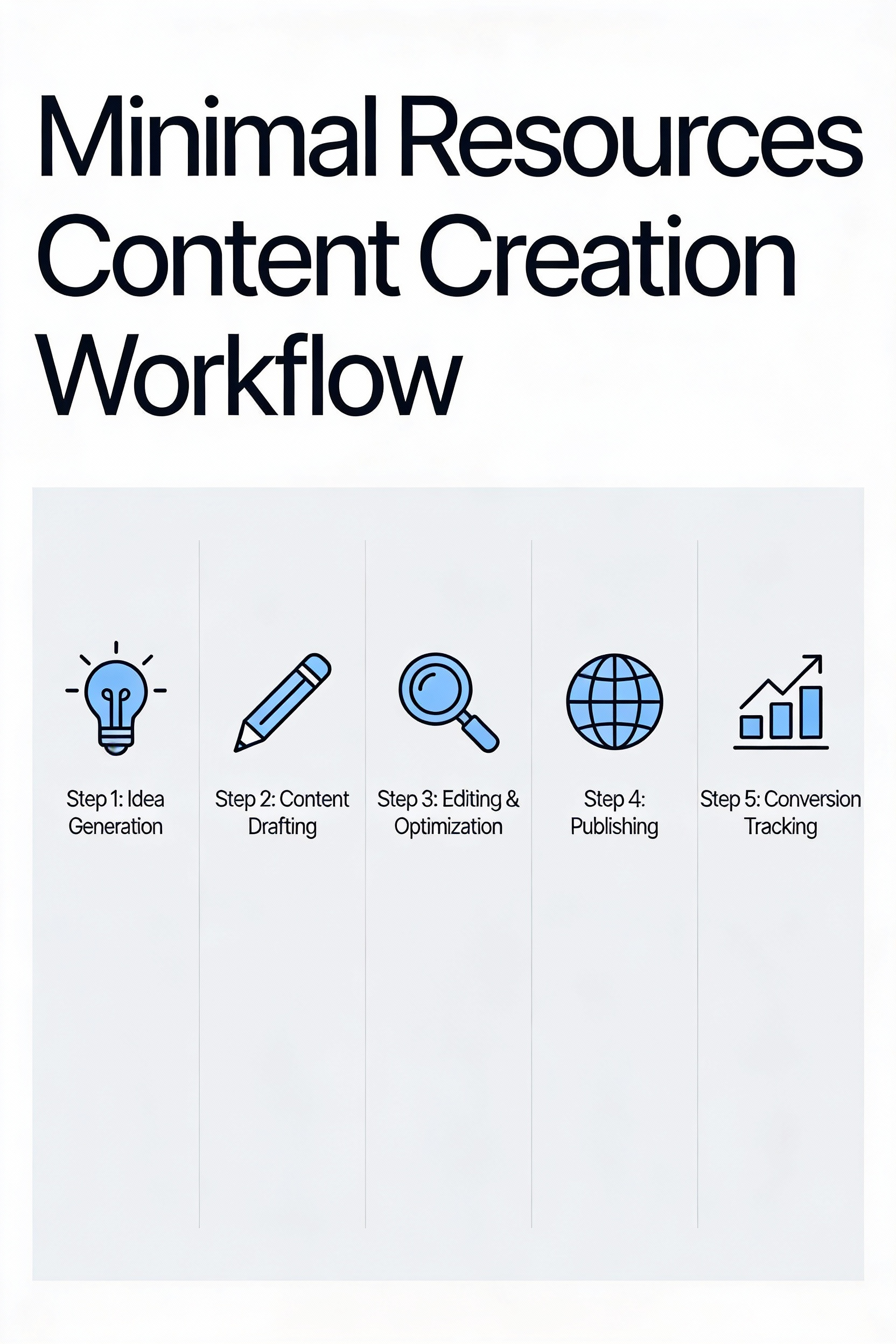
AI-Powered Content Creation: How Articfly Transforms Efficiency
One of the most significant breakthroughs for resource-limited teams in content creation is the advent of AI-powered tools. These platforms directly address the core challenges of time, cost, and consistent quality, making high-conversion content production more accessible than ever before. For teams struggling with stretched budgets and tight deadlines, AI is not just a luxury but a strategic necessity. Studies show that AI can reduce the time spent on drafting content by 30-70%, a game-changer for businesses that previously spent days or even weeks on a single blog post.
Articfly stands at the forefront of this revolution, offering a proprietary AI system meticulously designed to empower content teams. Our platform goes beyond simple content generation; it strategically plans, writes, and structures complete blog posts with conversion in mind. Articfly’s AI analyzes complex search intent, ensuring every article targets the exact needs and questions of your audience. It then automatically applies SEO best practices, from optimal keyword density to proper heading structures, all before you even lift a finger. This means your content is not just well-written, but also primed for visibility and conversion from the moment it's generated.
Consider a practical case study: a small marketing agency with a limited in-house team needed to scale its client content production without expanding staff. By integrating Articfly into their workflow, they were able to produce twice the volume of conversion-focused content, such as service-oriented blog posts and lead magnet articles, using the exact same resources. This enabled them to take on more clients, improve client retention through consistent high-quality output, and ultimately boost their agency's revenue without compromising on individual project quality or team well-being. The key was Articfly's ability to automate the mechanical, time-consuming aspects of content creation, freeing up their team for strategic oversight and client engagement.
Quality assurance remains a top priority, even with automation. Articfly's system is built to maintain your specific brand voice and ensure factual accuracy, reducing the need for extensive post-generation editing. While AI automates the mechanical writing tasks, it leaves room for human creativity and strategic input. You provide the topic and desired tone, and Articfly delivers a ready-to-publish draft that aligns with your brand identity and conversion goals. This synergistic approach allows teams to produce consistent, high-quality, and conversion-optimized content at a scale that was previously unattainable without substantial resources, fundamentally transforming how blogs are built and grow.
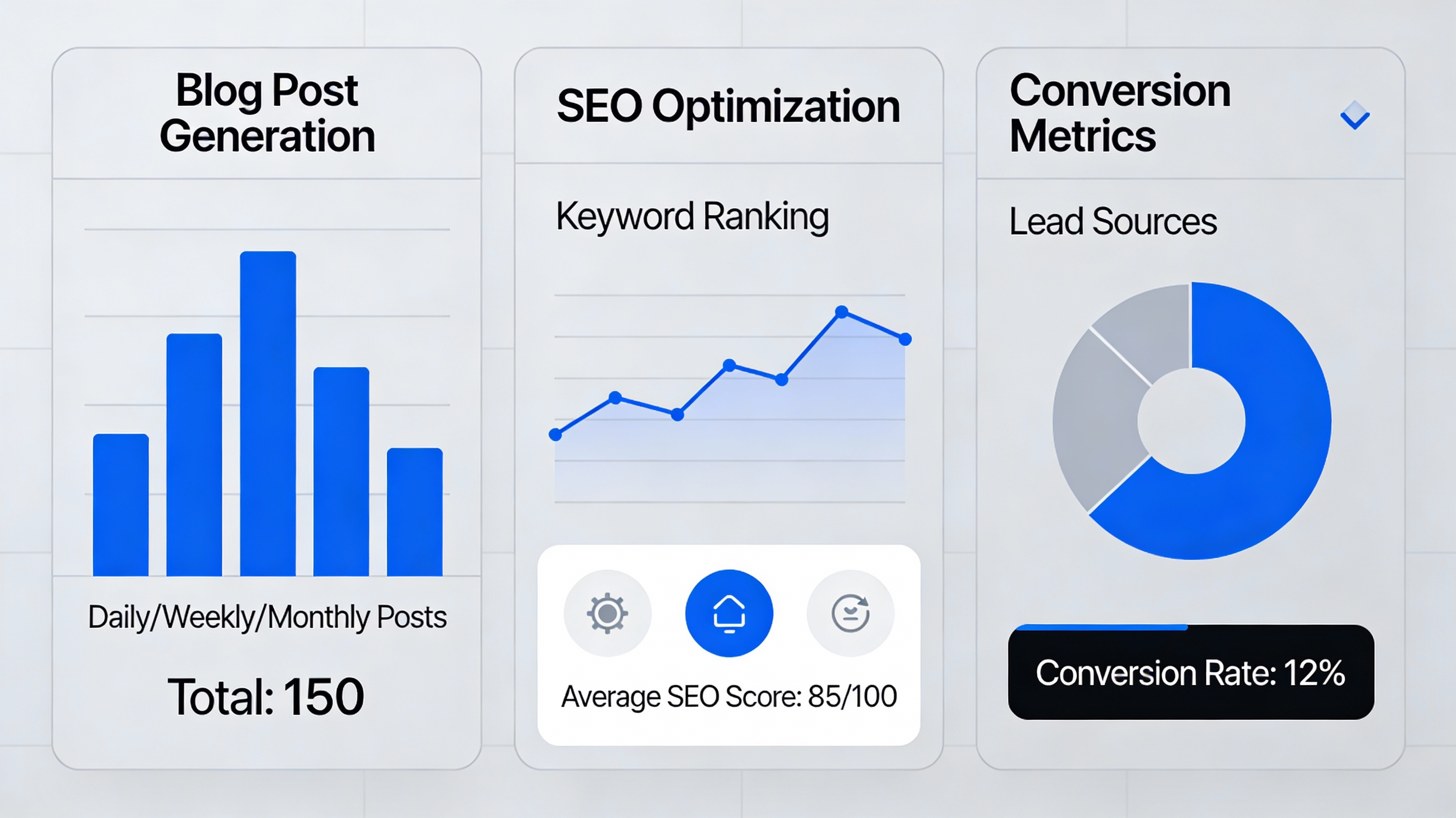
SEO Optimization for Maximum Visibility: Getting Found Without Big Budgets
Achieving high conversion rates is impossible if your content isn't seen by the right audience. SEO (Search Engine Optimization) is the vehicle that drives qualified traffic to your blog posts. For minimal-resource teams, the goal isn't to outspend large competitors but to outsmart them by focusing on highly targeted, effective SEO strategies. The first step is intelligent keyword targeting. Instead of battling for ultra-competitive, broad keywords, concentrate on long-tail, high-intent, low-competition keywords. These phrases might have lower search volume individually, but they attract users who are further along in their buying journey and, therefore, more likely to convert. Tools like Google Keyword Planner (free) can help identify these hidden gems.
Once you have your target keywords, impeccable on-page optimization becomes crucial. Here's a 7-point checklist for every blog post: 1) **Strategic Keyword Placement**: Integrate your primary keyword naturally in the title, first paragraph, and throughout the content. 2) **Compelling Title Tag**: Craft a catchy, keyword-rich title under 60 characters. 3) **Optimized Meta Description**: Write a persuasive 150-160 character summary that includes your keyword and a call to action. 4) **Clear Header Structure**: Use `h2`, `h3` tags to break up content and include relevant keywords. 5) **Image Alt Text**: Describe images using keywords. 6) **Internal and External Links**: Link to other relevant posts on your site and authoritative external sources. 7) **Readability**: Ensure clear, concise language and short paragraphs. Adhering to these elements improves both search engine understanding and user experience.
Technical SEO often sounds daunting, but there are fundamental basics that minimal-resource teams can implement with minimal effort for significant gains. Focus on page speed: slow loading times are a major deterrent for both users and search engines. Utilize image compression, browser caching, and consider a reliable hosting provider. Ensure your site is fully mobile-optimized, as the majority of internet users browse on mobile devices. Google's Mobile-Friendly Test is a free tool to check this. Finally, basic structured data (Schema markup) can help search engines better understand your content, potentially leading to rich snippets in search results, which can boost click-through rates.
Content clustering is an advanced, yet highly effective, strategy for building topic authority and boosting conversions without a huge budget. Instead of creating isolated posts, develop a "pillar page" that broadly covers a core topic (e.g., "AI Content Marketing Guide"). Then, create several "cluster content" posts that delve into specific sub-topics in detail (e.g., "Using AI for Keyword Research," "AI for Blog Post Drafting," "AI for Content Repurposing"). Link all cluster content back to the pillar page, and link from the pillar page to the clusters. This interconnected web signals to search engines that your site is a comprehensive authority on the topic, leading to higher rankings and more qualified traffic that is inherently conversion-ready.

Conversion-Focused Content Structure: Engineering Posts That Convert
The structure of your blog post is just as critical as its content in driving conversions. It’s not enough to merely inform; you must guide the reader from awareness to action. Think of your content structure as a conversion pyramid, funneling readers gently towards your desired outcome. Start with a compelling introduction that immediately hooks the reader and aligns with their search intent. Progress through informative body paragraphs that build value and address pain points. Conclude with a powerful summary and a clear, actionable path forward. This deliberate flow ensures that by the time a reader finishes your post, they are primed to take the next step.
Strategic CTA (Call to Action) placement is paramount. A single CTA at the end of a long post is often insufficient. Aim to embed 3-5 conversion opportunities naturally throughout your content. Start with a soft, relevant CTA early in the post, perhaps after the first few paragraphs (e.g., "Download our free guide to X"). Place a more direct CTA mid-way, particularly after delivering significant value or solving a key problem (e.g., "Request a demo to see X in action"). Always include a strong, clear CTA at the end, summarizing the benefit and reiterating the next step. Ensure CTAs are visually distinct, actionable, and aligned with the content's context.
Leveraging psychological triggers within your content can subtly increase conversion rates. **Scarcity** (e.g., "limited spots available") and **urgency** (e.g., "offer ends soon") can motivate immediate action, but use them genuinely and sparingly to maintain trust. **Social proof**—testimonials, case studies, or user statistics (e.g., "Join 10,000 satisfied customers")—builds credibility and reduces perceived risk. **Authority**, established by expert quotes, data, or your brand's unique insights, positions your brand as a trustworthy leader. Integrating these elements thoughtfully can tip the balance from consideration to conversion, compelling readers to act on your offers.
Effective lead magnet integration is another powerful technique. A lead magnet is a valuable, free resource (e.g., an ebook, template, checklist, or webinar) offered in exchange for contact information. Instead of simply placing a banner ad, weave the lead magnet naturally into your content. For example, if your blog post is about "10 SEO Tips," offer a "Free SEO Checklist" that expands on those tips. Describe the lead magnet's specific benefits and explain how it helps the reader further solve their problem. This approach makes the offer feel like a natural extension of the valuable content they've just consumed, significantly increasing opt-in rates and building your email list with qualified leads who are already engaged with your niche.
Testing and Optimization on a Budget: Data-Driven Decisions Without Expensive Tools
The journey to high-conversion blog posts doesn't end with publishing; it truly begins with continuous testing and optimization. Many small teams fear that data-driven decisions require expensive analytics platforms, but this is a misconception. You can measure and improve conversion rates effectively using free or low-cost tools that are already at your disposal. **Google Analytics** is indispensable for understanding user behavior: where they come from, what pages they visit, how long they stay, and where they exit. **Google Search Console** provides insights into your search performance, showing which keywords drive traffic, your click-through rates, and any technical issues. While premium heatmap tools exist, free alternatives or even strategic use of Google Analytics' "Page Analytics" browser extension can give you basic insights into user engagement on specific page elements.
A/B testing is often perceived as complex, but you can start with basic, high-impact tests even with limited traffic. For minimal-resource teams, focus on what truly matters first: your Calls to Action (CTAs), headlines, and lead magnet offers. Test different CTA button colors, copy, and placement. Does "Get Your Free Ebook" perform better than "Download Now"? Does a specific headline variant lead to more clicks? Does altering the offer for your lead magnet (e.g., a checklist vs. a mini-course) increase sign-ups? Implement one change at a time, allowing enough time for data collection (typically a few weeks, depending on traffic volume) before declaring a winner. Free tools like Google Optimize (though being sunsetted, alternatives exist and basic split testing can be done manually with tracking) or even manual tracking in Google Analytics can facilitate this.
Setting up conversion tracking doesn't have to be a complex, developer-intensive task. For most blog conversions (e.g., email sign-ups, lead magnet downloads), you can use Google Analytics Goals. This involves setting up a goal to track visits to a "thank you" page after a form submission. This simple setup allows you to see which blog posts contribute to these conversions, giving you clear data on your content's effectiveness. Avoid over-complicating your tracking initially; focus on the core actions that directly impact your business goals, and expand as you grow more comfortable and your needs evolve.
Embrace the "1% better" approach to iterative improvement. Instead of striving for massive, overnight conversion spikes, focus on making small, consistent enhancements based on your testing insights. If you improve your CTA by 1%, your headline by 1%, and your content readability by 1%, these small gains compound over time, leading to significant overall conversion uplift. Regularly review your analytics, identify underperforming posts, and make data-backed adjustments. This continuous cycle of analyzing, testing, and refining ensures that your content engine is always optimizing for better results, making every resource invested work harder for you.
Building a Scalable, Conversion-Focused Content Engine
Building a blog that consistently drives conversions with minimal resources is not just a dream—it's an achievable reality when approached with strategic intent. We've explored a powerful 3-pillar framework: Efficiency, Optimization, and Automation. Efficiency means adopting a minimal resource mindset, prioritizing high-impact efforts, and eliminating waste. Optimization involves understanding conversion fundamentals, structuring content to guide users to action, and employing smart SEO to attract qualified traffic. Automation, powered by innovative AI tools like Articfly, frees up valuable time and ensures consistent quality and conversion focus in content creation. Together, these pillars form the bedrock of a scalable and effective content strategy.
To help you put these strategies into action, here's a 30-day implementation plan: **Weeks 1-2: Audit & Strategy**. Review your existing content for conversion opportunities. Identify your top 5 high-intent topics using keyword research. Outline your first 3-5 conversion-focused blog posts, incorporating the "conversion pyramid" structure. **Weeks 3-4: Creation & Launch**. Leverage an AI tool like Articfly to draft your initial posts efficiently. Focus on integrating compelling CTAs and lead magnets. Publish your first batch of optimized posts. Simultaneously, set up basic conversion tracking in Google Analytics for your core goals.
As your initial efforts begin to yield results, you'll naturally want to scale. Scaling with limited resources doesn't mean hiring a massive team overnight. Instead, it involves gradually increasing your capacity as conversions grow. Reinvest a portion of the revenue generated by your high-converting content back into content tools, additional AI credits, or small strategic hires (e.g., a freelance editor for polish). Continuously monitor your analytics to identify which types of content and conversion points are most effective, then double down on those proven strategies. This organic growth model ensures that your content engine remains sustainable and profitable.
Remember, high conversion rates are not exclusive to brands with unlimited budgets. By embracing a smart, data-driven approach and leveraging the power of automation, any team can transform their blog into a formidable conversion engine. Start small, focus on measurable improvements, and let your results guide your expansion. Articfly is here to empower you on this journey, turning your ideas into engaging, data-driven articles that convert, effortlessly. The time to build your scalable, conversion-focused content engine is now.
Ready to supercharge your blog's conversion rates and streamline your content creation process? Explore how Articfly's AI-powered platform can help you generate high-converting, SEO-optimized blog posts in minutes, saving you time and resources. Start your free trial today and transform your content strategy!