
TL;DR: E-E-A-T (Experience, Expertise, Authority, Trustworthiness) is Google's framework for assessing content quality and creator credibility. In 2025, adhering to E-E-A-T is critical for SEO ranking, especially for Your Money or Your Life (YMYL) topics. Demonstrating first-hand experience, deep subject matter expertise, strong domain authority, and absolute trustworthiness through transparency and accuracy will build lasting trust with both users and search engines, ensuring content relevance and visibility.
Introduction to E-E-A-T for SEO Success in 2025
In the evolving landscape of search engine optimization, content quality remains paramount. Google's commitment to delivering reliable, high-quality results has solidified the importance of its E-E-A-T guidelines: Experience, Expertise, Authority, and Trustworthiness. For businesses, agencies, and creators leveraging platforms like Articfly to generate professional, SEO-optimized blog articles, understanding and integrating E-E-A-T is not merely an advantage—it is a foundational requirement for sustained SEO ranking in 2025 and beyond.
E-E-A-T serves as Google's yardstick for evaluating the credibility and relevance of content and its creators. It guides Quality Raters, who provide feedback to Google’s algorithms, on what constitutes valuable and trustworthy information. As AI-powered content generation becomes more sophisticated and widespread, the distinction between genuinely high-quality, human-centric content and purely automated, low-value output becomes even more critical. Google’s algorithms are increasingly adept at discerning these nuances, emphasizing authentic knowledge and reliable sources.
Neglecting E-E-A-T principles can lead to diminished visibility, lower rankings, and a failure to capture target audiences. Conversely, embracing these guidelines demonstrates a commitment to excellence, fostering user trust and signaling to Google that your content is a authoritative resource. This article will deconstruct each element of the E-E-A-T framework, provide actionable strategies for implementation, and explore how to build content that not only ranks but also genuinely serves its audience, positioning your digital presence for unparalleled success in the coming years.
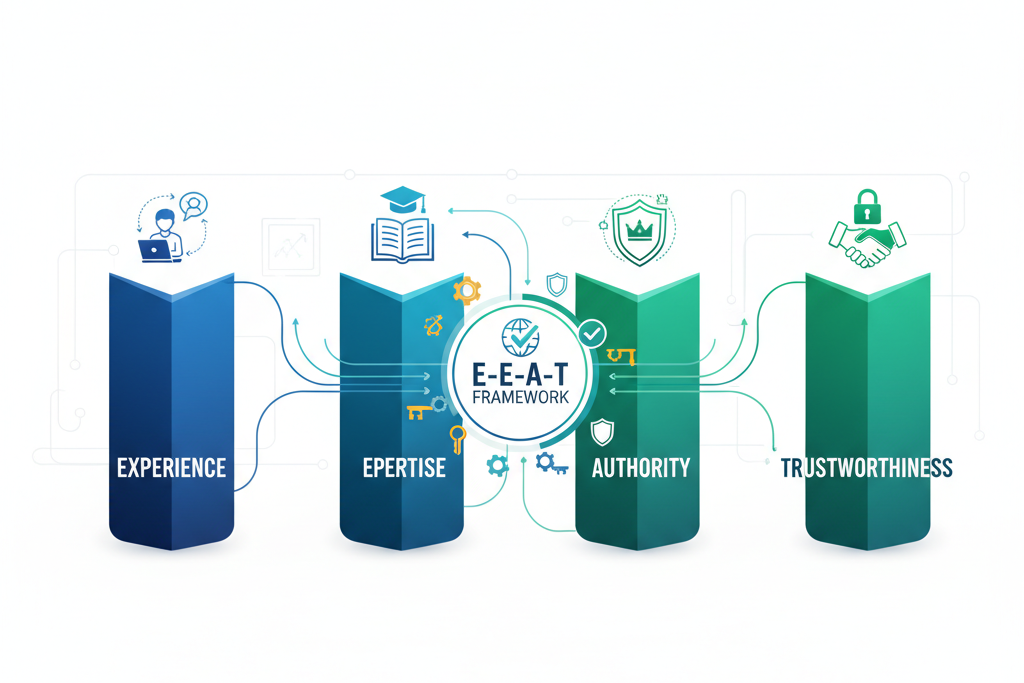
What is E-E-A-T? The Framework Explained
E-E-A-T stands for Experience, Expertise, Authority, and Trustworthiness. This comprehensive framework, initially introduced as E-A-T in Google’s Search Quality Rater Guidelines, was expanded in December 2022 to include "Experience." Its purpose is to help Google determine the overall quality and reliability of a website and its content, particularly in areas where misinformation or low-quality content could have significant negative impacts.
Experience: Demonstrating First-Hand Interaction
The "Experience" component emphasizes the value of content created by individuals who possess direct, first-hand experience with the topic. This goes beyond theoretical knowledge, focusing on practical application and personal insight. For example, a product review written by someone who has actually used the product extensively, or a travel guide authored by someone who has visited the destination, demonstrates clear experience. Google seeks evidence that the content creator has "done it" or "been there," providing unique perspectives and practical advice that can only come from personal engagement.
Expertise: Building Credibility Through Knowledge
Expertise refers to the demonstrable knowledge and skill a creator has in a particular subject area. This often involves formal qualifications, professional certifications, or a deep understanding gained through years of study and practice. For instance, a medical article should ideally be written or reviewed by a qualified doctor, and financial advice by a certified financial planner. Expertise assures users and search engines that the information presented is accurate, well-researched, and reliable, coming from a recognized authority in the field.
Authority: Establishing Your Site as a Trusted Source
Authority relates to the overall reputation and recognition of the content creator and the website as a trusted source within a specific industry or topic. It’s about being seen as a go-to leader or influencer in your niche. Authority is often built over time through consistent creation of high-quality content, industry recognition (awards, mentions), backlinks from reputable sites, and a strong online presence. It signifies that others in the field acknowledge and respect your contributions and insights.
Trustworthiness: The Foundation of E-E-A-T
Trustworthiness is the overarching principle that underpins all other E-E-A-T elements. It refers to the legitimacy, transparency, and accuracy of the content and the website. A trustworthy site is secure, provides accurate information, corrects errors promptly, and clearly identifies its authors and sources. For transactional sites, trustworthiness extends to secure payment processing and reliable customer service. Ultimately, trustworthiness ensures that users can depend on the information and services provided, without concern for deception or inaccuracy.
E-E-A-T is not merely an SEO tactic; it is a framework for building genuine digital credibility and user trust, essential for any content strategy in 2025.
Experience: Demonstrating First-Hand Knowledge
The "Experience" component of E-E-A-T elevates content beyond theoretical discussions, requiring demonstrable first-hand knowledge. This means actively showcasing that the content creator has personally interacted with, performed, or journeyed through the subject matter. For SEO in 2025, this isn't just a suggestion; it's a vital differentiator for authenticity and relevance.
To integrate experience into your content, consider these practical strategies:
- Personal Stories and Anecdotes: Weave authentic personal narratives into your articles. If you're reviewing a tool, describe specific situations where you used it, including challenges faced and solutions found. For a guide on a complex process, share your own journey of learning and implementation. This humanizes the content and makes it relatable.
- Case Studies and Real-World Examples: Go beyond hypothetical scenarios. Present detailed case studies outlining problems, your approach, the actions taken, and the measurable results. Use specific data, screenshots, or testimonials to back up your claims. For Articfly users, this could mean showcasing how the AI platform specifically saved a client time on content generation, with before-and-after metrics.
- Practical Demonstrations: If applicable, embed videos or detailed step-by-step photographic guides demonstrating a process or product use. This visual evidence provides undeniable proof of first-hand engagement and practical knowledge. For instance, a tutorial on using a specific software feature is much more impactful if the author shows themselves actively using it.
- Original Research and Data: Conduct your own surveys, experiments, or data analysis. Presenting unique insights derived from your direct investigations demonstrates a level of experience and engagement that mere aggregation cannot achieve. This also positions you as a thought leader who contributes new knowledge to the field.
- User-Generated Content and Reviews: If your platform allows, incorporate reviews or testimonials from users who have direct experience with your product or service. This leverages collective experience, further solidifying the practical application and benefits of what you offer.
Articfly, for example, empowers users to create content rapidly. By demonstrating how a user's prompt translates into a comprehensive blog post in minutes, we showcase the practical experience of content automation. Content that resonates because it’s clear the author has "walked the talk" will naturally build trust and contribute significantly to higher SEO rankings.

Expertise: Building Credibility Through Knowledge
Expertise is the second pillar of E-E-A-T, focusing on the depth of knowledge and skill a content creator possesses in a specific subject area. For Google, content emanating from demonstrable expertise is inherently more reliable and valuable. Establishing expertise is crucial, particularly for industries where accuracy and informed perspectives are non-negotiable.
To effectively showcase subject matter expertise, consider the following:
- Highlight Author Credentials: Clearly identify the author of each piece of content. Provide concise bios that include relevant qualifications, certifications, professional experience, and academic background. For instance, if a piece on AI content generation is written by an Articfly expert with a background in natural language processing, this should be explicitly stated.
- Cite Reputable Sources: Support your claims with references to scientific studies, industry reports, academic papers, or established authorities. Proper citation not only lends credibility to your content but also demonstrates a thorough understanding of the existing knowledge base within your field.
- Produce In-Depth, Comprehensive Content: Go beyond surface-level information. Tackle complex topics with nuance, providing detailed explanations, exploring various facets, and addressing potential counterarguments. Expert content answers user questions comprehensively, anticipating further queries.
- Demonstrate Up-to-Date Knowledge: Industries evolve, and so should your expertise. Regularly update content to reflect the latest research, trends, and best practices. For AI content, this means discussing the newest models, ethical considerations, and practical applications as they emerge.
- Participate in Industry Discussions: Engage in relevant forums, conferences, webinars, or social media discussions. Being recognized by peers and contributing to the collective knowledge of your industry reinforces your expert status. This can also include interviews, podcasts, or guest posts on other authoritative sites.
- Showcase Thought Leadership: Develop unique perspectives or frameworks on industry challenges. Offer solutions that go beyond conventional wisdom, backed by your deep understanding. This positions you not just as knowledgeable, but as an innovator and leader within your niche.
For Articfly, demonstrating expertise involves explaining the intricate workings of AI-powered content generation, detailing how our proprietary system analyzes search intent, applies SEO best practices, and structures complete blog posts. Our content showcases an understanding of both the technical complexities and the practical applications, reassuring users that our platform is built on solid, expert knowledge.
Authority: Establishing Your Site as a Trusted Source
Authority, within the E-E-A-T framework, refers to the overall recognition and respect your website and its content creators command within your specific niche or industry. It’s about being acknowledged as a leading voice and a dependable reference point. Google views authoritative sites as more likely to provide accurate and valuable information, thus influencing search rankings significantly.
Building domain authority and establishing your site as a trusted source requires a strategic, long-term approach:
- Earn High-Quality Backlinks: Backlinks from other reputable, authoritative websites act as votes of confidence. Focus on creating exceptional, original content that naturally attracts links. Engage in ethical outreach to industry leaders, share your research, and ensure your content is worthy of being cited. The quality of backlinks far outweighs the quantity.
- Secure Mentions and Recognition: Actively seek opportunities for your brand and content creators to be mentioned in industry publications, news outlets, and other high-profile platforms. This could involve press releases, expert commentary, or partnerships. Being cited by respected media amplifies your authority.
- Develop a Strong Brand Presence: A consistent brand identity, professional website design, and active social media presence contribute to overall authority. Ensure your brand messaging is clear, consistent, and reflective of your expertise and values.
- Foster Thought Leadership: Consistently publish innovative research, offer unique insights, and provide solutions to complex industry problems. Host webinars, participate in industry panels, or write whitepapers. Thought leadership positions you at the forefront of your field, naturally attracting recognition.
- Collaborate with Influencers and Experts: Partnering with recognized authorities in your niche can lend credibility by association. This could involve co-creating content, conducting interviews, or featuring guest posts from respected industry figures.
- Ensure Site Reputation: Monitor online reviews, testimonials, and public mentions of your brand. Address negative feedback constructively and strive to maintain a positive public image. A strong online reputation is a cornerstone of authority.
For Articfly, authority is built by consistently delivering cutting-edge AI content solutions, publishing insightful articles on AI and SEO trends, and being recognized as an innovator in automated content generation. Our platform's ability to produce SEO-optimized articles based on data-driven strategies reinforces our position as an authoritative voice in content creation technology.
Trustworthiness: The Foundation of E-E-A-T
Trustworthiness is the bedrock upon which the entire E-E-A-T framework rests. Without trust, even the most experienced, expert, and authoritative content can fall flat. Google's algorithms and human quality raters place immense importance on a website's ability to demonstrate legitimacy, transparency, and unwavering accuracy. For any content strategy in 2025, especially with the rise of AI-generated content, trustworthiness is non-negotiable.
To cultivate and communicate trustworthiness, focus on these critical aspects:
- Transparency in Authorship and Sources: Clearly state who created the content. Provide author bios with relevant credentials and affiliations. For factual claims, cite primary sources, research papers, or reputable organizations. For Articfly, this means being transparent about how our AI system works, its capabilities, and its limitations.
- Accuracy and Fact-Checking: All information presented must be factually correct and up-to-date. Implement rigorous fact-checking processes. Correct any errors promptly and transparently, demonstrating a commitment to truth. This is particularly crucial for "Your Money or Your Life" (YMYL) topics.
- Website Security (HTTPS): Ensure your website uses HTTPS. This encrypts data transferred between the user and your site, protecting privacy and signaling security. Google explicitly favors secure sites in its rankings.
- Clear Privacy Policy and Terms of Service: Provide easily accessible and comprehensive privacy policies, terms of service, and refund policies (if applicable). This shows respect for user data and legal compliance.
- Positive User Reviews and Reputation: Monitor and encourage positive reviews on platforms relevant to your industry. A strong reputation across various review sites, social media, and industry forums builds trust. Address negative feedback professionally and promptly.
- Contact Information and Accessibility: Make it easy for users to contact you. Include clear contact forms, email addresses, and physical addresses (if applicable). This shows accountability and accessibility.
- Editorial Guidelines and Review Processes: For larger content teams, establish and publish editorial guidelines that outline standards for research, accuracy, objectivity, and ethical content creation. If content undergoes expert review, highlight this process.
Articfly builds trustworthiness by delivering consistent, high-quality, and factually sound AI-generated content. Our commitment to accuracy and adherence to SEO best practices, combined with transparency about our AI's capabilities, assures clients that they are receiving reliable and effective content solutions. Trust is earned through consistent performance and ethical operations, forming a loyal audience and strong search engine standing.

YMYL Topics: Why They Require Higher Standards
Within the E-E-A-T framework, certain content categories are designated as "Your Money or Your Life" (YMYL) topics. These are subjects where inaccurate, misleading, or low-quality information could directly and negatively impact a person's health, financial stability, safety, or well-being. Google applies significantly higher E-E-A-T standards to YMYL content to ensure that users receive only the most reliable and trustworthy information when their critical life decisions are at stake.
Examples of YMYL topics include:
- Health and Medical Information: Content related to diseases, symptoms, treatments, medications, nutrition, mental health, and medical advice. Misinformation here can lead to serious health consequences.
- Financial Advice: Articles on investments, loans, credit cards, taxes, retirement planning, insurance, and personal finance management. Incorrect advice can cause significant financial harm.
- Legal Information: Content pertaining to legal rights, laws, regulations, and legal advice. Inaccurate legal guidance can have severe repercussions.
- Public Safety and Civics: Information about voting, government services, public safety warnings, and news events that impact public well-being.
- Shopping and Transactional Pages: E-commerce pages where users make purchases or financial transactions, as trust in product quality, pricing, and secure transactions is paramount.
For YMYL content, Google expects an even greater demonstration of Experience, Expertise, Authority, and Trustworthiness. This means:
- Higher Level of Expertise: Content creators for YMYL topics are often expected to have formal qualifications (e.g., licensed doctors, certified financial planners, lawyers).
- Rigor in Fact-Checking: Every claim must be meticulously fact-checked and supported by authoritative sources, such as government agencies, reputable scientific journals, or established institutions.
- Transparency in Authorship: Clear identification of authors and their credentials is non-negotiable.
- Impeccable Site Reputation: Websites publishing YMYL content must have an unblemished reputation, free from negative reviews or ethical concerns.
- Regular Updates: YMYL information, particularly in health and finance, changes frequently. Content must be regularly reviewed and updated to reflect the latest, most accurate data.
Articfly's AI is designed to incorporate SEO best practices and data-driven content structuring. While our platform can generate initial content for many topics, for YMYL, human oversight by qualified experts remains critical to ensure the highest E-E-A-T standards are met, particularly in fact-checking and validation. Understanding YMYL helps content creators prioritize the level of scrutiny and expertise required for different types of information.

Practical Implementation: E-E-A-T in Action
Translating the E-E-A-T framework into actionable strategies for your content creation process is essential for achieving and maintaining high SEO rankings. Effective implementation requires a holistic approach, integrating these principles into every stage of content planning, production, and optimization. Here’s how to put E-E-A-T into practice:
1. Content Creator Profiles and Biographies
- Showcase Credentials: For every author, include a detailed bio on an "About the Author" page or directly within the article. Highlight relevant degrees, certifications, years of experience, and any professional affiliations.
- Link to Social Proof: Link to the author's professional social media profiles (e.g., LinkedIn), personal websites, or reputable publications they’ve contributed to.
2. Enhance Content Quality and Accuracy
- Deep Research: Invest time in thorough research, citing primary sources, academic studies, and credible industry reports.
- Fact-Checking Protocols: Establish a robust fact-checking process, especially for sensitive or YMYL topics, to ensure all information is accurate and up-to-date.
- Original Content and Data: Whenever possible, conduct original research, surveys, or interviews. Presenting unique data or insights significantly boosts expertise and authority.
3. Demonstrate Experience
- First-Hand Accounts: Encourage authors to weave in personal anecdotes, case studies, and practical examples from their own experience.
- "How-To" Guides with Visuals: Create step-by-step guides using original images or videos that show the author actively performing the described actions.
4. Build Authority and Reputation
- Strategic Backlink Acquisition: Focus on earning high-quality backlinks from authoritative sites in your niche. Create link-worthy content like comprehensive guides, data studies, or unique tools.
- Public Relations and Media Mentions: Actively seek opportunities for your brand and experts to be featured in industry news, interviews, or as guest contributors.
- Community Engagement: Participate in industry forums, Q&A sites, and professional associations. Respond to comments and questions on your own content.
5. Foster Trustworthiness
- Transparent Policies: Ensure your website has easily accessible and clear privacy policies, terms of service, and contact information.
- Website Security: Maintain an HTTPS secure website.
- Editorial Review Process: Implement and, if appropriate, publicize an editorial review process for content, especially for YMYL topics.
- User Feedback and Reviews: Actively manage your online reputation, responding to reviews and fostering positive user feedback.
Articfly's AI system integrates SEO best practices to generate structured content, providing a strong foundation. However, the human element of validating experience, adding expert insights, and ensuring absolute trustworthiness remains paramount for true E-E-A-T optimization. By combining AI efficiency with human expertise, content teams can achieve scalable, high-quality, and E-E-A-T compliant content.
Case Studies: E-E-A-T Success Stories
Observing real-world examples of E-E-A-T implementation provides valuable insights into its impact on SEO and overall brand credibility. These case studies highlight how various entities have leveraged E-E-A-T principles to significantly improve their search rankings and establish themselves as trusted sources.
Case Study 1: The Health & Wellness Blog Rebound
A mid-sized health and wellness blog had experienced declining organic traffic due to algorithm updates targeting low-quality YMYL content. Their content was generic, often lacking author attribution or expert review. Recognizing the issue, they implemented a comprehensive E-E-A-T strategy:
- Experience: They hired registered dietitians and certified fitness trainers to author content, encouraging them to share personal client success stories and practical workout/diet plans.
- Expertise: Each article now prominently featured the author's credentials, with medical claims reviewed by an in-house physician. Sources were meticulously cited.
- Authority: They collaborated with reputable health organizations, securing guest posts and backlinks. They also started participating in health forums as experts.
- Trustworthiness: They updated their privacy policy, secured their site with HTTPS, and added a clear medical disclaimer.
Results: Within 12 months, organic traffic rebounded by over 80%. Their articles began ranking on page one for highly competitive health-related keywords, and user engagement metrics improved significantly, demonstrating increased trust.
Case Study 2: The SaaS Company's Technical Documentation
A SaaS company providing niche software solutions struggled with user adoption, partly due to technical documentation that, while accurate, felt impersonal and lacked depth. Their goal was to become the definitive resource in their software category.
- Experience: Their documentation team now included senior engineers and product managers who were heavy users of the software. They added "pro tips" and troubleshooting advice based on real-world scenarios.
- Expertise: Articles were attributed to specific technical leads, with their engineering backgrounds highlighted. They linked to relevant industry standards and academic papers where applicable.
- Authority: They opened up their API documentation, making it a valuable resource for developers, attracting backlinks. They also ran webinars featuring their experts, establishing them as thought leaders.
- Trustworthiness: All documentation was rigorously tested for accuracy against the latest software versions. A clear feedback mechanism allowed users to report issues, which were addressed promptly.
Results: The company saw a 30% reduction in customer support tickets related to technical queries and a 25% increase in organic traffic to their documentation portal. Their reputation as a knowledgeable and reliable provider grew substantially.
These examples underscore that E-E-A-T is not a theoretical concept but a practical framework that yields tangible results when consistently applied, building both search engine visibility and user confidence.
Embracing E-E-A-T isn't just about pleasing algorithms; it's about fundamentally improving the value and reliability of the content we provide to our audience.
Tools and Resources for E-E-A-T Optimization
Implementing and monitoring your E-E-A-T strategy effectively requires the right set of tools and resources. These aids can help you identify areas for improvement, track progress, and ensure your content consistently meets Google's high standards. For platforms like Articfly, which focus on efficient content generation, integrating these tools complements automated processes with crucial human oversight and enhancement.
1. SEO and Content Audit Tools:
- SEMrush/Ahrefs/Moz: These comprehensive SEO suites offer competitive analysis, backlink auditing, keyword research, and site health checks. They can help identify authoritative sites for backlink opportunities, analyze competitor E-E-A-T signals, and monitor your own domain authority.
- Google Search Console: Essential for monitoring your site's performance in Google Search, identifying crawl errors, and understanding how Google perceives your content. Pay attention to Core Web Vitals and manual actions.
- Surfer SEO/Frase: While primarily for content optimization, these tools help ensure your content covers topics comprehensively, often including entities and concepts that signal deeper expertise.
2. Reputation Management Tools:
- Google Alerts/Mention.com: Set up alerts for your brand, key personnel, and competitors to monitor online mentions. This helps you track your reputation and respond promptly to feedback.
- Trustpilot/Yelp/Industry-Specific Review Sites: Actively manage your presence on relevant review platforms. Positive reviews enhance trustworthiness, while professionally addressing negative ones shows accountability.
3. Author and Expert Management:
- Content Management Systems (CMS) with Author Profiles: Ensure your CMS (e.g., WordPress) allows for robust author profiles where you can easily display credentials, social links, and short bios.
- Internal Expert Databases: For larger organizations, maintain a database of internal experts, their specializations, and credentials to easily identify suitable authors or reviewers for specific topics.
4. Fact-Checking and Verification Resources:
- Reputable Databases: For YMYL topics, refer to established sources like the World Health Organization (WHO), National Institutes of Health (NIH), official government statistics, or peer-reviewed scientific journals.
- Snopes/FactCheck.org: While more for general news, understanding their methodology for fact-checking can inform your internal processes.
5. Website Security and Transparency:
- SSL Certificate Checkers: Ensure your HTTPS certificate is valid and correctly implemented.
- Privacy Policy Generators: Tools that help you create comprehensive and legally compliant privacy policies and terms of service.
By integrating these tools into your workflow, alongside the strategic content generation capabilities of platforms like Articfly, you can systematically monitor, optimize, and fortify your content's E-E-A-T signals, securing a stronger position in the search results for 2025 and beyond.
Future Trends: E-E-A-T in 2025 and Beyond
As we look towards 2025 and beyond, the fundamental principles of E-E-A-T will only grow in significance, albeit with evolving nuances influenced by technological advancements, particularly in AI. Google's continuous refinement of its algorithms signals a future where genuine authority and user trust are more critical than ever.
1. Advanced AI Content Detection and Evaluation:
While Articfly and similar platforms leverage AI to generate high-quality content efficiently, Google's AI capabilities are simultaneously advancing to discern genuine human experience and expertise from purely generative output. Future algorithms will likely become even more sophisticated at identifying AI-generated content that lacks unique insights, personal experience, or deep original research. This means that simply generating content won't be enough; it must be infused with demonstrable E-E-A-T signals to rank effectively.
2. Hyper-Personalization and Niche Expertise:
The future of search may lean towards hyper-personalized results, where user intent is understood with greater precision. This implies that content from highly specialized experts in niche areas will gain even more prominence. Demonstrating granular expertise and experience within a very specific sub-topic, rather than broad general knowledge, will become a powerful E-E-A-T enhancer.
3. Enhanced Author and Entity Recognition:
Google's knowledge graph and entity-based search will continue to evolve, making it easier for algorithms to identify and verify authors and organizations. Building a strong, verifiable digital footprint for authors, linking their credentials and contributions across the web, will directly contribute to their content's E-E-A-T. This includes structured data markup for authors and organizations.
4. Trust Signals Beyond On-Page:
While on-page E-E-A-T signals (author bios, citations) remain important, Google will increasingly look at off-page signals to assess trustworthiness. This includes brand mentions, sentiment analysis of reviews, mentions in news articles, and the overall perception of your brand in the broader digital ecosystem. Reputation management will become an even more direct factor in SEO.
5. Multi-Modal E-E-A-T:
As search becomes more multi-modal (incorporating video, audio, and images), E-E-A-T will extend to these formats. Experts demonstrating their knowledge through video tutorials, podcasts, or rich visual content will build authority across different media types, enhancing their overall E-E-A-T profile.
For Articfly, these trends underscore the importance of our platform's ability to structure SEO-optimized content. However, they also highlight the essential role of human collaboration: using AI to generate the framework, then enriching it with human experience, expert validation, and unique insights to meet these evolving E-E-A-T standards. The synergy between AI efficiency and human credibility will define future content success.
Building Lasting Trust and Authority with E-E-A-T
The E-E-A-T framework is far more than a fleeting SEO trend; it is a fundamental shift towards valuing genuine, high-quality, and trustworthy content. In 2025 and beyond, excelling in Experience, Expertise, Authority, and Trustworthiness will not just improve your search rankings but will cement your brand's reputation as a reliable and indispensable resource for your audience.
By consistently demonstrating first-hand knowledge, showcasing verifiable expertise, building a recognized authoritative presence, and maintaining unwavering trustworthiness, you create content that resonates deeply with users and earns the endorsement of search engines. The integration of E-E-A-T principles into your content strategy is an investment in long-term success, fostering user loyalty and enduring visibility in an increasingly competitive digital landscape.
Elevate your content creation process by focusing on these core tenets. For businesses, agencies, and creators seeking to streamline this while maintaining quality, Articfly’s AI-powered platform provides the foundational structure for SEO-optimized articles. Combine this efficiency with your unique E-E-A-T signals to produce content that truly stands out. Start building lasting trust and authority today.