Table of Contents
- The E-commerce Content Gap
- The SEO Reality: Why Product Pages Aren't Enough
- How Blogs Drive Qualified Organic Traffic
- Building Trust and Authority Through Content
- 5 Types of Blog Content That Convert
- SEO Strategies for E-commerce Blogs
- Measuring Blog ROI and Success Metrics
- Overcoming Common Objections
- Getting Started: Your 30-Day Blog Launch Plan
- The Competitive Advantage of E-commerce Blogging
TL;DR: The E-commerce Blogging Imperative
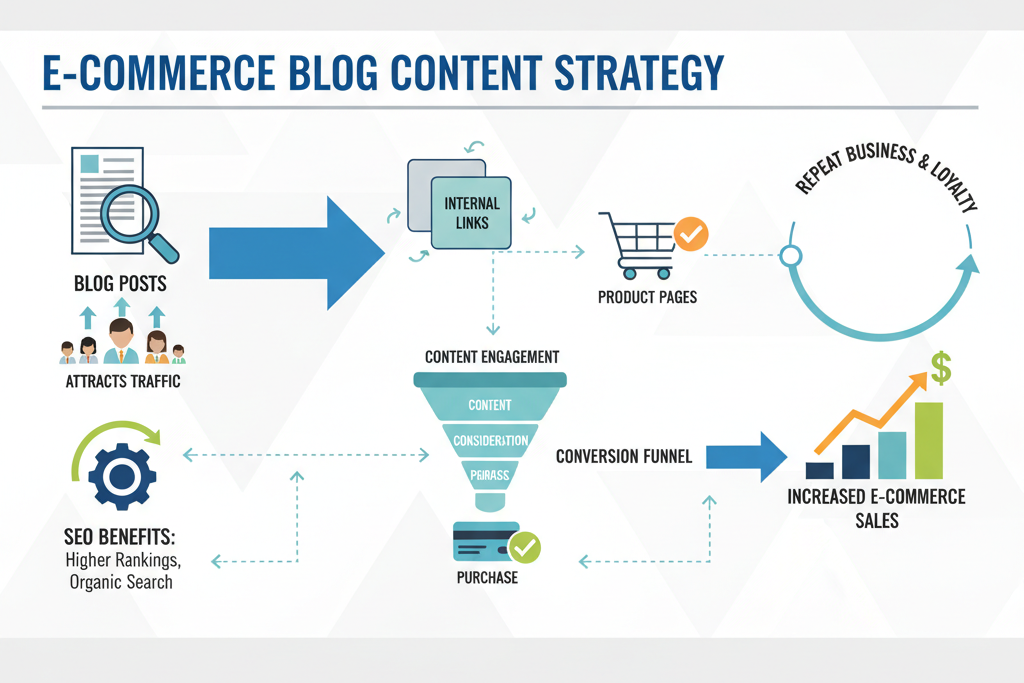
E-commerce stores often neglect the power of a blog, focusing primarily on product pages and paid ads. This creates a "content gap," limiting their reach for broader informational searches. A blog bridges this gap, driving qualified organic traffic by answering customer questions, building trust, and establishing industry authority. It allows stores to rank for a wider range of keywords, nurture customers through the buyer's journey, and ultimately boost sales and customer loyalty. Strategic content, SEO tactics, and ROI measurement are crucial for success, with AI tools now streamlining the creation process.
The E-commerce Content Gap
In the competitive landscape of online retail, many e-commerce store owners channel their primary efforts into product page optimization and aggressive paid advertising campaigns. While these are undeniably crucial components of a successful digital strategy, they often overlook a significant opportunity: the strategic deployment of a blog. This oversight creates what is known as the "e-commerce content gap," a void where product pages, by their very nature, fall short in capturing the vast array of informational queries customers use before they are ready to buy.
Product pages are designed to be transactional, providing details on features, pricing, and calls to action. They excel at ranking for specific, high-intent keywords like "buy [product name]" or "[product type] best price." However, the customer journey is rarely linear. Before making a purchase, potential buyers often conduct extensive research, asking questions such as "how to choose a [product type]," "benefits of [material]," or "best [product] for [problem]." These informational queries represent a massive organic traffic opportunity that product pages are not built to address.
The main argument for integrating a blog into an e-commerce platform is its ability to bridge this critical content gap. By creating valuable, educational, and engaging content, stores can attract visitors earlier in their decision-making process, nurturing them with expert advice and ultimately guiding them towards a purchase. This approach not only broadens a store's organic reach but also establishes it as a trusted authority, setting the stage for long-term customer relationships and sustainable growth.

The SEO Reality: Why Product Pages Aren't Enough
To truly understand the necessity of an e-commerce blog, one must first grasp the inherent SEO limitations of product pages. These pages are meticulously crafted to convert, focusing on concise descriptions, specifications, and direct purchase prompts. Their SEO strategy typically revolves around "transactional keywords" – phrases indicating a strong intent to buy, such as "wireless headphones price," "buy running shoes size 10," or "organic coffee delivery." While critical for capturing ready-to-buy customers, this focus means they inherently miss a significant portion of the search landscape.
The vast majority of online searches are not transactional. Instead, they are "informational queries" (e.g., "how to clean leather boots," "benefits of plant-based protein") or "commercial investigation queries" (e.g., "best budget gaming laptop," "sustainable fashion brands review"). Product pages are poorly equipped to rank for these types of searches. A page dedicated to a specific pair of headphones, for instance, cannot effectively answer "what are the best noise-cancelling headphones for travel?" because its primary purpose is not to provide comprehensive comparisons or educational content.
"Organic search drives a substantial 33% of all website traffic, underscoring its pivotal role in online visibility and customer acquisition."
This limitation highlights a crucial point: relying solely on product page SEO leaves substantial organic traffic on the table. Statistics consistently show the power of organic search. Data from Shopify indicates that organic search drives approximately 33% of all website traffic, making it a critical channel for customer acquisition. Furthermore, organic search traffic converts at an impressive average of 2.93% for e-commerce stores, often outperforming paid channels in terms of long-term ROI. By failing to create content that addresses informational and commercial investigation queries, e-commerce stores are effectively ceding this valuable organic traffic to competitors or leaving it entirely uncaptured.

How Blogs Drive Qualified Organic Traffic
A well-maintained blog serves as an indispensable tool for attracting qualified organic traffic by aligning content with various stages of the buyer's journey. Customers rarely jump directly from awareness to purchase. Instead, they move through a phased process: awareness, consideration, and decision. Each stage is characterized by distinct search intent, and a blog is uniquely positioned to capture all of them.
In the **awareness stage**, potential customers are identifying a problem or need. They use broad informational keywords like "how to sleep better" or "gifts for new parents." Product pages would struggle to rank for these. A blog, however, can publish articles such as "7 Tips for a Restful Night's Sleep" or "Unique Gift Ideas for Expecting Parents," attracting users who might not even know your product exists yet.
Moving into the **consideration stage**, customers are researching solutions. They might search for "memory foam vs. spring mattress" or "organic baby clothes reviews." A blog can offer comprehensive buyer's guides, comparison articles, or product reviews that educate and inform, subtly positioning your products as viable solutions. For example, a store selling mattresses can write an in-depth article comparing different mattress types, including their own, thereby drawing in highly relevant traffic.
Finally, in the **decision stage**, customers are ready to buy and are looking for validation or specific details. They might search for "[your brand name] reviews" or "best way to use [product]." Blog content can provide customer testimonials, detailed how-to guides that showcase product benefits, or FAQs that address common concerns, directly influencing the final purchase. This strategic content ensures that an e-commerce store is visible and valuable at every touchpoint of the customer's journey, converting casual readers into loyal customers.
"Educational content is the cornerstone of effective e-commerce blogging, enabling stores to rank for broader keywords and engage customers long before they are ready to make a purchase."
Successful e-commerce blogs consistently demonstrate this principle. For instance, Patagonia's "The Cleanest Line" blog features stories about environmental activism, product durability, and outdoor adventures, attracting an audience passionate about sustainability and outdoor sports – an audience perfectly aligned with their brand values. Similarly, Wayfair's "Ideas & Advice" blog provides decorating tips, style guides, and practical home solutions, drawing in users seeking inspiration and guidance before they even browse furniture categories. These blogs capture broader keywords, establish expertise, and funnel qualified traffic directly to their e-commerce platforms.

Building Trust and Authority Through Content
Beyond driving traffic, an e-commerce blog plays a crucial role in establishing your store as a trusted authority within its niche. In today's crowded online marketplace, consumers are increasingly wary of purely promotional content. They seek authentic voices, reliable information, and brands that demonstrate genuine expertise. A blog provides the ideal platform to showcase this.
When you consistently publish high-quality, informative, and unbiased content, you position your e-commerce store as an industry expert. This expert positioning builds credibility, a critical factor in consumer decision-making. Imagine a store selling specialized coffee equipment. If their blog features articles on the science of coffee brewing, bean origins, grinder comparisons, and maintenance tips, they are no longer just a retailer; they become a trusted resource for coffee enthusiasts. This transforms the customer relationship from transactional to advisory.
Educational content also significantly reduces purchase anxiety. Many online shoppers hesitate due to uncertainty about product suitability, quality, or how to use a product effectively. A blog can proactively address these concerns through detailed guides, troubleshooting articles, and answers to common questions. For example, a skincare brand's blog explaining different skin types, ingredient benefits, and application techniques can instill confidence in potential buyers, making them feel more informed and secure in their purchase decisions.
Psychologically, humans are hardwired to trust those who provide value without immediate expectation of return. By offering valuable information freely, your blog activates the principle of reciprocity, creating a sense of obligation and goodwill towards your brand. This builds strong trust signals that extend beyond the content itself, influencing perceptions of your products and customer service. Over time, this consistent delivery of value cultivates a loyal customer base who not only buy from you but also recommend your store to others, enhancing your reputation and brand equity.

5 Types of Blog Content That Convert
To maximize the impact of your e-commerce blog, it's essential to diversify your content strategy with types that specifically address customer needs and drive conversions. Here are five highly effective blog content types:
1. How-to Guides and Tutorials
These articles provide step-by-step instructions on how to use a product, solve a problem, or achieve a specific outcome related to your niche. They are incredibly valuable for attracting users in the consideration and decision stages.
- **Example:** A gardening store blog post titled "How to Repot Your Houseplants for Optimal Growth," featuring their specific potting soil and planters.
- **Benefit:** Demonstrates product utility, solves customer problems, and positions your brand as helpful.
2. Buyer's Guides and Comparison Articles
These help customers make informed decisions by breaking down complex product categories or comparing different options. They are excellent for attracting users doing commercial investigation.
- **Example:** An electronics retailer blog post: "The Ultimate Guide to Choosing the Right Smartwatch: Apple vs. Samsung vs. Fitbit."
- **Benefit:** Educates consumers, addresses common dilemmas, and allows you to subtly promote your own products as the best solution.
3. Industry Trends and Insights
Staying current with industry developments demonstrates thought leadership and keeps your audience engaged. These articles can attract a broader audience interested in your niche.
- **Example:** A sustainable fashion brand blog post: "5 Emerging Trends in Eco-Friendly Textiles for 2024."
- **Benefit:** Establishes authority, keeps your brand relevant, and attracts an audience interested in future-proofing their purchases.
4. Customer FAQs and Problem-Solving Content
Directly addressing common questions and pain points shows you understand your customers and care about their experience. This content is highly valuable for reducing purchase anxiety.
- **Example:** A pet supply store blog post: "Solving Separation Anxiety in Dogs: Products and Techniques That Work."
- **Benefit:** Builds trust, provides immediate value, and can directly lead to sales of related products.
5. Behind-the-Scenes and Brand Storytelling
Humanize your brand by sharing its origin, values, manufacturing processes, or team stories. This type of content fosters emotional connections and loyalty.
- **Example:** A handcrafted jewelry brand blog post: "Meet the Artisans: A Day in Our Workshop."
- **Benefit:** Creates a deeper connection with customers, highlights ethical practices, and differentiates your brand in a crowded market.
SEO Strategies for E-commerce Blogs
A blog's true power for an e-commerce store is unleashed when integrated with a robust SEO strategy. Simply publishing content is not enough; it must be optimized to be found by the right audience. Here are essential SEO tactics for e-commerce blogs:
Keyword Research for Content Gaps
Begin by identifying keywords that your product pages cannot effectively target. This involves looking beyond transactional terms to informational and long-tail keywords. Use tools like Ahrefs, Semrush, or Google Keyword Planner to find queries related to your products that indicate early-stage buyer intent or problem-solving. For instance, if you sell hiking boots, research terms like "best hiking trails for beginners," "how to waterproof hiking boots," or "difference between hiking boots and walking shoes." These represent content gaps your blog can fill.
Internal Linking Strategies
Internal linking is paramount for e-commerce blogs. Every relevant blog post should include strategic internal links pointing to related product pages, category pages, or other relevant blog posts. This not only helps search engines discover and index your product pages but also passes "link equity" (SEO value) from your high-ranking blog content to your money pages. For example, a blog post about "The Benefits of Organic Skincare" should link to your organic cleanser product page. Use descriptive anchor text that includes relevant keywords to maximize impact.
Optimizing for Featured Snippets
Featured snippets (the "answer box" at the top of Google search results) offer an unparalleled opportunity for visibility. Structure your blog content to target these by answering common questions concisely and directly. Use headings like "What is [concept]?" or "How to [do something]?" followed by a clear, paragraph-long answer. Lists and tables within your content can also be prime candidates for snippet inclusion, significantly boosting your click-through rate.
Creating Pillar Content Clusters
To establish comprehensive authority on a topic, develop "pillar content" around broad subjects and then create "cluster content" that links back to the pillar page. A pillar page is a comprehensive, evergreen piece of content (e.g., "The Ultimate Guide to Sustainable Living"). Cluster content would be more specific blog posts (e.g., "5 Easy Swaps for a Plastic-Free Kitchen," "Understanding Ethical Sourcing in Clothing") that deeply explore sub-topics and link back to the pillar. This structure signals to search engines that your site is a definitive resource for the overarching topic, improving rankings for all related content.

Measuring Blog ROI and Success Metrics
To ensure your e-commerce blog is a profitable venture, consistent measurement of its return on investment (ROI) and performance metrics is essential. Without tracking, it's impossible to identify what's working, what needs improvement, and the tangible impact on your business goals.
Organic Traffic Growth
This is a foundational metric. Track the increase in visitors arriving at your blog posts from search engines over time. Tools like Google Analytics can show you not only the total organic sessions but also which specific blog posts are driving the most traffic. A steady upward trend indicates that your content is ranking well and resonating with your target audience.
Conversion Rates from Blog Visitors
The ultimate goal is sales. Use your analytics platform to track how many visitors who landed on a blog post eventually made a purchase. This includes both direct conversions (where the blog post was the last touchpoint before sale) and assisted conversions (where the blog post was part of the customer's journey but not the final touchpoint). Set up conversion goals in Google Analytics for purchases, newsletter sign-ups, or adding items to a cart to accurately attribute revenue to your blog content.
Time on Page and Engagement
High time on page (the duration visitors spend on a particular blog post) indicates that your content is engaging and valuable. Low bounce rates (visitors leaving after viewing only one page) also signify good engagement. These metrics tell you if your content is holding attention, which is crucial for building trust and guiding visitors further down the sales funnel.
Assisted Conversions
Many sales journeys involve multiple touchpoints. A blog post might introduce a customer to your brand, who then returns later via a direct search or email to make a purchase. Assisted conversions illuminate the indirect impact of your blog, showing its role in nurturing leads even if it's not the final step. Analyze conversion paths in Google Analytics to see where your blog posts fit into the customer journey.
Other important metrics include keyword rankings, backlinks acquired (indicating content authority), and social shares. Regularly reviewing these metrics provides a clear picture of your blog's effectiveness and helps in refining your content strategy for maximum impact.
Overcoming Common Objections
Despite the clear benefits, many e-commerce store owners face hurdles when considering a blog. Common objections often revolve around resources, skills, and perceived impact. Addressing these concerns directly is vital for adoption.
"I don't have time to blog."
This is perhaps the most frequent concern. Running an e-commerce store is demanding, and adding another task like content creation can feel overwhelming. However, blogging does not require daily posting. A consistent schedule of 2-4 high-quality articles per month can yield significant results over time. Furthermore, the long-term ROI of organic traffic often outweighs the initial time investment compared to continuous paid ad spend. Delegating tasks or leveraging external resources can also free up your time.
"I'm not a writer."
Not everyone is a natural wordsmith, and the thought of producing engaging, SEO-optimized content can be daunting. The good news is that you don't have to be. Content creation skills can be learned, or more efficiently, outsourced. Freelance writers, content agencies, or even internal team members with a passion for writing can be tapped. Crucially, the rise of AI tools has revolutionized this objection.
Platforms like Articfly specialize in AI-powered blog content creation, enabling businesses to generate professional, SEO-optimized articles automatically. Articfly’s proprietary AI system plans, writes, and structures complete blog posts based on any topic or keyword, analyzing search intent and applying SEO best practices. This dramatically saves time, reduces costs, and maintains consistent quality, effectively eliminating the "I'm not a writer" barrier.
"Will this really drive sales?"
The connection between a blog post and a direct sale isn't always immediate, leading some to question its commercial impact. However, as discussed, blogging drives sales indirectly by building trust, authority, and attracting qualified leads earlier in the buyer's journey. It nurtures customers, answers their questions, and provides the information they need to feel confident in their purchase. While direct last-click conversions from blog posts might be lower than product pages, their role in assisted conversions and long-term customer loyalty is undeniable. A blog builds brand equity that compounds over time, creating a more sustainable and resilient business model than one solely reliant on direct marketing.

Getting Started: Your 30-Day Blog Launch Plan
Launching an e-commerce blog might seem like a large undertaking, but with a structured plan, you can establish a strong foundation within 30 days. Here's a step-by-step action plan:
Week 1: Strategy and Setup
- **Define Your Audience:** Who are you trying to reach? What are their pain points, interests, and questions related to your products?
- **Keyword Research:** Identify 10-15 informational and commercial investigation keywords relevant to your niche that your product pages don't currently target. Use tools to find topics with reasonable search volume and low competition.
- **Content Calendar:** Outline a preliminary content calendar for your first 3-6 months. Aim for 2-4 posts per month initially.
- **Platform Setup:** Integrate a blog into your existing e-commerce platform (Shopify, WooCommerce, etc.). Ensure it's mobile-friendly and easily navigable.
Week 2: Content Creation Kick-off
- **First 5 Post Ideas:** Based on your keyword research, brainstorm compelling titles and outlines for your initial posts. Focus on foundational topics that answer common customer questions or provide essential guides.
- **Drafting Begins:** Start writing (or generating with AI tools like Articfly) your first 2-3 articles. Prioritize clarity, value, and SEO optimization.
- **Internal Linking Plan:** Identify which product or category pages your first posts can link to, and plan for anchor text.
Week 3: Polish and Publish
- **Review and Edit:** Thoroughly review your drafted articles for grammar, spelling, factual accuracy, and readability. Ensure your tone aligns with your brand.
- **Add Visuals:** Incorporate high-quality images, infographics, or videos to make your posts more engaging. Ensure all images have descriptive alt text.
- **SEO Check:** Double-check titles, meta descriptions, headings, and keyword density.
- **Publish First Posts:** Launch your initial 2-3 blog posts, staggering them by a few days for consistent fresh content.
Week 4: Promotion and Planning Ahead
- **Promotion Strategy:** Share your new blog posts across your social media channels, email newsletters, and any other relevant marketing platforms.
- **Monitor Performance:** Begin tracking initial traffic and engagement using Google Analytics.
- **Plan Next Steps:** Review your content calendar and start preparing for the next batch of articles based on initial performance and feedback.
By following this plan, you can systematically launch your e-commerce blog and begin reaping the benefits of organic traffic and enhanced customer engagement within a month.
The Competitive Advantage of E-commerce Blogging
In the dynamic world of e-commerce, where competition is fierce and advertising costs are ever-rising, establishing a blog is no longer merely an option; it is a sustainable competitive advantage. While product pages and paid ads address immediate transactional needs, a blog builds the foundational elements of long-term success: organic traffic, brand authority, and customer loyalty.
By investing in content that answers questions, educates consumers, and fosters trust, e-commerce stores can break free from the limitations of transactional SEO. They can capture a wider audience earlier in the buyer's journey, nurturing leads with valuable information and positioning themselves as indispensable resources rather than just another retailer. This strategy not only drives qualified visitors but also cultivates a deeper relationship with customers, leading to higher conversion rates and repeat business.
The integration of a blog allows businesses to future-proof their marketing efforts, creating evergreen assets that continually attract traffic and build equity over time. Tools like Articfly are further democratizing this powerful strategy, making high-quality, SEO-optimized content creation accessible to every e-commerce brand, regardless of internal writing resources. Do not miss the opportunity to transform your e-commerce store into an industry thought leader and a magnet for loyal customers.
Empower your e-commerce store with a blog to secure a lasting competitive edge. Start planning your content strategy today and explore how AI-powered solutions can streamline your creation process.