
Understanding CFO Priorities
Aligning your pitch with CFO priorities is the essential first step in securing a budget for long-term marketing initiatives. Chief Financial Officers are primarily focused on risk mitigation, return on investment, and maintaining healthy cash flow across the organization. By speaking their language—focusing on EBITDA and payback periods—you position SEO as a strategic financial asset rather than an optional expense.

In the financial world, every dollar spent must be justified by its contribution to the overall financial strategy. CFOs operate on strict decision-making timelines and have a specific risk tolerance that marketers must respect. Articfly’s guide on aligning marketing with finance suggests that showing how SEO fits into these timelines is key to winning approval from reputable resources like Investopedia.
| CFO-Focused Metrics | Typical Marketing KPIs |
|---|---|
| EBITDA Impact | Keyword Rankings |
| Payback Period | Monthly Website Traffic |
| Cost Per Acquisition (CPA) | Social Media Engagement |
| Incremental Revenue | Click-Through Rate (CTR) |
Core SEO ROI Metrics to Highlight
Translating SEO performance into financial language requires moving beyond surface-level data to focus on incremental revenue growth. CFOs want to see exactly how organic traffic converts into dollars and how those dollars compare to other acquisition channels. Utilizing revenue attribution models, such as first-touch or multi-touch, helps demonstrate the true value of every search visitor.
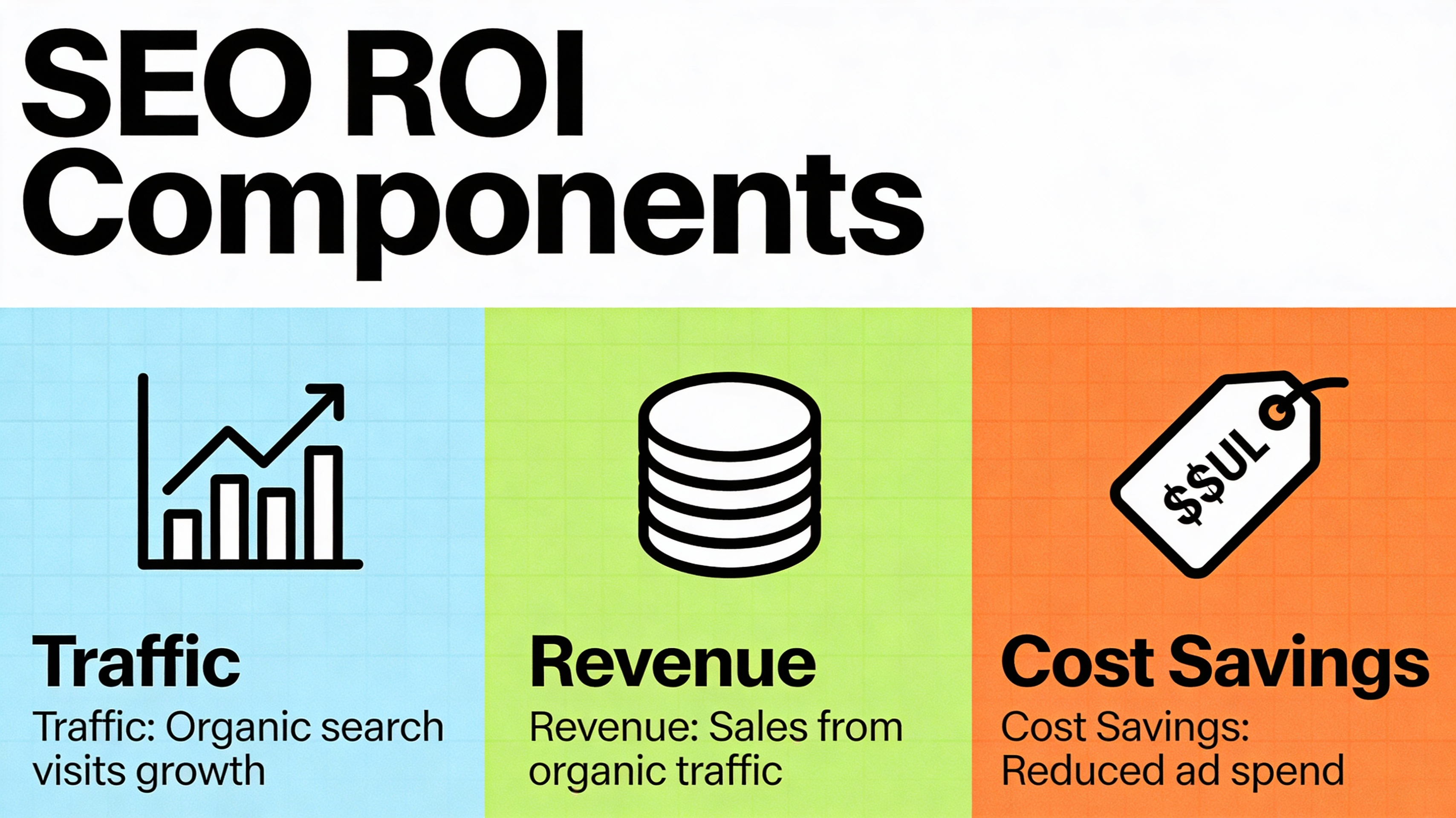
When presenting these numbers, focus on the cost savings generated by SEO compared to traditional paid media. Use Articfly’s SEO ROI calculator page to find the specific figures that prove organic search's efficiency. You can also reference Moz’s article on SEO ROI measurement to provide external validation for your calculations.
- Organic traffic growth expressed as incremental revenue impact.
- Revenue attribution models showing multi-channel contribution.
- Comparative cost analysis between SEO and PPC spend.
- Long-term customer lifetime value (LTV) from organic leads.
Crafting a 3-Minute Pitch
A repeatable pitch structure ensures that you can deliver your most impactful data within a very limited window of time. The pitch should begin with a strong hook, move into data points with clear dollar impacts, and end with a vision of future growth. This streamlined approach respects the CFO’s time while addressing their core concerns about capital allocation.

To prepare effectively, use a pitch template to organize your thoughts and ensure no critical metric is missed. Consulting HubSpot’s guide on executive presentations can also help you refine your delivery for a high-stakes meeting. The goal is to be concise, data-driven, and focused on the bottom line.
"Our current SEO strategy is projected to deliver approximately 20% incremental revenue growth this year, achieving a significantly lower cost per acquisition than our paid search channels. By investing now, we mitigate the risk of rising ad costs and build a permanent digital asset that compounds in value over time."
Structure: Hook, Data, Impact
The hook should establish immediate value by stating that SEO delivers a specific percentage of incremental revenue at a lower cost than paid ads. Once you have their attention, provide concise numbers that show the approximately calculated dollar impact of your organic growth. Connect these results back to broader strategic goals like market share and long-term brand equity.
| Scenario | Advertising Reliance | Profit Margin Impact |
|---|---|---|
| Before SEO Investment | High (100% PPC) | Lower due to rising ad costs |
| After SEO Investment | Balanced (60% Organic) | Higher due to reduced acquisition costs |
By reviewing a case study on Search Engine Journal, you can see how other companies have successfully navigated this transition. Showing a before and after scenario makes the financial benefit of SEO undeniable.
Storytelling Techniques
Using narrative hooks helps a CFO visualize SEO as a financial instrument rather than a technical task. Analogies like "SEO is the long-term dividend of a growth portfolio" can make the concept of compounding interest in content more relatable. Utilizing Articfly’s storytelling resources can provide more frameworks for these types of high-level discussions.
"From a financial perspective, SEO is not just marketing; it is an investment in our digital real estate that compounds over time, providing a more stable return than volatile paid auction markets."— CFO Perspective on Digital Growth
Leveraging AI-Powered Content Tools
Articfly’s AI-powered platform drastically improves SEO ROI by reducing the time and labor costs associated with content creation. By automating topic research and writing, the system saves dozens of hours per week for marketing teams. This efficiency allows the company to scale output and hit growth targets much faster than manual processes allow.
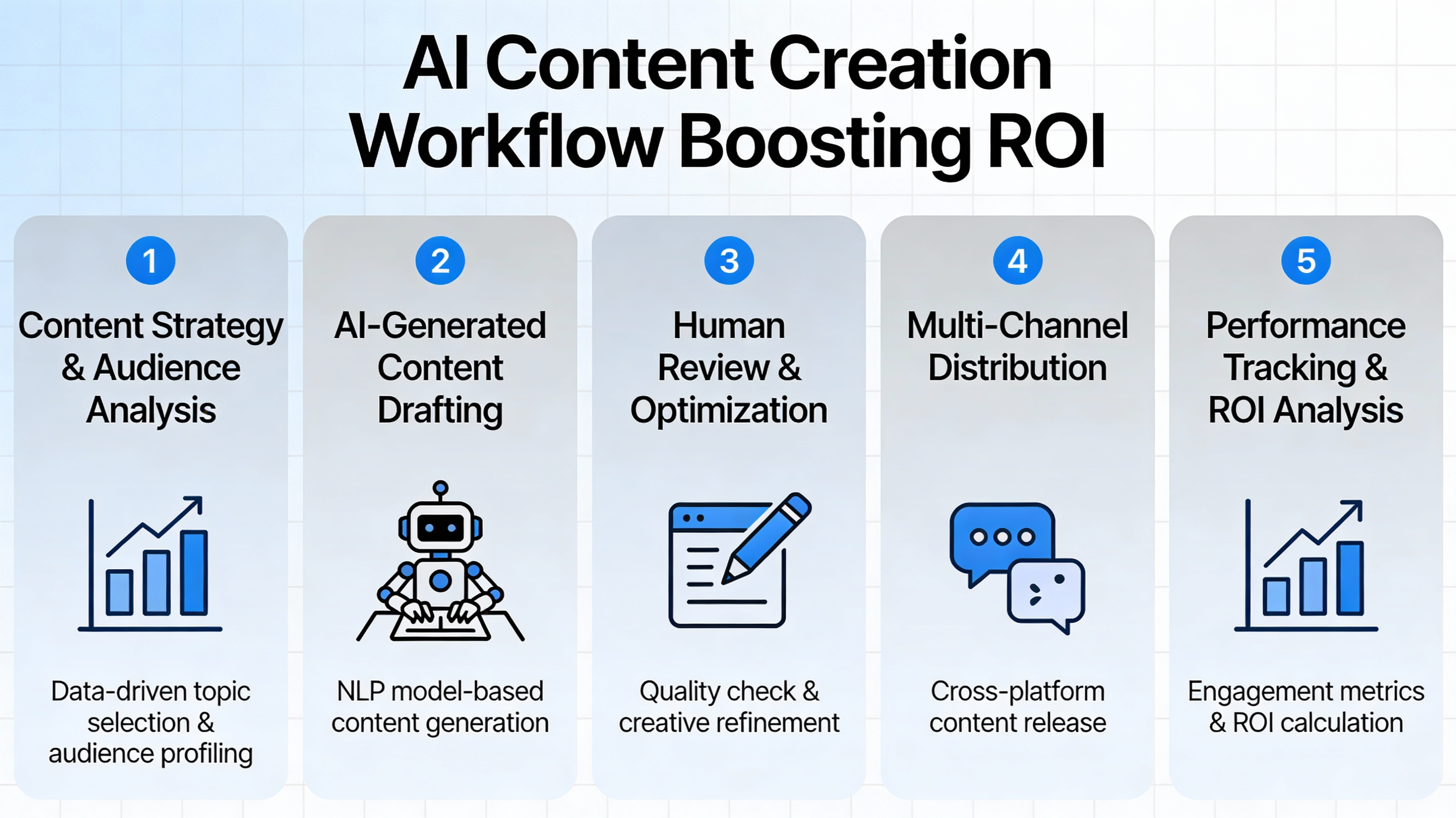
Furthermore, consistent application of SEO best practices through AI increases the ranking potential of every article published. This scalable approach aligns perfectly with corporate growth targets and ensures a steady stream of organic traffic. For more context, you can read the Articfly product page or a neutral AI-in-marketing overview on Gartner.
Visual Aids for Rapid Understanding
Equipping your pitch with one-page visuals allows the CFO to grasp complex data trends in seconds. A well-designed ROI dashboard should prominently feature traffic growth, revenue generation, and total cost savings. These visual aids act as a source of truth during the meeting and can be easily shared as a follow-up document.
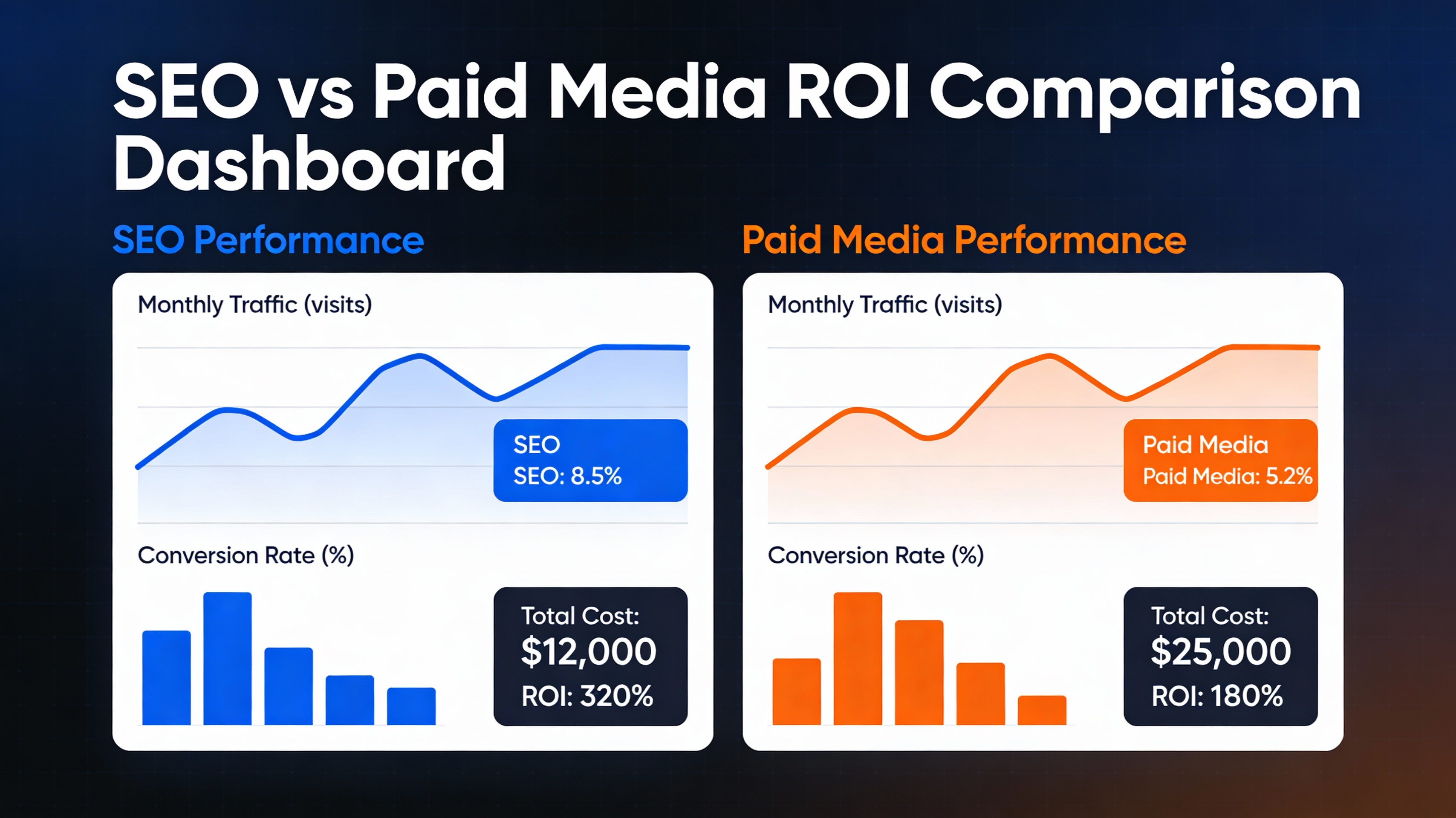
A comparison chart showing SEO versus paid media ROI over a 12-month period is particularly effective at demonstrating the "break-even" point. You can find a downloadable template for this purpose on our site, or reference a benchmark report like the Ahrefs State of SEO 2026 for industry standard data.
Key Takeaways
Focusing on the financial mindset is the only way to consistently win budget approval for SEO projects. By aligning your metrics with the CFO's priorities and using a structured 3-minute pitch, you can prove the value of organic search. Leveraging AI tools like Articfly ensures that these results are achieved efficiently and at scale.
- Always lead with CFO-centric metrics like EBITDA and CPA.
- Use the Hook-Data-Impact structure for all executive presentations.
- Demonstrate the compounding value of SEO compared to paid media.
- Use AI-powered tools to reduce content production costs.
- Provide clear, one-page visual dashboards for rapid understanding.
FAQ
How do I attribute revenue to organic search without exact data?You can use multi-touch attribution models or industry benchmarks to estimate the portion of revenue driven by organic search. Authoritative sources like Search Engine Journal provide frameworks for calculating these estimates when direct tracking is limited.
What’s the typical payback period for SEO investments?While results vary, many businesses see a break-even point within 6 to 12 months as organic traffic begins to compound. This timeline is often shorter when using AI tools to accelerate the content production cycle.
Can AI-generated content affect brand voice?When used correctly, AI tools like Articfly are tailored to match your specific brand identity and tone. This ensures that the scale of production does not come at the expense of consistent quality or voice.
How often should I update the ROI dashboard?A monthly update is generally sufficient for tracking SEO progress, though quarterly deep dives are better for presenting to executive leadership. This frequency allows you to show long-term trends rather than short-term fluctuations.
What if the CFO wants a more detailed financial model?Be prepared to provide a spreadsheet that breaks down cost savings, projected traffic growth, and estimated conversion rates. Referencing principles from Harvard Business Review can help you structure these detailed financial models.
Turn this into results
Taking the next step in your SEO journey is easy with a free 14-day trial focused on SEO ROI reporting. You can also view a demo video showing the AI content workflow to see how Articfly saves your team time and money. If you prefer a personalized strategy, you can schedule a 15-minute consult with an SEO strategist to discuss your specific goals.
Visit the trial signup page to get started or browse our testimonial page to see how other companies have transformed their content strategy. Ready to scale your organic growth? Take action today and start building your 3-minute pitch with data you can trust.