
TL;DR: Future-Proofing Content Marketing
The content marketing landscape is undergoing a rapid transformation, driven by AI, personalization, evolving search methods, data privacy, and immersive technologies. By 2026, content strategies must integrate AI for efficiency, prioritize hyper-personalized experiences, optimize for voice and visual search, build robust first-party data systems, and explore interactive formats in AR/VR. Proactive adaptation and strategic planning are crucial for maintaining a competitive edge and ensuring sustained engagement in this dynamic digital environment.
Table of Contents
- The Evolution of Content Marketing: Preparing for 2026
- AI and Automation in Content Creation
- Hyper-Personalized Content Experiences
- Voice and Visual Search Optimization
- First-Party Data Strategy in a Post-Cookie World
- Immersive Content in AR/VR and the Metaverse
- Preparing Your Content Strategy for 2026
The Evolution of Content Marketing: Preparing for 2026
The digital landscape is in a state of perpetual motion, and content marketing stands at the forefront of this rapid transformation. What was effective five years ago may now be obsolete, and strategies considered cutting-edge today could be standard practice or even outdated by 2026. This relentless evolution necessitates a proactive and strategic planning approach from marketers and businesses aiming to maintain relevance and competitive advantage. The ability to anticipate and adapt to emerging trends is no longer merely advantageous; it is fundamental to sustained growth and audience engagement.
Historically, content marketing has progressed from simple blog posts and keyword stuffing to sophisticated SEO-driven strategies and multi-channel distribution. We've witnessed shifts from broad audience targeting to nascent forms of segmentation, and from static content to dynamic, interactive experiences. However, the pace of change is accelerating, driven by advancements in artificial intelligence, evolving consumer behaviors, and fundamental shifts in data privacy regulations. These forces are collectively reshaping how content is created, distributed, consumed, and measured.
Staying ahead in this environment requires more than incremental adjustments; it demands a strategic re-evaluation of content ecosystems. Businesses must consider how their content initiatives integrate with broader technological advancements and respond to the demands of an increasingly discerning and privacy-conscious audience. From the operational efficiencies gained through automation to the profound impact of immersive digital worlds, the future of content marketing is rich with opportunities for those prepared to embrace change.
At Articfly, we understand the criticality of foresight in this dynamic field. Our mission is to empower content teams with the tools to not only keep pace but to lead. This article delves into five pivotal trends that are poised to dominate the content marketing sphere between 2025 and 2026. By exploring these areas—AI and automation, hyper-personalization, voice and visual search, first-party data strategies, and immersive content—we aim to provide a comprehensive roadmap for strategic planning. Understanding these shifts now will enable marketers to future-proof their strategies, cultivate deeper customer relationships, and unlock new avenues for content-driven success.
The future of content marketing demands more than adaptation; it requires proactive strategic planning to navigate a landscape shaped by AI, personalization, and evolving consumer interactions.
The upcoming years will not merely bring new tools but fundamentally alter the strategic priorities for content creation and distribution. From leveraging AI for unparalleled efficiency and scalability to crafting hyper-personalized experiences that resonate deeply with individual users, the emphasis will shift towards more intelligent, data-driven, and engaging approaches. Those who prepare for these changes will not just survive; they will thrive, establishing themselves as leaders in the next era of digital communication.
AI and Automation in Content Creation
Artificial intelligence and automation are no longer future concepts; they are current realities transforming content creation. The current state of AI in content generation primarily involves assisting with research, drafting initial outlines, optimizing for SEO, and generating various content formats such as blog posts, social media updates, and email copy. Tools like Articfly leverage proprietary AI systems to plan, write, and structure complete, professional, and SEO-optimized blog articles automatically. This significantly enhances efficiency by handling repetitive tasks, allowing human content strategists to focus on higher-level strategic thinking, creativity, and brand voice refinement.
By 2026, the projections for AI in content creation indicate a move beyond mere assistance to more sophisticated, integrated roles. AI models will demonstrate an improved understanding of nuance, tone, and brand identity, producing content that is virtually indistinguishable from human-generated output in terms of quality and creativity. Furthermore, AI will become adept at generating multimodal content, effortlessly combining text, images, and even video scripts based on user prompts and data insights. The integration of AI with data analytics will enable predictive content creation, anticipating audience needs and market gaps before they become apparent.

The strategic implications for content teams are profound. Automation will lead to unprecedented scalability, allowing businesses to produce a much larger volume and variety of high-quality content without a proportional increase in human resources. This efficiency translates directly into reduced costs and accelerated content pipelines. Teams will need to evolve, with roles shifting from pure content generation to content curation, AI prompt engineering, quality assurance, and strategic oversight. The focus will be on leveraging AI to augment human capabilities, not replace them entirely.
Practical implementation tips for businesses preparing for this future include investing in AI content platforms that align with their strategic goals, such as Articfly. Begin by identifying repetitive content tasks that can be automated, like drafting meta descriptions, summarizing articles, or generating routine reports. Implement a phased approach, starting with AI-assisted workflows and gradually expanding to more automated processes as team proficiency grows. It is crucial to establish clear guidelines for AI usage, ensuring brand voice consistency and maintaining ethical standards in content production.
Articfly's role in this evolution is central. Our platform is designed to make high-quality content production effortless and scalable, enabling businesses, agencies, and creators to generate SEO-optimized blog articles automatically. We empower content teams by turning ideas into engaging, data-driven articles in minutes, analyzing search intent, applying SEO best practices, and tailoring content to specific brand identities. As AI technology advances, Articfly continuously enhances its proprietary system to ensure our clients remain at the cutting edge of content automation, driving efficiency and maintaining consistent quality in the increasingly competitive digital landscape.
Hyper-Personalized Content Experiences
The era of mass content is rapidly giving way to an imperative for hyper-personalized experiences. In today's saturated digital environment, generic content struggles to capture attention. Consumers expect relevance, and by 2026, this expectation will elevate to a demand for content that dynamically adapts to their individual preferences, behaviors, and precise stage in the customer journey. This shift is driven by advancements in data collection, machine learning, and AI, which enable a deeper understanding of individual users than ever before.
The evolution of personalization technologies has progressed from basic segmentation (e.g., email lists by demographics) to advanced behavioral analytics and AI-driven recommendation engines. Predictive content delivery, a key component of this trend, utilizes machine learning to analyze vast datasets of user interactions, purchase history, browsing patterns, and even real-time contextual information. This allows systems to anticipate what content a user will find most valuable or engaging next, delivering it proactively across various touchpoints. Examples include dynamic website content that changes based on a visitor's past interactions, personalized product recommendations, and email campaigns triggered by specific user actions or inactions.
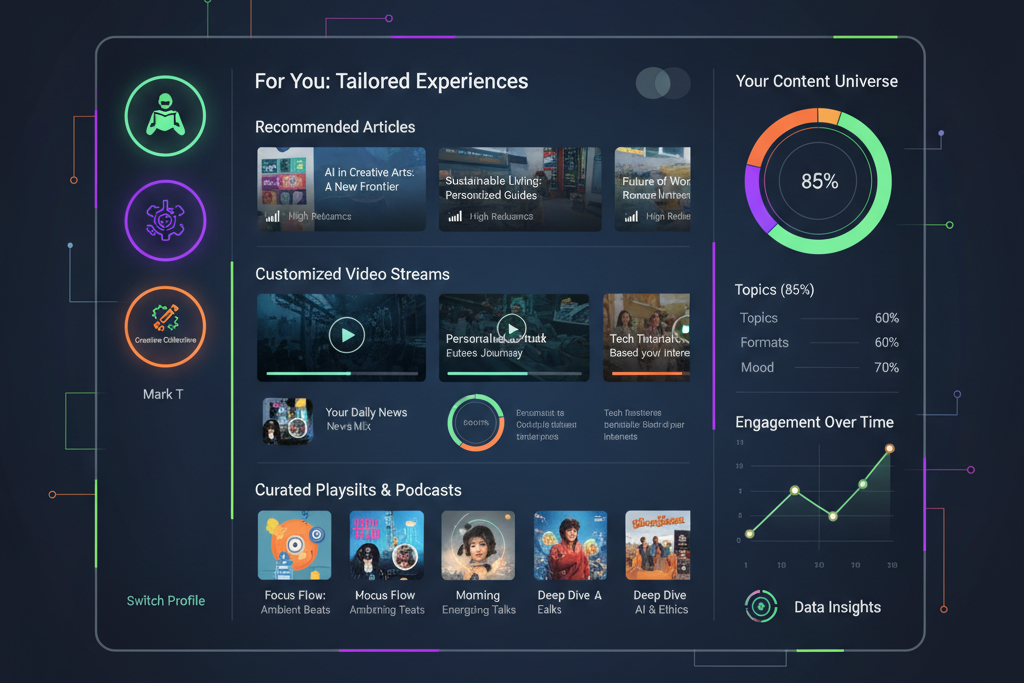
Implementation strategies for hyper-personalization require a robust data infrastructure. First, focus on collecting clean, relevant first-party data (discussed further in Trend 4). Utilize Customer Data Platforms (CDPs) to unify disparate data sources, creating a comprehensive 360-degree view of each customer. Second, segment audiences not just by demographics, but by psychographics, behavioral patterns, and intent. Third, invest in AI and machine learning tools capable of analyzing this data and dynamically generating or recommending content. This includes adopting content management systems (CMS) that support dynamic content delivery and A/B testing platforms designed for personalized experiences.
Measuring personalization effectiveness is crucial for iterative improvement. Key metrics include engagement rates (time on page, click-through rates), conversion rates (sign-ups, purchases), customer lifetime value (CLV), and customer satisfaction scores. Track how personalized calls to action perform versus generic ones, and analyze the impact of tailored content on user journey progression. Tools for A/B testing and multivariate testing are essential for optimizing personalized content variations. The goal is to move beyond simply addressing a user by name to delivering precisely the right message, at the right time, on the right platform, in a format that resonates most effectively with their unique user experience.
Hyper-personalization is no longer a luxury but a necessity, transforming content from generic messages to dynamic, individual experiences driven by sophisticated data analytics.
Ultimately, hyper-personalization fosters stronger customer relationships by demonstrating a deep understanding of individual needs and preferences. It enhances the user experience, making content feel less like marketing and more like a valuable, tailored service. As technology continues to advance, the ability to deliver truly individualized content at scale will become a defining characteristic of successful content marketing strategies.
Voice and Visual Search Optimization
The way consumers interact with search engines is evolving beyond traditional text-based queries. Voice search and visual search are rapidly gaining traction, representing a significant shift in user behavior that content marketers must address. Voice search, driven by smart speakers, virtual assistants, and mobile devices, allows users to pose conversational queries. Visual search, enabled by smartphone cameras and AI image recognition, permits users to find information by uploading or pointing to images.
Current adoption rates for voice search are substantial, with a significant percentage of internet users regularly employing voice commands for various tasks, including product discovery and information retrieval. Projections indicate continued growth by 2026, as voice technology becomes more sophisticated and integrated into daily life. Similarly, visual search, while perhaps slightly behind in widespread adoption, is seeing increased usage, particularly in e-commerce and retail for identifying products, styles, or information about objects in the real world. As AI and machine learning capabilities improve, the accuracy and utility of both voice and visual search will accelerate their integration into mainstream search behaviors.

Optimization strategies for voice search revolve around understanding natural language and conversational AI. Content needs to be structured to directly answer common questions. This means prioritizing long-tail keywords and phrases that mirror how people speak, focusing on "who, what, when, where, why, how" questions, and creating concise, direct answers. Featured snippets and schema markup are critical, as voice assistants often pull answers from these sources. Content should aim for clarity and brevity, making information easily digestible. Building a strong FAQ section on websites can be particularly effective.
For visual search, optimization strategies involve high-quality, relevant imagery that is properly tagged and described. Ensure all images have descriptive alt text and captions, using keywords that describe the image content accurately. Implement image sitemaps and use structured data markup for products or visuals to provide search engines with rich context. Optimizing image file sizes for fast loading is also important for user experience and search engine ranking. Content format implications extend to creating multimodal content strategies, where visual elements are not merely supplementary but integral to the search experience. This includes producing rich media, infographics, and short-form video content that can be easily indexed and understood by visual search algorithms.
The shift to voice and visual search demands a move away from keyword stuffing towards creating content that is contextually rich, semantically relevant, and optimized for natural language and visual recognition. Businesses must audit their existing content to identify gaps in voice and visual search optimization and begin incorporating these practices into their content creation workflows. Those who proactively adapt will capture a growing segment of search traffic and provide a more seamless, intuitive experience for their audience.
First-Party Data Strategy in a Post-Cookie World
The digital advertising and content marketing landscape is undergoing a monumental shift with the deprecation of third-party cookies. This change, driven by increasing privacy regulations (like GDPR and CCPA) and browser-level restrictions, fundamentally impacts how marketers track user behavior, target audiences, and measure campaign effectiveness. The impact of cookie restrictions means traditional methods of audience segmentation and personalized advertising, heavily reliant on third-party data, are becoming unsustainable. This forces a pivot towards more direct, transparent, and user-centric data collection methods.
In response, building a robust first-party data collection system is no longer optional; it is a strategic imperative. First-party data is information collected directly from customers through owned channels, such as website interactions, CRM systems, email sign-ups, customer service interactions, and loyalty programs. This data is consensual, privacy-compliant by design, and offers a more accurate, reliable, and permission-based view of customer behavior. Key components of building such a system include implementing strong analytics platforms on owned properties, developing clear consent management processes, and creating valuable exchanges that incentivize users to share their data.

Content strategies for data acquisition must be reimagined to explicitly drive the collection of first-party data. This means creating compelling content offers that require an email sign-up (e.g., exclusive reports, whitepapers, webinars, tools, or gated content). Developing interactive content like quizzes, surveys, and polls can not only engage users but also provide valuable zero-party data (data intentionally shared by customers to improve their experience). Loyalty programs, personalized content hubs, and community forums are excellent avenues for collecting declared user preferences and behaviors over time. The key is to offer clear value in exchange for data, fostering trust and transparency.
Privacy considerations are paramount in any first-party data strategy. Businesses must ensure full compliance with global data protection regulations, clearly communicate their data collection and usage policies, and provide users with easy-to-understand options for managing their data preferences. This includes obtaining explicit consent, providing data access and deletion rights, and implementing robust data security measures. A strong privacy posture not only ensures legal compliance but also builds customer trust, which is invaluable in an era of heightened data sensitivity. By focusing on first-party data, content marketers can cultivate deeper, more direct customer relationships, enabling personalized experiences that respect user privacy while still delivering targeted and effective content.
Immersive Content in AR/VR and the Metaverse
The burgeoning worlds of Augmented Reality (AR), Virtual Reality (VR), and the broader Metaverse present an exciting, yet complex, frontier for content marketing. While still in nascent stages for widespread consumer adoption, these immersive environments represent the next evolution of digital interaction and, consequently, content consumption. Current AR/VR adoption in marketing has primarily focused on experimental campaigns, such as virtual showrooms, interactive product demos (e.g., "try before you buy" AR apps for furniture or cosmetics), and VR brand experiences designed to create deep emotional connections. Early adopters have demonstrated the potential for unparalleled engagement and memorability.
The Metaverse opportunities for content marketers are vast and extend beyond mere advertising. It encompasses persistent virtual worlds, digital economies, and social interaction spaces. Brands can establish virtual storefronts, host immersive events, create branded digital assets (NFTs), and facilitate entirely new forms of interactive experiences. Imagine virtual concerts sponsored by a beverage brand, fashion shows featuring digital clothing, or educational workshops in a branded virtual campus. These environments allow for continuous engagement, community building, and direct interaction with consumers in ways traditional content cannot match.

Content creation for immersive environments demands a new skill set and a fresh perspective. It moves beyond static text and 2D images to spatial storytelling, interactive narratives, and 3D asset creation. Marketers will need to consider how content flows within a virtual space, how users interact with it, and how it contributes to a sense of presence. This includes developing virtual objects, avatars, interactive scenarios, and environmental design. Technical considerations like 3D modeling, game engine integration (e.g., Unity, Unreal Engine), and user interface/user experience (UI/UX) design for AR/VR platforms become critical. The emphasis shifts from passive consumption to active participation.
Early adoption advantages in this space are significant. Being among the first to experiment and establish a presence in AR/VR and the Metaverse allows brands to define their role, capture mindshare, and build a competitive moat. It positions them as innovative, forward-thinking, and deeply connected to emerging consumer trends. Early engagement also provides invaluable learning opportunities, allowing brands to refine their strategies, understand user behavior in these new contexts, and build a foundational knowledge base before the mainstream rush. While the investment can be substantial, the potential for differentiation, brand loyalty, and novel revenue streams makes immersive content a compelling area for strategic exploration by 2026 and beyond.
Strategic Adaptation for a Future-Proof Content Strategy
The content marketing landscape of 2026 will be defined by speed, intelligence, personalization, and immersion. The five key trends explored—AI and automation, hyper-personalization, voice and visual search optimization, first-party data strategy, and immersive content—are not isolated phenomena but interconnected forces reshaping how brands connect with their audiences. Businesses that proactively embrace these transformations will not only future-proof their content strategies but also secure a significant competitive advantage in a rapidly evolving digital ecosystem.
Immediate action steps for marketers include auditing existing content capabilities against these emerging trends, identifying skill gaps within teams, and beginning pilot projects. Experiment with AI-powered content generation tools to improve efficiency. Start collecting and analyzing first-party data with a strong emphasis on privacy compliance. Begin optimizing current content for conversational and visual search queries. Finally, explore low-barrier entry points into immersive content, such as branded AR filters or simple virtual experiences.
For long-term planning, consider integrating these trends into a cohesive strategic framework. This involves investing in scalable AI platforms, building a robust customer data infrastructure, and fostering a culture of continuous learning and experimentation within content teams. The goal is not just to react to change but to anticipate it, positioning your brand as a leader rather than a follower.
Articfly stands as a vital partner in this journey of adaptation. Our AI-powered platform is specifically designed to help businesses navigate the complexities of content creation in this new era. By automating the generation of professional, SEO-optimized blog articles, we empower content teams to save time, reduce costs, and maintain consistent quality, freeing up resources to focus on personalization, immersive experiences, and strategic data initiatives. Let Articfly transform the way your blogs are built, turning your ideas into engaging, data-driven articles in minutes, and ensuring your content strategy is ready for 2026 and beyond.