
TL;DR: Manual content brief creation is a significant bottleneck, consuming hours and hindering scalability. Automating this process with AI tools can reduce creation time from 2-4 hours to mere minutes, drastically cut costs, and enable scaling blog production from dozens to hundreds of articles monthly. Articfly offers a comprehensive AI solution to generate briefs and full articles, streamlining your content workflow for unprecedented efficiency and growth.
Spis treści:
- The Content Brief Bottleneck: Why Manual Creation Limits Your Growth
- What Makes a Great Content Brief? Essential Components You Can't Miss
- Manual vs. Automated: The Time, Cost, and Quality Comparison
- AI-Powered Content Brief Generation Tools: Market Overview 2024
- Articfly's Complete Solution: From Brief to Published Article in Minutes
- Implementation Guide: How to Integrate Automated Briefs into Your Workflow
- Scaling Your Blog Production: From 10 to 100+ Articles Monthly
The Content Brief Bottleneck: Why Manual Creation Limits Your Growth
In the dynamic world of content marketing, speed and scale are paramount. Yet, many organizations find themselves trapped in a cumbersome cycle, limited by the very first step of content creation: the brief. Manually crafting a comprehensive content brief is an exhaustive process, typically demanding 2-4 hours of a skilled strategist's time for each individual article. This labor-intensive approach involves deep keyword research, competitive analysis, outlining, and ensuring alignment with strategic goals.
This "content brief bottleneck" severely impedes content team productivity. Imagine a team aiming for 50 articles per month; that's 100-200 hours purely dedicated to briefing, consuming valuable resources and delaying content rollout. Such inefficiencies often lead to missed deadlines, inconsistent quality, and a significant drain on budgets. Organizations often struggle to move beyond producing a handful of articles each month, let alone scale to 100 or even 200+ articles without exponentially increasing headcount and costs.
The implications of this bottleneck extend beyond just time and money; it stifles growth. Businesses that could be dominating SERPs with a high volume of quality content are instead lagging, outpaced by more agile competitors. The opportunity cost of slow content production is immense, impacting everything from organic traffic and lead generation to brand authority. Recognizing this challenge, it becomes clear that traditional methods are unsustainable for ambitious growth targets.
The solution lies in automation. Automating content brief creation transforms this pain point into a competitive advantage. By leveraging intelligent systems, companies can drastically reduce the time and resources spent on this critical initial step. The return on investment (ROI) for automating content brief creation is substantial, freeing up strategists to focus on higher-level content strategy while enabling an unprecedented scale of blog production. This shift is not just about efficiency; it's about unlocking exponential growth.
What Makes a Great Content Brief? Essential Components You Can't Miss
Before automating, it's crucial to understand the anatomy of a truly effective content brief. A robust brief serves as the blueprint for writers, guiding them to produce content that is not only engaging but also strategically aligned and SEO-optimized. It must provide clear directions without stifling creativity, ensuring every article contributes meaningfully to overall marketing objectives. Neglecting any key component can lead to off-target content that fails to perform.
A great content brief typically comprises four core components: strategy and purpose, SEO inputs, content structure, and brand/logistics. The strategic section outlines the target audience, their pain points, the article's primary goal (e.g., lead generation, brand awareness), and the unique angle or value proposition. Understanding the "why" behind the content empowers writers to craft more impactful narratives tailored to specific reader needs.

SEO inputs are the data-driven backbone. This includes the primary keyword, a comprehensive list of secondary keywords, and an analysis of the search intent behind the target query. A thorough SERP analysis reveals what top-ranking competitors are doing well, allowing the brief to guide content creators on how to differentiate and outperform. This section ensures the article is primed for organic visibility from the outset.
The content structure provides a clear outline, often including suggested H1-H3 headings, sub-topics, and key questions to address. This helps writers organize their thoughts and ensures logical flow, preventing important points from being overlooked. Finally, brand and logistical elements cover tone of voice, style guides, internal linking opportunities, calls-to-action (CTAs), word count targets, and any specific client requirements. A comprehensive brief, unlike a basic one-pager, leaves no room for ambiguity, ensuring consistency and quality across all content outputs.
Manual vs. Automated: The Time, Cost, and Quality Comparison
The stark contrast between manual and automated content brief creation illuminates a clear path to efficiency and scalability. Historically, the manual approach has been the default, requiring significant human expertise and hours. Creating a detailed, SEO-driven content brief can take a skilled strategist anywhere from 2 to 4 hours, sometimes even more for complex topics or highly competitive keywords. This time commitment translates directly into substantial costs, often ranging from $150 to $300 per brief when factoring in salaries and overheads.
Automated solutions, powered by advanced AI, fundamentally transform this equation. Tools capable of generating comprehensive briefs can complete the task in a fraction of the time, typically between 5 and 15 minutes. This dramatic reduction in time directly impacts cost, bringing the expense down to an estimated $5 to $20 per brief, depending on the tool and subscription model. The cost savings alone present a compelling case for transitioning to automation, especially for content-heavy operations.
Automated content brief creation can slash costs from $150-300 per brief to just $5-20, while reducing creation time from hours to minutes.
Beyond time and cost, quality is a crucial metric. Manual briefs, while potentially excellent, are subject to human variability. Consistency can fluctuate between strategists, and detailed SERP analysis or extensive keyword mapping might be overlooked due to time constraints. Automated tools, however, ensure a consistent baseline of quality. They meticulously analyze vast datasets, incorporating critical SEO elements like primary and secondary keywords, competitor analysis, and search intent with unwavering precision. This leads to briefs that are not only comprehensive but consistently optimized.
Scalability is perhaps the most significant differentiator. Manual processes hit a wall quickly; scaling from 10 to 100 articles monthly with human-intensive briefing is economically unfeasible and logistically challenging. The number of content strategists required would skyrocket, creating new bottlenecks. Automated systems, by contrast, are designed for scale. They can generate hundreds of briefs with consistent quality and speed, enabling businesses to dramatically increase their content output without proportionate increases in labor or expenditure. This scalability is essential for market dominance in today's digital landscape.
AI-Powered Content Brief Generation Tools: Market Overview 2024
The landscape of AI-powered content brief generation tools is rapidly evolving, offering increasingly sophisticated solutions for content teams. These platforms leverage artificial intelligence and natural language processing to automate various aspects of content planning, from keyword research to outline creation. Understanding their capabilities and limitations is key to selecting the right tool for your specific needs.

Several prominent players dominate this market. Tools like Surfer SEO excel in on-page SEO analysis, providing detailed content scores, keyword suggestions, and structural recommendations based on top-ranking articles. MarketMuse focuses on content intelligence, helping users identify content gaps and prioritize topics based on competitive analysis and authority. Frase integrates AI to generate detailed content briefs, including outlines, topic clusters, and questions to answer, directly from SERP analysis.
Clearscope is highly regarded for its robust content optimization capabilities, offering a comprehensive list of relevant terms to include for SEO performance. While not a brief generator in the same vein as Frase, it provides critical data for informing briefs. Jasper (formerly Jarvis) is a broader AI writing assistant that can assist in brief creation by generating ideas, outlines, and initial drafts, often requiring more human input to structure a complete brief.
These tools typically compare features such as detailed SERP analysis, primary and secondary keyword research, automated outline generation, and competitor content analysis. Pricing models vary widely, from subscription tiers based on content volume to enterprise-level solutions. They cater to different business sizes, with some being ideal for small teams and others designed for large agencies. While these tools offer significant advantages, they also have limitations. Many require users to piece together insights from different modules to form a cohesive brief, and fully integrating them into an end-to-end content workflow can still be a challenge. Gaps often exist in fully automating the strategic alignment and unique brand voice aspects, necessitating manual refinement.
Articfly's Complete Solution: From Brief to Published Article in Minutes
While existing AI tools offer valuable assistance, Articfly takes content automation a significant step further, providing a truly end-to-end solution from initial brief generation to a polished, publish-ready article. Our proprietary AI system is designed to eliminate the fragmented workflow, offering a seamless and intelligent process that empowers businesses, agencies, and creators to scale their content production effortlessly.
Articfly's system simplifies content creation into an intuitive 3-step process: topic analysis, brief generation, and article creation. You start by providing a topic or keyword, and our AI immediately conducts a deep dive. It analyzes search intent with unparalleled precision, understanding not just what users search for, but why they search for it. This insight forms the foundation of a highly optimized and relevant content brief.
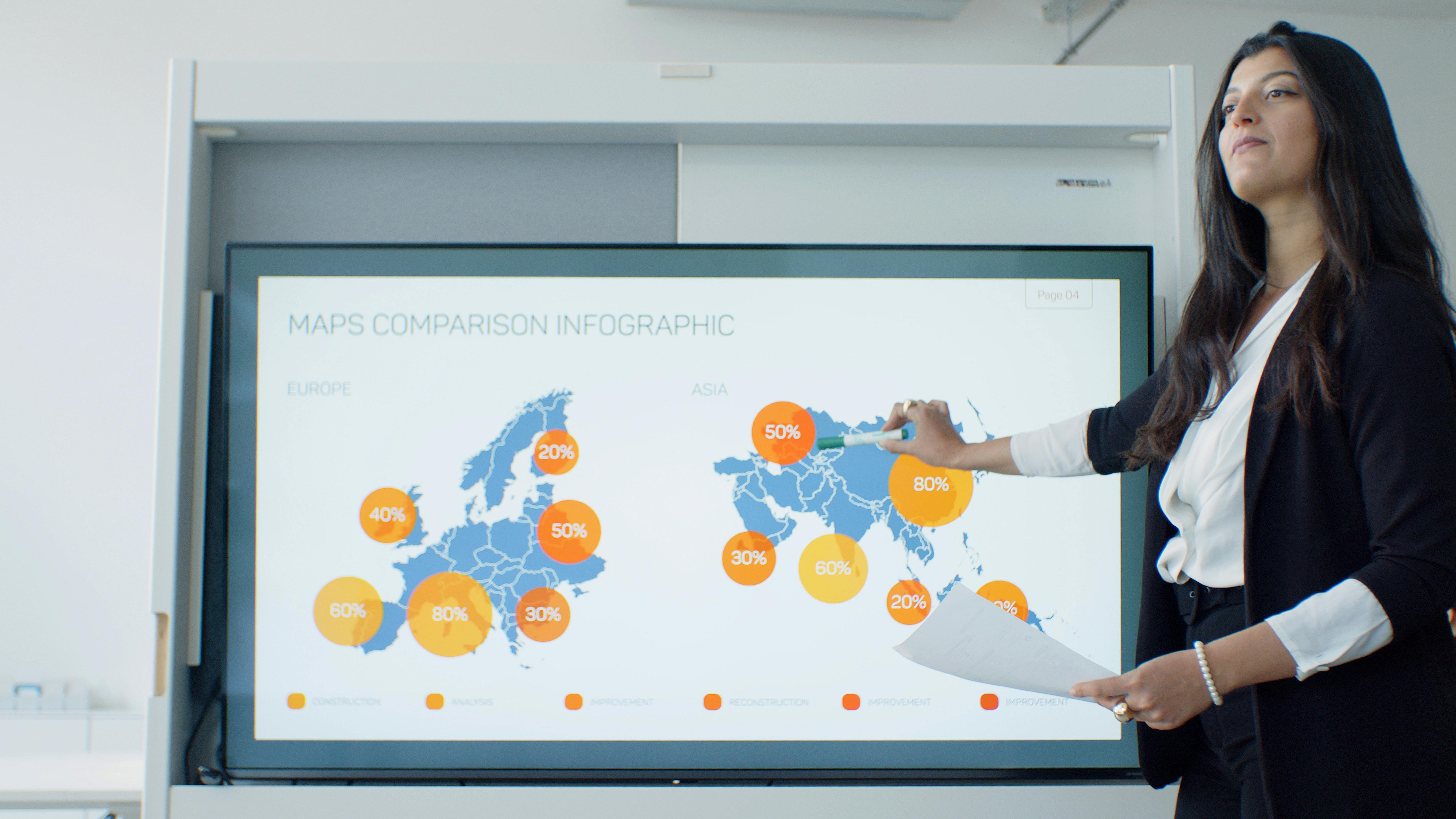
Our proprietary features go beyond standard outline generation. Articfly's system applies advanced SEO best practices to ensure every brief includes meticulously researched keywords, competitor insights, and a structure designed for maximum organic visibility. Crucially, it adapts to your unique brand voice and tone, ensuring that the generated article maintains consistency with your existing content and resonates with your audience. This level of brand voice adaptation is a significant differentiator, addressing a common gap in other tools that often produce generic content.
What truly sets Articfly apart is its ability to seamlessly transition from brief generation to full article creation within minutes. Our AI system doesn't just create a plan; it executes on it, writing comprehensive, engaging, and data-driven articles. This complete workflow automation is a game-changer for content teams. For instance, agencies using Articfly have reported scaling their content output from 20 articles monthly to over 200, all while maintaining high quality and reducing operational costs. Articfly transforms your content strategy, making high-quality, scalable content production not just possible, but effortless.
Implementation Guide: How to Integrate Automated Briefs into Your Workflow
Integrating automated content brief generation into your existing content operations requires a strategic approach, but the benefits in terms of efficiency and scalability are well worth the effort. A structured implementation plan ensures a smooth transition and maximizes the value derived from these powerful AI tools. Avoid simply "plugging in" a new tool; instead, focus on a thoughtful integration process.
Begin with a comprehensive assessment of your current workflow. Identify existing bottlenecks, pain points, and areas where manual brief creation is most time-consuming or inconsistent. This initial assessment will help you define clear objectives for automation. Next, select the right tool that aligns with your specific needs, considering factors like features, integration capabilities, and scalability. Many tools offer trial periods, which are excellent for preliminary testing.
Once a tool is selected, initiate a pilot testing phase. Start with a small batch of articles or a specific content category. Generate briefs using the automated system and compare their quality and comprehensiveness against your manual briefs. Gather feedback from writers, editors, and SEO specialists. Use this feedback to fine-tune the tool's settings and your internal processes. This iterative approach helps refine the system before a full rollout.
Workflow optimization is crucial for successful integration. Connect your automated brief generation tool with your existing content management system (CMS), project management platforms, and editorial calendars. This might involve API integrations or developing custom workflows to ensure a seamless flow of information. Establish clear quality control processes; while automation is powerful, human review checkpoints remain essential for ensuring brand alignment, factual accuracy, and stylistic nuances. Finally, invest in team training and change management. Educate your content team on the benefits of automation, how to use the new tools effectively, and how their roles may evolve. Empowering your team through training fosters adoption and minimizes resistance to change, ensuring your automated system delivers its full potential.
Scaling Your Blog Production: From 10 to 100+ Articles Monthly
Automating content briefs lays the foundation for truly exponential growth in your blog production. Moving from a handful of articles to hundreds monthly requires more than just faster brief creation; it demands a strategic overhaul of your entire content operation. This scaling journey is about leveraging efficiency to drive market saturation and build unparalleled authority in your niche.
Start with a robust content calendar planning at scale. Instead of monthly plans, consider quarterly or even annual content roadmaps, identifying key themes, pillars, and clusters of topics that can be generated en masse. Automated brief tools can help identify these clusters rapidly, allowing you to pre-plan hundreds of articles covering a vast array of keywords and search intents. This foresight ensures consistent content flow and targeted coverage.

Team structure optimization becomes critical. With automated briefs and content generation, content strategists can shift from tactical brief writing to higher-level strategic planning, identifying new opportunities and refining existing content pillars. Writers, supported by AI-generated first drafts, can focus on refining, adding unique insights, and ensuring brand voice rather than starting from scratch. Editors can manage a larger volume, focusing on quality control and final polish. This redefinition of roles maximizes human creativity and oversight where it matters most.
Maintaining a delicate balance between quality and quantity is paramount when scaling. Automation provides the quantity; your robust quality control processes and human review checkpoints ensure the quality. Establish clear style guides, editorial guidelines, and SEO checklists to maintain standards across all content. Implement A/B testing for headlines and CTAs to continually optimize performance. Finally, consistent measurement and optimization are key to scaling success. Track KPIs such as organic traffic, keyword rankings, conversion rates, and engagement metrics. Use this data to continuously refine your content strategy, identify what resonates, and adapt your approach for sustained growth. Scaling is not a one-time event but an ongoing process of improvement and strategic adjustment.
Embrace the future of content production today by transforming your content brief process. By moving beyond manual limitations and harnessing the power of AI, you can unlock unprecedented efficiency, significantly reduce costs, and finally achieve the scale needed to dominate your market. Stop wasting hours on manual briefs and start publishing more, higher-quality content in less time. Ready to supercharge your content strategy and scale your blog production from 10 to 100+ articles monthly? Explore Articfly's complete AI solution and book a demo to see how effortless high-volume, high-quality content creation can be.