TL;DR: Elevating Local SEO with Content
For small businesses, local SEO content is critical in 2024. This guide outlines strategies for creating location-specific blog posts, understanding local search intent, optimizing with geo-targeted keywords, and integrating local landmarks and schema markup. Learn to answer customer questions with Q&A content, leverage AI tools like Articfly for scalable content generation across multiple locations, and measure your content's impact to drive local traffic and conversions.
Table of Contents
- Introduction
- Understanding Local Search Intent
- Location-Specific Keyword Strategies
- Creating Locally-Focused Blog Posts
- Incorporating Google Maps and Local Landmarks
- Local Q&A Content Strategies
- AI Automation for Multiple Locations
- Measuring Success and Analytics
- Conclusion and Next Steps
Introduction
In 2024, the digital landscape continues to evolve, placing an unprecedented emphasis on local relevance, particularly for small businesses. Local SEO is no longer merely an advantage; it is a fundamental requirement for visibility and growth. Google's algorithm consistently prioritizes content that is geographically pertinent to user queries, making a robust local SEO content strategy indispensable. For small businesses, this translates into a powerful opportunity to connect directly with nearby customers who are actively searching for products and services in their vicinity.
Effective content, primarily through blog posts, serves as the cornerstone of this strategy. These posts are not just informational; they are conduits for driving highly qualified local traffic, enhancing brand authority, and ultimately, boosting conversions. By crafting content that speaks directly to the needs and interests of a local audience, small businesses can significantly improve their Google ranking in local search results. This guide will provide a complete roadmap to developing and implementing local SEO content strategies, ensuring your business stands out in a competitive digital market. We will explore how to identify local search intent, implement geo-targeted keywords, generate engaging local content ideas, and leverage advanced tools to scale your efforts, positioning your small business for local dominance in 2024 and beyond.
The goal is to create a digital presence that accurately reflects your physical presence, guiding local customers from search engines directly to your doorstep, whether virtual or physical.
Understanding Local Search Intent
To effectively create local SEO content, a profound understanding of local search intent is paramount. User behavior in local searches differs significantly from broader, general queries. When users perform a local search, they often have an immediate need or are seeking information directly relevant to a specific geographic area. Google's algorithm is adept at interpreting these nuances, delivering highly localized results based on various types of local queries.
One of the most common types is "near me" searches. These queries, such as "coffee shop near me" or "plumber near me," indicate a desire for instant gratification and proximity. Users are typically ready to make a purchase or engage a service immediately. For small businesses, optimizing for "near me" searches involves ensuring accurate Google My Business listings and incorporating location signals throughout their content.
Local service queries represent another critical category. Examples include "best Italian restaurant in [City Name]" or "dentist in [Neighborhood]." These searches often involve users comparing options, seeking reviews, or looking for specific expertise within a defined area. Content addressing these queries should highlight unique selling propositions, local testimonials, and specific service offerings tied to the geographic location.
Informational local searches, while less conversion-focused than transactional queries, are equally important for building authority and attracting early-stage customers. These might be questions like "what to do this weekend in [City Name]" or "history of [Local Landmark]." By providing valuable, locally relevant information, businesses can establish themselves as community experts, fostering trust and visibility within the local ecosystem. Understanding these distinct search intent categories allows businesses to tailor their content, ensuring it directly answers user questions and meets their specific needs, thereby improving relevance and engagement according to the Google algorithm.

Location-Specific Keyword Strategies
Implementing a robust location-specific keyword strategy is fundamental to capturing local search traffic. This involves moving beyond generic terms to focus on keywords that explicitly tie your business to its geographic location. Effective keyword research for local SEO combines standard practices with a keen awareness of local nomenclature and user search patterns. The goal is to identify and integrate keywords that resonate with your local audience and signal relevance to search engines.
Begin by incorporating city names directly into your content. This is the most straightforward approach. For example, a bakery in Austin, Texas, should consistently use "bakery in Austin" or "Austin bakery" throughout its website and blog posts. Extend this to include specific neighborhoods within your city, such as "bakery in South Congress" or "cupcakes in Zilker Park." These hyper-local terms attract highly targeted traffic from individuals residing or searching in those precise areas.
Beyond formal geographical names, consider integrating local landmarks and popular establishments. If your business is near a well-known park, museum, or historic site, mentioning it can create additional geographic relevance. For instance, "our cafe, just steps from the State Capitol," helps users orient themselves and search engines understand your location relative to prominent local features. This enhances your geo-targeting capabilities.
Service area keywords are crucial for businesses that serve multiple towns or a broader region. Instead of just "plumber," consider "plumber serving Dallas and Plano" to broaden your reach while maintaining local focus. Utilizing tools like Google Keyword Planner, SEMrush, or Ahrefs, combined with Google Autocomplete suggestions, can uncover valuable long-tail local keywords and related semantic SEO opportunities. Pay attention to how locals refer to places or services, as these colloquialisms can be powerful keyword differentiators. Regularly review your competitor's local keyword usage to identify gaps or opportunities. By meticulously integrating these location keywords, you build a comprehensive local SEO profile that effectively guides local searchers to your business.
Effective local SEO goes beyond generic terms; it's about speaking the language of your local community, integrating the specific city names, neighborhoods, and landmarks that define your business's place.
Creating Locally-Focused Blog Posts
Crafting locally-focused blog posts is an exceptionally effective way to engage your target audience and boost local SEO. These posts should provide value, entertain, or inform residents and visitors about topics relevant to your community and business. Developing a content calendar centered on local themes ensures a steady stream of fresh, optimized material.
One powerful content idea involves local events. Businesses can write about upcoming community festivals, charity runs, farmers' markets, or concerts. If your business participates, highlight your involvement. If not, position your business as a valuable resource for attendees, perhaps by offering pre-event services or post-event discounts. For example, a restaurant could publish "Top 5 Places to Eat Before the [Local Festival] in [City]."
Community news and developments also offer rich material. Blog about new infrastructure projects, local business openings, historical anniversaries, or positive community initiatives. This demonstrates your business's vested interest in the area and provides valuable local content. A real estate agency might cover "The Impact of New Downtown Development on [Neighborhood] Property Values."
Industry developments, when framed locally, can also be highly effective. For instance, a solar panel installer could discuss "How New State Rebates Affect Solar Adoption in [City]" rather than a generic post on solar energy. This grounds the information in a local context, making it more relevant to your immediate audience.
"Best of" lists are incredibly popular and drive significant local search traffic. These can include "Best Brunch Spots in [City]," "Top Family-Friendly Activities in [Neighborhood]," or "5 Hidden Gems for Coffee Lovers in [Town]." Ensure these lists are genuinely helpful and, where appropriate, subtly weave in mentions of your own business or related offerings. Interviewing local personalities or other non-competing businesses can also generate compelling content and foster community engagement. By diversifying your blog topics with these locally relevant angles, you not only improve your local search rankings but also become a trusted local resource, driving both organic traffic and community goodwill.

Incorporating Google Maps and Local Landmarks
Integrating Google Maps and local landmarks directly into your content significantly enhances local SEO. This practice not only provides practical information for users but also sends strong geographic signals to search engines, improving your visibility in local search results. The goal is to make your business’s physical location and its surroundings undeniable to both humans and algorithms.
Embedding Google Maps directly into relevant blog posts or your contact page is a highly effective strategy. This offers users immediate visual context and directions, reducing friction for visits. When embedding, ensure the map displays your exact business location. Beyond embedding, actively describe your location in relation to major local landmarks. For instance, a paragraph might state, "Find us conveniently located just two blocks north of the historic [Local Theater Name] on [Street Name], easily accessible from [Major Road]." These geographic references ground your business within the local physical environment.
Utilizing schema markup for local businesses is a critical technical step. Schema.org is a collaborative initiative that provides a collection of shared vocabularies for structured data markup. Implementing LocalBusiness schema on your website, especially on your contact or about page, allows search engines to clearly understand key information about your business, such as its name, address, phone number (NAP consistency), operating hours, and type of business. This structured data makes your information highly extractable and eligible for rich results in search engine results pages (SERPs), like knowledge panels or local pack listings.
Ensuring NAP consistency (Name, Address, Phone Number) across all online platforms – your website, Google My Business, social media, and local directories – is equally vital. Any discrepancies can confuse search engines and dilute your local SEO efforts. Regularly audit your NAP information to maintain accuracy. By thoughtfully integrating maps, descriptive geographic references, and precise schema markup, you solidify your business's digital connection to its physical location, making it easier for local customers to find and choose you.
Local Q&A Content Strategies
Creating Q&A content that specifically addresses local customer questions is an intelligent strategy for enhancing local SEO and providing tangible value. This approach directly tackles the informational needs of your community, positions your business as an authoritative local resource, and effectively optimizes for common local queries, including those driven by voice search.
Begin by identifying common local questions. This can be done through several methods: reviewing customer service inquiries, monitoring local community forums or social media groups, analyzing your Google My Business Q&A section, or simply asking your team what questions they frequently receive. Look for patterns in questions that include local context, such as "What's the best time to visit [Local Attraction]?" or "Do you offer delivery to [Specific Neighborhood]?"
Once identified, structure your Q&A content clearly. A dedicated FAQ page is beneficial, but incorporating Q&A sections into blog posts or creating individual posts for complex questions can be even more impactful. Each question should be a specific, well-defined query, followed by a concise, authoritative answer. For example:
- Q: What are your operating hours during the [Local Holiday] weekend?
- A: We will be open from 10 AM to 6 PM on [Date] and [Date] for the [Local Holiday] weekend.
- Q: Do you stock locally sourced produce from [Local Farm Name]?
- A: Yes, we proudly partner with [Local Farm Name] to bring you fresh, seasonal produce weekly.
This type of content naturally incorporates local keywords and provides direct answers, which is highly beneficial for voice search queries. When users ask their smart devices "Where can I find a vegan bakery in [City]?" or "What's the phone number for [Business Name]," well-structured Q&A content significantly increases the likelihood of your business being the featured snippet or direct answer. By proactively addressing these local FAQs, you not only improve user experience but also signal to search engines that your content is highly relevant and helpful for local searchers.
AI Automation for Multiple Locations
Scaling local content creation across multiple locations presents a significant challenge for growing businesses and agencies. Manually generating unique, locally optimized blog posts for dozens or hundreds of locations can be time-consuming and resource-intensive. This is where AI automation, particularly with tools like Articfly, offers an innovative and highly efficient solution.
Articfly specializes in AI-powered blog content creation, enabling businesses to generate professional, SEO-optimized articles automatically. For businesses with multiple locations, this means the ability to produce a high volume of tailored content with speed and consistency. Articfly’s proprietary AI system can analyze search intent and apply SEO best practices to generate ready-to-publish articles, making high-quality content production effortless and scalable.
The core of this strategy involves leveraging AI to create location-specific content templates. Instead of writing each article from scratch, businesses can define a core content structure and then use AI to dynamically inject local variables. For example, a template for "Best [Service] in [City/Neighborhood]" can be automated by Articfly to generate unique articles for "Best [Service] in Austin," "Best [Service] in Round Rock," and "Best [Service] in Cedar Park," ensuring each piece is locally relevant while maintaining brand voice and quality.
Automation strategies with AI can include:
- Localized Event Calendars: Generate blog posts highlighting events unique to each store's city or neighborhood.
- Neighborhood Guides: Create guides specific to the area surrounding each location, featuring local attractions, dining, and community resources.
- Service Area Spotlights: Develop content that showcases how your services cater to the specific needs or demographics of different local communities.
- Local Q&A Expansion: Use AI to expand on common local FAQs, generating comprehensive answers that incorporate local nuances for each branch.
By using Articfly, content teams can save significant time and reduce costs associated with manual content generation. The platform ensures consistent quality across all articles, regardless of the number of locations. This allows businesses to maintain a strong, local digital presence everywhere they operate, turning the aspiration of scalable, hyper-local content into a tangible reality.

Measuring Success and Analytics
Implementing a comprehensive local SEO content strategy requires diligent performance tracking to ensure a positive return on investment (ROI). Without proper analytics, it is impossible to determine which strategies are effective and where adjustments are needed. Measuring success involves monitoring various metrics that directly reflect local visibility, engagement, and conversion.
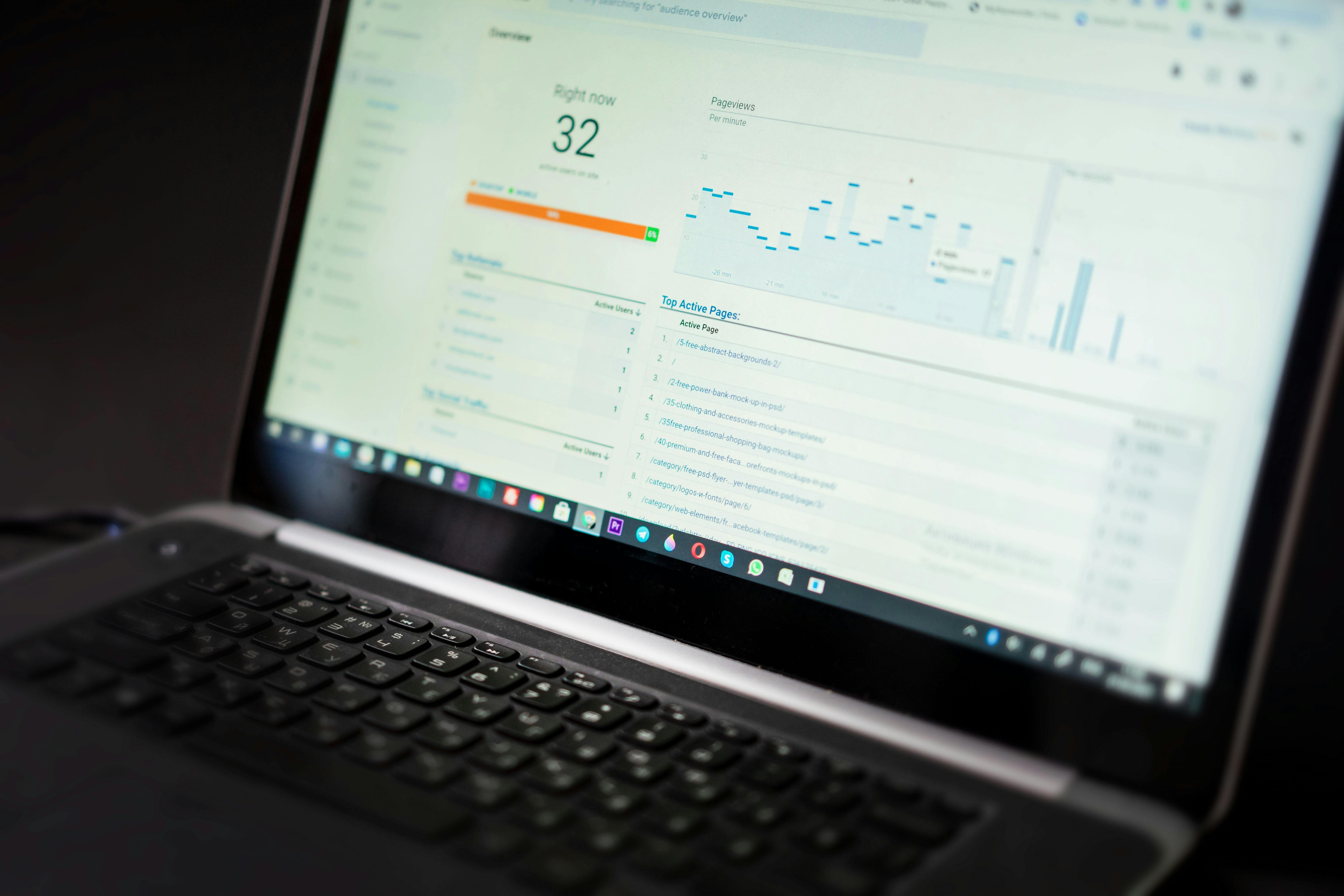
Google Analytics is an indispensable tool for tracking website performance. Focus on metrics such as organic traffic from local searches, geographical user data, and engagement signals like bounce rate and time on page for locally optimized blog posts. By segmenting your audience by location, you can see how specific cities or regions are interacting with your content. Look for increases in users from your target service areas after implementing new local content.
Beyond website analytics, local ranking tools are crucial. Tools like Semrush, Ahrefs, or Moz Local allow you to track your keyword rankings for location-specific terms. Monitor your position in the local pack (the map results at the top of Google search results) and for individual city and neighborhood keywords. Consistent improvement in these rankings is a strong indicator of successful local SEO content.
Google My Business Insights provides direct data on how customers are interacting with your business profile. Track metrics such as:
- Searches: How many people found your business through direct or discovery searches.
- Views: How many times your listing was viewed on Search and Maps.
- Actions: Clicks to your website, requests for directions, and phone calls.
Ultimately, conversion metrics are the most important indicator of success. Track leads generated from local content (e.g., specific landing pages for local offers), online sales attributed to local searches, or even foot traffic if measurable (though this can be challenging to directly attribute to content). By correlating content efforts with tangible business outcomes, you can demonstrate the ROI of your local SEO content strategy and continually optimize for better results. Regular reporting and analysis are key to refining your approach and ensuring ongoing local dominance.
Measurement is not merely about tracking numbers; it's about understanding the journey of your local customer, from their first search to their final conversion, and optimizing every step along the way.

Conclusion and Next Steps
Local SEO content is an indispensable asset for small businesses aiming to thrive in 2024. By systematically understanding local search intent, meticulously researching location-specific keywords, and consistently creating locally-focused blog posts, businesses can significantly enhance their online visibility and attract a highly relevant audience. Incorporating Google Maps and local landmarks, developing targeted Q&A content, and embracing AI automation for scalability are all critical components of a winning strategy.
The journey to local dominance requires ongoing optimization and a commitment to data-driven decisions. Your next steps should include an audit of your current local content, identification of content gaps, and the strategic implementation of the techniques outlined in this guide. Leverage tools like Articfly to streamline your content creation, especially if you operate in multiple locations. Remember, effective local SEO is an iterative process, demanding continuous monitoring and adaptation. Start today by crafting content that speaks directly to your community, and watch your local presence flourish.