
Understanding the CEO's Priorities in 2026

Core growth metrics serve as the primary lens through which modern executives evaluate new investments and strategic shifts. In 2026, CEOs are increasingly focused on Annual Recurring Revenue (ARR), Customer Acquisition Cost (CAC), and churn reduction as market volatility persists. By understanding these specific drivers, marketing teams can position organic search as a critical lever for sustainable business expansion.
Risk aversion remains a dominant theme in the post-pandemic economy, leading to higher expectations for immediate ROI. Executives look for investments that offer measurable milestones and clear paths to profitability. Demonstrating how SEO mitigates long-term costs while building brand equity is essential for securing budget approval.
| Metric Category | Traditional Marketing Focus | 2026 CEO Priority (SEO) |
|---|---|---|
| Success Indicators | Impressions and Likes | Organic Pipeline and ARR |
| Cost Efficiency | Ad Spend per Lead | LTV to CAC Ratio |
| Asset Value | Temporary Campaigns | Compounding Content Equity |
Business Growth Metrics CEOs Care About
Revenue growth and customer lifetime value are the foundation of executive decision-making. SEO directly influences these numbers by capturing high-intent traffic without the recurring cost of paid placements. This efficiency improves the overall customer acquisition cost, making the business more resilient to market shifts.
Risk Aversion and ROI Expectations
Short-term performance is often prioritized, but long-term ROI is where organic search provides the most significant value. Establishing measurable milestones allows the C-suite to see progress before the full ranking potential is realized. Clear communication regarding these early indicators reduces perceived risk and builds trust.
Crafting a Persuasive SEO Pitch
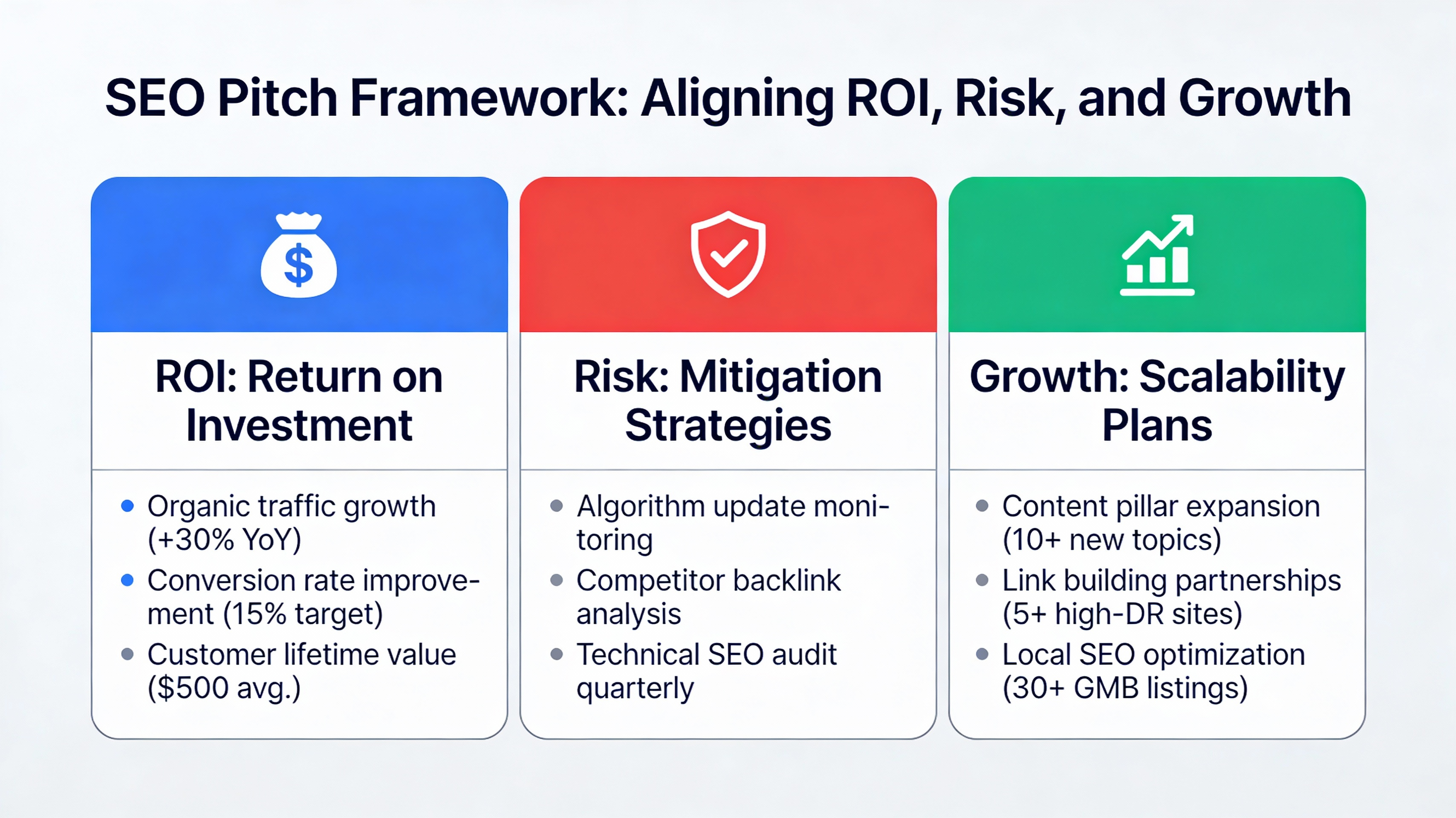
Aligning SEO benefits with strategic goals requires a shift in language from technical execution to business outcomes. When pitching to a CEO, focus on profit, market share, and risk mitigation rather than keyword density or backlink profiles. A successful pitch follows a logical flow that identifies a business problem and presents organic search as the most cost-effective solution.
Data-driven storytelling is the most effective way to communicate complex SEO concepts to non-technical stakeholders. Leverage benchmark data and competitor analysis to show exactly where the business is losing ground. By presenting projected uplift with simple scenarios, you can transform abstract search goals into tangible financial forecasts.
Using Data-Driven Storytelling
Predictive models help visualize the potential traffic lift and its impact on the bottom line. Showing a side-by-side comparison of current performance versus industry leaders creates a sense of urgency for the executive team. This data removes the guesswork and provides a concrete reason to invest in organic growth.
Example Pitch Framework
- Situation: We are currently spending 60% of our budget on paid ads with rising CAC.
- Complication: Ad costs are increasing annually while conversion rates remain stagnant.
- Solution: Implement an AI-powered SEO strategy to capture organic search intent.
- Benefits: Diversified traffic sources and a 40% reduction in long-term lead costs.
Demonstrating Quick Wins and Long-Term Value
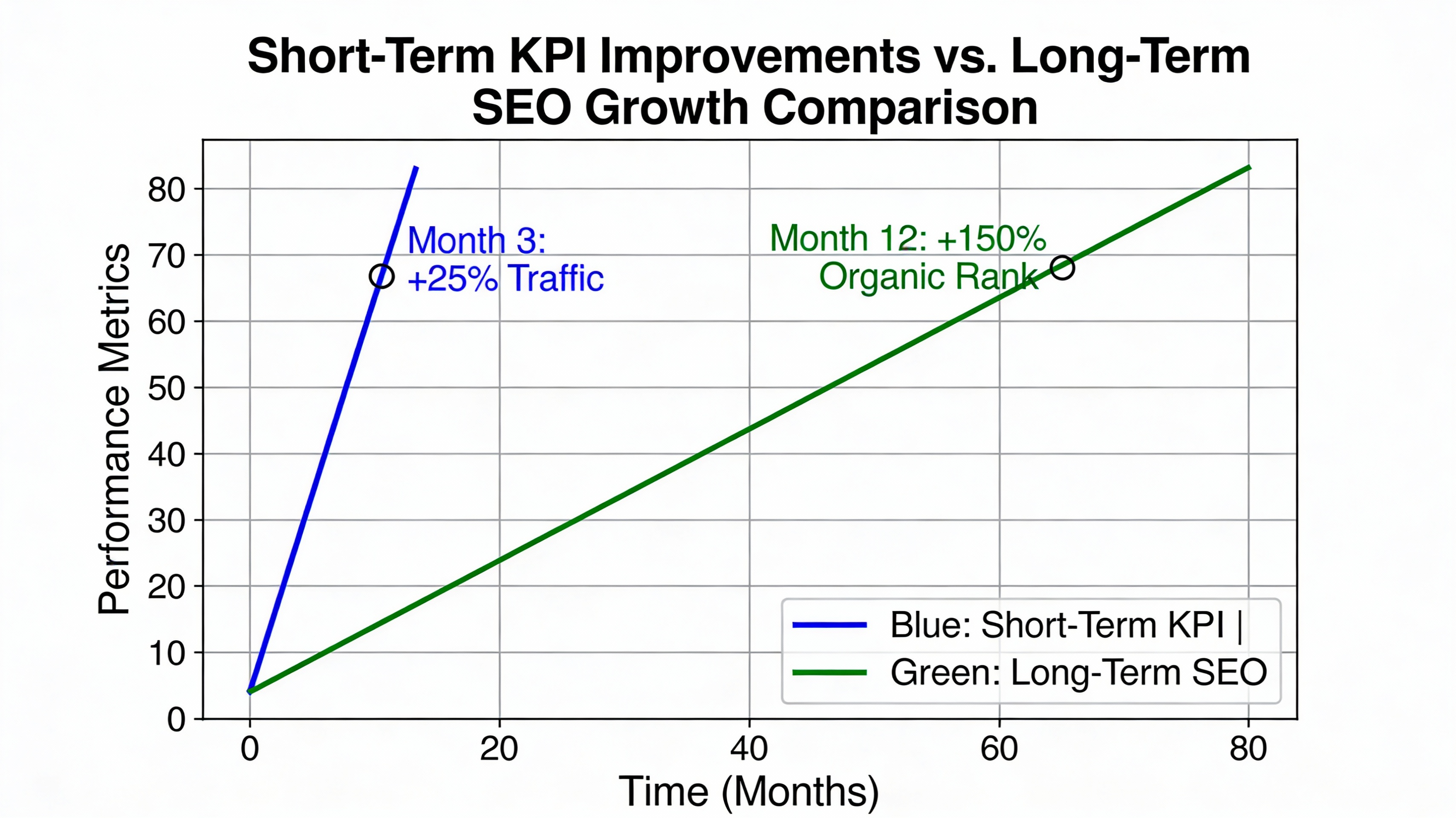
Identifying low-hanging keyword opportunities provides the immediate proof of concept needed to sustain executive support. By targeting terms where the site already has some visibility, teams can generate traffic spikes and early lead gains within 30 days. This immediate momentum justifies the investment required for a comprehensive 12-month growth roadmap.
Sustainable growth is built on the foundation of content clusters and technical authority. While quick wins gain initial approval, the long-term strategy ensures the brand remains dominant in its niche. A balanced approach allows for both immediate wins and the compounding returns characteristic of mature SEO programs.
Short-Term KPI Improvements
Initial metrics should focus on early ranking gains and organic traffic lift in targeted categories. Capturing leads through optimized landing pages shows the C-suite that SEO is a viable revenue channel. These early indicators are vital for maintaining confidence during the longer authority-building phases.
Roadmap for Sustainable Growth
A 12-month roadmap should outline how content clusters and technical SEO will solidify market presence. Authority building is a gradual process that requires consistent production of high-quality, relevant information. This long-term view protects the business from future algorithm updates and competitor entry.
Overcoming Common Objections

Emphasizing cost per acquisition serves as a powerful rebuttal to concerns regarding the price of SEO initiatives. When compared to the fluctuating costs of paid advertising, organic search offers a compounding return that lowers the overall break-even point for new customers. Addressing these concerns directly with financial data helps clear the path for implementation.
Skepticism regarding content quality and technical integration is common among founders and agency owners. Demonstrating a clear workflow for AI-assisted content ensures that brand standards are never compromised. Outlining how new systems integrate with existing CMS and CRM tools removes technical friction from the decision-making process.
How do we justify the initial cost before seeing results?Present a break-even analysis that compares the one-time cost of SEO content to the recurring expense of paid clicks. Over time, the cost per lead for organic search drops significantly while paid ads remain fixed or increase.
Is AI-generated content high enough quality for our brand?Modern platforms use a hybrid approach that combines AI efficiency with human-level review. This ensures all articles are factually accurate, on-brand, and optimized for both readers and search engines.
How long does integration with our current stack take?Most advanced platforms offer seamless API and CMS integration, allowing for automated publishing workflows. This minimizes the burden on internal IT teams and speeds up the time to market.
Leveraging AI-Powered Content Platforms (like Articfly)

AI-powered content platforms serve as the catalyst for scaling production while maintaining strict SEO standards. By automating topic research and initial drafting, these tools allow content teams to focus on strategy and brand voice. This increased efficiency enables companies to produce a higher volume of targeted articles without significantly increasing their overhead.
Rapid iteration is a major advantage of utilizing AI for blog creation. Performance data can be used to update and optimize existing content almost instantly, ensuring the blog remains competitive. This agility allows brands to respond to market trends and search engine changes faster than traditional manual processes.
How AI Accelerates SEO Success
Faster content creation cycles mean that businesses can cover more keyword territory in less time. Real-time integration of SEO best practices ensures that every piece of content is built to rank from the start. This reduces the need for extensive post-publication edits and accelerates the timeline for organic traffic growth.
Case Study Snapshot
A growing brand recently implemented an AI-driven content strategy to address a 50% gap in organic market share. By streamlining their research and writing process, they were able to double their publishing frequency while reducing the content cycle time. This led to a significant traffic lift and a measurable decrease in lead acquisition costs within two quarters.
Key Takeaways
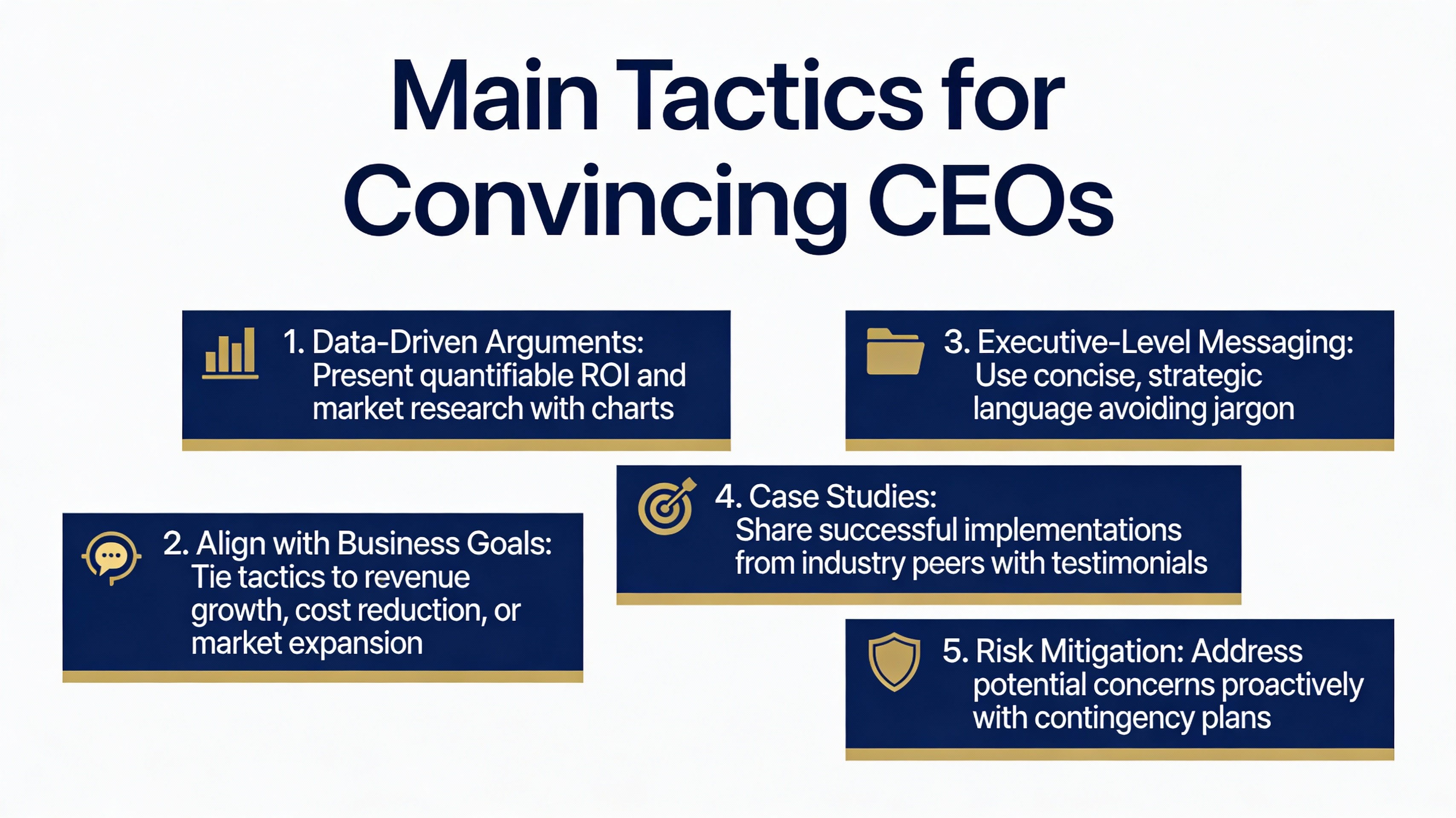
Strategic alignment between SEO goals and executive priorities is the most effective way to secure long-term buy-in. By focusing on the metrics that drive the business, such as ARR and CAC, you turn search marketing into a financial asset. Remember to lead with data and follow up with a clear roadmap for execution.
- Align SEO initiatives with CEO metrics like ARR and CAC reduction.
- Use a structured pitch framework: Situation, Complication, Solution, Benefits.
- Demonstrate immediate value through quick wins before pitching a 12-month roadmap.
- Address objections using ROI data and the efficiency of AI-powered platforms.
FAQ
Frequent questions regarding SEO investment often focus on timelines, quality, and the comparison to paid media. Providing clear, data-backed answers helps manage executive expectations and sets the stage for a successful partnership. These responses should emphasize the compounding nature of organic search results.
What ROI can I realistically expect from SEO in the first 90 days?
While full organic authority takes time, you can expect to see early ranking gains for long-tail keywords and an initial lift in organic traffic. These early wins serve as a proof of concept for the larger strategy.
How does AI ensure content quality and originality?
AI platforms analyze top-performing content and search intent to create structured outlines and drafts. When combined with a final human review, this process produces original, high-value articles that meet brand standards.
Can SEO replace paid advertising for lead generation?
SEO is a powerful complement to paid ads, often providing a lower cost-per-lead over time. While it may not replace ads entirely, it reduces the brand's dependency on paid channels and builds long-term equity.
What is the typical timeline for seeing organic traffic growth?
Most businesses see noticeable growth within 3 to 6 months of consistent publishing and optimization. The compounding effect of SEO means that growth typically accelerates after the first year of the program.
Next steps for AI-Powered Content Platforms
Free trial or demo options are available for teams ready to transform their content production workflow. By leveraging AI-powered systems, your business can generate professional, SEO-optimized blog articles automatically. Take the first step toward faster growth and consistent quality by exploring how automation can scale your organic reach.
Ready to take action? Start a free trial today and experience the future of data-driven content creation.