
Understanding the Post‑AI Search Economy
The post-AI search economy represents a fundamental shift in how digital content is discovered and consumed by target audiences. Search engines are rapidly transitioning from a simple list of blue links to a sophisticated ecosystem of AI-generated overviews that synthesize information directly on the results page. This evolution requires marketing leads and agency directors to move beyond legacy keyword strategies and prioritize visibility within these intelligent summaries.

As organic visibility increasingly depends on structured data and topical authority, the role of AI citations has become a critical ranking signal. These citations act as the new standard for authority, where being referenced by an AI agent is as valuable as a traditional top-three ranking. Understanding this landscape is the first step toward justifying SEO investments for the 2026 fiscal year. Articfly’s "How AI Improves SEO" page and the Search Engine Land article on AI search trends provide further context on these shifts.
| Feature | Traditional SERP | AI-Generated Overview |
|---|---|---|
| Primary Goal | Direct traffic to external websites. | Provide immediate answers within search. |
| Ranking Basis | Keyword density and backlink volume. | Topical authority and structured data. |
| User Experience | Scrolling through multiple listings. | Consuming a synthesized summary. |
What is the Post‑AI Search Economy?
This new economy is defined by search results driven primarily by large language models that interpret user intent with high precision. These models aggregate data from across the web to provide comprehensive answers, significantly impacting traditional click-through rates. Marketers must adapt by creating content that these models can easily parse and reference as a trusted source.
Key Drivers of Organic Growth in 2026
Achieving organic growth now requires a deep commitment to topic clusters and the principles of Experience, Expertise, Authoritativeness, and Trustworthiness (E-E-A-T). By organizing content into interconnected hubs, sites can signal comprehensive knowledge to search crawlers. Additionally, implementing robust schema and structured data ensures that site information is eligible for inclusion in AI-generated snippets.
Challenges Marketers Face When Pitching SEO in 2026
Securing executive buy-in for SEO projects has become more difficult as stakeholders demand immediate returns on investment in an uncertain economy. The shift toward AI-generated answers can make traditional organic impact harder to measure when users no longer need to click through to a website to get their information. This creates a perceived gap in value that marketers must bridge with new data-driven narratives.

Marketers also face stiff budget competition from paid-media teams who leverage AI tools for instant, albeit expensive, lead generation. It is vital to articulate that organic growth remains the most sustainable long-term asset for a brand. Resources like the Articfly case-study page and the Moz article on measuring SEO ROI offer frameworks for overcoming these internal objections.
The transition to AI-driven search doesn't mean SEO is dead; it means our metrics must evolve to value authority and citation share over raw, unfiltered clicks.
— Senior Marketing Director
Shifting Stakeholder Priorities
Executives are increasingly focused on short-term revenue and high-quality lead generation rather than top-of-funnel traffic. To win budget approval, SEO leads must demonstrate how content directly supports the product funnel and improves lead quality. Aligning organic goals with specific business outcomes is no longer optional; it is a prerequisite for funding.
Measuring ROI in an AI‑Dominated Landscape
Measuring success now involves tracking impression share within AI overviews and the frequency of brand citations in automated summaries. While exact click data may fluctuate, industry observations suggest that being cited as a source by an AI model leads to higher brand trust and conversion intent. Marketers should frame their forecasts using safe ranges to manage expectations while highlighting the potential for long-term growth.
Proven Pitch Framework for SEO Projects
A structured pitch framework is essential for translating technical SEO needs into a compelling business case for 2026. By following a replicable process, content leads can demonstrate both the strategic necessity and the operational efficiency of their proposed projects. This framework emphasizes AI-enabled productivity to show how more can be achieved with fewer manual resources.
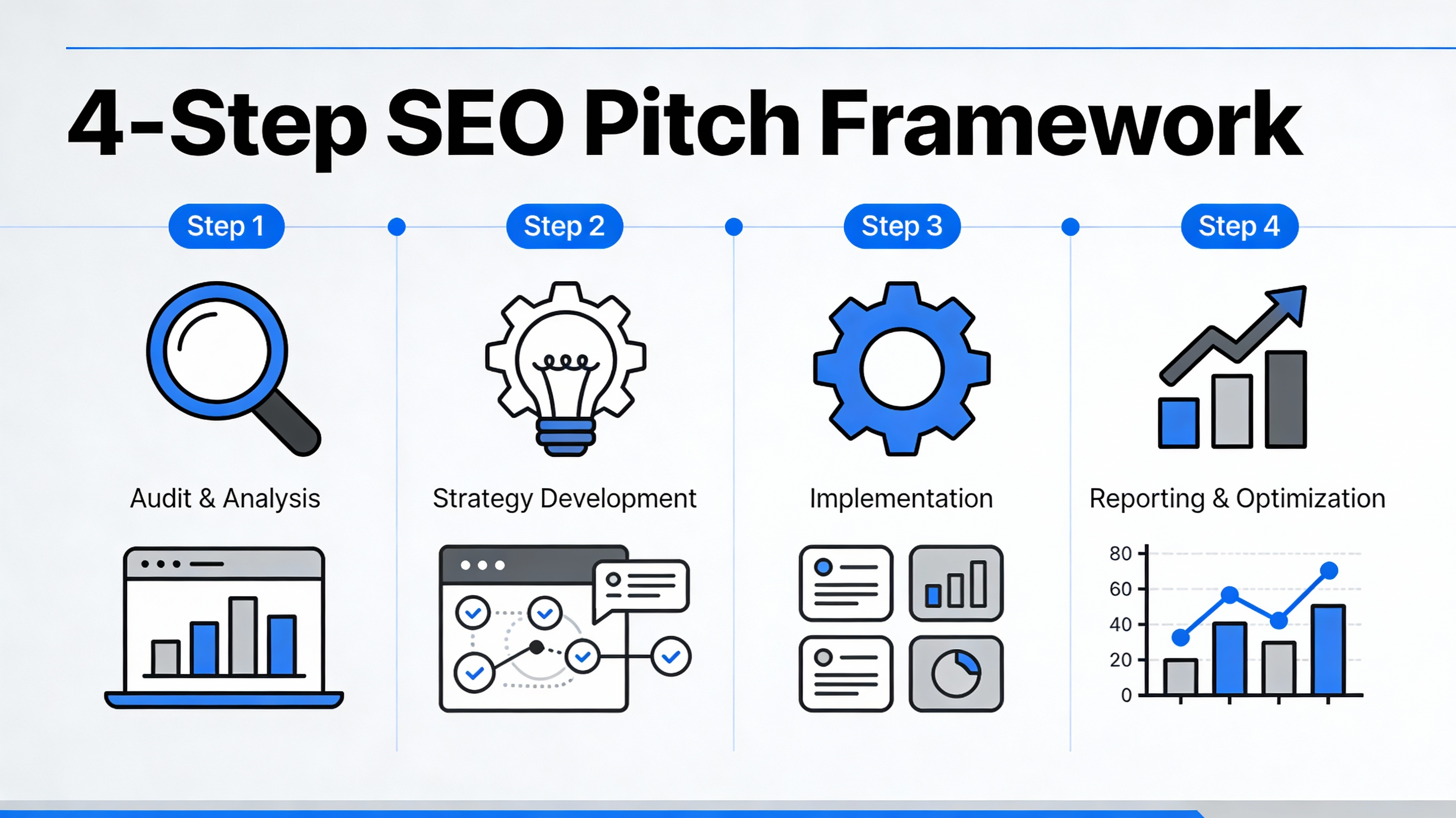
Efficiency is a major selling point in modern proposals, especially when referencing the Articfly pricing page or SEMrush 2026 SEO trends. Stakeholders are more likely to approve budgets that incorporate automation to reduce overhead while maintaining a high output of quality content. The following steps provide a clear path to project approval.
- Diagnose the current search landscape and AI citation gaps.
- Define clear, business-focused objectives tied to revenue.
- Quantify expected gains using industry-standard ranges.
- Align the strategy with AI-driven content automation tools.
Step 1 – Diagnose the Current Search Landscape
Before requesting resources, marketers must conduct an AI-powered competitor analysis to understand where the brand stands in the current search environment. Identifying gaps in AI citations allows teams to target specific topics where the brand is currently underrepresented. This data-backed approach provides a concrete starting point for any proposal.
Use AI‑Powered Competitive Analysis
Utilizing tools like Articfly’s keyword planner and market-wide AI audits helps identify which competitors are winning the "answer box" and why. This level of insight allows for a more surgical approach to content creation. By focusing on where the market is underserved, brands can claim authority more quickly.
Step 2 – Define Clear, Business‑Focused Objectives
Objectives must be aligned with the overarching revenue targets of the organization to gain executive support. Rather than promising "more traffic," promise "increased visibility for high-intent product categories." This shift in language ensures that the SEO strategy is seen as a core business driver rather than a peripheral marketing tactic.
Step 3 – Quantify Expected Organic Gains Without Exact Numbers
When forecasting results, it is safer and more professional to phrase expectations as ranges, such as a "potential 10-15% lift in organic visibility." Referencing industry-wide observations helps ground these projections in reality without making proprietary claims that may be affected by future algorithm updates. This approach builds credibility and manages stakeholder expectations effectively.
Step 4 – Align with AI‑Driven Content Automation
The final step is showing how the project will be executed efficiently through AI-driven content automation. Demonstrating that Articfly can produce SEO-optimized drafts in minutes highlights significant cost-per-article savings compared to manual production. This operational efficiency is often the deciding factor for budget-conscious stakeholders.
Leveraging AI‑Powered Content Automation for Organic Growth
AI-powered content automation has transformed SEO from a labor-intensive manual process into a scalable strategic operation. By using platforms that handle the entire workflow—from initial planning to final SEO checks—teams can focus on strategy and distribution rather than just production. This shift allows for a much higher volume of high-quality content without a linear increase in costs.

Articfly’s proprietary system analyzes search intent and applies best practices automatically, ensuring that every article is ready to publish and tailored to the brand's voice. Exploring the Articfly feature page or a reputable AI-search overview reveals how these tools integrate seamlessly into modern marketing stacks. The result is a consistent flow of data-driven content that builds long-term topical authority.
How Articfly Accelerates SEO Delivery
Articfly accelerates delivery by automating rapid topic research and the generation of on-page SEO tags. This ensures that every piece of content is technically sound and strategically aligned with target keywords from the start. Furthermore, the system maintains a consistent brand voice across hundreds of articles, which is vital for building trust in an automated environment.
Generic Case‑Study Example
Consider a SaaS company that struggled to maintain a consistent blog schedule while scaling their product offerings. By implementing AI-driven content automation, they were able to increase their publishing frequency significantly without expanding their content team. Studies indicate that such companies see a steady rise in organic visibility as their topical authority expands through a denser web of high-quality content.
Building a Persuasive SEO Proposal
A persuasive SEO proposal should be a polished document that translates a complex strategy into a clear, visual narrative for decision-makers. It must address the "why" and "how" of the project while clearly outlining the investment required and the expected timeline. Professional storytelling through data and visuals makes the proposal more engaging and easier to digest.
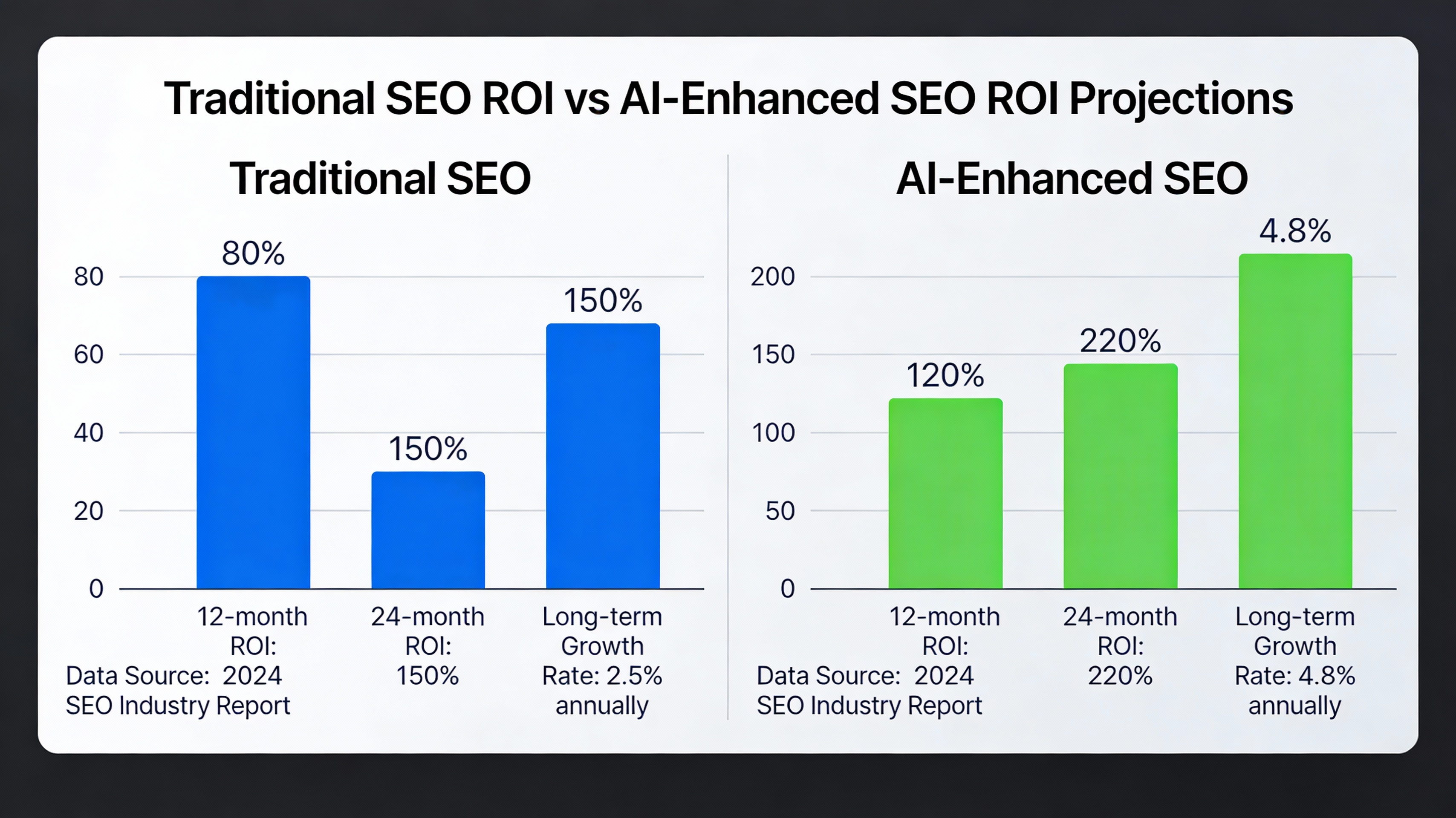
Using resources like a downloadable proposal template or a HubSpot guide on SEO proposals can help structure the document for maximum impact. The goal is to present a roadmap that feels both ambitious and achievable. A well-organized proposal reduces the friction of the approval process by answering common questions before they are asked.
Structure of the Proposal Document
The proposal should begin with a one-page Executive Summary that highlights the main objectives and benefits. This is followed by a Current Landscape section utilizing data tables to show the brand's present search standing. Proposed tactics should be listed clearly as bullets, followed by charts showing expected outcomes and a final table detailing the investment and timeline.
Visual Aids & Data Storytelling
Data storytelling is most effective when it uses simple, clear visuals to compare pre- and post-AI search traffic scenarios. Using tables to highlight the difference in visibility between current results and optimized content helps stakeholders visualize the potential for growth. Simple bar charts can further illustrate how an investment in AI-enhanced SEO delivers a more sustainable ROI than traditional methods.
Key Takeaways
The landscape of organic search is shifting toward an AI-driven model where topical authority and citations are the new currency of success. To thrive in 2026, marketers must adapt their pitch strategies to reflect these new realities.
- AI citations are becoming as important as traditional search rankings for building authority.
- Automation through Articfly allows for scalable content production without sacrificing SEO quality.
- Framing SEO objectives in terms of revenue and business outcomes is essential for budget approval.
- Winning proposals use data storytelling and clear frameworks to justify the investment in organic growth.
For those ready to implement these strategies, Articfly’s free trial provides the perfect starting point for testing AI-powered content workflows.
Frequently Asked Questions
How accurate are AI‑generated content suggestions?AI-generated suggestions are highly accurate when based on comprehensive search intent data and established SEO best practices. These tools analyze top-ranking content to provide recommendations that align with what search engines currently value as authoritative.
Will AI overviews reduce clicks to my site?While AI overviews provide direct answers, industry observations suggest they also drive higher-quality traffic by citing sources that provide deeper context. Being featured as a citation can lead to improved brand trust and more targeted click-throughs.
How does Articfly ensure brand voice consistency?Articfly uses proprietary algorithms that can be tailored to match a client's specific tone and identity. By analyzing existing content, the system ensures that every automated draft aligns with the established brand persona.
What metrics should I track for AI‑driven SEO?In addition to traditional traffic metrics, you should track impression share in AI-generated overviews and brand citation frequency. These metrics provide a better picture of your authority in an AI-centric search environment.
Can I integrate Articfly with my existing CMS?Yes, many teams use Articfly to generate ready-to-publish drafts that can be easily imported into popular CMS platforms. For more details, consult the support article or the Google’s Search Generative Experience overview for general integration best practices.
Next steps for organic growth
Developing a robust SEO strategy for 2026 begins with embracing the tools that make content creation more efficient and data-driven. By moving away from manual bottlenecks and toward AI-powered automation, your team can achieve greater visibility and higher authority in less time. To see these results firsthand, you can sign up for a free‑trial signup or attend a relevant industry webinar to learn more about the evolving search economy.