
Understanding Product-Led SEO
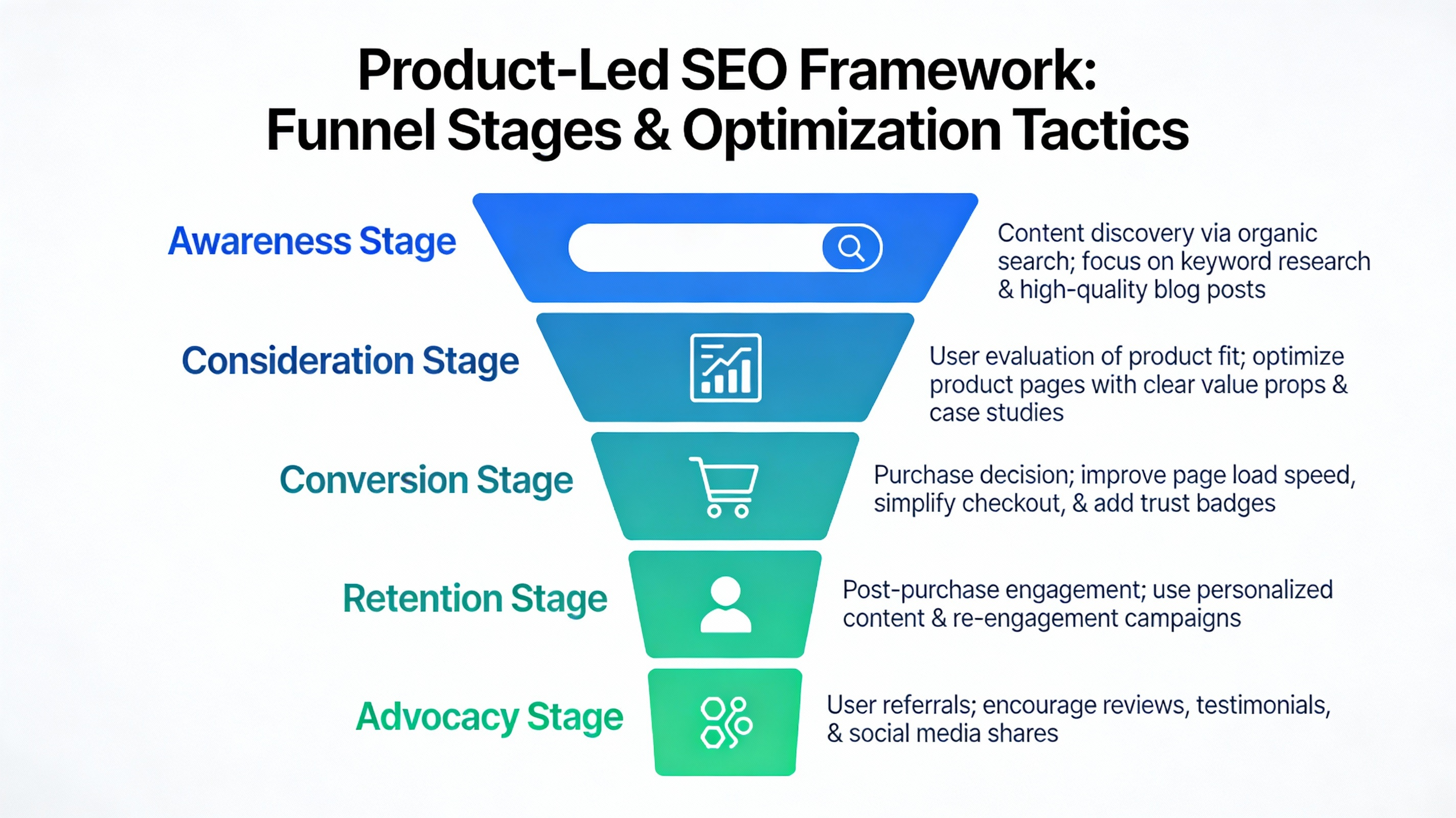
Product-led SEO is a value-first approach that prioritizes the user's immediate needs over the hard sell. In the SaaS world, this mindset transforms search optimization into a discovery channel where the product naturally solves the problem being searched. By focusing on helpfulness, brands can align their content with every stage of the funnel, from awareness to long-term retention.
Traditional SEO often focuses on high-volume keywords to drive traffic at any cost, whereas a product-led strategy seeks to attract users who are looking for specific solutions. This alignment ensures that every visitor has a clear path toward activation. Understanding the difference between these two approaches is critical for SaaS founders and marketers who want to build a sustainable growth engine.
| Feature | Product-Led SEO | Sales-Heavy SEO |
|---|---|---|
| Primary Goal | Deliver user value first | Direct sales and conversions |
| Content Tone | Educational and helpful | Promotional and persuasive |
| User Journey | Awareness to Activation | Awareness to Transaction |
For more detailed insights, you can review Articfly’s “What is Product-Led SEO?” guide or explore definitions from leading growth blogs like OpenView.
How Content Fuels the SaaS Funnel Without Being Salesy
Fueling the SaaS funnel effectively means providing the right information at the right time. Awareness-stage content should focus on educational blog posts and industry reports that address broad challenges. This builds credibility without pressuring the user to make an immediate purchase decision.
As prospects move into the consideration phase, the content should shift toward how-to guides, product tutorials, and case studies. These formats allow the user to see the product in action while still focusing on educational outcomes. During the final decision stage, comparison charts and ROI calculators provide the necessary data for a purchase, maintaining a helpful tone throughout.
A well-structured SaaS funnel moves users from high-level problem awareness to deep product activation by consistently providing value-driven touchpoints. This model is often cited by experts like ForEntrepreneurs as a cornerstone of modern growth.
Utilizing resources like Articfly’s content templates page can help teams maintain this balance across all content types.
Strategies to Create Product-Led Content
Identify User Intent at Each Funnel Stage
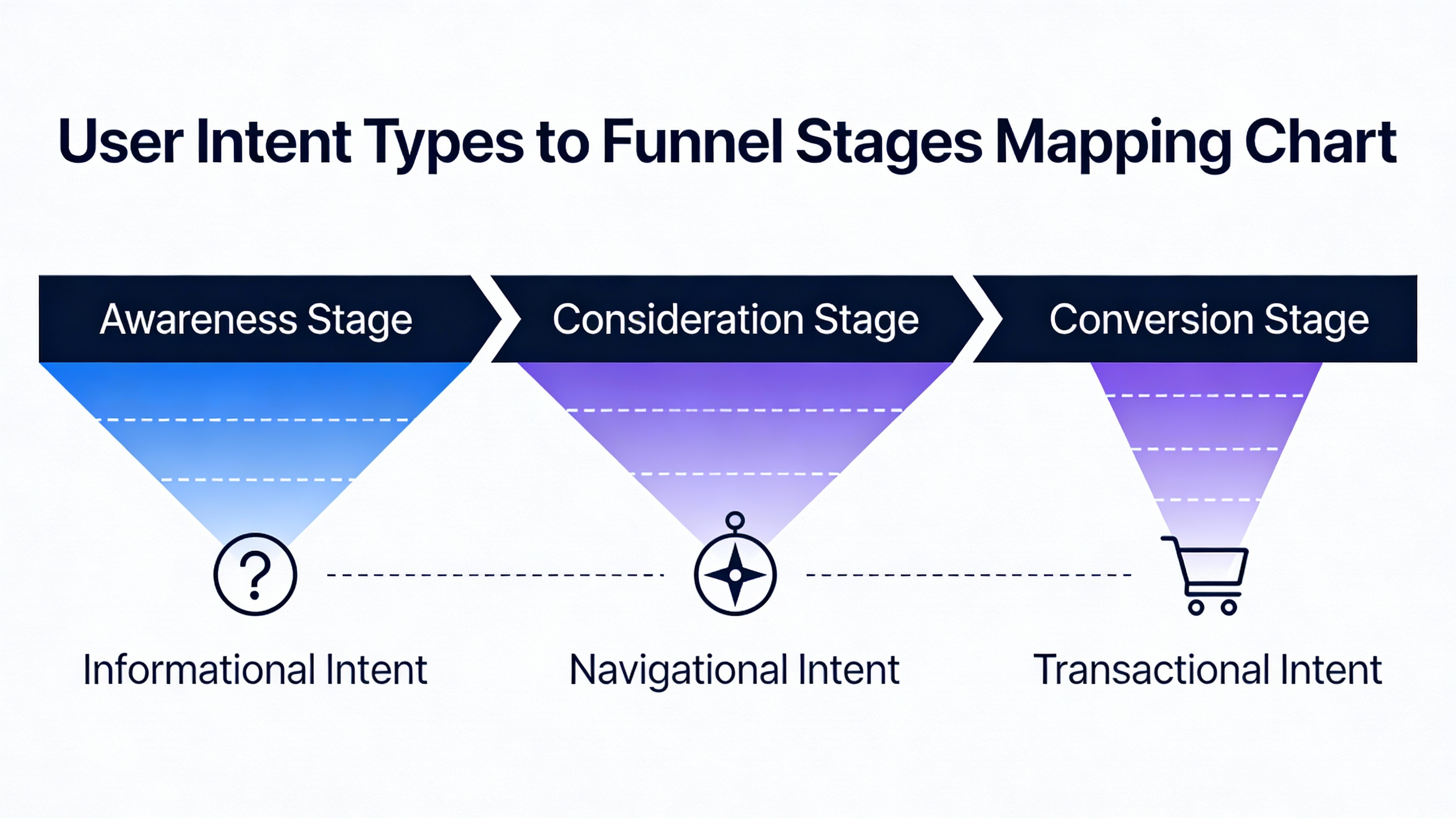
Identifying user intent is the first step in creating content that truly resonates with your audience. Using keyword research tools allows you to distinguish between informational intent (users wanting to learn) and transactional intent (users ready to buy). Aligning these findings with pain points discovered in user interviews ensures the content is relevant.
Mapping intent to the funnel helps avoid the mistake of pushing product features to someone who is only beginning to explore a problem. For more assistance, refer to Articfly’s keyword intent guide to streamline this mapping process.
Leverage Educational Formats Over Promotional Copy

Educational formats are far more effective at building trust than standard promotional copy. Long-form guides, video tutorials, and webinars allow you to dive deep into a topic and provide genuine solutions. This approach uses storytelling and real-world examples to demonstrate value authentically.
- Long-form Guides: Comprehensive resources that cover a topic from start to finish.
- Video Tutorials: Visual walkthroughs that solve specific user technical problems.
- Webinars: Interactive sessions that allow for real-time engagement and Q&A.
- Industry Reports: Data-driven insights that position the brand as a thought leader.
- Case Studies: Real-world success stories that show the product in action.
Many studies, including those by HubSpot, show that educational content significantly outperforms traditional promotional assets in terms of long-term engagement.
Optimize for SEO While Maintaining Authenticity
Optimizing for SEO does not have to mean sacrificing the quality or authenticity of your brand voice. Integrating keywords naturally and using semantic HTML helps search engines understand your content while keeping it readable for humans. Structured data, such as FAQ and how-to schemas, can further enhance visibility without feeling like "spam."
| Optimization Step | Purpose |
|---|---|
| Natural Keyword Integration | Maintains brand voice and flow |
| Semantic HTML | Improves structure for crawlers |
| Structured Data | Enables rich snippets in search |
| Readability Focus | Reduces bounce rates and improves UX |
Teams should consult Articfly’s SEO best-practice checklist to ensure their content meets technical requirements without losing its human touch.
Measuring Success of Product-Led SEO
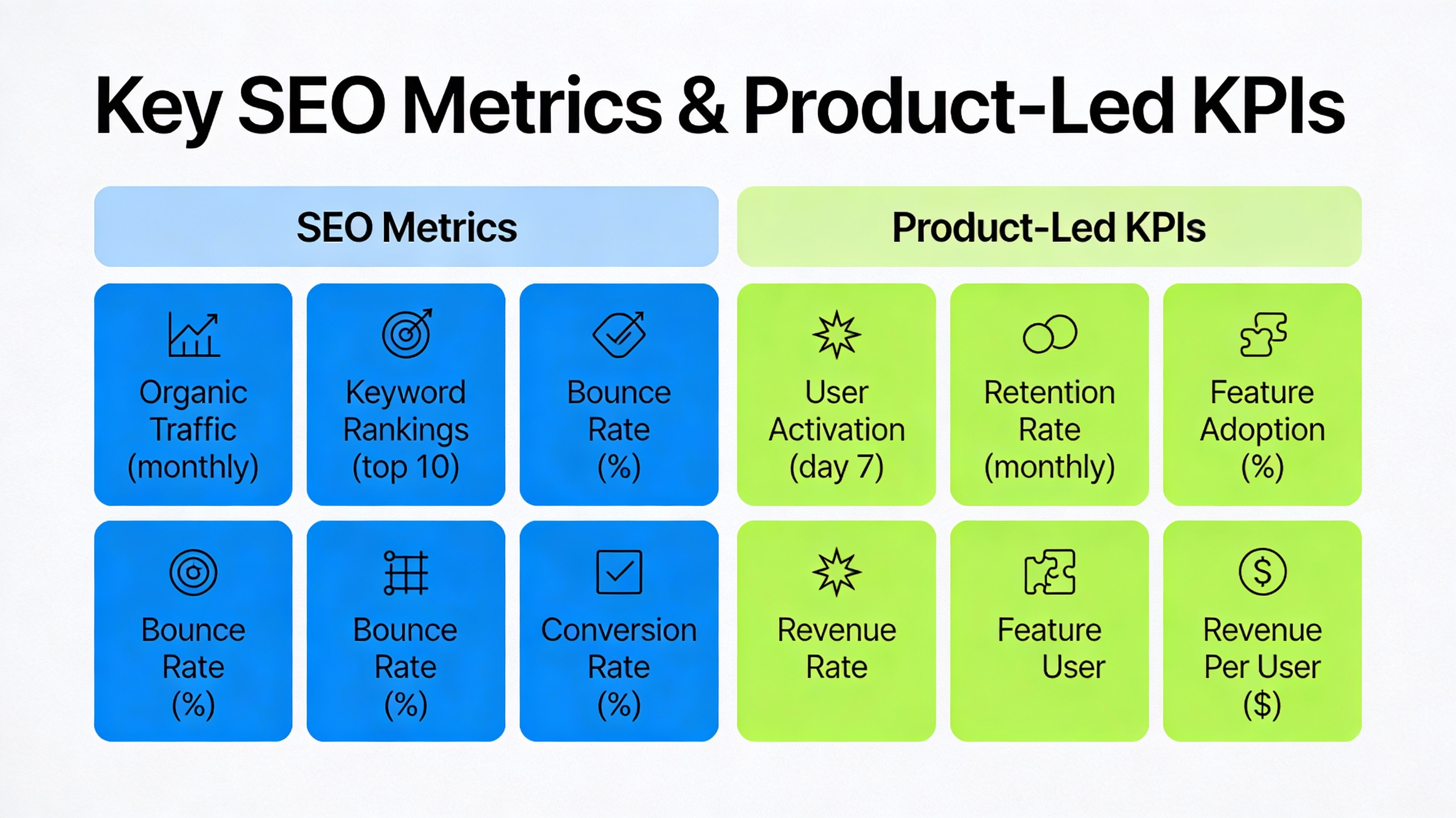
Measuring your success in a product-led model requires looking beyond basic keyword rankings. While organic traffic growth is important, you must also track engagement time and conversion paths through the funnel. This data reveals how well your content is actually moving users toward product adoption.
Key performance indicators (KPIs) should include marketing qualified leads (MQLs) generated from the blog and the activation rate of users who consume specific content. Using cohort analysis can further help tie content consumption to long-term user retention. Referencing Moz articles on SEO metrics or Articfly’s analytics dashboard can provide deeper visibility into these numbers.
Common Pitfalls and How to Avoid Them
Common pitfalls in SaaS content strategy often stem from a lack of alignment between user needs and business goals. One of the most frequent mistakes is over-promoting product features too early in the user journey. This can alienate prospects who are looking for information rather than a sales pitch.
| Pitfall | Solution |
|---|---|
| Over-promoting early | Prioritize education in awareness content |
| Ignoring User Intent | Perform thorough keyword intent research |
| Neglecting Updates | Perform regular content audits and refreshes |
Avoiding these issues ensures your content remains a helpful resource. Utilizing Articfly’s content audit service can help identify and fix these common strategy gaps.
Key Takeaways
Key takeaways for any product-led strategy center on the philosophy of value-first communication. By mapping content to the funnel and focusing on user intent, brands can build trust and authority simultaneously. This approach creates a sustainable growth engine that supports the entire product lifecycle.
- Focus on value-first content aligned with specific funnel stages.
- Use intent mapping to ensure content meets user expectations.
- Leverage educational formats like guides and tutorials over promotional copy.
- Track product-led metrics such as activation rates and funnel-specific KPIs.
For those ready to implement these tactics, downloading a specialized checklist can serve as a roadmap for your next campaign.
FAQ
How does product-led SEO differ from traditional SEO?Product-led SEO focuses on delivering user value through education and solving pain points, whereas traditional SEO often prioritizes traffic volume and direct sales conversions.
What content types work best at the activation stage?How-to guides, product tutorials, and case studies are highly effective at the activation stage because they show users exactly how to use the product to solve their problems.
Can AI tools like Articfly maintain a non-salesy tone?Yes, AI platforms can be configured to produce content tailored to specific brand identities and tones, ensuring the output remains educational and helpful rather than promotional.
How often should I refresh product-led content?You should perform regular audits and updates to ensure your content remains accurate and continues to align with evolving user intent and product features.
Which metrics prove product-led SEO ROI?Metrics such as organic traffic growth, engagement time, MQLs from the blog, and post-consumption activation rates provide clear evidence of ROI.
To see how automation can support these efforts, visit Articfly’s AI content creation page.
Next steps for product-led SEO

Implementing product-led SEO requires a strategic approach combined with the right tools to scale your efforts. By automating the planning and writing process, your team can focus on higher-level strategy and user engagement. This ensures a consistent flow of high-quality, SEO-optimized content that resonates with your audience.
You can begin by signing up for a free trial to generate your first set of product-led blog posts. Additionally, use the provided intent-mapping worksheet to align your topics with user needs, or schedule a strategy call with growth experts to refine your approach. Exploring case studies of other SaaS companies using this model can provide further inspiration.