
Why Refresh Content Matters for SEO
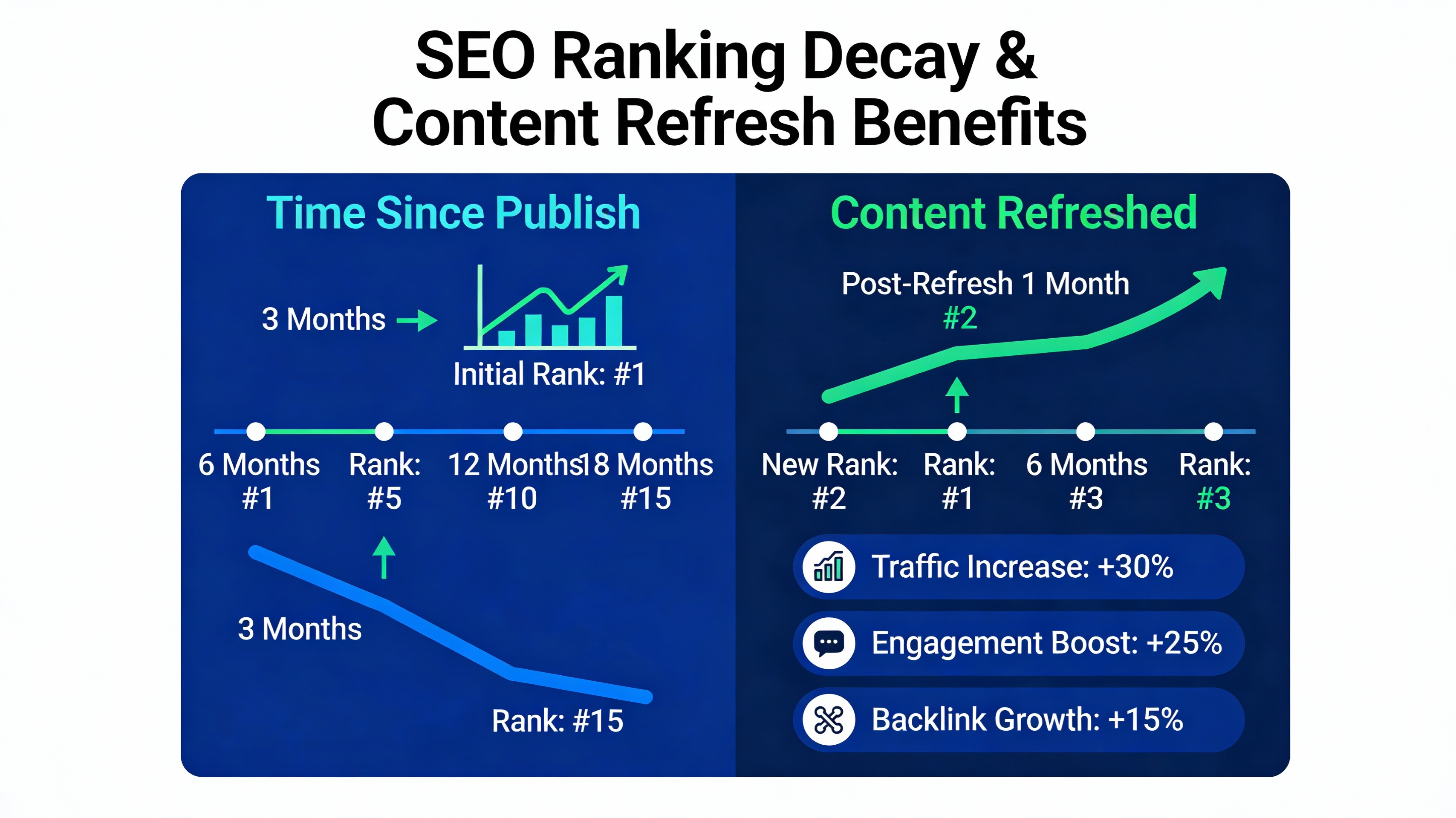
Refreshing existing content is a critical strategy for maintaining search engine visibility and combating natural ranking decay. Search engines prioritize freshness, meaning older posts often lose their positions even if the information remains relevant. By updating your articles, you signal to Google that your content is current and valuable to users.
- Google’s freshness algorithm directly influences how often your pages appear in results.
- Ranking decay can lead to a steady decline in organic traffic over time.
- Regular updates increase your eligibility for featured snippets by refining the clarity of your answers.
| Metric | Before Refresh | After Refresh |
|---|---|---|
| Average Ranking | Declining | Improving/Stable |
| Click-Through Rate (CTR) | Lower | Higher |
| Featured Snippet Presence | Rare | Frequent |
Resources for further reading include Articfly’s blog on SEO basics and the Google Search Central article on content freshness.
Identifying Content Worth Refreshing
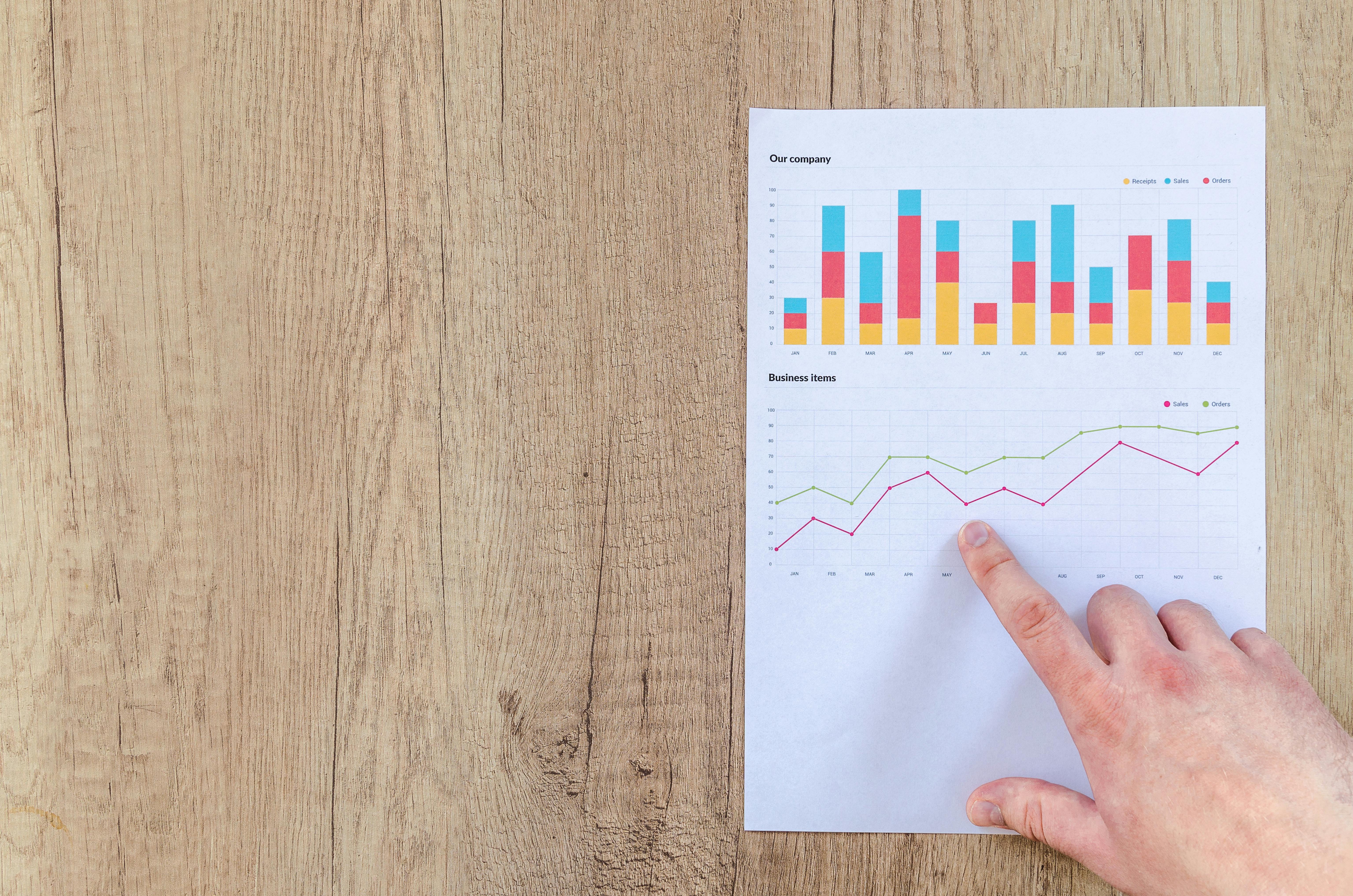
Identifying the right pages to update ensures that your efforts result in the highest possible return on investment. Not every post requires a refresh; focus on pages that already show potential through high impressions but suffer from low click-through rates. These "near-miss" opportunities often just need a few structural tweaks to capture more traffic.
- Analyze pages with high impressions and low clicks in Google Search Console.
- Monitor shifts in keyword relevance and user search intent.
- Check for existing snippet presence or cases where your content is close to winning a snippet.
To streamline this process, you may use Articfly’s content audit tool page or consult Moz’s guide on content audits.
Core Refresh Techniques to Target Featured Snippets
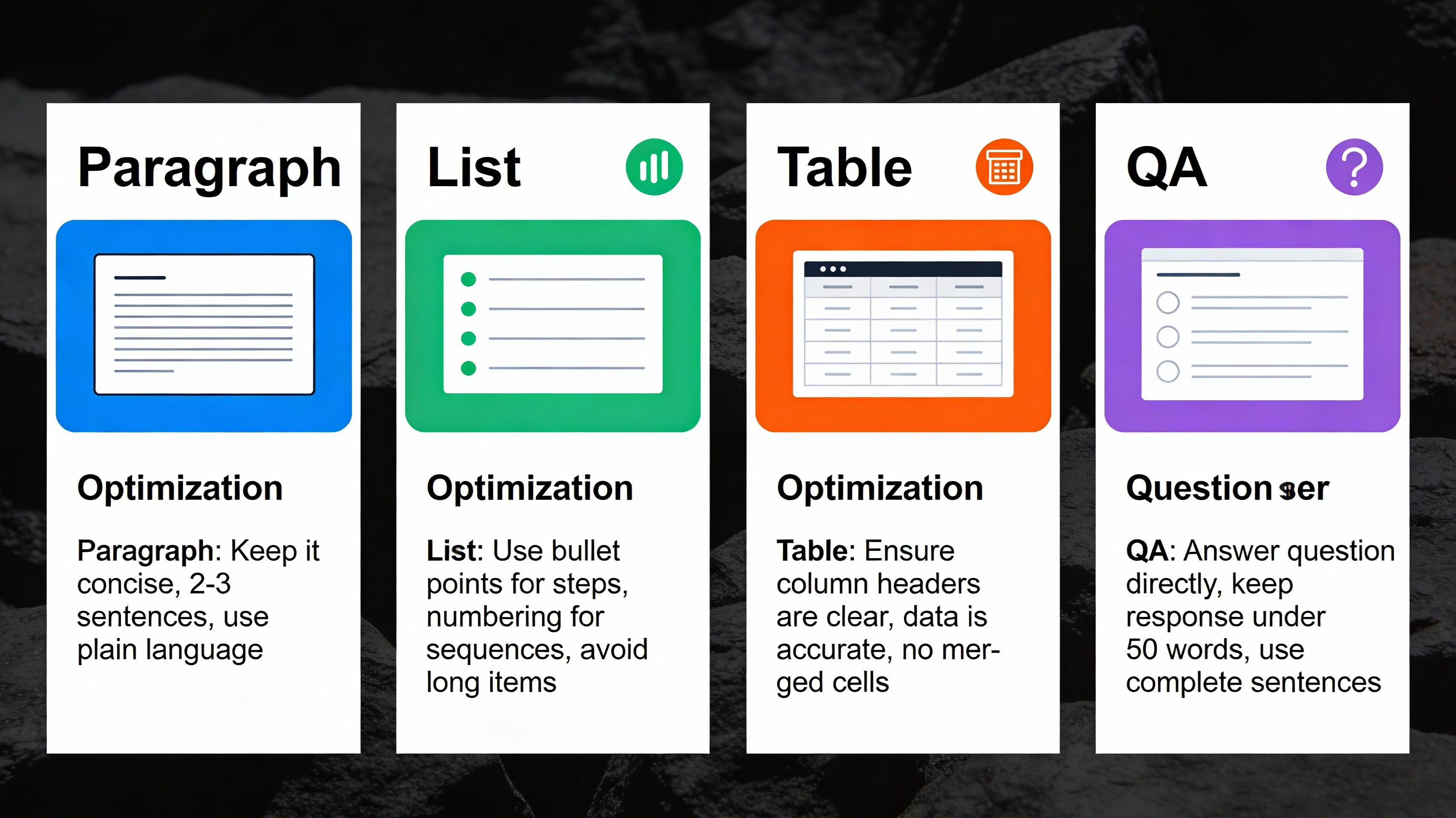
Targeting featured snippets involves restructuring your content to provide immediate value to searchers. Google looks for concise, direct answers that can be easily pulled into "position zero" at the top of the search results page. By organizing your data into specific formats, you increase the likelihood of your content being selected for these prominent spots.
- Write direct answers to common questions in 40-50 word blocks.
- Utilize bulleted lists, numbered steps, and tables for data comparison.
- Format sub-headings as questions that match common search queries.
- Implement structured data like FAQ and How-To schema to help bots understand your content.
| Snippet Format | Best Use Case | Benefit |
|---|---|---|
| Paragraph | Definitions and direct questions | Quick information delivery |
| List | Step-by-step guides or rankings | High readability and structure |
| Table | Data comparisons and pricing | Organized data visualization |
You can explore more strategies in Articfly’s AI prompt library or Ahrefs’ featured snippet guide.
Leveraging AI for Efficient Content Refresh
Using artificial intelligence like Articfly allows you to scale your content updates without spending hours on manual rewriting. AI can quickly analyze your existing text and suggest improvements that align with current SEO standards and snippet requirements. This automation ensures that your entire content library remains optimized and competitive.
"By prompting an AI with your current blog content and a target snippet format, you can generate multiple optimized variations in seconds. This allows human editors to focus on factual accuracy and brand voice while the AI handles the heavy lifting of SEO structuring."
- Prompt the AI with your current text and specific target snippet requirements.
- Review the AI-generated output to ensure it matches your brand's unique tone.
- Use AI to instantly create meta titles, descriptions, and relevant schema markup.
Learn more on the Articfly product page or read a reputable AI-in-SEO article at Search Engine Journal.
Optimizing On-Page Elements Without New Backlinks
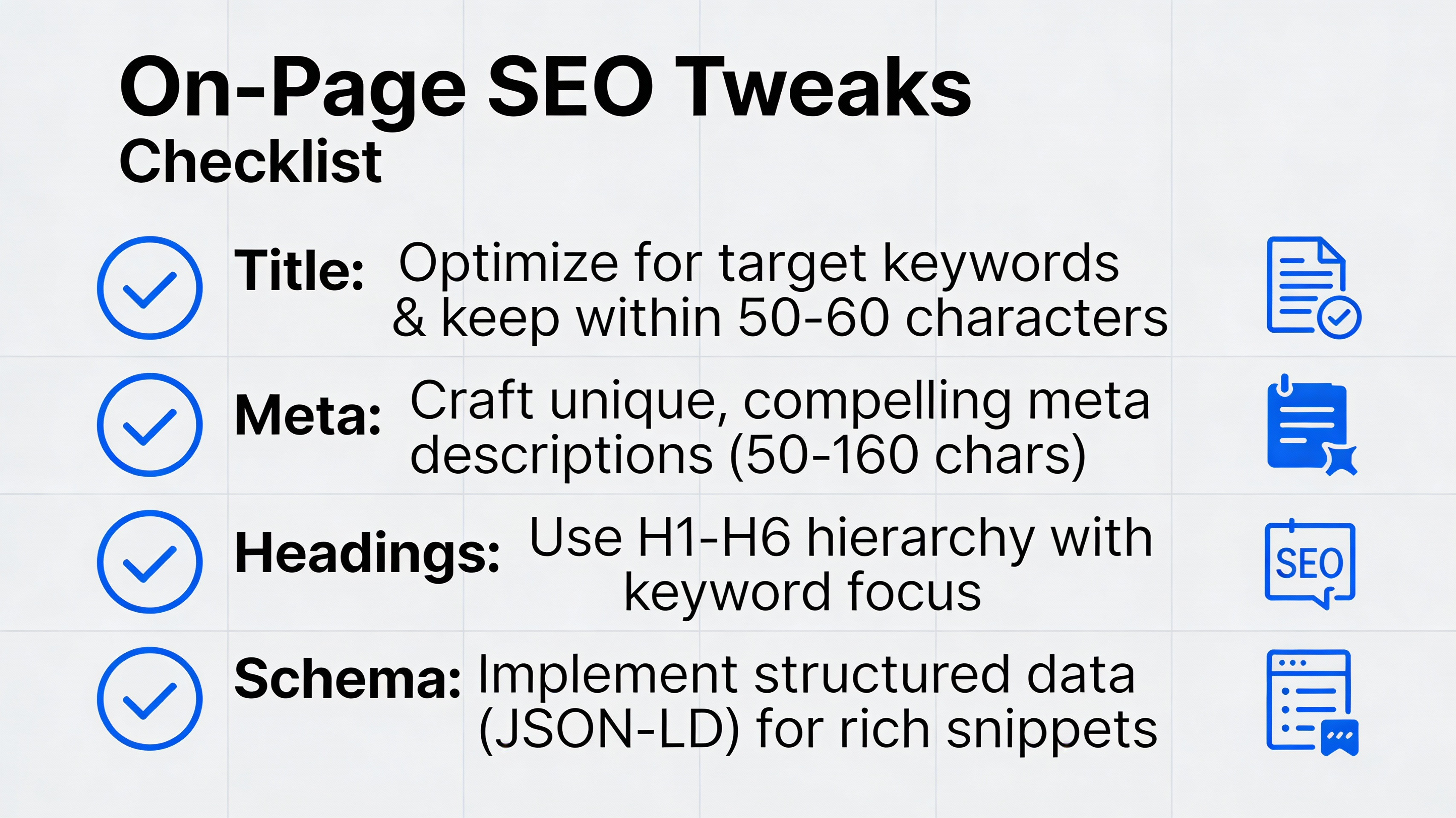
On-page optimization is a powerful way to boost rankings without the need for expensive backlink campaigns. By focusing on technical and structural elements within your control, you can improve how search engines index and rank your pages. These small tweaks often make the difference between a second-page result and a top-three position.
- Refine title tags and meta descriptions to better match current target queries.
- Ensure your heading hierarchy (H1-H3) uses question-based phrasing.
- Update image alt text to be descriptive and keyword-rich.
- Increase internal linking to connect new updates with your pillar content.
Check out Articfly’s internal linking guide or Google’s SEO starter guide for more technical tips.
Measuring Success & Iterating

Tracking performance metrics allows you to see the direct impact of your refresh efforts and identify what works best for your audience. SEO is not a one-time task but a continuous cycle of improvement. By monitoring results, you can decide which pages need another round of updates and which are performing at their peak.
- Track ranking changes and CTR improvements in Google Search Console.
- Utilize AI to suggest further refinements based on the performance data you collect.
- Set a schedule for periodic refresh cycles, such as quarterly or bi-annually.
View your data in the Articfly analytics dashboard or read the official Search Console documentation.
Key Takeaways
- Refreshing content is essential to combat ranking decay and align with Google's freshness algorithm.
- Auditing for high-impression, low-click pages reveals the best opportunities for traffic gains.
- Structure content with concise answers and tables to win high-value featured snippets.
- AI significantly speeds up the rewriting and optimization process while maintaining quality.
- Significant SEO improvements are possible through on-page changes without acquiring new backlinks.
Frequently Asked Questions
Can I refresh content without changing its original intent?Yes, refreshing content is about updating data, improving structure, and enhancing clarity rather than altering the core purpose of the article.
How long does it take for a refreshed page to appear as a featured snippet?While it varies, improvements can often be seen as soon as Google recrawls the page, which typically happens within a few days to a few weeks.
Do I need to rebuild internal links after a refresh?It is not necessary to rebuild existing links, but adding new internal links to and from the refreshed page can help boost its authority.
Is AI-generated content safe for Google’s guidelines?AI-generated content is safe as long as it provides high-quality, helpful information that meets user intent and adheres to search guidelines.
What metrics prove a successful refresh?Success is typically measured by improved keyword rankings, higher click-through rates, and increased appearances in featured snippets.
Next steps for content refresh
Ready to see how automation can transform your existing blog posts? Try Articfly’s free content refresh demo to see instant SEO improvements in minutes and start winning more featured snippets today.