
The New Landscape of SEO in 2026

Traditional search engine optimization is undergoing a fundamental shift toward AI-centric discoverability. Instead of just focusing on keyword rankings, creators must now consider how AI agents and large language models interpret their content. This evolution reflects a broader move from simple link-based results to synthesized, direct answers.
Understanding these changes is vital for content marketers and SEO specialists who want to stay relevant. According to industry analysts at HubSpot, the rise of generative search is fundamentally changing how users interact with information online. Adapting to this shift requires a new set of tactics focused on machine-readability and topical depth.
From Rankings to Discoverability
Discoverability refers to the ability of an AI system to find, understand, and cite your content in its generated responses. This requires a transition from optimizing for clicks to optimizing for semantic relevance and authority. Brands that fail to adapt risk being left out of the AI overview summaries that dominate the top of modern search results.
Why AI Systems Matter
AI systems act as the primary gatekeepers between users and information in the current digital landscape. These models analyze vast datasets to provide users with condensed insights without requiring them to visit multiple websites. Ensuring your blog content is structured for these systems is now essential for maintaining visibility and audience reach.
How AI-Powered Search Engines Work
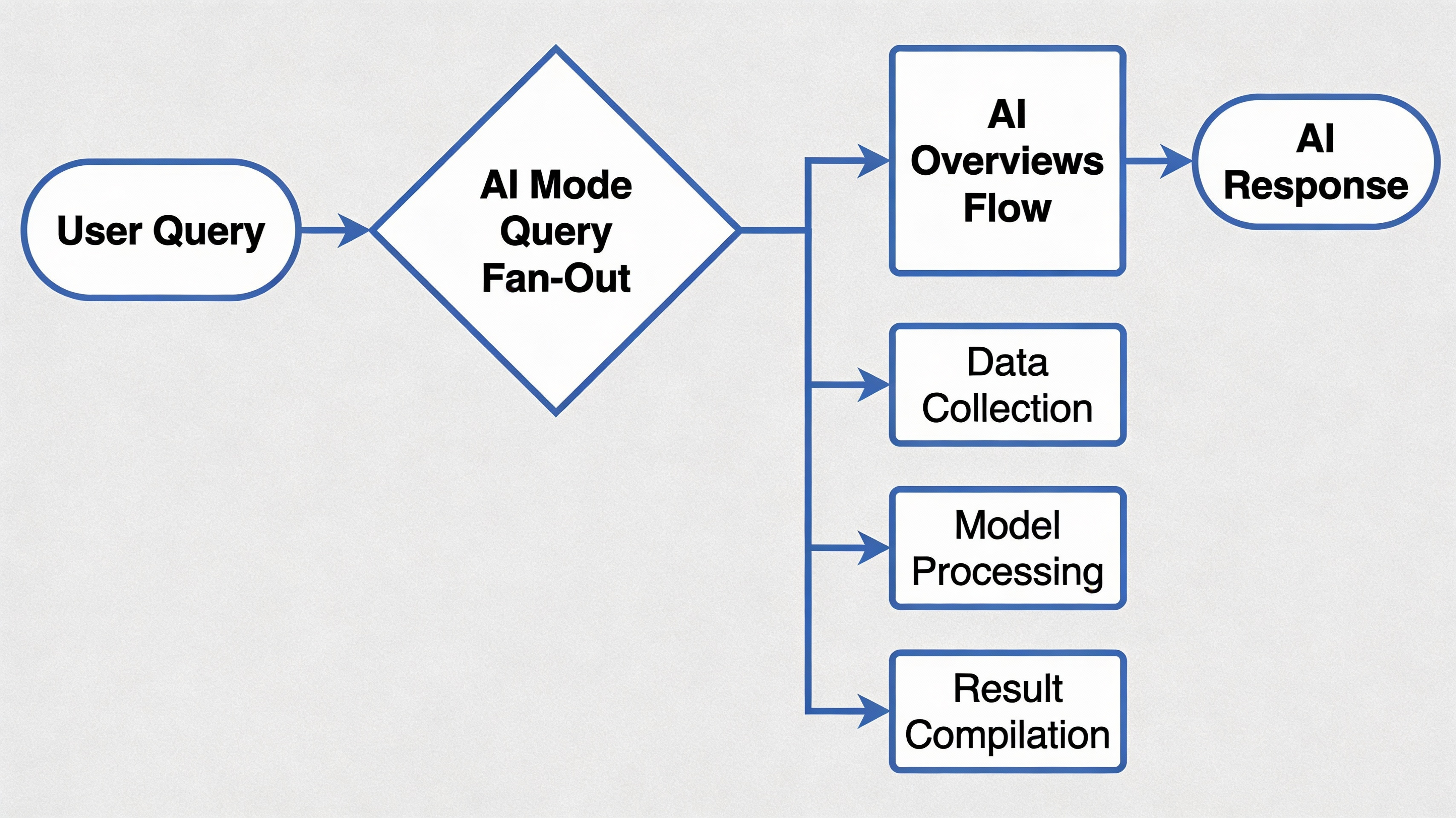
Understanding AI search mechanics is the first step in mastering the new digital landscape. Modern engines utilize complex processes like query fan-out and multi-modal analysis to deliver highly personalized results. These systems prioritize content that offers clear, direct answers to sophisticated user prompts.
Google Search Central has provided guidance on how their systems prioritize helpful content that demonstrates expertise and trustworthiness. By aligning your articles with these principles, you improve the chances of your data being utilized by AI agents. This technical alignment is the backbone of successful AI discoverability.
AI Mode and Query Fan‑out
Query fan-out occurs when an AI search engine takes a single user prompt and breaks it into multiple sub-queries to gather a comprehensive set of data. This allows the system to synthesize an answer from various sources simultaneously. Content that covers a topic deeply and clearly helps these engines map your data to these sub-queries effectively.
AI Overviews and Multimodal Results
AI overviews are the generated summaries that appear at the top of the search results page, often pulling from several high-authority sources. These results are increasingly multimodal, incorporating text, images, and data tables to answer the user's intent. Providing diverse content formats within your blog posts makes your work more likely to be featured in these premium placements.
Example of an AI Overview (pattern interrupt: table)
| Feature | Traditional Search | AI-Powered Search |
|---|---|---|
| Primary Result | List of blue links | Synthesized AI Overview |
| User Intent | Keyword matching | Semantic understanding |
| Source Citations | Individual page rankings | Cross-platform citations |
Key Strategies for Discoverability

Optimizing for AI discoverability requires a shift in how content is planned and produced. Success in 2026 relies on semantic intent and the technical structures that allow AI to parse information efficiently. By focusing on these core areas, you can ensure your content remains at the forefront of AI search results.
Strategic content creation now involves building a network of related topics rather than isolated articles. According to the Google AI Mode announcement, search engines are looking for contextually rich sources that provide value beyond simple definitions. This holistic approach ensures your brand is seen as a definitive authority by AI crawlers.
Optimize for Semantic Intent
Semantic intent focuses on the underlying meaning and context behind a search query rather than just the literal words. AI search engines are now skilled at identifying these nuances, prioritizing content that addresses the user's actual goal. High-quality writing should aim to answer the "why" and "how" of a topic to satisfy these advanced algorithms.
Structured Data for AI Consumption
Structured data provides a clear roadmap for AI systems to understand the key elements of your page. Using schema markup helps bots categorize your content, identify entities, and extract relevant facts for their summaries. This technical foundation is a critical component of any modern SEO strategy aimed at AI-first search environments.
Build Authority Across Platforms
Authority is no longer just about backlink counts; it is about being recognized as a reliable source of information across multiple digital touchpoints. AI systems look for consistency and citations from other reputable sites to verify your expertise. A holistic approach to content distribution reinforces your standing as a topical leader.
Discoverability Checklist (pattern interrupt: list)
- Include direct answers to common questions within the first two paragraphs.
- Use descriptive subheadings that summarize the section content clearly.
- Implement appropriate schema markup for articles, FAQs, and products.
- Ensure content is formatted with lists and tables for easy data extraction.
- Link to high-authority external sources to provide additional context.
Leveraging Articfly’s AI Content Engine

The Articfly platform simplifies the transition to AI-first SEO by automating the planning and creation process. Our proprietary AI system is specifically designed to generate content that aligns with modern search intent and discoverability standards. This allows content teams to scale their production without sacrificing depth or quality.
Articfly features such as the AI content engine and SEO best practices guide help users stay ahead of evolving search trends. By automating the heavy lifting of content research and structuring, our platform turns ideas into data-driven articles in minutes. This is especially valuable for agencies and startups looking for consistent growth.
Automated Topic Planning for AI
Articfly analyzes search trends and query patterns to develop topic plans that are optimized for AI discoverability. By identifying the specific themes that AI systems prioritize, the platform ensures your content strategy is data-driven from the start. This automated approach saves time while maximizing the potential for your articles to be cited by chatbots.
Writing with Discoverability in Mind
Every article generated by Articfly is structured to meet the needs of both human readers and AI crawlers. The system applies SEO best practices, uses semantic keywords, and organizes information into clear, logical sections. This ensures your blog posts are ready to publish and optimized for high-visibility AI overviews.
Sample Prompt for AI‑Optimized Outline (pattern interrupt: quote)
"Generate a blog outline that prioritizes semantic intent and provides clear data points for AI summary extraction, focusing on topical authority and direct user answers."Articfly AI Prompt Logic
Measuring Success in an AI‑First World
Tracking performance metrics in an AI-dominated search environment requires new tools and approaches. Standard click-through rates and keyword positions are still relevant, but they no longer tell the whole story. Marketers must now monitor how often their content is cited by AI agents and featured in generated summaries.
Understanding your visibility in AI-generated answers is crucial for evaluating your content ROI. Industry reports suggest that citations in AI overviews can significantly boost brand awareness and perceived authority. By monitoring these new metrics, you can refine your strategy to better capture the attention of AI-driven users.
AI Search Visibility Metrics
AI visibility is measured by the frequency with which your brand appears in AI-generated answers across various platforms. This metric provides a more accurate picture of your influence in an era where many users get answers without ever clicking a link. Monitoring these citations helps you understand your share of voice in the AI landscape.
Monitoring AI Overviews and Chatbot Citations
Keeping track of chatbot citations allows you to see exactly which parts of your content are most valuable to AI systems. If a specific section of your blog is consistently quoted, it indicates high topical authority in that area. This feedback loop is essential for refining your content strategy and maintaining long-term discoverability.
Key Takeaways
Future-proofing your content for 2026 requires a proactive approach to AI discoverability and semantic search. By focusing on quality, structure, and technical optimization, you can maintain a strong presence in the new digital era.
- Prioritize semantic intent over simple keyword matching to align with AI search logic.
- Use structured data and clear formatting to make content easy for AI to synthesize.
- Build authority by providing deep, expert-level insights on your primary topics.
- Leverage automation tools like Articfly to scale high-quality, SEO-optimized content.
- Monitor AI citations and visibility metrics to measure your brand's reach.
Try Articfly’s free trial today to transform your content strategy.
FAQ
What is "discoverability" in the context of AI search?
Discoverability is the measure of how easily an AI model can find, interpret, and cite your content within its generated responses. Unlike traditional SEO, which focuses on ranking in a list of links, discoverability focuses on being included in the AI-synthesized answer itself.
This requires a high level of semantic clarity and technical optimization. Content must be structured so that AI agents can quickly extract facts and context to answer user queries effectively.
How does Google AI Mode affect traditional SEO tactics?
Google AI Mode shifts the focus from simple keyword placement to overall helpfulness and expertise. While keywords still matter, the system now prioritizes content that provides a comprehensive answer to a user's underlying intent.
Traditional tactics like backlink building and on-page SEO remain relevant but must be combined with better content structure. The goal is to provide information that is both human-readable and machine-understandable.
Which structured data types are most important for AI Overviews?
Schema types such as Article, FAQPage, and Product are highly influential for appearing in AI Overviews. These markups provide explicit clues about the content's purpose and the specific entities it discusses.
By using structured data, you help AI systems categorize your information correctly. this increases the likelihood of your content being used as a source for direct answers in search results.
Can Articfly help me track AI search visibility?
Articfly is designed to create content that is highly discoverable by AI systems, putting you in the best position for citations. While the platform focuses on creation and optimization, the articles produced are tailored to maximize visibility in AI-first search environments.
By using Articfly's data-driven approach, you ensure your content meets the criteria that AI agents look for when selecting sources. This significantly improves your chances of being featured in generated summaries.
Do I need to change my content calendar for AI‑first discoverability?
Yes, your content calendar should evolve to include more depth and topical clusters. Instead of chasing high-volume keywords, focus on building a comprehensive library of content that covers all aspects of a specific subject.
This approach establishes your brand as a topical authority, which is a key factor for AI discoverability. Using Articfly can help you quickly build out these clusters with professional, optimized blog posts.
Next steps for AI‑first discoverability
Articfly empowers your team to stay ahead of search trends by automating professional, SEO-optimized blog creation. Sign up for Articfly today to begin scaling your discoverability in the new AI-powered search landscape.