
Introduction: The Rise of SEO as a Moat in 2026

SEO as a strategic barrier has undergone a massive evolution from the days of simple keyword stuffing to a sophisticated, intent-first approach. In the digital landscape of 2026, automation is no longer just a luxury for enterprise brands but a necessary defense mechanism for businesses of all sizes. Small firms now have the unique opportunity to defend and expand their digital territory against larger competitors by leveraging high-velocity content systems.
The growing role of AI and automation allows marketing teams to respond to search trends in real-time. By prioritizing search intent over raw volume, companies can establish a presence that is difficult for competitors to displace. This shift ensures that content remains relevant and authoritative, serving as a long-term asset rather than a temporary traffic spike.
| Feature | Traditional SEO | Automated SEO Moat |
|---|---|---|
| Content Creation | Manual, slow, and resource-heavy | AI-driven, scalable, and instant |
| Optimization | Static keyword targeting | Dynamic intent-first mapping |
| Competitive Edge | Relies on massive budgets | Relies on speed and topical depth |
Why traditional SEO is no longer enough
Manual content creation often suffers from significant limitations in speed and consistency. While humans provide essential nuance, the time required to research, outline, and draft articles manually makes it impossible to compete with high-volume digital environments. Scaling a blog without automation leads to burnout and a lack of topical coverage.
The shift toward automation and AI
Recent breakthroughs in AI content generation have fundamentally changed how information is processed and published. These systems can now analyze massive datasets to identify what readers actually need, rather than just what they are typing. This allows brands to produce helpful content that satisfies both search engines and human readers at an unprecedented scale.
How Small Companies Can Build a Competitive Moat

Building a competitive moat requires small teams to focus on niche topics that larger competitors might overlook. By identifying low-competition keywords with high intent, a startup or agency can dominate specific search clusters. This targeted approach creates a foundation of authority that is difficult for broad-market brands to penetrate.
Using AI to generate depth and breadth quickly ensures that every corner of a topic is covered. Maintaining a consistent brand voice across this volume is critical for building trust with the audience. When a brand sounds the same in every article, it reinforces its identity and professional standing in the marketplace.
- Identify high-intent niche clusters with low keyword difficulty.
- Deploy AI-driven content generation to achieve topical authority.
- Upload and enforce a strict brand voice guideline for all outputs.
- Monitor search intent shifts and update content automatically.
- Leverage internal linking to keep readers within your ecosystem.
Leveraging AI-powered content automation
The benefits of using an end-to-end platform like Articfly include the ability to handle planning, writing, and structuring in one workflow. This automation reduces the administrative burden on marketing managers, allowing them to focus on strategy rather than logistics. By streamlining production, companies can publish multiple articles per day without sacrificing quality.
Focusing on search intent and topical authority
Mapping intent clusters is the secret to moving beyond simple traffic and toward actual conversions. This process involves grouping keywords based on the user's journey, from awareness to decision-making. By providing comprehensive answers across an entire topic, a business signals to search engines that it is the definitive source of information.
Example workflow
Consider a small business that uses automation to launch a new product line. They begin by importing their brand voice and a list of core keywords into their AI system. Within hours, the platform generates a month's worth of structured, SEO-optimized blog posts that address every potential customer question. The team reviews the content, makes minor adjustments, and publishes a content library that immediately begins capturing niche search traffic.
Smart Content Automation Strategies
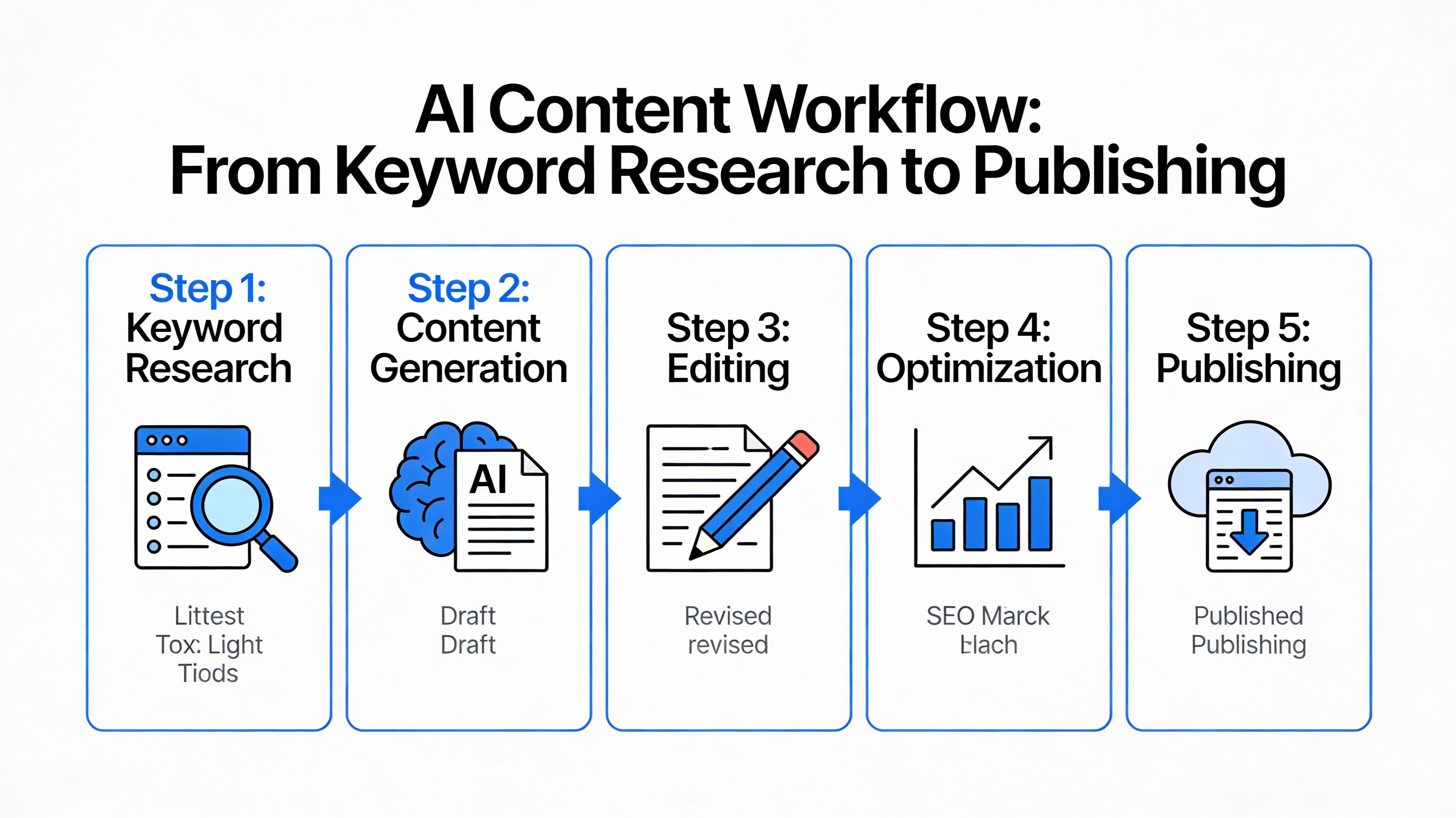
Automated keyword research and clustering are the first steps in a modern SEO strategy. By using tools and APIs to group related terms, businesses can see the "big picture" of a topic before they ever start writing. This data-driven approach ensures that no effort is wasted on content that doesn't contribute to the overall moat.
AI-driven outlines are designed to respect the structure of the Search Engine Results Page (SERP). By analyzing what is already ranking, the AI can suggest headings and subheadings that satisfy user expectations. This structural integrity is vital for both readability and search engine performance in a competitive field.
Automated keyword research and clustering
Modern APIs allow for the integration of real-time search data directly into the content planning process. This eliminates the need for manual spreadsheets and guessing games regarding keyword relevance. Automation handles the heavy lifting of categorizing thousands of terms into actionable content pillars.
AI-driven content planning and outlines
Intent mapping informs the hierarchy of H2 and H3 tags within every article. By understanding if a user wants a tutorial or a comparison, the AI structures the post to provide the most relevant information first. This precision helps in reducing bounce rates and improving the overall user experience on the site.
Scalable article generation with brand voice
Prompt engineering and tone presets allow for consistent article generation regardless of the volume. By setting specific rules for language, such as avoiding jargon or using a helpful tone, the AI acts as a digital version of the brand's best writer. This scalability means a small team can produce the output of a much larger agency.
Measuring Success Without Overreliance on Numbers

Measuring SEO success often focuses too heavily on raw traffic numbers, which can be misleading. While organic growth is important, qualitative signals like dwell time and brand mentions often tell a more accurate story of how well a moat is being built. These metrics reflect the actual relevance and helpfulness of the content to the target audience.
Using a balanced KPI framework allows teams to monitor health without getting lost in the data. Light quantitative metrics, such as shifts in SERP positions, should be viewed alongside engagement levels. This holistic view ensures that the content strategy is driving meaningful business results rather than just vanity metrics.
Quantitative vs. Qualitative Metrics
- Quantitative: Organic traffic volume, number of ranking keywords, and bounce rate percentages.
- Qualitative: Content relevance, average time on page, and the frequency of brand-name searches.
Qualitative signals (engagement, relevance)
Engagement signals help marketers understand if their content is truly resonating with readers. By interpreting how long a visitor stays on a page, teams can gauge if the information provided met the user's initial intent. High relevance scores often correlate with higher conversion rates and better long-term retention.
Using SEO tools for trend monitoring
Various free and paid tools can be used for ongoing trend monitoring and position tracking. These platforms provide dashboards that visualize how a brand's authority is growing over time across different topics. Regular check-ins with these tools allow for quick pivots if a competitor starts encroaching on a key content area.
Integrating Articfly into Your Workflow
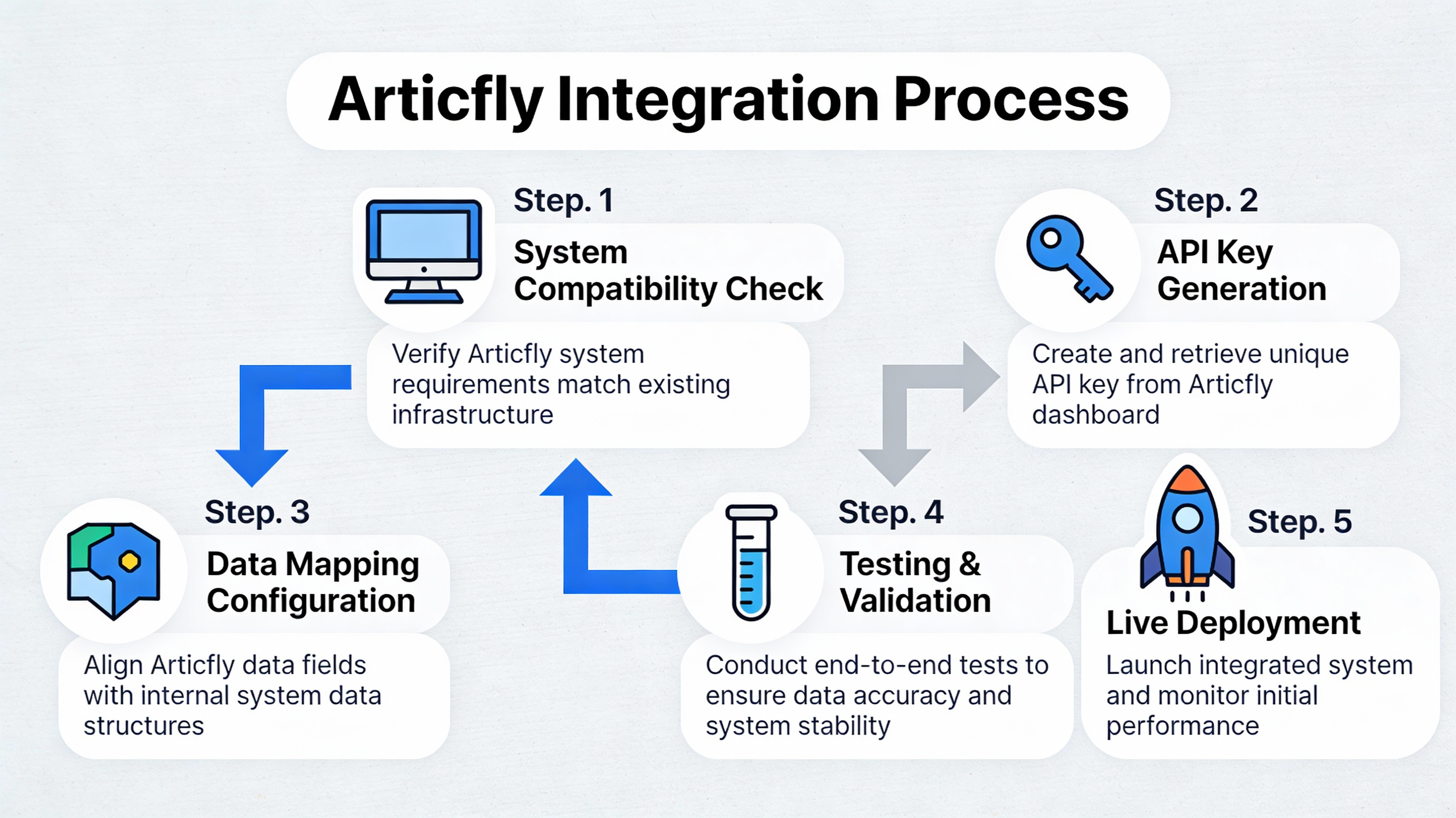
Integrating automation tools into your daily workflow should be a seamless process that enhances existing efforts. The onboarding stage typically involves setting up an account and uploading your unique brand voice to ensure consistency. Once the foundation is laid, keyword lists can be imported to begin the planning phase.
Synchronizing a content calendar ensures that the AI-generated posts align with broader marketing goals. A review and edit loop is essential before publishing to add a final layer of human touch and expertise. This collaborative approach combines the efficiency of AI with the strategic oversight of a marketing professional.
Step-by-step implementation guide
The first action in the implementation stage is to define your core content pillars based on business objectives. Next, use the platform to generate a series of outlines that cover these pillars comprehensively. After the content is generated, schedule the posts according to your team's publishing frequency for maximum impact.
Tips for maximizing ROI
To get the most out of your investment, consider repurposing blog content into social media posts or email newsletters. A/B testing headlines can also help identify what attracts the most clicks within your specific niche. Leveraging analytics regularly allows you to double down on the topics that are performing best.
Key Takeaways
Building a content moat is the most effective way for small businesses to compete in the modern digital age. By utilizing AI and automation, teams can create high-quality, intent-driven content at a scale that was previously impossible. This strategy not only improves search rankings but also builds long-term brand authority.
- SEO automation acts as a defensible moat against larger competitors.
- Small firms can outperform big brands by focusing on intent-first content clusters.
- AI tools like Articfly provide a turnkey solution for scalable article generation.
- Measuring success requires a balance of quantitative and qualitative data.
- Integrating automation into the workflow saves time and reduces operational costs.
Frequently Asked Questions
Do I need SEO expertise to use AI content automation?While some basic understanding of your target audience helps, many platforms handle the technical aspects of SEO automatically. The AI is designed to follow search engine best practices so you can focus on your business goals.
How does Articfly ensure my brand voice stays consistent?The system allows you to upload specific brand guidelines and previous content examples. It uses these references to maintain the same tone, style, and vocabulary across every article it generates.
Can AI-generated articles rank against human-written content?Yes, search engines prioritize content that provides value and satisfies user intent. When AI content is well-structured and relevant, it can rank as well as, or even better than, manual content.
How quickly can I see results?SEO is generally a long-term strategy, but increasing content volume and topical authority can lead to faster visibility in niche areas. Many businesses see improved engagement signals shortly after expanding their content library.
Next steps for SEO automation
The transition to automation is the most effective way to ensure your marketing efforts remain scalable and competitive. By choosing a platform that understands your brand voice and search intent, you can build a digital presence that grows day by day. Articfly offers a turnkey solution for teams ready to transform their content production.
Ready to see the difference for yourself? You can explore the platform with a 14-day free trial that requires no credit card. This allows you to test the workflow, generate your first few articles, and experience the speed of AI-driven content creation firsthand. Start your journey toward a stronger SEO moat today.