Why Content Freshness Still Rules SEO in 2026

Maintaining content freshness has become a cornerstone of successful search engine optimization as algorithms prioritize the most current information. Modern search engines utilize specific signals, such as the Query Deserves Freshness update, to identify which topics require up-to-the-minute accuracy. Users also demonstrate a clear preference for clicking on articles that show a recent "last updated" date.
Refreshing existing pages often allows them to outrank newer competitors because they already possess established authority and backlinks. This strategy ensures that your high-performing assets do not decay over time. By keeping information current, you satisfy both technical search requirements and human expectations for reliability.
| Metric | Old Content (Unmodified) | Refreshed Content | New Content |
|---|---|---|---|
| Time to Rank | Decreasing | Rapid (1-4 weeks) | Slow (3-6 months) |
| Resource Cost | Zero | Low to Moderate | High |
| Authority Level | High but decaying | High and growing | Zero (Starting from scratch) |
Search Engine Emphasis on Updated Content
Search engines use sophisticated freshness signals to determine if a piece of content is still relevant to the user's search intent. Artificial intelligence now makes it easier for these engines to detect when a page has been substantively updated rather than just changing a date. Keeping your content fresh informs search bots that your site is active and authoritative.
Benefits Over New Content Creation
Updating old posts often results in faster ranking gains because the URL already has a history with search engines. This approach typically involves a lower production cost since the core research and structure are already in place. It is a sustainable way to maintain authority without the constant pressure of generating entirely new topics.
The Business Case: ROI of Updating vs Creating New Articles
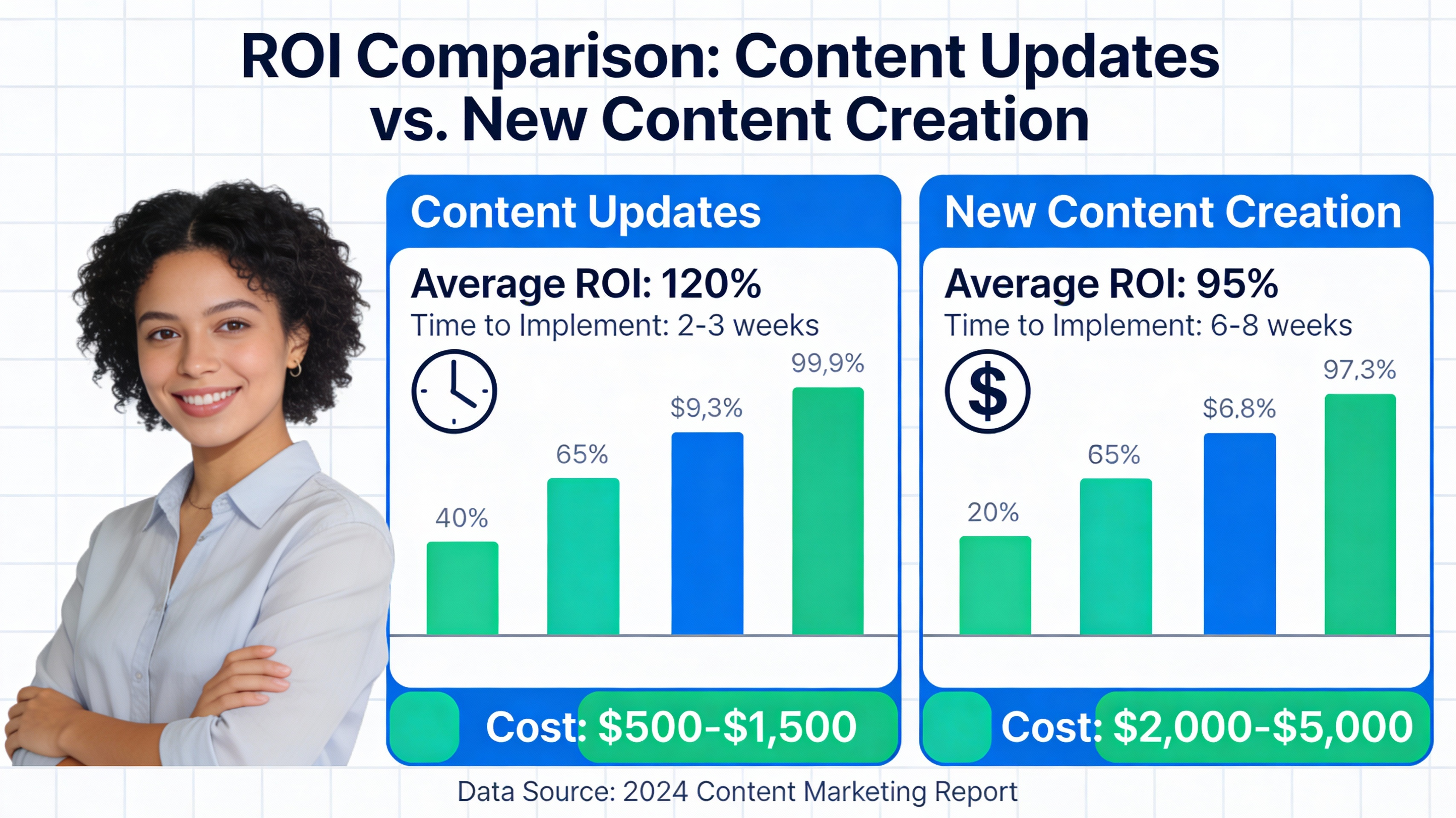
Evaluating the financial impact of content refreshes highlights why many savvy marketers are shifting their focus away from purely new production. The cost associated with writer hours and deep research is significantly reduced when working with an existing foundation. Historical trends suggest that updated pages see a more immediate return on investment compared to the "sandbox" period of new articles.
By focusing on your "middle-of-the-pack" articles, you can push them into top positions with minimal effort. This strategy stabilizes long-term traffic and prevents your most valuable pages from falling into obscurity. Maximizing the value of your existing library is often the most efficient way to scale organic growth.
- Reduced cost per lead through optimized existing traffic.
- Lower research and writing hours for content teams.
- Higher conversion rates by aligning old content with current offerings.
- Improved site-wide authority through consistent quality updates.
Cost Efficiency
The reduction in time required for research and drafting makes content updates highly cost-efficient for any budget. Instead of building a narrative from nothing, editors can focus on refining the message and adding new data. This allows content teams to achieve more with fewer resources.
Faster Ranking Gains
Authority transfer is a key reason why refreshed posts climb the rankings so quickly compared to new ones. When an established page is updated, search engines recognize the improvement to an already trusted source. This avoids the long wait times often associated with indexing and ranking brand-new URLs.
Proven Strategies to Refresh Old Content Effectively

Implementing actionable refresh tactics requires a structured approach that goes beyond simple grammar corrections. A thorough content audit is the first step, identifying which posts have the highest potential for growth based on past performance. Once you know what to update, you can focus on aligning the content with current search intent and modern user expectations.
| Audit Action Item | Status | Responsible Party |
|---|---|---|
| Identify traffic-decaying posts | Pending | SEO Lead |
| Check keyword search intent alignment | In Progress | Content Manager |
| Update internal and external links | Pending | Editor |
| Add modern media/schema markup | Pending | Dev/Design |
Conduct a Content Audit
Identify High-Potential Posts
Focus your efforts on posts that previously performed well but have seen a decline in traffic or rankings. Use metrics like historical backlinks, previous click-through rates, and current relevance to prioritize your workload. These pages are your "low-hanging fruit" for rapid SEO improvements.
Optimize for Current Search Intent
Update Keywords, Meta, and Structure
Search intent can shift over time, meaning a keyword that used to be informational might now be transactional. Ensure your headers, meta descriptions, and core text reflect these latest intent signals. Modernizing your structure with clear H3 and H4 tags also helps search engines parse your content more effectively.
Add New Media and Internal Links
Enhance Readability and User Experience
Adding modern images, videos, and updated schema markup can significantly boost the time users spend on your page. Internal linking should be updated to point toward your newest services or related articles. Improving the visual appeal and UX of a page often leads to better engagement signals and higher rankings.
How AI, Like Articfly, Automates the Update Process
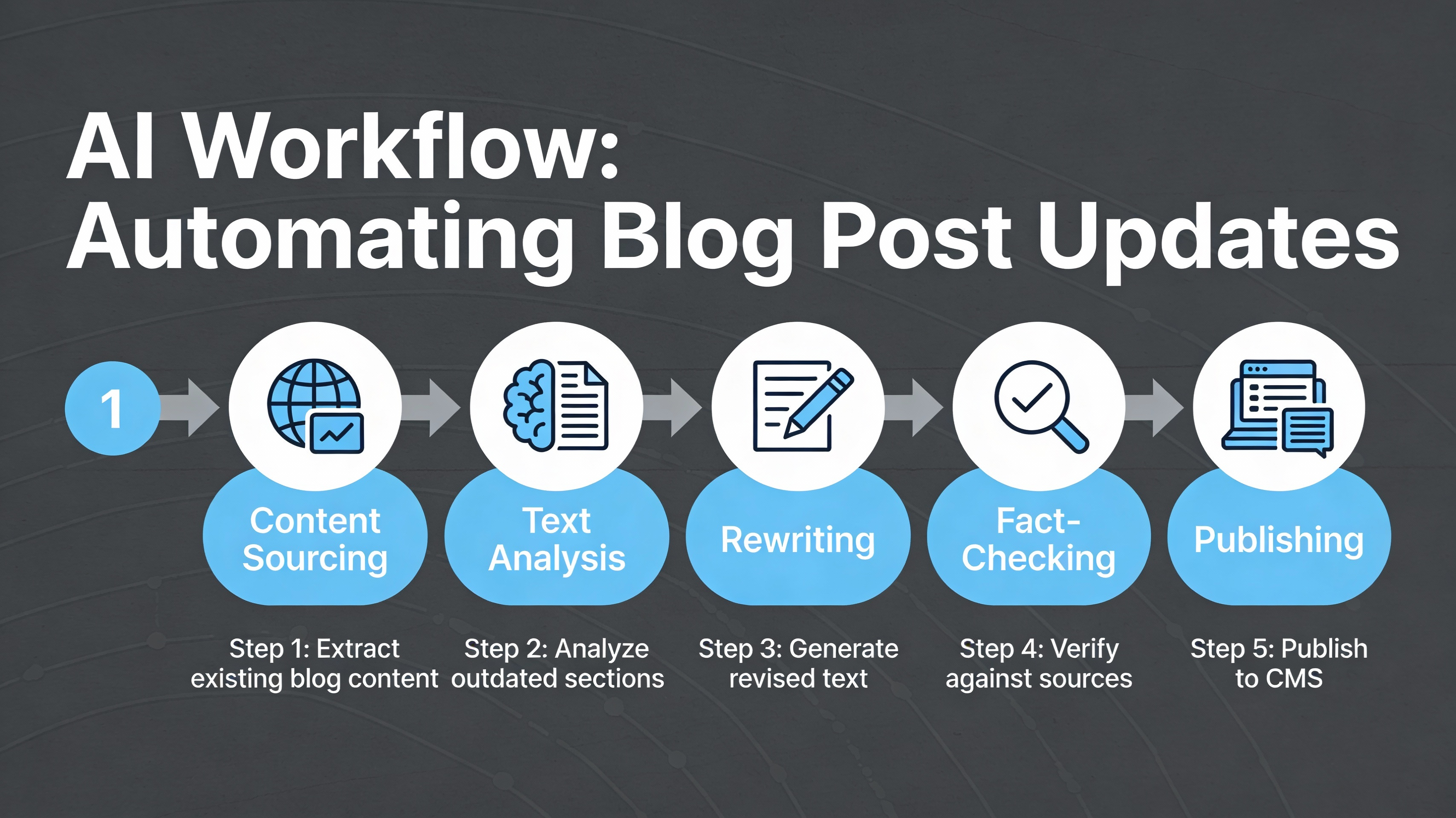
Utilizing artificial intelligence to handle content updates can transform a manual, tedious process into a streamlined workflow. AI-driven tools can perform deep content gap analysis, identifying exactly what information is missing compared to top-ranking competitors. This ensures that your updates are data-driven rather than based on guesswork.
Automated systems like Articfly can rewrite sections to improve tone, structure, and keyword placement while maintaining your brand voice. This allows for bulk scheduling and publishing, making it possible to keep an entire library fresh without a massive editorial team. AI acts as a force multiplier for your existing content strategy.
AI-Powered Content Gap Analysis
Artificial intelligence can scan the current search results to detect outdated topics or missing subheadings in your old articles. By comparing your content against the current winners, the AI provides a roadmap for what needs to be added. This level of analysis ensures your refresh is comprehensive and competitive.
Automated Rewriting and SEO Optimization
The ability to automatically adjust tone and keyword density saves editors hours of manual labor. AI can restructure paragraphs for better readability and ensure that the most important SEO factors are addressed. This results in content that is optimized for both search bots and human readers alike.
Scheduling and Publishing at Scale
Managing the update cycle for hundreds of blog posts is made simple through automated queueing and monitoring. You can schedule updates to go live at optimal times and track their performance immediately afterward. This systematic approach ensures that no content is left to become obsolete.
Step-by-Step Guide: Updating an Old Blog Post with Articfly
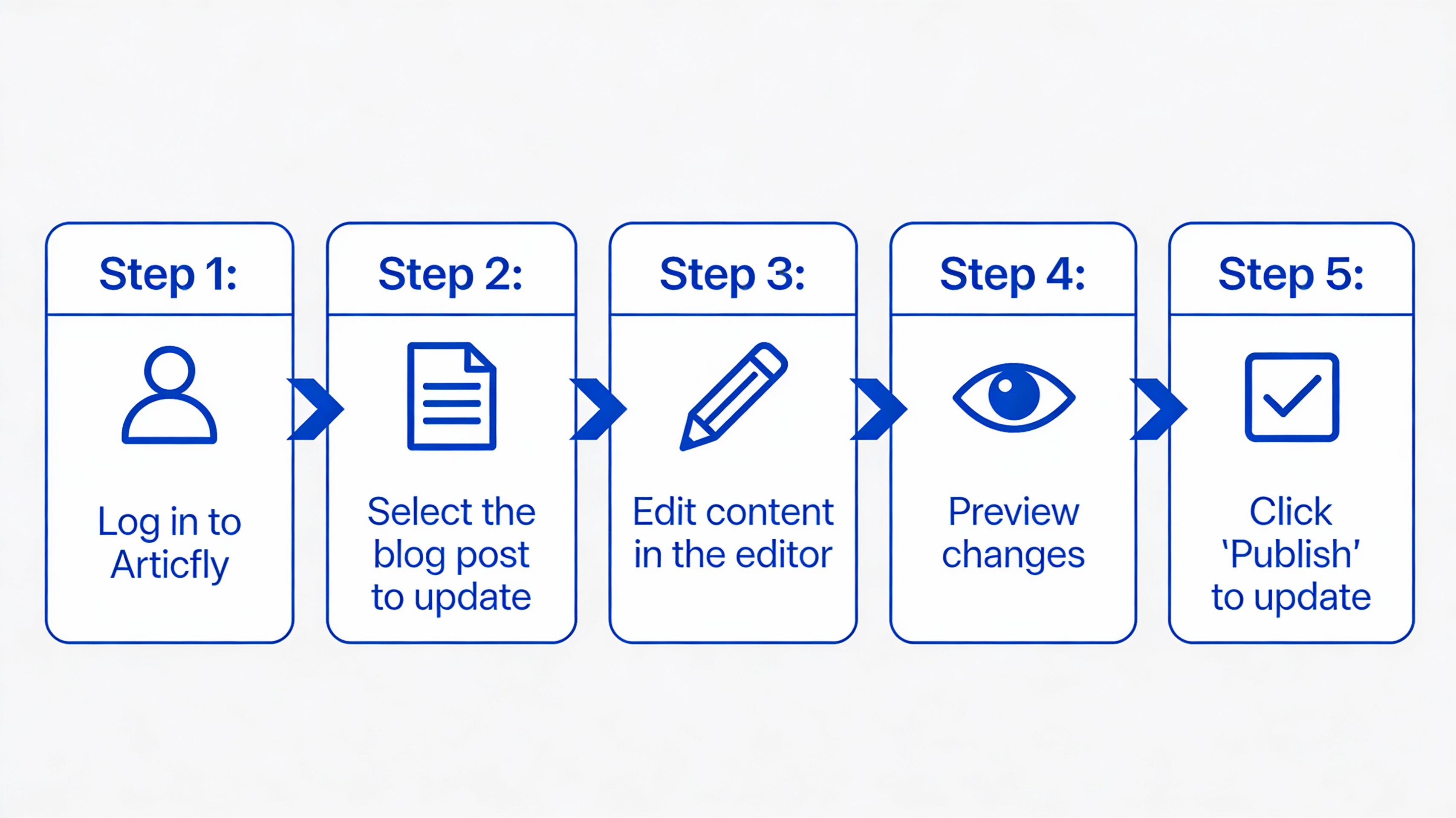
Following a clear workflow with Articfly ensures that your content refreshes are both efficient and high-quality. The process begins by importing your existing content directly into the platform, where the AI can begin its initial evaluation. This step-by-step approach removes the friction usually associated with large-scale content audits and rewrites.
- Import and Analyze: Provide the URL or text of your existing post to allow the AI to evaluate its current performance and structure.
- Review Suggestions: Examine the AI-generated recommendations for keyword updates, new sections, and readability improvements.
- Apply Edits: Use the Articfly interface to accept or tweak suggestions, ensuring the content aligns perfectly with your brand identity.
- Publish: Deploy the updated content to your blog and monitor the ranking improvements in real-time.
Import and Analyze the Existing Post
Simply upload the URL or the raw text of the article you wish to refresh into the Articfly dashboard. The system will then analyze search intent and current rankings to provide a baseline for the update. This initial data collection is crucial for making informed optimizations.
Apply AI Recommendations
The AI will suggest specific changes ranging from meta tag updates to entirely new paragraphs that fill information gaps. You have full control to accept these suggestions as they are or make minor tweaks to the phrasing. This collaborative process ensures the final output meets your exact standards.
Review, Edit, and Publish
Before going live, conduct a final QA check using Articfly’s built-in checklist to ensure all SEO best practices are met. Once satisfied, the updated post can be published directly to your CMS. This streamlined cycle makes it easy to maintain a consistent publishing cadence.
Key Takeaways
Summarizing the core benefits of content refreshes underscores why this strategy is essential for modern SEO. By prioritizing your existing library, you can achieve better results with less effort than traditional content creation. The following points represent the most critical factors for success in 2026.
- Updating old content yields a significantly higher ROI than creating new articles from scratch.
- Freshness signals remain a core ranking factor, as search engines prioritize recent and accurate data.
- AI tools like Articfly streamline the entire process, from gap analysis to automated rewriting.
- Authority transfer allows refreshed pages to climb rankings faster than new URLs.
- Regular audits are necessary to identify which pages are losing traffic and need immediate attention.
Frequently Asked Questions
Will updating my old posts hurt my existing rankings?When done correctly, updating old posts is one of the safest ways to improve your SEO. By maintaining the same URL and improving the quality of the content, you are signaling to search engines that the page is more valuable than before. Avoid changing the URL slug to preserve existing backlink equity.
How often should I refresh my blog content?A standard recommendation is to conduct a content audit every six months. However, for high-traffic or highly competitive keywords, you may want to review and refresh the content quarterly. Evergreen posts might only need a refresh once a year to ensure links and statistics are still accurate.
Can AI completely replace human editors in the refresh process?AI should be viewed as a powerful assistant rather than a total replacement. While tools like Articfly can handle the heavy lifting of data analysis and drafting, human editors provide the final creative touch and brand alignment. This combination leads to the best results for both SEO and reader engagement.
What types of posts benefit the most from being updated?Evergreen guides, "best of" lists, and high-traffic pages that have started to see a decline in rankings are the best candidates. Additionally, any post containing time-sensitive data, such as "SEO Trends for 2024," should be updated to reflect the current year and latest industry shifts.
How does Articfly handle multimedia and internal link updates?Articfly's AI suggests relevant media placements and can identify opportunities for new internal links based on your site's current content library. It helps ensure that your refreshed post is fully integrated with your latest offerings and provides a modern user experience.
Next steps for content strategy
Transform your blog performance by starting a free Articfly trial today to experience the power of automated content updates. Take advantage of a free content audit for your first five posts to identify immediate ranking opportunities. Contact our team for a personalized demo to see how our proprietary AI system can scale your high-quality content production effortlessly.