Small Business Content Marketing: 5x Your Solo Output
Key Takeaways
Scaling a blog as a solo marketer requires a shift from manual craftsmanship to a structured production mindset. Most business owners struggle with consistency because they treat every blog post as an isolated creative project rather than a repeatable technical process.
| Growth Pillar | Core Function | Solo Marketer Benefit |
|---|---|---|
| Strategy | Focusing on high-intent topics | Reduces wasted effort on vanity metrics |
| Tools | Centralizing the content lifecycle | Eliminates tool fatigue and context switching |
| Repurposing | The "Seed and Branch" model | Maximizes reach from a single effort |
| Automation | AI-assisted drafting and SEO | Maintains volume without increasing headcount |
| Measurement | Tracking content decay and ROI | Ensures long-term SEO health and revenue |
By adopting the right systems, it is possible to increase output significantly without sacrificing quality. The following guide outlines how to bridge the efficiency gap and build a sustainable content engine.
Identifying the Solo Marketer’s Efficiency Gap
Efficiency gaps in content production usually stem from a lack of technical systems rather than a lack of writing ability. Solo marketers often find themselves trapped in a cycle of manual labor-researching keywords, drafting text, hunting for internal link opportunities, and configuring WordPress settings one by one.
This manual approach creates a "blank page" syndrome where the friction of starting a new post outweighs the potential benefits of the content itself. When every step of the process requires active decision-making, the cognitive load becomes unsustainable. A production-line approach removes these micro-decisions, allowing you to focus on the high-level strategy that drives business results.
To scale, you must identify the specific "efficiency killers" that are draining your time and preventing you from shipping content consistently.
- Editing while writing: Attempting to polish sentences before the full draft is finished breaks your creative flow and doubles production time.
- Manual internal linking: Scouring your existing archives to find relevant anchor text is a tedious task that should be handled by a database or AI.
- Fragmented research: Jumping between keyword tools, search results, and your drafting document leads to lost focus and inconsistent SEO optimization.
- Lack of a publishing schedule: Writing only when "inspired" ensures that your blog remains stagnant for weeks at a time.
A solo marketer who spends four hours on a single post that receives little traffic is facing a system failure. By automating the technical heavy lifting-such as SEO scoring and initial drafting-you can reclaim the hours needed to promote your content and engage with your audience.
The "Seed and Branch" Method for Content Distribution
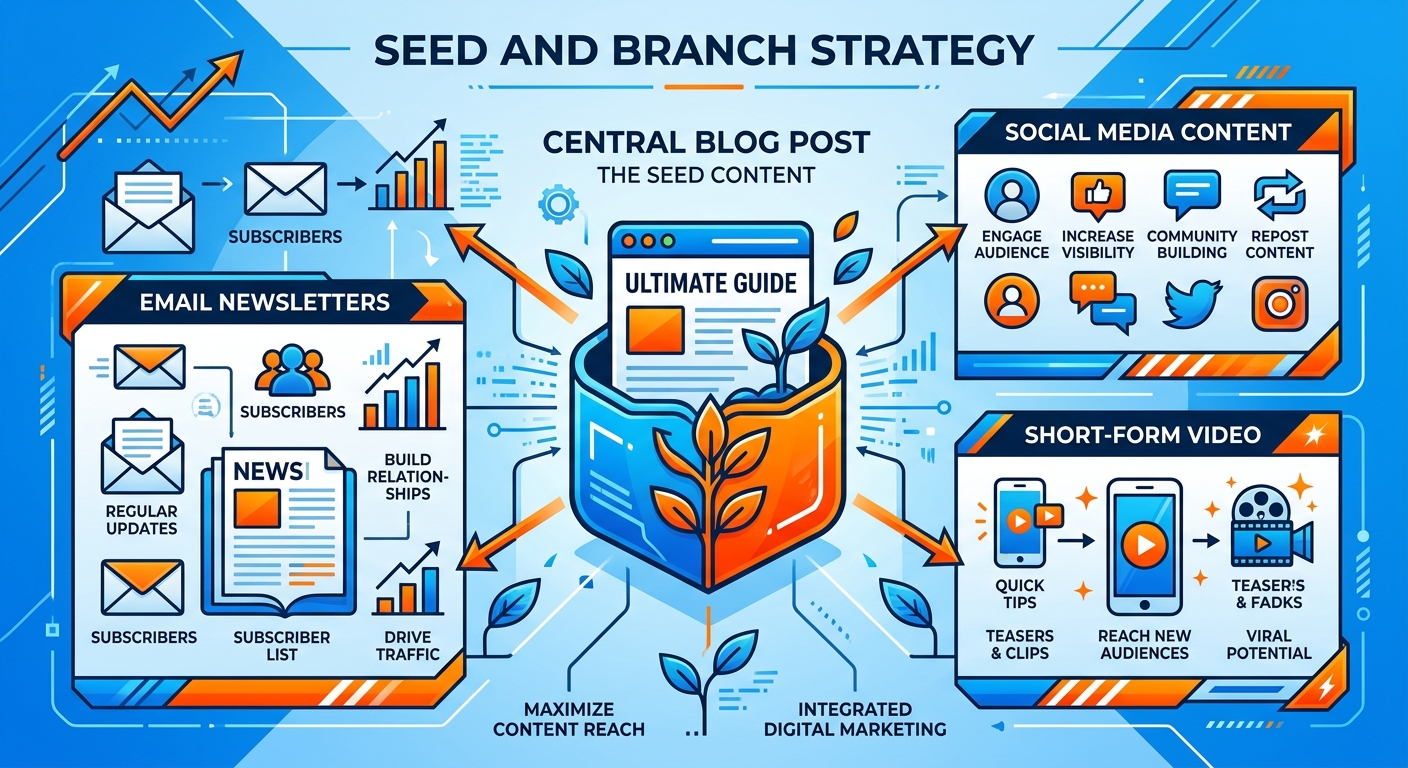
The "Seed and Branch" method is a strategy designed to maximize the utility of every long-form article you produce. Instead of treating a blog post as a single destination, you treat it as a "seed"-a dense collection of insights, data, and arguments that can be branched out into various formats.
This approach ensures that your content lives beyond your WordPress site. For a solo business owner, this is the most effective way to maintain a multi-channel presence without creating unique content for every platform. You write the deep-dive article once, and the "branches" follow naturally from the existing structure.
Deconstructing the Seed Post
A well-structured 1,500-word seed post contains multiple distinct components: headings, lists, quotes, and specific takeaways. Each of these can be extracted and reformatted for social media or email marketing. The goal is to ensure that the core message reaches people where they already spend their time.
Consider the following scenario for a single 1,500-word seed article:
- LinkedIn Posts: Five separate posts focusing on specific headings or controversial takes within the article.
- Email Newsletter: A direct summary of the article’s value proposition with a clear call to action.
- Short-form Threads: Three threads that break down step-by-step processes or listicles found in the post.
By following this logic, one hour of high-quality writing generates a week's worth of marketing assets. This reduces the pressure to constantly "create" and shifts the focus toward "distributing" what has already been validated through your SEO research.
Automating the Production Lifecycle on WordPress

Automating the production lifecycle involves connecting your strategic planning directly to your WordPress dashboard. Most content failures happen in the "middle" of the process-the transition from an idea to a published, optimized post. If these stages are disconnected, the workflow grinds to a halt.
Modern tools allow solo marketers to handle research, drafting, and optimization within a single environment. By training an AI on your specific brand voice, you can generate drafts that feel authentic rather than generic. This doesn't replace the human editor; it provides a high-quality foundation that reduces the time to publish by a significant margin.
A zero-friction workflow should look like this:
- Ideation: Use an AI-driven calendar to plan topics based on your niche and keyword difficulty.
- SEO Analysis: Analyze the top-ranking results to determine the necessary word count, headings, and keyword density.
- Drafting: Generate a full article draft based on your brand guidelines and the SEO analysis.
- Internal Linking: Use automated mapping to connect the new post to your existing content architecture.
- Publishing: Sync the finalized content directly to WordPress with metadata and schema already in place.
This technical integration ensures that the "chore" of SEO is handled automatically. When your dashboard handles the schema generation and SERP previews, you can focus on the nuance of the message. The objective is a system that allows you to move from a blank screen to a scheduled post in minutes, not days.
Optimizing for Blog ROI on a Limited Budget
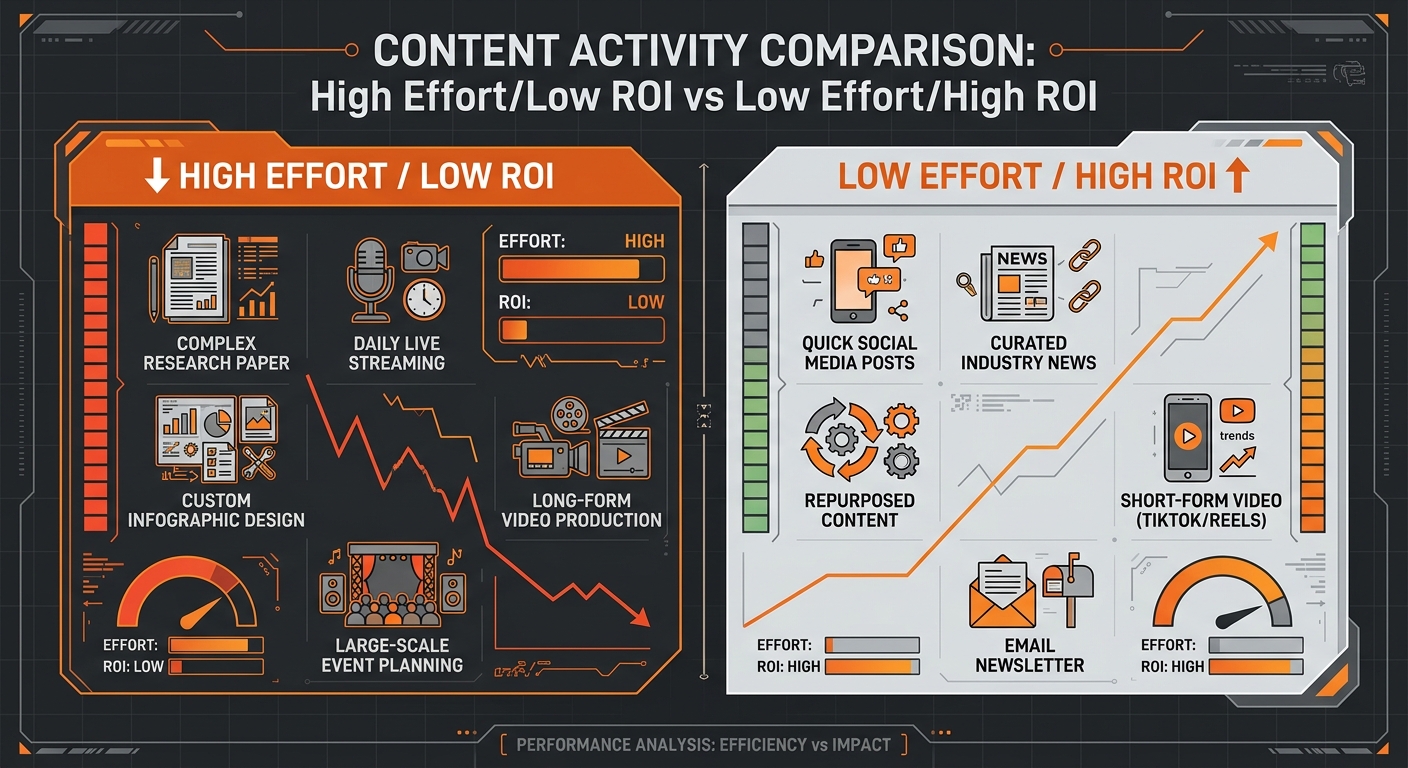
Optimizing for blog ROI requires a ruthless focus on high-conversion topics rather than high-volume vanity metrics. For a solo marketer, traffic that doesn't lead to a lead or a sale is a drain on resources. You must prioritize content that addresses specific pain points your customers are facing right now.
Many businesses make the mistake of chasing "top of funnel" keywords that are too broad. While these might bring in thousands of visitors, the intent is often low. Instead, focusing on "middle" and "bottom" of funnel content-such as comparison guides, "how-to" tutorials for specific problems, and case studies-tends to produce a much higher return on investment.
Traffic-First vs. Revenue-First Content
Understanding the difference between these two content types is essential for managing a limited budget. Revenue-first content may have lower search volume, but it attracts a visitor who is ready to take action. This is where a small business can compete with larger brands that are too focused on broad audience reach.
| Metric | Traffic-First Content | Revenue-First Content |
|---|---|---|
| Goal | General awareness | Conversion and lead gen |
| Keyword Intent | Informational / Broad | Transactional / Specific |
| Example | "What is digital marketing?" | "Best WordPress automation tools for 2024" |
| ROI Potential | Low (requires high volume) | High (works with low volume) |
By categorizing your content this way, you can allocate your time more effectively. You might use AI to quickly produce the broad informational posts that build authority, while spending more personal time refining the high-intent pages that directly drive your business revenue.
Building a Sustainable Solo Content Calendar
A sustainable content calendar is the antidote to burnout and erratic publishing cycles. Solo marketers often fail because they plan one week at a time, leading to constant pressure. A truly effective system looks 30 to 90 days into the future, mapping out a roadmap that aligns with seasonal trends and business goals.
When you plan in advance, you can batch your tasks. You might spend one day on keyword research for the next three months and another day generating the initial drafts for all those topics. This "batching" approach is significantly more efficient than switching between different types of tasks every few days.
Choosing the right level of depth for each post is also a critical part of sustainability. Not every article needs to be a 3,000-word definitive guide. Some topics only require a "Normal" mode approach-clear, concise, and focused on a single answer. High-competition keywords, however, require "Advanced" mode-deeper analysis, more data, and more comprehensive SEO optimization.
Content Depth Decision Guide
- Use Normal Depth when: The keyword has low competition, the query is straightforward, or the post is meant for quick social sharing.
- Use Advanced Depth when: The keyword is a primary business driver, competition is high, or you are aiming to become the definitive source on the topic.
By balancing your calendar with a mix of these depths, you can maintain a high publishing frequency without exhausting your mental resources. Consistency is built on the back of a manageable system, not heroic individual efforts.
FAQ
How much time should a solo marketer spend on a single blog post?
With a streamlined system, a solo marketer should spend no more than 60 to 90 minutes on a typical 1,500-word post. This includes editing the AI-generated draft, adding personal insights, and managing the final WordPress settings. Spending more time often indicates a lack of automation in the research or formatting stages.
Is AI-generated content safe for Google Search rankings?
Google has clarified that high-quality content is rewarded regardless of how it is produced. The key is ensuring the content is helpful, original, and optimized for the user’s intent. Using AI as a drafting and SEO tool is a safe and common practice, provided a human editor reviews it for accuracy and brand voice.
What are the most important SEO metrics for small businesses to track?
Focus on conversion rate, organic click-through rate (CTR), and keyword rankings for high-intent terms. While total traffic is a popular metric, small businesses should prioritize "revenue-first" data, such as how many visitors from a specific blog post clicked on a product link or signed up for a newsletter.
Can I do content marketing effectively with $0 in tool spend?
It is possible, but it requires a significant trade-off in time. Without paid tools for SEO analysis and content generation, you must manually perform every task. For most solo marketers, the cost of an affordable subscription is far lower than the value of the hours saved through automation.
How do I keep my brand voice consistent when using automation?
Use tools that allow you to feed in your existing website content or brand guidelines to extract your tone and vocabulary. By training the AI on your specific voice-whether it is technical, friendly, or direct-you ensure that the output feels like a natural extension of your writing rather than a generic template.
Put this into practice
Optimizing your content workflow begins with a clear audit of your current production habits. Identify the specific points where you feel most stuck, whether it is the initial ideation or the final WordPress formatting. Once you recognize these bottlenecks, you can apply technical solutions to remove them.
Start by selecting one "seed" topic that aligns with your highest-priority business goal. Use this topic to pilot the 5x growth strategy: generate a long-form article, optimize it using technical SEO tools, and then branch it out into social and email assets. By treating this as a test of your production line rather than a creative experiment, you will quickly see where automation can offer the most relief.
Consistency is the only path to long-term SEO success. By choosing a tool-first approach, such as integrating Articfly into your WordPress site, you can ensure that your blog stays alive and your brand remains visible without the need for a full editorial team.
Want the system behind this content?
Join the top 1% of SEOs generating programmatic, high-converting organic traffic completely on auto-pilot.
DEPLOY ARTICFLYMore Articles
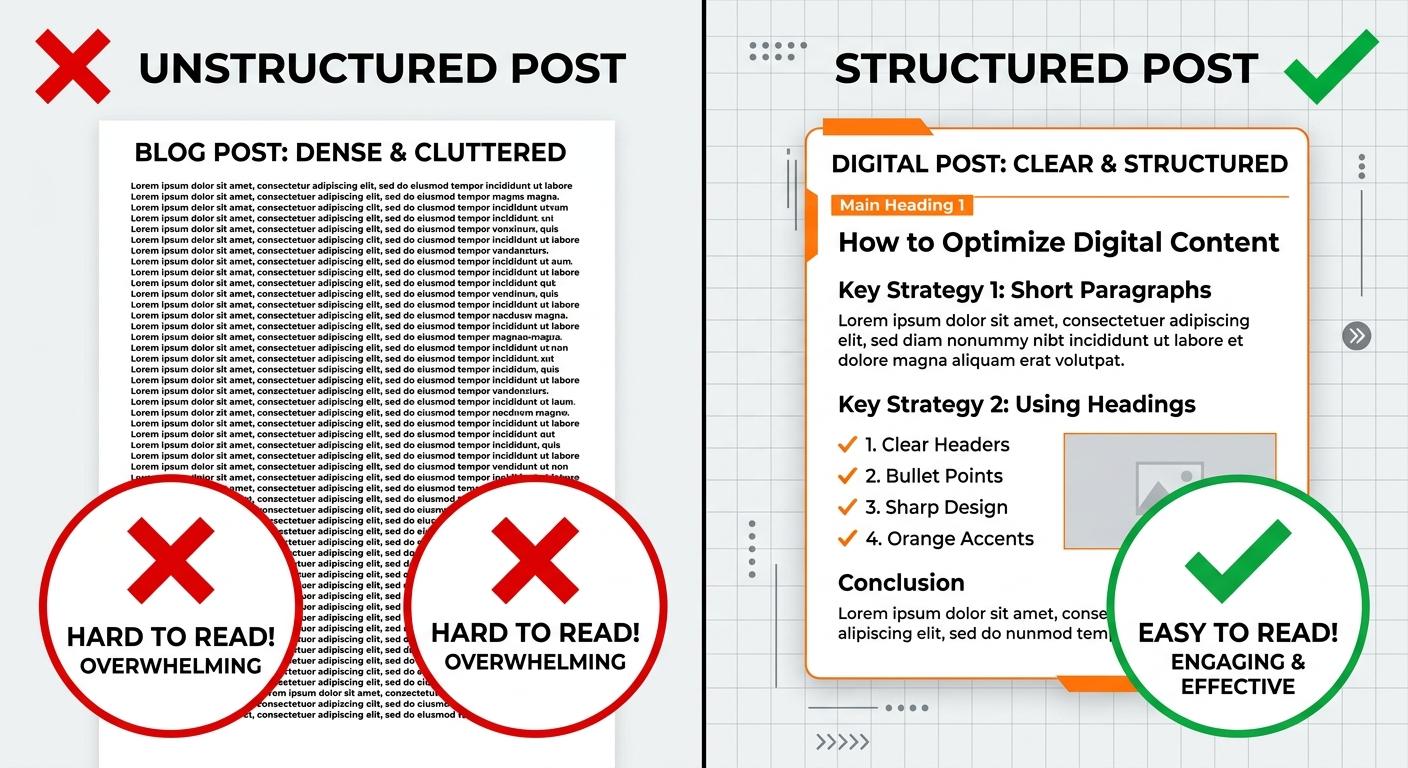
Why People Stop Reading Your Blog Post After 30 Seconds (and How to Fix It)
Most readers decide to stay or leave a blog post within the first 30 seconds. If your bounce rates are high, it's likely due to structural friction, poor hooks, or a lack of immediate value. Learn how to diagnose engagement killers and use AI-driven optimization to keep readers scrolling.
READ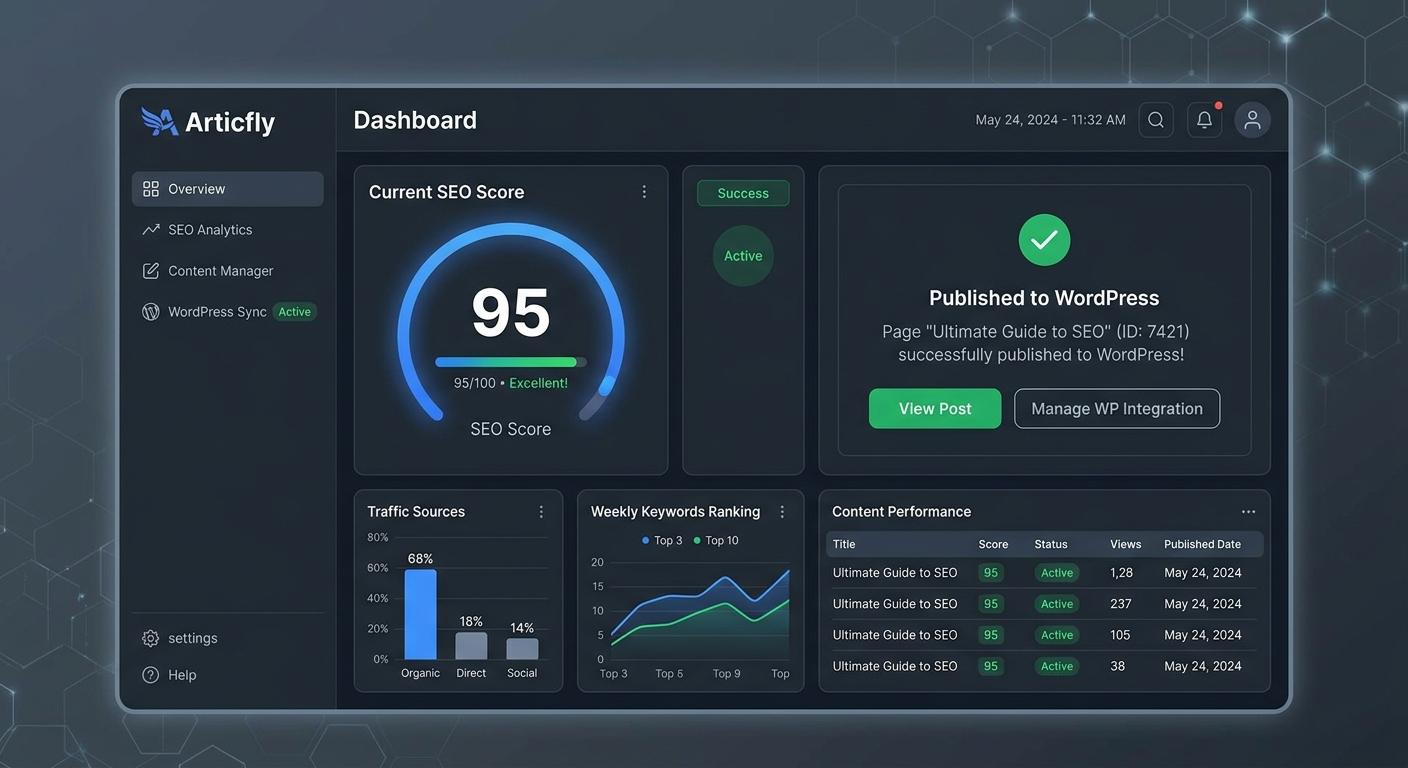
The $15 Blog Post That Brings in $2,000/Month: How AI Content Delivers 130x ROI
Discover the unit economics of high-scale AI publishing. Learn how to leverage Articfly to produce $15 blog posts that generate $2,000 in monthly recurring revenue through SEO optimization, automated publishing, and strategic content refreshing.
READ
Brand Voice in AI Content: How to Stop Your Blog from Sounding Like a Robot
Generic AI content is killing brand authority. Learn how to use Articfly’s Brand Voice Analyzer and Advanced Mode to produce high-scale, SEO-optimized content that sounds like your team, not a machine.
READ