TL;DR: On-page SEO remains a cornerstone of digital marketing in 2025, driven by Google's continuous refinement towards user experience and content quality. This guide outlines 10 critical best practices, from E-E-A-T and comprehensive meta tags to Core Web Vitals and advanced schema, designed to enhance search rankings and drive organic traffic by aligning with modern algorithm demands.
Introduction
In the dynamic landscape of digital marketing, where search engine algorithms evolve at an accelerating pace, one truth remains constant: on-page SEO is foundational. For 2025 and beyond, mastering on-page optimization is not merely an advantage; it is a necessity for achieving and maintaining visibility in search engine results pages (SERPs). Google's algorithm updates, particularly those emphasizing helpful content and user experience, underscore a significant shift: it’s no longer just about keywords, but about delivering genuine value and a seamless experience to the user.
Properly implemented on-page SEO directly influences your search rankings and organic traffic. Studies indicate that top-ranking pages often demonstrate superior on-page optimization across various factors. For instance, optimizing your content and technical elements can lead to a significant increase in organic search visibility, with some businesses reporting up to a 50% uplift in search traffic by addressing on-page deficiencies. This guide delves into the top 10 on-page SEO best practices crucial for 2025, providing actionable insights to future-proof your digital strategy. We will explore how to align your website with Google’s evolving directives, focusing on elements that enhance both crawlability for search engines and usability for your audience. From E-E-A-T principles to technical performance and structured data, these practices form the definitive blueprint for on-page success.
Understanding and implementing these strategies will not only help your site rank higher but also build authority and trust with both users and search engines. As we move further into an AI-driven search era, the emphasis on context, relevance, and user intent becomes paramount. The following sections will break down each critical component, offering precise, factual, and actionable advice to optimize your web pages effectively.
1. E-E-A-T Implementation
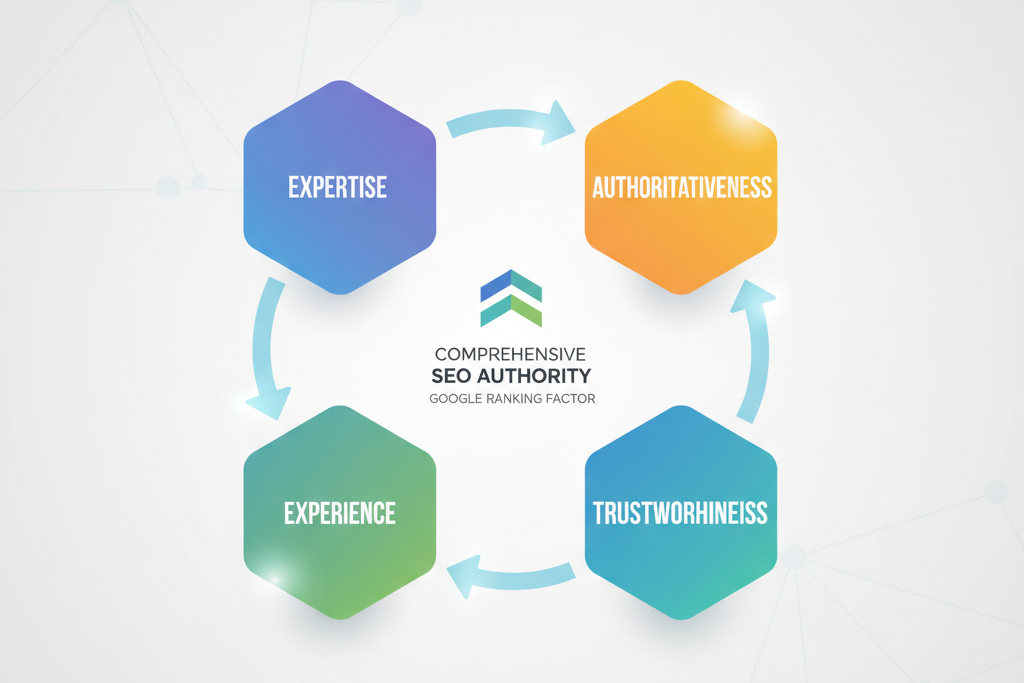
The E-E-A-T framework—Experience, Expertise, Authoritativeness, and Trustworthiness—is Google's cornerstone for evaluating content quality, particularly vital for YMYL (Your Money Your Life) topics. In 2025, demonstrating strong E-E-A-T signals is paramount for achieving and sustaining high search rankings. Google uses these criteria to ensure that users receive reliable, high-quality information, especially in areas that can impact their health, finances, or well-being.
To implement E-E-A-T effectively, each element must be explicitly demonstrated:
- Experience: Show firsthand experience with the topic. This can be achieved through detailed case studies, practical tutorials based on personal use, or testimonials from individuals who have directly benefited from a product or service. For content creators, this means sharing real-world application and insights.
- Expertise: Establish the author's or organization's knowledge in the field. This involves prominently displaying author bios with relevant qualifications, certifications, educational backgrounds, and years of industry experience. Linking to an author's professional profiles (LinkedIn, academic pages) further validates their expertise.
- Authoritativeness: Build a reputation as a trusted source. This is achieved by earning backlinks from authoritative sites, being cited by other experts, and consistently publishing well-researched, accurate content. Mentions in industry publications or academic papers also contribute to authoritativeness.
- Trustworthiness: Ensure transparency and reliability. This includes having clear contact information, a comprehensive privacy policy, secure website protocols (HTTPS), and readily available customer support. Testimonials, reviews, and case studies with measurable results also serve as strong trust signals. For e-commerce, transparent shipping and return policies are crucial.
Demonstrating strong E-E-A-T signals is paramount for achieving and sustaining high search rankings in 2025, especially for YMYL topics where trust is non-negotiable.
For YMYL content, the bar for E-E-A-T is exceptionally high. Google prioritizes content from highly qualified sources to prevent the spread of misinformation. Therefore, financial advice must come from certified financial planners, and medical information from licensed medical professionals. Integrating these E-E-A-T elements directly into your content and website structure will not only improve your perceived quality but also directly impact your organic visibility by aligning with Google's core quality guidelines.
2. Comprehensive Meta Tags Optimization
Meta tags are fundamental HTML elements that provide search engines with essential information about a webpage's content. Optimizing these tags is crucial for conveying relevance, attracting clicks, and influencing how your page appears in SERPs. In 2025, optimization extends beyond simple keyword stuffing to semantic understanding and user intent alignment.
Title Tags
The title tag (<title>) is the most critical on-page SEO element after the main content itself. It should accurately describe the page's content, include primary target keywords, and be compelling enough to entice clicks. Keep title tags concise, typically under 60-70 characters, to prevent truncation in SERPs. Place primary keywords near the beginning and consider modifiers like "guide," "best," or "2025" to enhance relevance and user intent matching.
Meta Descriptions
Meta descriptions (<meta name="description">) do not directly influence rankings, but they are vital for click-through rates (CTR). They should be a concise summary of the page's content, around 150-160 characters, and include a compelling call-to-action (CTA). Incorporate secondary keywords naturally, but prioritize readability and relevance to encourage users to click your link over competitors'. Google often boldens keywords in meta descriptions that match a user's query.
Header Tags (H1-H6)
Header tags (<h1> to <h6>) establish a clear content hierarchy, making your page easier for both users and search engines to understand. The <h1> tag should be used once per page, typically for the main title, incorporating your primary keyword. Subsequent <h2> and <h3> tags break down content into logical sections and subsections, utilizing related keywords and phrases. This structure improves readability and helps search engines grasp the content's main themes and subtopics, reinforcing topical relevance.
Alt Tags for Images
Alt tags (alt attributes for <img>) describe images for visually impaired users and search engines. They are crucial for image SEO and accessibility. Ensure alt text is descriptive, contains relevant keywords where natural, and accurately conveys the image's content. Avoid keyword stuffing; focus on providing helpful context. This improves image search visibility and overall page understanding for bots.
By meticulously optimizing these meta tags, you provide search engines with a clear roadmap of your content, simultaneously improving user experience and enhancing your chances of ranking for targeted queries.
3. Structured Data Markup
Structured data, often referred to as Schema markup (Schema.org), is a powerful on-page SEO technique that provides search engines with explicit cues about the meaning of your content. By adding specific labels to elements on your webpage, you help search engines understand the context and relationships within your data, leading to enhanced visibility in SERPs through rich snippets.
Rich snippets are visually enhanced search results that display additional information directly on the SERP, such as star ratings, product prices, event dates, or FAQ toggles. These snippets significantly improve click-through rates (CTR) by making your listing more prominent and informative, drawing user attention amidst a sea of standard blue links.
The most common and impactful types of structured data markup include:
- Article Schema: Essential for blog posts, news articles, and informational content. It helps search engines understand the article's headline, author, publication date, and main image, which can lead to enhanced display in Google News or Top Stories carousels.
- FAQ Schema: Used for pages containing a list of questions and answers. When correctly implemented, Google can display these Q&A pairs directly in the SERP, expanding the search result and providing immediate answers to user queries, dramatically increasing visibility.
- How-to Schema: Ideal for content that provides step-by-step instructions. This markup can render as an interactive carousel or detailed text box in SERPs, guiding users through a process directly from the search results.
- Product Schema: Crucial for e-commerce pages. It allows you to highlight product details like price, availability, reviews, and ratings, making your products stand out in organic search and often leading to product-rich results.
- Local Business Schema: Beneficial for brick-and-mortar businesses. It provides critical information such as address, phone number, opening hours, and services, enhancing local search visibility and helping customers find essential business details directly.
Implementation typically uses JSON-LD (JavaScript Object Notation for Linked Data), which is Google's preferred format. This script is embedded within the <head> or <body> of your HTML, separate from the visible content, making it unobtrusive. Tools like Google's Structured Data Testing Tool or Rich Results Test can validate your markup and preview how your rich snippets might appear.
By leveraging structured data, you move beyond merely informing search engines about your content to explicitly defining its nature, granting you a competitive edge in capturing user attention and improving overall search visibility.
4. Core Web Vitals Optimization
Core Web Vitals are a set of specific metrics that Google uses to evaluate user experience on a webpage. These metrics became a direct ranking factor in 2021 and continue to gain importance in 2025, playing a critical role in Google's Page Experience signals. Optimizing these vitals is essential not only for search rankings but also for providing a smooth, fast, and stable user journey.
The three Core Web Vitals are:
- Largest Contentful Paint (LCP): Measures loading performance. LCP reports the render time of the largest image or text block visible within the viewport relative to when the page first started loading. An ideal LCP score is 2.5 seconds or less.
- Optimization Techniques: Optimize server response times, remove render-blocking resources (CSS, JavaScript), optimize images (compression, responsive images), pre-load critical assets, and use a Content Delivery Network (CDN).
- First Input Delay (FID): Measures interactivity. FID quantifies the time from when a user first interacts with a page (e.g., clicking a link, tapping a button) to when the browser is actually able to begin processing event handlers in response to that interaction. An ideal FID score is 100 milliseconds or less.
- Optimization Techniques: Break up long JavaScript tasks, defer non-critical JavaScript, use web workers to offload main thread work, and optimize third-party script loading.
- Cumulative Layout Shift (CLS): Measures visual stability. CLS quantifies the unexpected shifting of visual page content. A low CLS score means elements don't shift around unexpectedly as the page loads, preventing frustrating user experiences (e.g., accidentally clicking the wrong button). An ideal CLS score is 0.1 or less.
- Optimization Techniques: Always set explicit width and height dimensions on images and video elements, reserve space for ads or embeds, avoid inserting new content above existing content, and use CSS transforms for animations instead of properties that trigger layout changes.
Optimizing Core Web Vitals is essential not only for search rankings but also for providing a smooth, fast, and stable user journey, directly impacting conversion rates and engagement.
In 2025, mobile-specific considerations are paramount, as Google's indexing is primarily mobile-first. Ensure all optimizations are effective across various mobile devices and network conditions. Regularly monitor your Core Web Vitals using tools like Google Search Console's Core Web Vitals report, PageSpeed Insights, and Lighthouse to identify and address performance bottlenecks. Prioritizing these metrics demonstrates a commitment to user experience, which Google heavily rewards with improved search visibility.
5. Content Quality and Depth
In 2025, content remains king, but only if it's truly high-quality, comprehensive, and deeply relevant to user queries. Google's algorithm continues to prioritize content that fully addresses search intent, demonstrates topical authority, and adheres to E-E-A-T principles. Gone are the days of shallow, keyword-stuffed articles; modern SEO demands content that provides complete answers and unparalleled value.
Comprehensive Content: Your content should leave no stone unturned for the specific query it targets. This means going beyond basic definitions to include detailed explanations, practical examples, various perspectives, and solutions to related problems. Analyze competitor content for the same keywords and aim to surpass it in depth, accuracy, and utility. The goal is to be the single best resource for a given topic on the internet.
Topical Authority: Beyond individual pages, cultivate topical authority across your entire website. This involves creating "pillar content" – extensive, high-level articles that cover a broad topic – and then supporting them with "cluster pages" – more detailed articles that delve into specific subtopics linked back to the pillar. This interconnected strategy demonstrates to Google that your site is a knowledgeable resource for a complete subject area, not just a collection of isolated articles.
Content Freshness: While not every piece of content needs constant updates, evergreen content should be periodically reviewed and refreshed to ensure accuracy, relevance, and adherence to the latest best practices. Adding new statistics, updating processes, or incorporating new developments keeps your content current and signaling its continued value to search engines.
E-E-A-T Alignment: As discussed, integrating E-E-A-T into your content quality strategy is non-negotiable. Ensure that content is authored by or overseen by credible experts, presents information transparently, and is meticulously fact-checked. For complex or sensitive topics, citing reputable sources and studies further enhances trustworthiness.
Content depth directly correlates with higher rankings because it indicates to Google that you are providing a thorough and satisfying user experience. When users find comprehensive answers on your site, they spend more time, engage more deeply, and are less likely to "pogo-stick" back to the SERP, all positive signals that Google interprets as quality and relevance. Focus on serving your audience with the best possible information, and your search rankings will follow.
6. Internal Linking Strategy
An effective internal linking strategy is a powerful, yet often overlooked, on-page SEO practice. Internal links are hyperlinks that point to other pages within the same domain. They are crucial for establishing clear site architecture, distributing "link equity" (PageRank) across your website, and enhancing both crawlability for search engines and user experience.
Importance of Internal Linking:
- Site Architecture: Internal links help define the hierarchical structure of your website, guiding search engine bots through your content and showing them which pages are most important. A well-structured site is easier for search engines to crawl and index efficiently.
- Link Equity Distribution: When a high-authority page on your site receives backlinks from external sources, some of that "authority" or "link equity" can be passed to other relevant pages through internal links. This boosts the ranking potential of deeper pages that might not attract many external links.
- User Experience: Strategic internal links provide users with relevant, contextual navigation, helping them discover more valuable content on your site. This increases time on site, reduces bounce rate, and improves overall engagement.
Best Practices for Internal Linking:
- Contextual Links: Embed links naturally within the body text of your content, connecting related topics. The anchor text should be descriptive and relevant to the linked page's content, clearly indicating what the user will find when they click. Avoid generic anchor text like "click here."
- Anchor Text Optimization: Use keyword-rich, descriptive anchor text. This helps search engines understand the topic of the linked page. For example, instead of "read more," use "learn more about advanced schema implementation."
- Silo Structure: Organize your content into topical silos. This means creating a clear hierarchical structure where related pages are grouped together. For instance, a pillar page on "On-Page SEO" might link to cluster pages on "Meta Tags," "Structured Data," and "Core Web Vitals," which then link to even more specific articles within their respective topics. This structure reinforces topical authority.
- Depth and Quantity: Link to important, authoritative pages from as many relevant internal pages as possible. Ensure that "deep" pages (those many clicks away from the homepage) are accessible within a few clicks to improve crawlability.
- Auditing and Fixing: Regularly audit your internal links to identify broken links, orphaned pages (pages with no internal links pointing to them), and pages that could benefit from more internal links. Tools like Google Search Console can help identify these issues.
A robust internal linking strategy is a powerful, self-controlled SEO lever. By thoughtfully connecting your content, you enhance both its visibility to search engines and its utility to users, fostering a more engaging and authoritative website.
7. Mobile-First Optimization
In 2025, mobile-first indexing is not just a trend; it is the default standard for Google's indexing and ranking. This means Google primarily uses the mobile version of your website for crawling, indexing, and ranking. Therefore, optimizing your site for mobile users is paramount for organic visibility and user experience.
Responsive Design
The cornerstone of mobile-first optimization is responsive web design. A responsive site adapts its layout and content seamlessly to any screen size, from desktops to tablets and smartphones, using CSS media queries. This ensures a consistent experience across all devices, eliminating the need for separate mobile versions and preventing content disparity issues. Google explicitly recommends responsive design as the preferred configuration.
Mobile Page Speed
Mobile page speed is a critical ranking factor and a core component of user experience. Mobile users expect fast-loading pages; delays can lead to high bounce rates. Optimizing images, leveraging browser caching, minifying CSS and JavaScript, and utilizing a CDN are essential steps. Aim for pages to load within 2-3 seconds on mobile devices, especially on slower network connections. Tools like Google PageSpeed Insights provide specific recommendations for mobile performance improvements.
Touch-Friendly Interfaces
Mobile users interact with screens using touches and gestures, not mice. Your website's design must accommodate this. Ensure interactive elements like buttons and links are sufficiently sized and spaced apart to prevent accidental taps. Avoid small text that requires pinching and zooming, and make sure navigation menus are easily accessible and usable on smaller screens, often employing a hamburger menu for cleaner aesthetics.
Mobile-Specific UX Considerations
Beyond responsive design, consider the unique context of mobile usage. Mobile users might be on the go, seeking quick answers or specific information. Streamline content for readability on smaller screens, prioritize critical information "above the fold," and minimize intrusive pop-ups or large ads that hinder the mobile experience. Optimize forms for easy input and avoid Flash content, which is largely unsupported on modern mobile browsers.
According to recent statistics, over 60% of organic search visits now come from mobile devices, and this figure continues to grow. A well-optimized mobile experience not only improves your search rankings but also significantly enhances user satisfaction, leading to better engagement and higher conversion rates. Regularly test your site's mobile usability using Google Search Console's Mobile Usability report to identify and fix any issues.
8. Image SEO and Optimization
Images are integral to engaging content, but if not optimized, they can significantly slow down page load times and hinder SEO. Comprehensive image SEO ensures your visuals contribute positively to both user experience and search engine visibility, offering additional ranking opportunities through image search.
File Naming
Before uploading, rename your image files to be descriptive and include relevant keywords. Instead of generic names like IMG_001.jpg, use names such as top-10-on-page-seo-practices-2025.jpg. This helps search engines understand the image's content even before crawling the page.
Alt Text
The alt attribute (alt text) is crucial for accessibility and SEO. It provides a text description of the image for screen readers and search engines. Craft descriptive alt text that accurately conveys the image's content and context, incorporating keywords naturally where appropriate. For example, alt="Infographic showing 10 key on-page SEO best practices for 2025" is far more effective than alt="SEO image".
Image Compression
Large image file sizes are a primary culprit for slow page load times, directly impacting Core Web Vitals. Compress images without sacrificing visual quality. Use tools like TinyPNG, Compressor.io, or image optimization plugins for your CMS. Aim for the smallest possible file size (e.g., under 100-200 KB for most web images) while maintaining clarity. Modern formats like WebP offer superior compression compared to JPEG or PNG.
Responsive Images
Implement responsive images using the <picture> element or srcset attribute. This ensures that the browser delivers the most appropriate image size based on the user's device, screen resolution, and viewport. Serving smaller images to mobile users significantly reduces bandwidth usage and improves load times.
Lazy Loading
Lazy loading defers the loading of images (and other media) until they are needed – typically when they enter the user's viewport. This means images further down the page won't load until the user scrolls to them, significantly improving initial page load times, especially for content-heavy pages. Most modern browsers support native lazy loading, or it can be implemented with JavaScript.
By meticulously optimizing your images, you enhance page speed, improve accessibility, and provide search engines with more context about your content, leading to better rankings and a richer user experience, particularly in Google Image Search.
9. URL Structure Best Practices
A well-structured URL is more than just a web address; it's a clear signal to both users and search engines about the content of a page. Optimizing your URL structure is a foundational on-page SEO practice that improves user experience, crawlability, and search engine understanding of your site's hierarchy.
Clean and Descriptive URLs
Your URLs should be human-readable and descriptive. Avoid long strings of numbers, parameters, or cryptic characters. Instead, use words that clearly indicate the page's content. For example, yourwebsite.com/blog/on-page-seo-best-practices-2025 is far better than yourwebsite.com/post?id=123&cat=4.
Keyword Inclusion
Incorporate your primary target keywords naturally into the URL. This reinforces the page's relevance to search engines and provides a direct hint to users about the content. However, avoid keyword stuffing; focus on clarity and conciseness.
Logical Hierarchy
Reflect your site's content hierarchy in your URLs. This means using subdirectories to categorize content logically. For instance, a URL like yourwebsite.com/services/seo/on-page-optimization clearly shows that "on-page optimization" is a subtopic of "SEO," which is a subcategory under "services." This structure helps search engines understand the relationships between your pages.
Use Hyphens, Not Underscores
When separating words in your URL, use hyphens (-) instead of underscores (_). Google treats hyphens as word separators, making your URLs more readable and ensuring keywords are correctly interpreted. Underscores tend to merge words, hindering semantic understanding.
Keep it Short and Sweet
While descriptive, aim for brevity. Shorter URLs are easier to remember, share, and appear cleaner in search results. Remove unnecessary words like "a," "the," "and," unless they are essential for clarity.
Canonicalization
For pages with identical or very similar content (e.g., due to different tracking parameters or pagination), use canonical tags (<link rel="canonical" href="[preferred_URL]">) to tell search engines which version is the definitive one. This prevents duplicate content issues and consolidates link equity to your preferred URL, ensuring search engines index the correct version.
Optimized URLs are a small but significant detail in your on-page SEO strategy. They enhance user experience by providing clear navigation cues and improve search engine understanding, contributing to better crawlability and potentially higher rankings.
10. Advanced Schema Markup Implementation
Building on the foundational structured data discussed earlier, advanced schema markup strategies in 2025 allow for even greater granularity in communicating your content's meaning to search engines. Comprehensive schema implementation significantly enhances search visibility and click-through rates by enabling richer, more informative displays in SERPs and powering new search experiences like Google's Knowledge Graph.
Organization Schema
Implementing Organization schema markup provides crucial information about your business, such as its official name, logo, contact information, and social media profiles. This data helps Google correctly associate your brand with your content and can contribute to your presence in the Knowledge Panel for branded searches. For Articfly, this would explicitly define us as a SoftwareCompany, providing details about our services and mission.
<script type="application/ld+json">{ "@context": "https://schema.org", "@type": "Organization", "name": "Articfly", "url": "https://www.articfly.com", "logo": "https://www.articfly.com/logo.png", "sameAs": [ "https://twitter.com/articfly", "https://linkedin.com/company/articfly" ]}</script>Breadcrumb Markup
Breadcrumb navigation helps users understand their location within your site's hierarchy. Implementing BreadcrumbList schema markup allows this navigation to appear directly in the search results, replacing the standard URL path with a more user-friendly, hierarchical breadcrumb. This improves clarity for users and can make your search listing more appealing, indirectly boosting CTR.
Specialized Schema Types
Beyond common types, explore specialized schema relevant to your industry or content. For instance:
- Recipe Schema: For food blogs, showcasing ingredients, cooking time, and reviews directly in SERPs.
- Event Schema: For websites listing events, displaying dates, locations, and ticket information.
- JobPosting Schema: For career pages, detailing job title, salary range, and application deadlines.
- VideoObject Schema: For pages with embedded videos, providing title, description, and thumbnail, enhancing visibility in video search results.
- Dataset Schema: For data-rich pages, enabling discoverability of research and public datasets.
The goal is to provide Google with as much contextually rich, structured information about your content as possible. This precision helps Google connect your content to very specific user queries and new search experiences (like "Generative AI Search" results), solidifying your presence across various search dimensions. Regular validation using Google's Rich Results Test is crucial to ensure correct implementation and eligibility for rich snippets.
Implementation Checklist
To ensure your website is fully optimized for 2025 on-page SEO, follow this actionable checklist:
E-E-A-T Implementation
Action: Review author bios, ensure credentials are visible and verifiable.
Action: Integrate case studies, testimonials, and clear business information.
Tool: Google Search Console for E-E-A-T related quality guideline adherence.
Comprehensive Meta Tags Optimization
Action: Optimize all title tags (under 70 chars, primary keyword first).
Action: Craft compelling meta descriptions with CTAs (150-160 chars).
Action: Structure content with H1-H6 hierarchy for clarity and keywords.
Action: Write descriptive alt text for all images.
Tool: Yoast SEO, Rank Math, or similar CMS plugins.
Structured Data Markup
Action: Implement basic Schema.org markup (Article, FAQ, Product, Local Business) using JSON-LD.
Tool: Google's Rich Results Test, Schema.org Generator.
Core Web Vitals Optimization
Action: Address LCP, FID, and CLS issues (e.g., image compression, remove render-blocking JS/CSS).
Tool: Google PageSpeed Insights, Lighthouse, Google Search Console's Core Web Vitals report.
Content Quality and Depth
Action: Create comprehensive content addressing full user queries.
Action: Develop pillar content and supporting cluster pages for topical authority.
Action: Regularly refresh and update evergreen content.
Tool: Content analytics platforms, keyword research tools.
Internal Linking Strategy
Action: Embed contextual links with descriptive anchor text.
Action: Ensure logical site architecture and deep pages are reachable.
Tool: Screaming Frog SEO Spider, Ahrefs Site Audit.
Mobile-First Optimization
Action: Ensure responsive design and fast mobile page speed.
Action: Optimize for touch-friendly interfaces and mobile UX.
Tool: Google Search Console's Mobile Usability report, Chrome DevTools.
Image SEO and Optimization
Action: Use descriptive file names and optimized alt text.
Action: Compress images and implement responsive images/lazy loading.
Tool: TinyPNG, WebP converter, Image CDN.
URL Structure Best Practices
Action: Create clean, descriptive, keyword-inclusive URLs using hyphens.
Action: Implement canonical tags to prevent duplicate content.
Tool: CMS URL settings, Google Search Console.
Advanced Schema Markup Implementation
Action: Implement Organization schema, Breadcrumb markup.
Action: Explore and apply specialized schema types relevant to your niche.
Tool: Google's Rich Results Test, Schema App.
The digital landscape is ever-evolving, yet the fundamental principles of on-page SEO remain vital. By meticulously implementing these top 10 best practices for 2025, you are not merely reacting to algorithm changes but proactively building a future-proof foundation for your online presence. Prioritizing user experience, content quality, and technical excellence will consistently position your website favorably in search rankings, driving sustainable organic growth.
Actionable Next Step: Begin by auditing your current website against this comprehensive checklist. Identify areas for improvement and prioritize changes that will yield the greatest impact on your search visibility and user engagement. Leveraging platforms like Articfly can streamline content creation, ensuring your foundational content adheres to these SEO standards from inception, freeing your team to focus on strategic implementation and analysis.