Table of Contents
- Debunking SEO Myths for 2025: Navigating the Evolving Digital Landscape
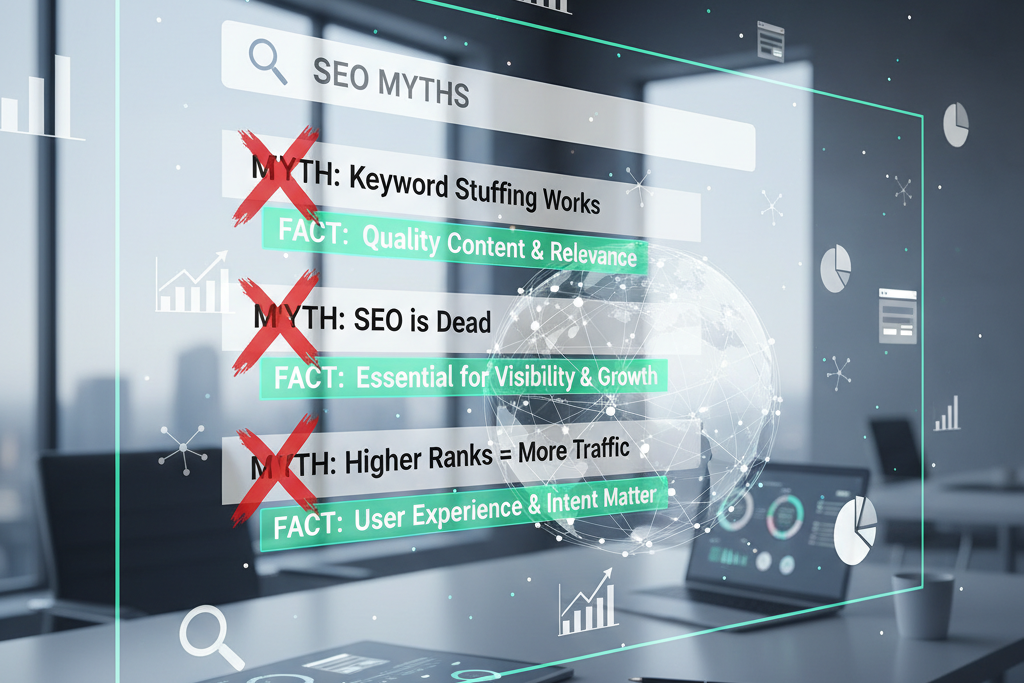
- Myth 1: SEO is Dead
- Myth 2: AI Content is Always Penalized
- Myth 3: More Keywords Equal Higher Rankings
- Myth 4: Link-Building is All That Matters
- Myth 5: SEO is a One-Time Setup
- Myth 6: Meta Tags Are the Most Important Ranking Factor
- Myth 7: Content Length Directly Equals Ranking
- Myth 8: Social Media Signals Directly Impact Rankings
- Myth 9: Exact Match Domains Guarantee Success
- Myth 10: Google Penalizes All Duplicate Content
- Embracing Modern SEO Best Practices for 2025 and Beyond
Debunking SEO Myths for 2025: Navigating the Evolving Digital Landscape
In the dynamic world of search engine optimization, staying current is not just an advantage; it is a necessity. As Google's algorithms grow more sophisticated and user expectations evolve, the SEO landscape of 2025 demands precision and adaptability. Yet, despite continuous updates and clear guidelines, persistent myths continue to circulate, leading many businesses astray. These misconceptions can derail even the most well-intentioned digital strategies, costing time, resources, and ultimately, organic visibility.
The challenge for content creators and marketers lies in separating actionable intelligence from outdated folklore. Misinformation about SEO often stems from past practices that are no longer relevant, or from misinterpretations of complex algorithm changes. A common pitfall is relying on anecdotal evidence or unverified claims, rather than Google's official statements and empirical data. This gap between myth and reality is precisely why myth-busting is so crucial in 2025.
For platforms like Articfly, an AI content creation specialist, understanding and adhering to current SEO best practices is fundamental. Our proprietary AI system is engineered to analyze search intent, apply the latest SEO principles, and generate professional, optimized blog articles. We are acutely aware that our clients rely on us for content that not only engages readers but also performs well in search rankings. Therefore, Articfly’s perspective is rooted in a commitment to accuracy and efficiency, ensuring that the content we help create aligns with the most effective, forward-thinking SEO strategies.
This article aims to dismantle the top 10 most pervasive SEO myths heading into 2025. By addressing these misconceptions with factual evidence and expert insights, we hope to equip you with the knowledge to make informed decisions, optimize your content effectively, and truly thrive in the competitive digital ecosystem. Prepare to shed outdated notions and embrace a clearer, more effective approach to SEO.
TL;DR: Top 10 SEO Myths Busted
Many SEO myths persist despite algorithm updates, hindering effective strategies. This article debunks common misconceptions for 2025, from "SEO is dead" to "AI content is always penalized," emphasizing quality, user intent, and continuous optimization. Articfly's AI content aligns with modern SEO best practices, focusing on valuable, ranking content.
Myth 1: SEO is Dead
One of the most enduring myths in digital marketing is the declaration that "SEO is dead." This statement resurfaces with every significant Google algorithm update, yet it consistently proves to be profoundly inaccurate. Far from dying, SEO has undergone a significant evolution, transforming from a technical trickery game into a sophisticated discipline centered around user experience and content quality.
Google's continuous efforts, particularly with updates like the Helpful Content System and core algorithm improvements, reinforce the paramount importance of SEO. These updates are designed to reward websites that provide genuine value to users, penalizing those that prioritize search engine manipulation over helpfulness. Therefore, SEO in 2025 is not about gaming the system; it's about understanding and meeting user needs better than ever before.
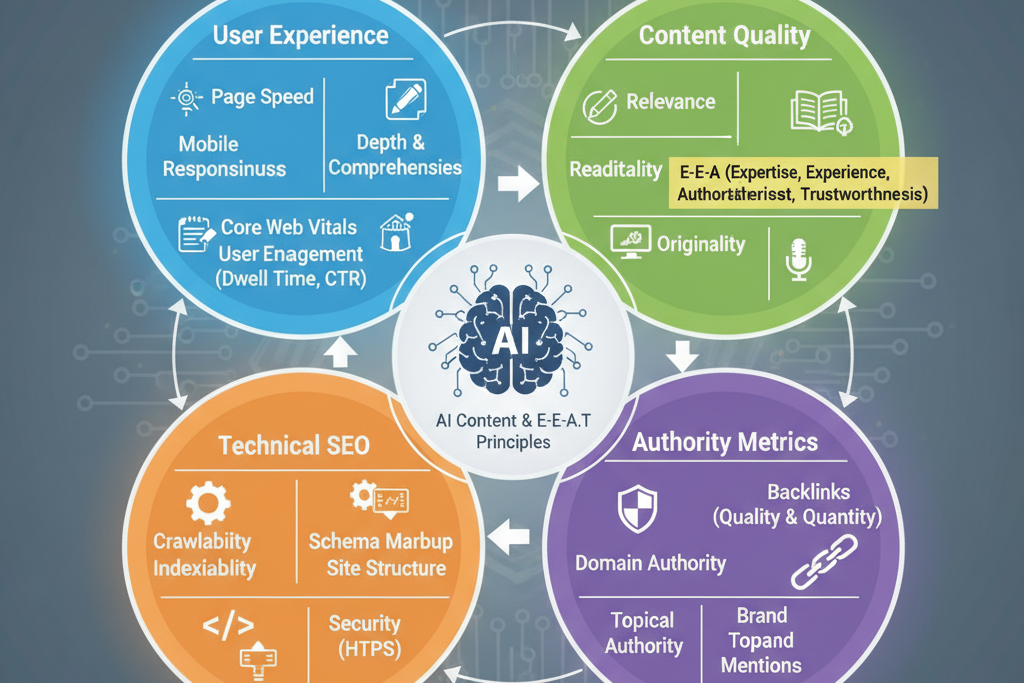
The core principles of SEO, such as crawlability, indexability, keyword research, and link building, remain vital. However, the emphasis has shifted dramatically towards E-E-A-T (Experience, Expertise, Authoritativeness, Trustworthiness). Google explicitly states that creating content that demonstrates these attributes is crucial for ranking success. This means providing unique insights, expert opinions, and trustworthy information that satisfies search intent.
"SEO is not dead; it has evolved. Its focus on user experience and helpful content ensures its continued relevance in driving organic traffic and building brand authority."
Statistics consistently show that organic search remains a primary driver of website traffic and conversions. Businesses that neglect SEO risk becoming invisible in an increasingly crowded digital landscape. The role of SEO professionals and robust SEO strategies, like those employed by Articfly to create optimized content, is not diminishing but rather expanding to encompass a holistic approach to online presence and user engagement. SEO is very much alive, thriving, and more critical than ever.
Myth 2: AI Content is Always Penalized
Another prevalent myth, particularly relevant with the rapid advancements in generative AI, is the belief that content created by AI will automatically be penalized by Google. This misconception often leads businesses to shy away from leveraging powerful AI tools that could significantly enhance their content strategy. However, Google's official stance on AI-generated content is far more nuanced and quality-focused than this myth suggests.
Google has clarified that its concern is not with how content is produced, but with the quality and helpfulness of the content itself. In Google's own words, "Google Search’s long-standing guidance about high-quality content, and our policies for unhelpful content, applies no matter how content is produced." This means whether content is written by a human, an AI, or a combination of both, it must still meet the high standards of E-E-A-T and genuinely serve the user's search intent.
Articfly's approach to AI content creation directly addresses this principle. Our proprietary AI system is not designed to churn out generic, low-quality articles. Instead, it is developed to produce professional, SEO-optimized blog articles that prioritize value, accuracy, and engagement. We emphasize data-driven planning, ensuring that the AI understands the target audience's needs and the nuances of the topic. This allows our system to generate content that is not only coherent and well-structured but also inherently helpful and informative.
The key differentiator for AI content is human oversight and strategic direction. When AI is used as a tool to augment human creativity and efficiency, rather than replace it entirely, the results can be exceptional. Businesses that leverage AI platforms responsibly, focusing on quality control, factual accuracy, and adding unique value, will find that AI-generated content can be a powerful asset, not a liability, in their SEO efforts.

Myth 3: More Keywords Equal Higher Rankings
The notion that stuffing as many keywords as possible into content will lead to higher rankings is an outdated and detrimental SEO myth. In the early days of search engines, keyword density was a measurable metric that could influence rankings. However, Google's algorithms have long since evolved past such simplistic metrics, now prioritizing natural language, semantic search, and user intent.
Today, keyword stuffing—the practice of excessively repeating keywords in an unnatural way—is actively penalized. It degrades the user experience, making content difficult to read and often nonsensical. Google's sophisticated AI understands the context and meaning behind queries, not just the individual words. This means it can identify synonyms, related concepts, and the overall topic of a page without requiring an exact match or a high frequency of specific keywords.
Instead of focusing on keyword density, modern SEO emphasizes strategic keyword integration. This involves using primary and secondary keywords naturally throughout the content, ensuring they align with the overall topic and contribute to the readability and flow. The goal is to comprehensively answer the user's query, addressing various facets of their intent, rather than just repeating a target phrase.
For example, if the keyword is "best running shoes," a well-optimized article wouldn't just repeat "best running shoes" dozens of times. Instead, it would discuss features, brands, types of running, foot arch support, and user reviews, naturally incorporating terms like "top athletic footwear," "high-performance trainers," or "footwear for runners." This semantic approach provides a richer, more valuable experience for the user and signals to Google that the content is authoritative and comprehensive. Focusing on user intent and natural language is far more effective than an archaic reliance on keyword count.
Myth 4: Link-Building is All That Matters
While link-building remains a critical component of SEO, the myth that it is the *only* thing that matters, or that quantity always trumps quality, is dangerously misleading. In the past, simply acquiring a large number of backlinks, regardless of their source or relevance, could significantly boost rankings. This led to widespread manipulative practices that Google has since cracked down on through updates like Penguin.
Today, the landscape of link-building is entirely different. Google's algorithms are highly sophisticated in evaluating the quality, relevance, and authority of backlinks. A single high-quality, authoritative backlink from a reputable website in your niche is exponentially more valuable than dozens of low-quality links from spammy or irrelevant sites. In fact, acquiring links from dubious sources can lead to severe penalties, harming your website's search performance.
The emphasis is now firmly on earning natural, editorial backlinks. This means creating exceptional content that others genuinely want to reference and link to. High-quality content organically attracts links because it provides value, expertise, and a unique perspective. Building relationships with other industry leaders, participating in relevant communities, and engaging in legitimate outreach are also effective strategies for acquiring valuable backlinks.
Furthermore, an over-reliance on link-building ignores other crucial SEO factors such as technical SEO, on-page optimization, site speed, mobile-friendliness, and, most importantly, content quality and user experience. A website with strong backlinks but poor content and a frustrating user interface will struggle to rank effectively. Modern SEO demands a holistic strategy where link-building complements, rather than dominates, all other optimization efforts. Quality, relevance, and authority are the cornerstones of effective link acquisition, not sheer volume.

Myth 5: SEO is a One-Time Setup
One of the most dangerous myths for long-term digital success is the belief that SEO is a "set it and forget it" task. Many businesses erroneously treat SEO as a one-time setup, implementing a few initial optimizations and then moving on to other marketing initiatives. This static approach is fundamentally flawed in the dynamic and ever-evolving world of search engines.
SEO is, by its very nature, an ongoing process that requires continuous attention, adaptation, and optimization. There are several critical reasons why this is the case. Firstly, Google's algorithms are constantly being updated, sometimes with major core updates and often with smaller, more frequent adjustments. What worked effectively last year or even last month may not be as impactful today. Staying current with these changes is essential to maintain or improve rankings.
Secondly, the competitive landscape is always shifting. New competitors emerge, existing ones refine their strategies, and user behavior changes over time. Your audience's search queries, their preferred content formats, and their overall online journey are not static. Continuous keyword research, content audits, and competitor analysis are necessary to remain relevant and visible.
"SEO is not a sprint; it's a marathon. Continuous optimization, driven by data and adaptation to algorithm changes, is the only path to sustained visibility."
Furthermore, website technical elements, content performance, and backlink profiles require regular monitoring and maintenance. Broken links, outdated content, slow loading times, or new technical issues can all negatively impact SEO performance if left unaddressed. Just as a garden requires continuous weeding, watering, and pruning to flourish, a website's SEO demands persistent care. Embracing SEO as an iterative and continuous journey, rather than a destination, is key to achieving sustainable organic growth.
Myth 6: Meta Tags Are the Most Important Ranking Factor
In the early days of SEO, meta tags, particularly the meta keywords tag, held significant weight in search engine rankings. This led to a pervasive myth that optimizing meta tags was the most crucial factor for visibility. While meta tags still play a role, their importance as a direct ranking signal has drastically diminished, and relying solely on them is a significant misstep in modern SEO.
The meta description and title tag are still important, but their function has largely shifted from direct ranking signals to influencing click-through rates (CTR). The title tag (or title element) is a strong on-page signal, indicating to search engines and users what the page is about. The meta description, while not a direct ranking factor, serves as a mini-advertisement in the search results, enticing users to click. A well-crafted, compelling meta description can significantly improve CTR, which in turn can indirectly influence rankings as Google observes user engagement.
The meta keywords tag, on the other hand, has been largely ignored by Google for many years due to widespread abuse and keyword stuffing. Including it might be harmless, but it offers no SEO benefit whatsoever. Focus should instead be on crafting engaging and accurate title tags and meta descriptions that entice clicks, rather than stuffing them with keywords.
Modern SEO prioritizes content quality, relevance, user experience, and technical performance as primary ranking factors. A page with an optimized title and description but poor content will not rank well. Conversely, a page with exceptional content, even with less-than-perfect meta tags, has a much better chance. Meta tags are part of a broader technical SEO strategy that supports, but does not override, the fundamental importance of valuable, user-focused content.
Myth 7: Content Length Directly Equals Ranking
There's a common misconception that simply writing longer content will automatically lead to higher search engine rankings. This myth, often perpetuated by studies showing correlations between content length and top rankings, can lead to the creation of verbose, thin, and ultimately unhelpful articles that prioritize word count over value. The truth is, content length itself is not a direct ranking factor; content comprehensiveness and quality are.
Google doesn't reward articles purely for being long. It rewards articles that are comprehensive, well-researched, and thoroughly answer a user's query. Often, providing a complete answer requires more words, covering various subtopics and related questions. This is where the correlation between length and rankings often comes from: longer articles tend to be more comprehensive. However, if a short, concise piece of content fully satisfies a user's intent, it can absolutely outrank a much longer, but less focused or overly verbose, article.
The focus should always be on providing maximum value to the user in the most efficient way possible. Ask yourself: "How much content is needed to thoroughly cover this topic and fulfill the searcher's intent?" For some topics, a 500-word article might be perfectly adequate. For others, a detailed guide of 2,000+ words might be necessary to cover all relevant aspects.
Prioritizing quality over arbitrary word count means eliminating filler, redundancy, and fluff. Every sentence should serve a purpose, adding value to the reader's understanding. Articfly's AI content generation emphasizes structured, data-driven content that is built to be comprehensive without being unnecessarily long. The goal is to create content that is genuinely helpful, regardless of its final word count, because user value is the ultimate determinant of ranking potential.

Myth 8: Social Media Signals Directly Impact Rankings
It's a widely held belief that social media signals—likes, shares, comments, and follower counts—directly contribute to higher search engine rankings. While social media is undeniably crucial for digital marketing and brand building, Google has consistently stated that social signals are not a direct ranking factor in its algorithms.
The reasoning is practical: social media platforms are dynamic, and their signals can be easily manipulated. Furthermore, Google's primary job is to rank web pages based on their relevance and authority, not the popularity of their associated social posts. While a surge in social shares might indicate content popularity, it doesn't automatically translate into a direct algorithmic boost.
However, dismissing social media's role in SEO entirely would be a mistake. Its impact, while indirect, is significant. Strong social media presence and engagement can lead to several indirect SEO benefits:
- Increased Visibility and Brand Awareness: When content is shared widely on social platforms, it gains more exposure, bringing your brand to new audiences.
- Referral Traffic: Social shares can drive a considerable amount of traffic directly to your website. This increased traffic can lead to more opportunities for organic engagement.
- Content Discovery and Backlinks: Popular content on social media is more likely to be discovered by bloggers, journalists, and industry influencers, potentially leading to valuable editorial backlinks—a direct ranking factor.
- Longer Shelf Life for Content: Social media can give evergreen content a longer lifespan, allowing it to continue generating interest and potential SEO value over time.
- Signals of Authority: While not a direct ranking signal, a strong, active social media presence can subtly contribute to a brand's overall perceived authority and trustworthiness, which aligns with E-E-A-T principles.
Therefore, integrating social media into your overall marketing strategy is essential, not for direct ranking benefits, but for its powerful indirect contributions to visibility, traffic, and content amplification.
Myth 9: Exact Match Domains Guarantee Success
The idea that owning an "exact match domain" (EMD)—a domain name that precisely matches a target keyword, e.g., "bestrunninggear.com"—automatically guarantees high rankings is another outdated myth. While EMDs might have offered a slight advantage in the past, Google has significantly de-emphasized their importance and actively works to prevent low-quality EMDs from ranking well.
In 2012, Google implemented an EMD update specifically designed to prevent poor-quality websites from ranking simply because they had a keyword-rich domain. Today, simply having an exact match domain will not provide a significant SEO advantage if the content and overall user experience are subpar. In fact, a generic EMD can sometimes even hinder brand building, as they often lack uniqueness or memorability.
Modern SEO and branding prioritize trust, authority, and a positive user experience. A strong brand name, even if it doesn't contain the exact keywords, coupled with high-quality content, excellent site design, and a robust backlink profile, will consistently outperform a low-quality EMD. Companies like Articfly understand that a strong brand identity and valuable content are far more critical for long-term success than a keyword-stuffed domain.
When choosing a domain name, focus on brandability, memorability, and ease of spelling. Consider how it will represent your business and resonate with your audience. While incorporating a relevant keyword can be a nice bonus if it fits naturally, it should never come at the expense of creating a strong, unique brand identity. The search engines are smarter than ever, and they prioritize genuine value and user satisfaction over keyword manipulation in domain names.
Myth 10: Google Penalizes All Duplicate Content
The myth that Google automatically penalizes *all* instances of duplicate content causes undue anxiety for many website owners. While it's true that large-scale, intentional duplication designed to manipulate rankings can result in penalties, Google's stance on legitimate duplicate content is much more nuanced. The core issue Google tries to avoid is showing multiple identical versions of the same content in search results, not necessarily penalizing the source.
Duplicate content refers to blocks of content that appear on more than one URL, either within the same website or across different domains. Common scenarios include:
- Printer-friendly versions of pages.
- E-commerce product descriptions available on multiple retailer sites.
- Content syndication where an article is published on several platforms with permission.
- HTTP vs. HTTPS versions or www vs. non-www versions of a site.
- URL parameters (e.g., `example.com?color=red` and `example.com?color=blue` showing the same product).
In these cases, Google typically handles duplicate content by consolidating indexing signals and choosing the most canonical (authoritative) version to show in search results. It generally won't "penalize" a site unless the duplication is clearly manipulative or deceptive.
To manage legitimate duplicate content effectively, SEO professionals use canonical tags (<link rel="canonical" href="URL">). This tag tells search engines which version of a page is the preferred one, ensuring that all ranking signals are consolidated to a single URL. Other strategies include 301 redirects for identical pages, or simply rewriting content to be unique.
The crucial distinction is intent. If duplicate content exists naturally or for legitimate technical reasons, and you guide Google through canonicalization, there's no penalty. It's only when content is intentionally duplicated across many low-quality sites to game the system that penalties are likely. Understanding this distinction is key to avoiding unnecessary panic and managing your content effectively.
Embracing Modern SEO Best Practices for 2025 and Beyond
The journey through these top 10 SEO myths reveals a clear and consistent theme: the search engine landscape of 2025 is sophisticated, user-centric, and constantly evolving. The days of quick fixes and manipulative tactics are long gone. What remains are core principles rooted in providing genuine value, demonstrating authority, and relentlessly focusing on the user experience. SEO is not dead; it has simply matured, demanding a more strategic, holistic, and intelligent approach.
To truly succeed in modern SEO, content creators and businesses must prioritize:
- User-Focused Content: Create content that genuinely answers user queries, provides unique insights, and is inherently helpful, adhering to E-E-A-T principles.
- Quality Over Quantity: Whether it's links, keywords, or content length, prioritize depth, relevance, and impact over sheer volume.
- Continuous Adaptation: SEO is an ongoing process. Stay informed about algorithm updates, monitor performance, and be prepared to refine your strategies regularly.
- Technical Excellence: Ensure your website is technically sound, fast, mobile-friendly, and easily crawlable and indexable by search engines.
- Holistic Strategy: Integrate SEO with your broader digital marketing efforts, understanding that indirect signals and brand building contribute significantly to organic success.
For businesses, agencies, and creators seeking to navigate this complex environment efficiently, platforms like Articfly offer a powerful solution. Our AI-powered content creation system is built precisely on these modern SEO best practices. We empower you to generate professional, SEO-optimized blog articles that are not only high-quality and engaging but also strategically aligned with Google’s latest guidelines.
By leveraging Articfly, you can save time, reduce costs, and maintain consistent quality, ensuring your content is always current, relevant, and poised for ranking success. Stop letting outdated myths hold you back. Embrace the future of SEO with informed strategies and powerful tools. Partner with Articfly to transform your content production and achieve scalable, effortless high-quality blog creation.