Topical Authority: The SEO Strategy That Beats Backlinks in 2026
Key Takeaways
Topical authority has evolved from a marketing buzzword into the primary mechanism for sustainable organic growth. In a landscape where traditional link building faces diminishing returns, search engines prioritize the completeness of a domain’s coverage over isolated metrics.
- Completeness is the new quality: Dominating a niche requires addressing every relevant sub-query, not just targeting high-volume keywords.
- Architecture drives authority: Strategic internal linking and the pillar-cluster model signal to search engines that your site is a definitive resource.
- Entity-based SEO: Modern algorithms focus on the relationships between concepts and entities rather than simple keyword density.
- Information gain: Adding unique perspectives or data to the existing corpus of content provides the competitive edge needed to outrank legacy domains.
Why Backlinks are No Longer the Sole SEO Currency
External validation through backlinks once served as the definitive indicator of site value, but the focus has shifted toward internal integrity. As search engines refine their understanding of user intent, they look for signals that a site can satisfy a user's entire journey without forcing them to return to the search results for follow-up questions.
Relying solely on guest posts or outreach is increasingly inefficient. The costs of high-quality link acquisition continue to rise while the algorithmic "weight" of those links is being counterbalanced by semantic factors. A site with a moderate backlink profile but exhaustive topical coverage often outranks a high-DR generalist site that only scratches the surface of a subject.
Understanding this shift requires a move from the "PageRank" mindset to a "Knowledge Graph" mindset. When a site demonstrates deep expertise across a network of related articles, it builds a level of trust that external links alone cannot replicate.
| Feature | Traditional Backlink Focus | Topical Authority Strategy |
|---|---|---|
| Primary Goal | External PageRank acquisition | Internal semantic completeness |
| Control | Low (dependent on third parties) | High (editorial decision-making) |
| Scalability | Linear and expensive | Exponential and efficiency-driven |
| Search Signal | Popularity and trust | Expertise and relevance |
| Sustainability | Vulnerable to link decay/penalties | Resilient to algorithmic shifts |
The Mechanics of Topical Authority: Beyond Keyword Density
Semantic search capabilities allow modern algorithms to identify the relationships between different concepts, even if they aren't mentioned on the same page. This means that ranking for a primary term like "technical SEO" is no longer just about repeating that phrase; it is about demonstrating competence in related entities like "crawl budget," "canonicalization," and "schema markup."
If your content ecosystem skips these supporting topics, search engines perceive a gap in your expertise. Topical authority is essentially a measure of how well you cover the "neighborhood" of your primary keyword. By mapping out these semantic relationships, you create a web of content that reinforces your site’s identity as an authority on the broader subject.
"The shift toward semantic entities represents a transition from strings to things. Search engines no longer just read the text on a page; they understand the objects and concepts those words represent, evaluating how deeply a source explores the nuances of a given niche."- Editorial Stance on Semantic Entities
This technical reality means that your editorial strategy must be proactive. Instead of writing isolated blog posts based on a monthly keyword list, you must build content that bridges the gap between different sub-topics. This interconnectedness is what transforms a collection of articles into a cohesive authority engine.
Mapping Your Ecosystem: The Topic Cluster Framework
The pillar and cluster model remains the most effective way to organize content for both users and search engines. A pillar page serves as the high-level overview of a broad topic, while a network of cluster articles dives deep into specific, long-tail aspects of that same theme. This structure allows you to capture a wide range of search intents while funneling authority back to your primary landing pages.
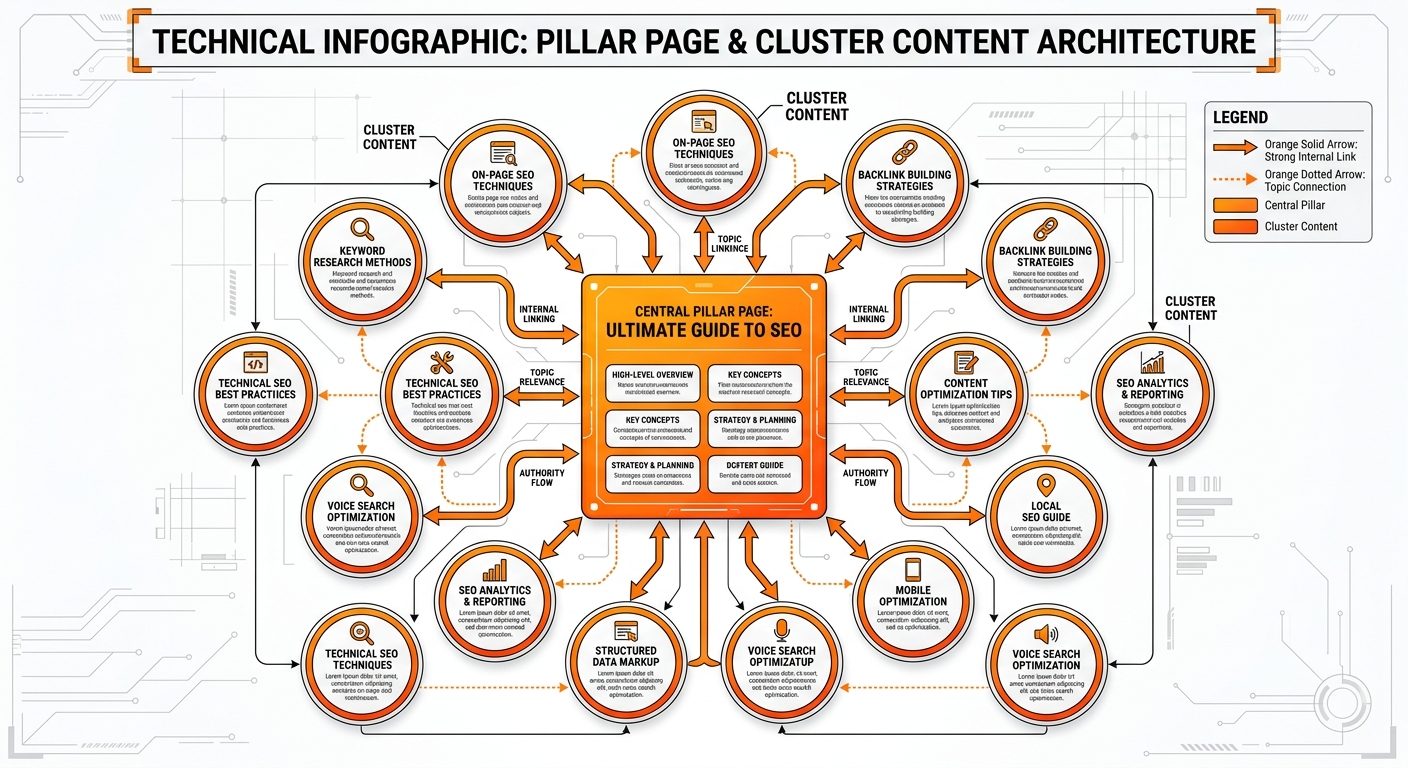
Success in this framework depends on "Information Gain." Google’s recent focus on helpful content rewards articles that bring something new to the table-whether that is a unique case study, a more detailed explanation, or a better user experience. Simply rewriting what is already on page one of the search results is no longer sufficient to establish authority.
To build a robust cluster, you must audit your niche for "unanswered questions." These are the granular queries that users search for after reading a general guide. By providing the answers to these specific problems, you keep users on your site longer and signal to search engines that your domain is the end-point for that particular research journey.
Content Depth vs. Content Breadth: The 2026 Benchmark
Exhaustive niche coverage is often more valuable than a high volume of surface-level articles. Breadth refers to how many different topics you cover, while depth refers to how thoroughly you explore each one. In the current SEO environment, a site that covers five topics with extreme depth will almost always outperform a site that covers fifty topics with only basic information.

Authority requires answering every possible sub-query within a defined niche. This means your content calendar shouldn't just chase new trends; it should systematically work through the foundational knowledge of your industry. When you reach the point where a user can find every answer they need within your domain, you have achieved topical authority.
Consider the difference between a generalist site and a niche expert. A generalist might write one post about "coffee beans." A niche expert will write twenty posts, covering growing regions, roasting temperatures, grind sizes for different brewing methods, and the chemistry of caffeine extraction. The niche expert becomes the entity search engines trust for coffee-related queries because their coverage is complete.
Scenario: Niche Site vs. Generalist Site
Niche Site: A website dedicated exclusively to "Bonsai Tree Care." It publishes 50 articles covering every species, soil type, and pruning technique. Despite having a lower Domain Rating, it ranks #1 for high-competition terms because its semantic relevance is focused and deep.
Generalist Site: A lifestyle blog that writes about "Gardening" in general. It has one high-quality post about Bonsai trees. Despite having thousands of backlinks from various sources, it struggles to outrank the niche site for Bonsai-specific terms because its authority is diluted across too many unrelated topics.
Automating Authority: How ARTICFLY Streamlines Cluster Management
Managing a complex topic cluster manually becomes a bottleneck as your content library grows. Coordinating internal link maps, identifying content decay, and ensuring that every new article aligns with your established brand voice requires significant editorial overhead. This is where automation shifts from a luxury to a necessity for teams looking to scale.
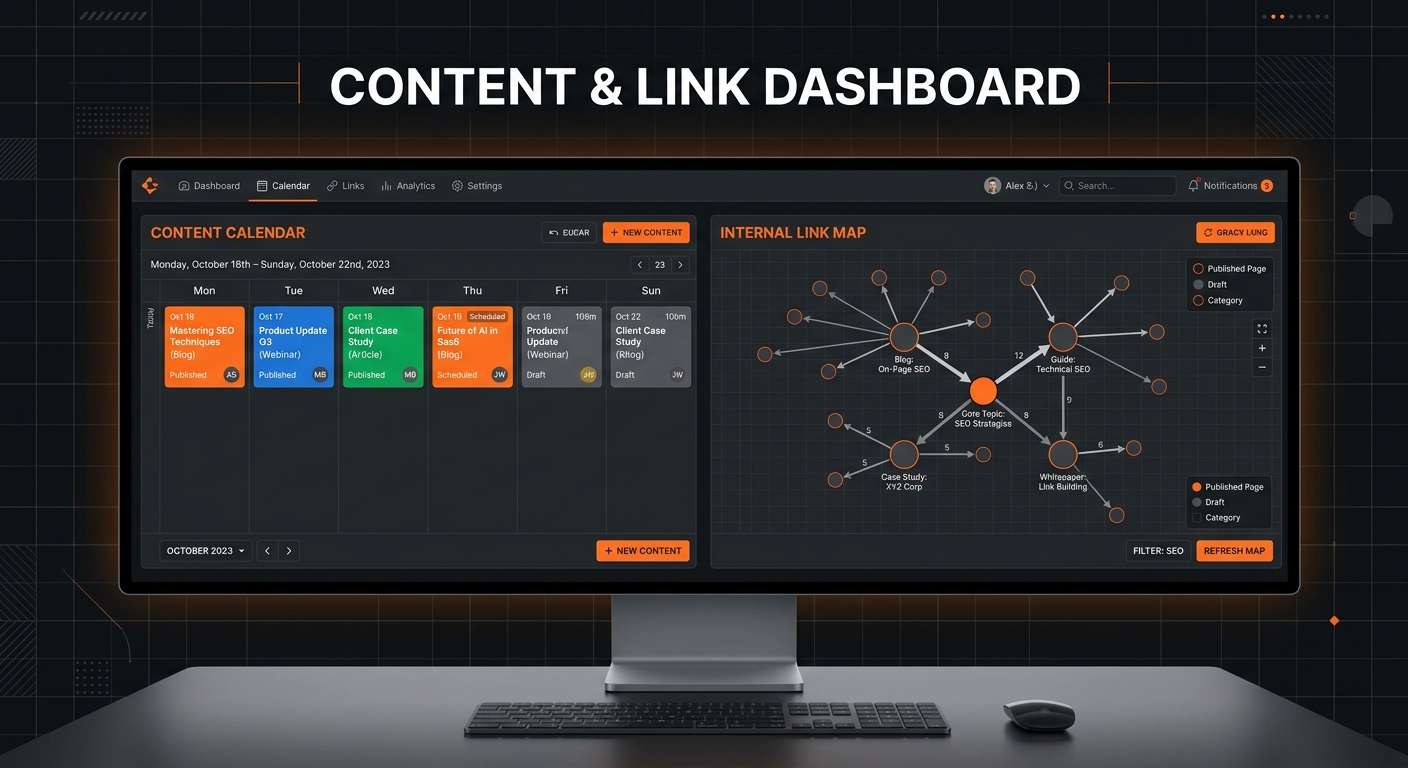
ARTICFLY provides the infrastructure to execute a topical authority strategy without hiring a massive editorial team. By using the Brand Voice Analyzer, you ensure that every piece of content-whether it's a pillar page or a minor cluster update-remains consistent in tone and vocabulary. The platform’s internal link mapping and SEO tools identify gaps in your coverage, allowing you to build out clusters with precision.
The Article Refresher tool is particularly critical for maintaining authority. As new information emerges in your niche, old content can lose its relevance, causing a drop in rankings. Automatically tracking this decay and refreshing aging posts ensures that your "complete" coverage stays current and continues to signal expertise to search engines.
When to use AI for cluster mapping?AI should be used when the volume of data exceeds your team's ability to track it manually. If you are managing more than 50 articles, an AI-powered content calendar and internal link tool can prevent "content silos" where valuable articles are left unlinked and unindexed. Use automation to handle the structural mapping, leaving your team to focus on high-level strategy and final editorial polish.
FAQ
- How long does it take to see results from a topical authority strategy?
While timing varies by niche and competition, significant improvements in ranking often appear after a full cluster (pillar + 10-15 cluster posts) has been indexed and internally linked. This typically takes 3 to 6 months as search engines recognize the site's comprehensive coverage.
- Can I rank for high-competition keywords with zero backlinks if I have authority?
It is possible to outrank sites with more links if your topical coverage is demonstrably superior and satisfies user intent more effectively. However, authority and links usually work in tandem; high-quality, authoritative content naturally attracts backlinks over time.
- How many cluster articles do I need for a single pillar page?
There is no fixed number, but a baseline of 8 to 15 articles is usually required to cover the primary sub-topics of a competitive niche. The goal is completeness, so you should continue adding articles until all common user questions are addressed.
- Does topical authority expire if I stop publishing?
Authority can decay if the information becomes outdated or if competitors provide more current and comprehensive coverage. Maintaining authority requires periodic updates and "refreshes" of your existing content library.
- What is the biggest mistake people make with topic clusters?
The most common error is failing to link the cluster articles back to the pillar page and to each other. Without a strong internal linking structure, search engines cannot easily see the relationship between the pages, and the authority remains fragmented.
Put this into practice
Building topical authority is a methodical process that rewards consistency over quick wins. To move away from the high-cost cycle of backlink acquisition, focus on owning the semantic space of your niche through structured content and deep expertise.
- Audit: Identify your existing content and group it into potential clusters. Locate "orphan" pages that lack internal links.
- Map: Choose one core pillar topic and map out 10 cluster sub-topics that haven't been covered yet.
- Create: Use Articfly's SEO tools and Advanced mode generation to produce high-depth articles that focus on Information Gain.
- Link: Implement a rigorous internal linking strategy that connects every cluster article to your main pillar.
- Monitor: Use the Article Refresher to track performance and update your pillar pages as your niche evolves.
Want the system behind this content?
Join the top 1% of SEOs generating programmatic, high-converting organic traffic completely on auto-pilot.
DEPLOY ARTICFLYMore Articles
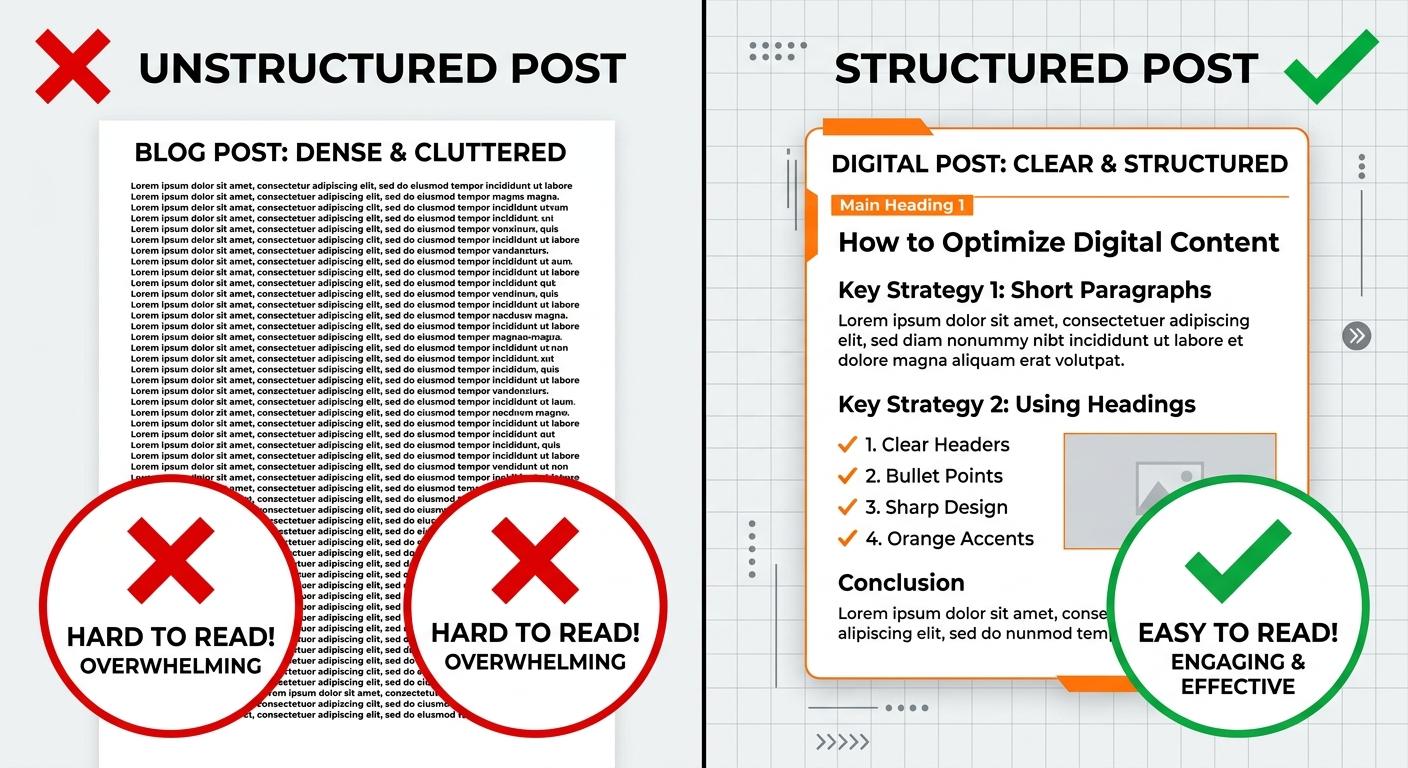
Why People Stop Reading Your Blog Post After 30 Seconds (and How to Fix It)
Most readers decide to stay or leave a blog post within the first 30 seconds. If your bounce rates are high, it's likely due to structural friction, poor hooks, or a lack of immediate value. Learn how to diagnose engagement killers and use AI-driven optimization to keep readers scrolling.
READ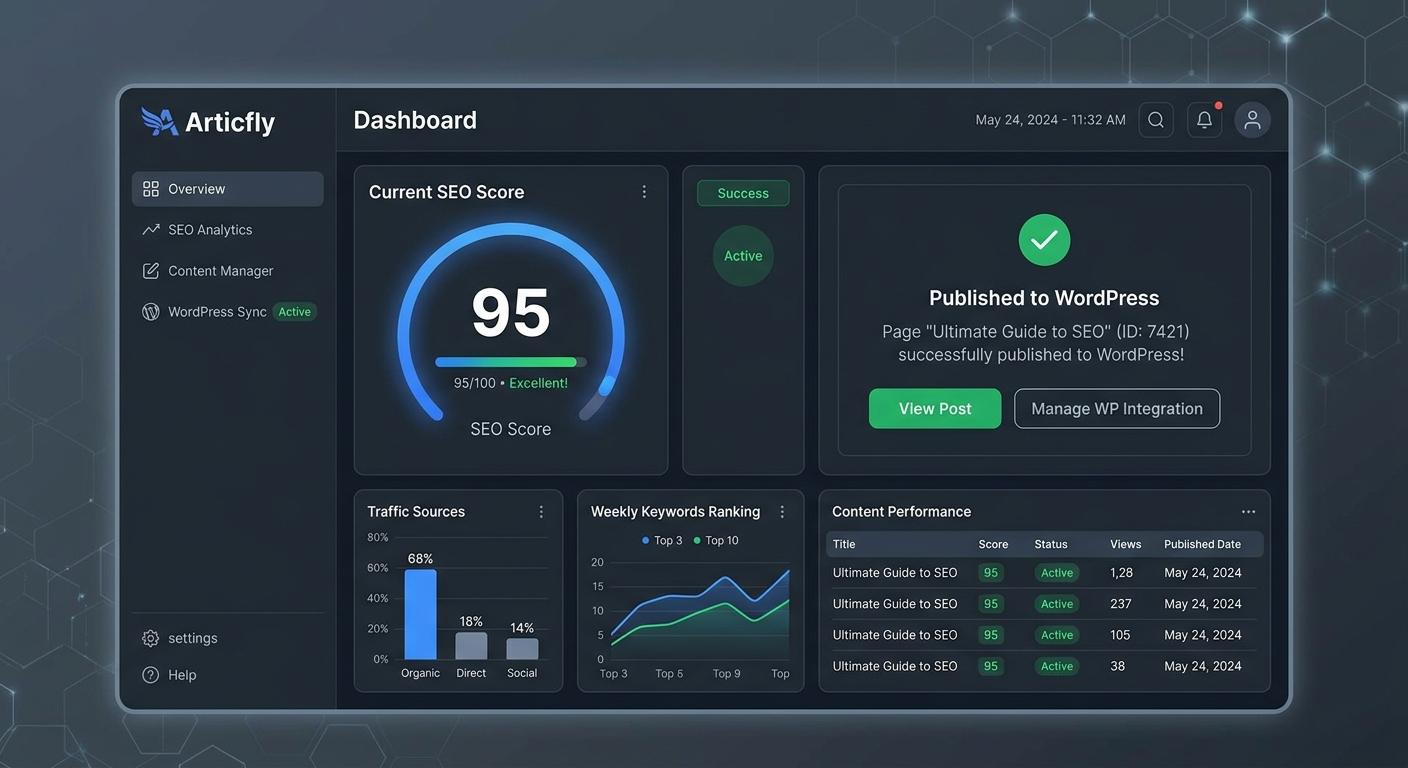
The $15 Blog Post That Brings in $2,000/Month: How AI Content Delivers 130x ROI
Discover the unit economics of high-scale AI publishing. Learn how to leverage Articfly to produce $15 blog posts that generate $2,000 in monthly recurring revenue through SEO optimization, automated publishing, and strategic content refreshing.
READ
Brand Voice in AI Content: How to Stop Your Blog from Sounding Like a Robot
Generic AI content is killing brand authority. Learn how to use Articfly’s Brand Voice Analyzer and Advanced Mode to produce high-scale, SEO-optimized content that sounds like your team, not a machine.
READ