Why Your Competitor's Crappy Blog Outranks You (and How to Win)
Key Takeaways
SEO success is often a matter of technical execution rather than just literary merit. While high-quality writing is essential for user retention, search engines prioritize relevance, structure, and authority signals that "better" prose sometimes ignores.
| Why Competitors Rank | Your Counter-Strategy |
|---|---|
| High Domain Authority | Build a topical authority ladder with niche clusters. |
| Direct Intent Alignment | Optimize for immediate answers and "People Also Ask." |
| Freshness Signals | Implement automated content refresh cycles. |
| Internal Linking Depth | Map entities across your site to show topical depth. |
The Quality Trap: Why Google Doesn't Always Reward "Best" Writing
The Quality Trap occurs when editors focus on prose at the expense of search engine requirements. A beautifully written 3,000-word essay can easily lose to a mediocre 500-word listicle if the latter answers the user's query more efficiently.
Google's algorithms are designed to satisfy user intent, not to grade creative writing. If your content is structured like a traditional narrative rather than a digital resource, it may fail to trigger the right entity associations in the index. This results in "invisible" content that humans love but crawlers find difficult to categorize.
Domain Authority vs. Content Quality: The Legacy Advantage
Domain authority acts as a competitive moat that protects older, established websites even when their individual articles are thin or outdated. Search engines rely on these historical signals to determine trust, which often allows legacy sites to rank by default.
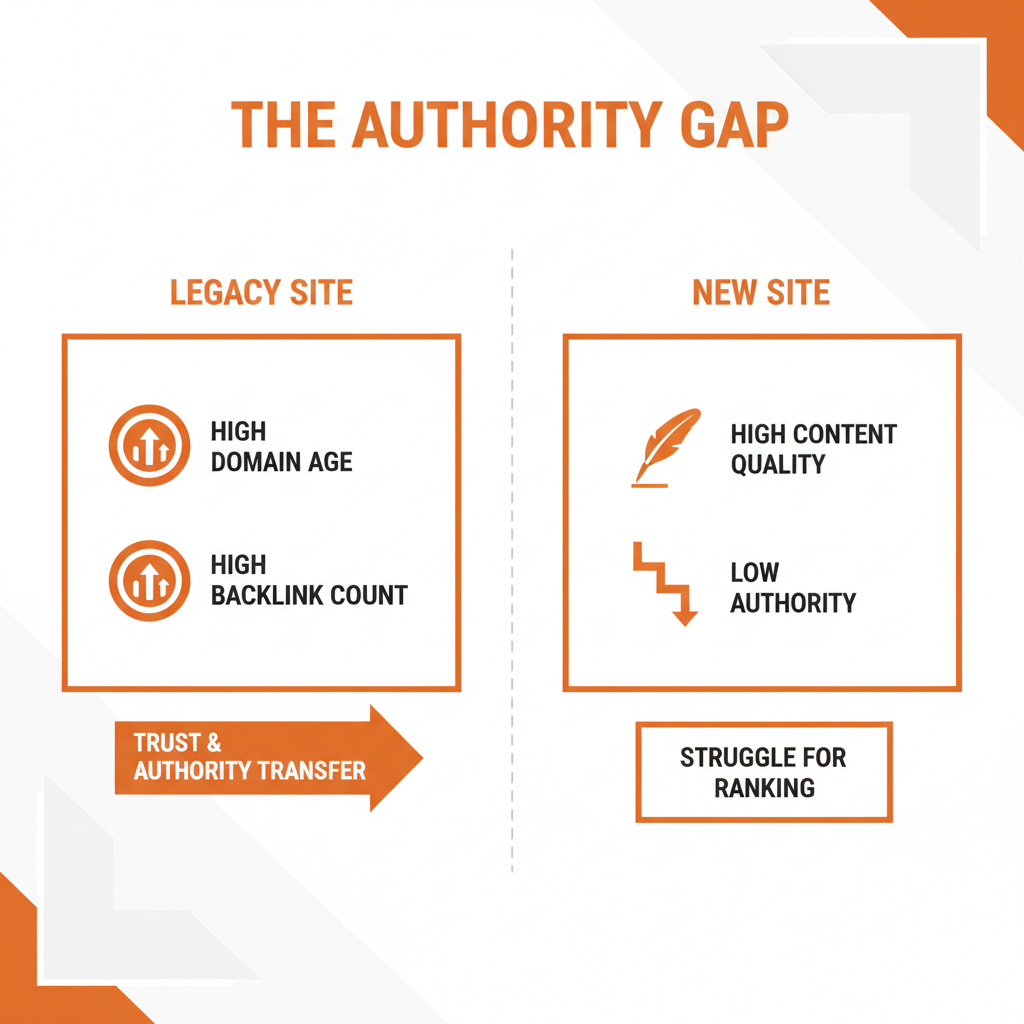
A competitor with a significantly higher authority profile can publish a low-effort post and still outrank your deeply researched guide. This isn't a failure of your content; it is a reflection of the competitor's established backlink profile and historical performance. To beat this, you must stop competing on single articles and start competing on topical density.
Instead of trying to win on a single high-volume keyword, build a topical authority ladder. This involves publishing a series of interconnected articles that cover every sub-topic within your niche. By creating a dense network of internal links, you signal to the algorithm that your site is a specialized resource, eventually neutralizing the generic authority of legacy competitors.
User Intent and Technical Alignment: Where Your Content Might Be Failing
Matching user intent is the primary goal of modern search algorithms, often outweighing word count or vocabulary depth. If a user is searching for a "calculator" or a "quick checklist," they will bounce from a long-form philosophical guide, sending negative signals to Google.
Consider the difference between "Information" intent and "Transactional" intent. If your page is optimized for the wrong stage of the buyer's journey, no amount of good writing will fix your rankings. You must align your content structure with the current SERP winners, even if their prose seems inferior.
View Scenario Breakdown: Intent vs. LengthScenario A: A 4,000-word academic guide on "How to fix a leaky faucet" that includes the history of plumbing and various pipe materials. The answer is buried in the middle.
Scenario B: A 500-word post with three bullet points, a 15-second video, and a list of required tools at the very top. The answer is immediate.
Outcome: Scenario B wins the ranking because it fulfills the "How-to" intent faster and more accurately, despite having lower word count and simpler writing.
The Silent Killer: Content Decay and Refresh Cycles
Content decay is the gradual loss of ranking relevance as newer information enters the SERPs or as competitors update their own pages. Even if your article was perfect 12 months ago, its "freshness" signal has likely degraded, allowing newer posts to leapfrog you.
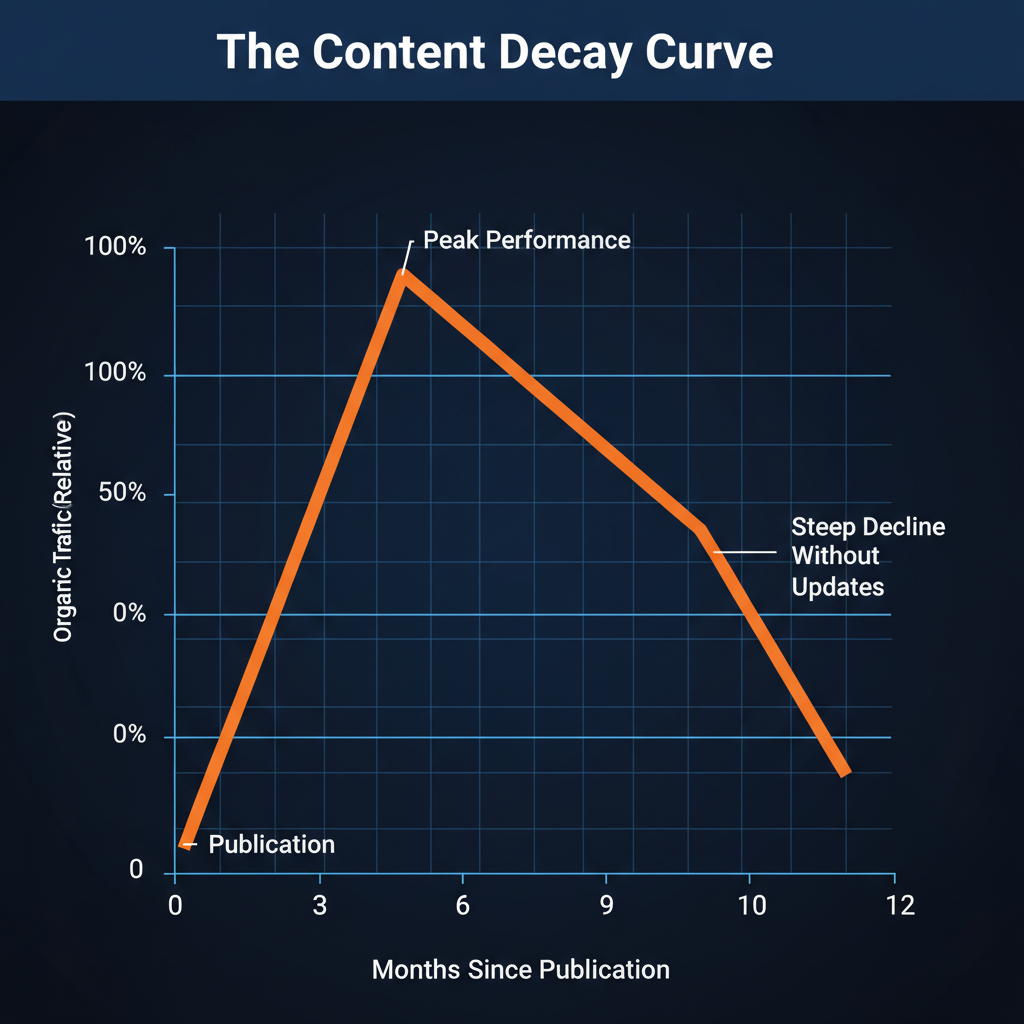
Maintaining a high-ranking blog requires more than just publishing new content. It requires a systematic approach to monitoring SEO performance over time. Stagnant content is a liability; it signals to search engines that your site may no longer be actively maintained or relevant to current trends.
A content refresh doesn't always require a full rewrite. Often, updating the statistics, adding a new subhead based on "People Also Ask" questions, or improving internal links is enough to signal relevance. Constant iteration is the only way to defend your position against aggressive competitors who are actively optimizing.
The Content Refresh Checklist
- Verify all external links are still active and relevant.
- Update dated references (e.g., changing "2023 trends" to "2024 insights").
- Check for "Search Console" keywords where the page is appearing but not ranking in the top 3.
- Add new entities or keywords that have gained prominence since the original publish date.
- Optimize the meta description and title tag to improve click-through rates.
How to Systematically Outrank "Inferior" Competitors
Winning back lost rankings requires a systematic approach that addresses technical gaps before editorial ones. You must diagnose exactly where the competitor is winning-is it their link profile, their page speed, or their specific structure?

If the competitor has higher authority, your move is to increase your topical coverage. If they have better intent alignment, you must restructure your page to deliver answers faster. If they are winning on freshness, you need to automate your update cycle. SEO is a game of marginal gains where technical precision often beats raw creative talent.
"The goal is not to write the best article ever written; the goal is to be the best answer available on the SERP today." - Content Strategy Axiom
Strategic Decision Guide
Use the following logic to determine your next move based on SERP behavior:
- If ranking 4-10: Focus on click-through rate (CTR) optimization and internal linking from higher-authority pages on your site.
- If ranking 11-30: Check for intent mismatch. Are you providing a guide when the user wants a tool or a list?
- If ranking 30+: You likely have a topical authority issue or a technical crawling problem. Expand your content calendar to cover related niches.
- If rankings are dropping: This is a clear signal of content decay. Execute a refresh immediately.
FAQ
Why does a 200-word post outrank my 2,000-word guide?
Search engines prioritize direct answers and user intent alignment. If a 200-word post provides the exact information a user needs immediately, it will often outrank a longer guide that buries the answer under excessive introductory text.
Does Google actually care about "good" writing?
Google prioritizes algorithmic signals like readability, entity density, and intent fulfillment. While "good" writing helps with human metrics like time-on-page and conversions, it must be supported by technical SEO to rank in the first place.
How often should I update my blog posts to maintain rankings?
Frequency depends on the niche, but high-competition topics should be reviewed every 3 to 6 months. This prevents content decay and ensures your "freshness" signals remain competitive against newer entries in the SERP.
Can AI-generated content actually outrank manual writing?
Yes. Rankings are determined by the quality of the optimization and the accuracy of the output, not the method of production. Well-structured, AI-assisted content that is properly optimized for search signals often outperforms manually written content that lacks technical SEO focus.
Put this into practice
To stop losing to inferior competitors, you must pivot from a purely editorial mindset to a technical one. Audit your existing content to identify high-potential losers-articles that have the quality but are slipping in the rankings due to decay or authority gaps.
Follow this three-step action plan to regain your momentum:
- Identify your "decaying" posts by checking for significant traffic drops in the last six months.
- Analyze the structure of the winning competitor's page, looking specifically at how they answer the core query and which subheads they use.
- Use an automated content engine to scale the refresh process, ensuring your articles stay updated without requiring constant manual intervention.
By focusing on the technical requirements of the algorithm, you can ensure your high-quality content finally receives the visibility it deserves.
Want the system behind this content?
Join the top 1% of SEOs generating programmatic, high-converting organic traffic completely on auto-pilot.
DEPLOY ARTICFLYMore Articles
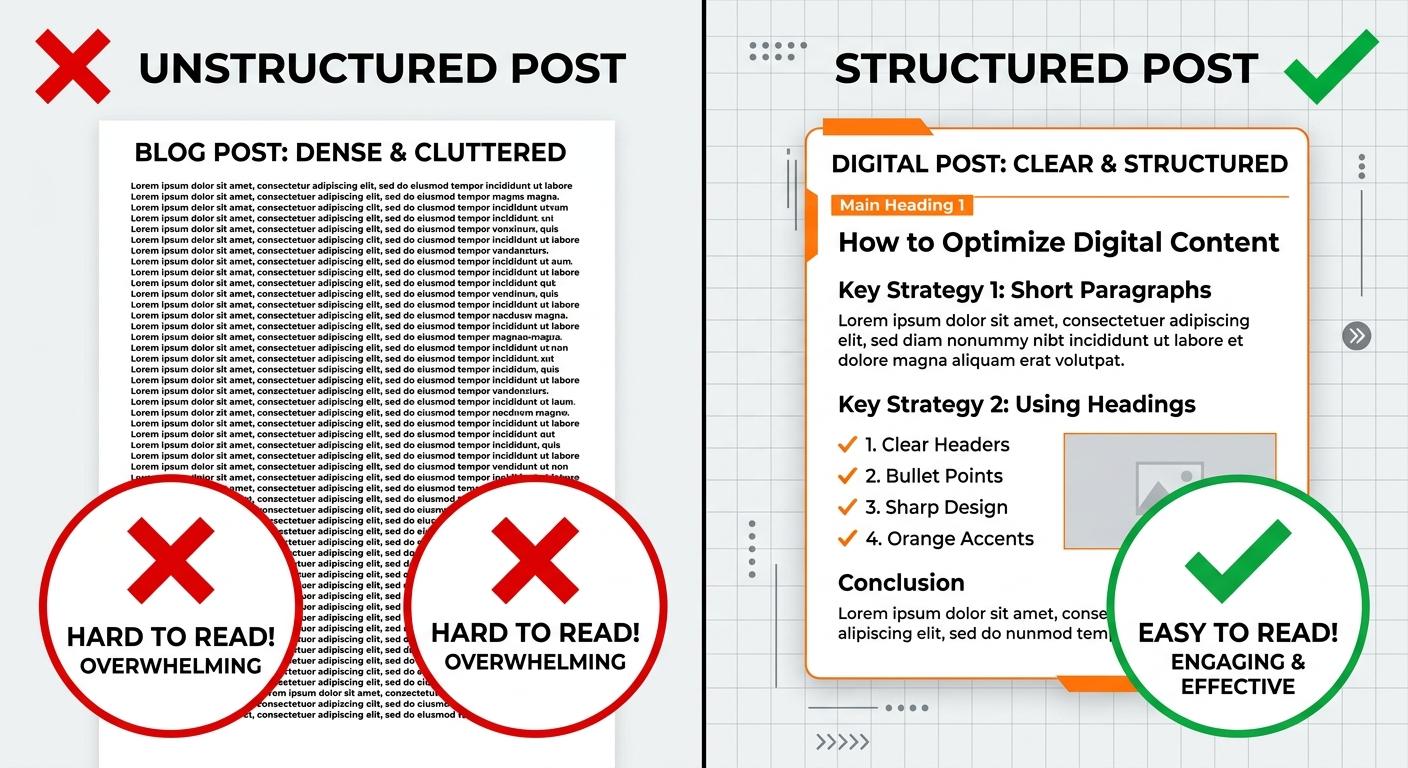
Why People Stop Reading Your Blog Post After 30 Seconds (and How to Fix It)
Most readers decide to stay or leave a blog post within the first 30 seconds. If your bounce rates are high, it's likely due to structural friction, poor hooks, or a lack of immediate value. Learn how to diagnose engagement killers and use AI-driven optimization to keep readers scrolling.
READ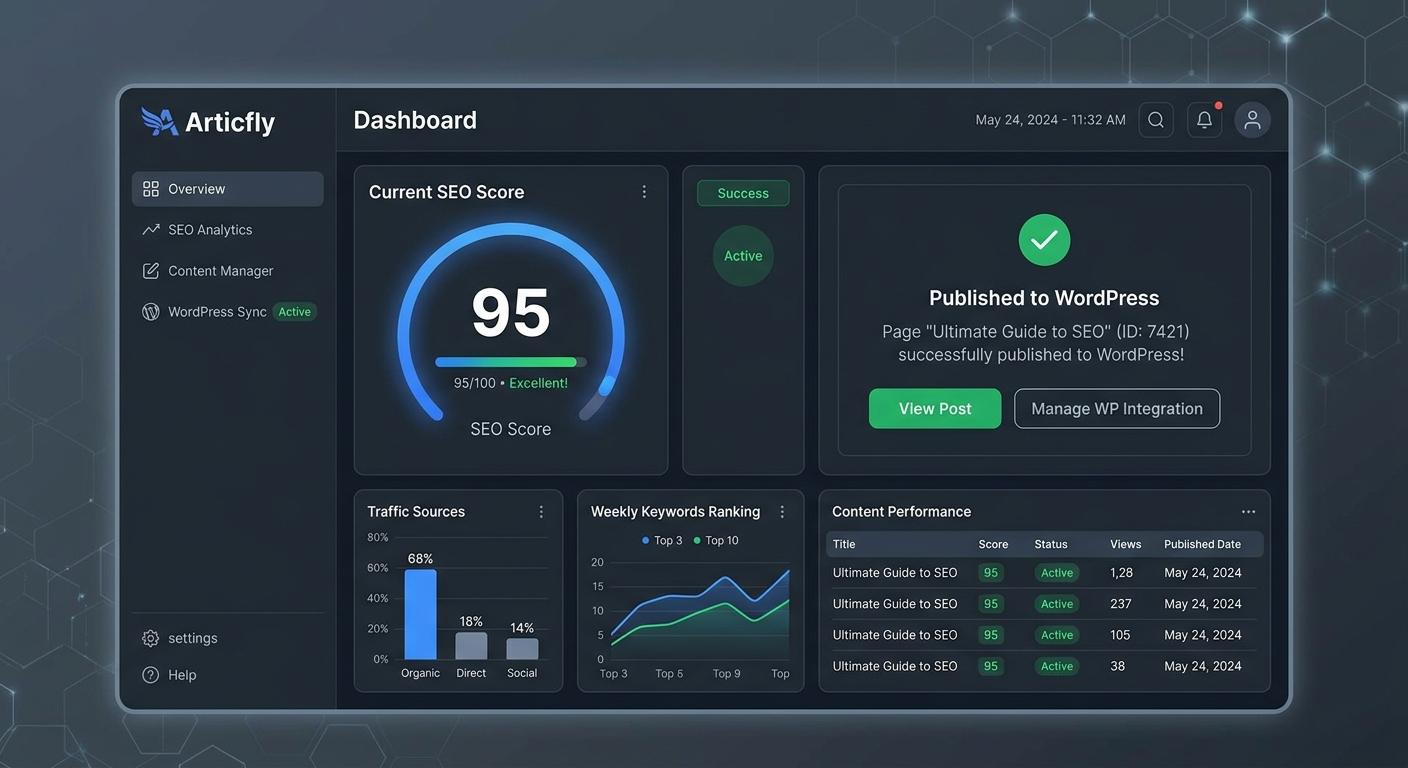
The $15 Blog Post That Brings in $2,000/Month: How AI Content Delivers 130x ROI
Discover the unit economics of high-scale AI publishing. Learn how to leverage Articfly to produce $15 blog posts that generate $2,000 in monthly recurring revenue through SEO optimization, automated publishing, and strategic content refreshing.
READ
Brand Voice in AI Content: How to Stop Your Blog from Sounding Like a Robot
Generic AI content is killing brand authority. Learn how to use Articfly’s Brand Voice Analyzer and Advanced Mode to produce high-scale, SEO-optimized content that sounds like your team, not a machine.
READ