
The Strategic Importance of SEO for CFOs in 2026

Organic search sustainability represents a critical hedge against the rising costs of paid digital advertising for modern enterprises. This section explains why maintaining a dominant search presence is essential for long-term financial stability and market share protection. By treating SEO as a capital investment rather than a recurring expense, CFOs can ensure more predictable customer acquisition costs.
Why SEO remains a core growth driver
Search engines continue to be the primary gateway for B2B discovery, even as interfaces evolve with artificial intelligence. Establishing authority through organic content creates a compounding asset that generates value long after the initial production cost is settled. Industry reports indicate that companies with strong organic foundations recover more quickly from market shifts.
Financial metrics CFOs track
Financial leaders focus on lifetime value and the reduction of customer acquisition costs across all digital channels. Organic search provides a high-margin alternative to pay-per-click models which are subject to inflationary auction pricing. Monitoring the correlation between organic visibility and lead quality is vital for justifying ongoing marketing expenditures.
- Predictable cost-per-acquisition compared to volatile paid media markets.
- Compounding traffic growth that functions as a long-term business asset.
- Enhanced brand credibility that supports higher conversion rates across all channels.
- Reduced dependency on third-party advertising platforms for lead generation.
- Alignment with long-term revenue goals through evergreen content strategies.
Strategic SEO is no longer just a marketing tactic; it is a financial instrument that protects a company’s digital real estate and ensures long-term margin health.
— Analysts at leading research firms
For more information on maximizing efficiency, read [Internal: SEO automation] and consult the [External: AI search study] for broader market context.
How AI Search is Changing the SEO Landscape
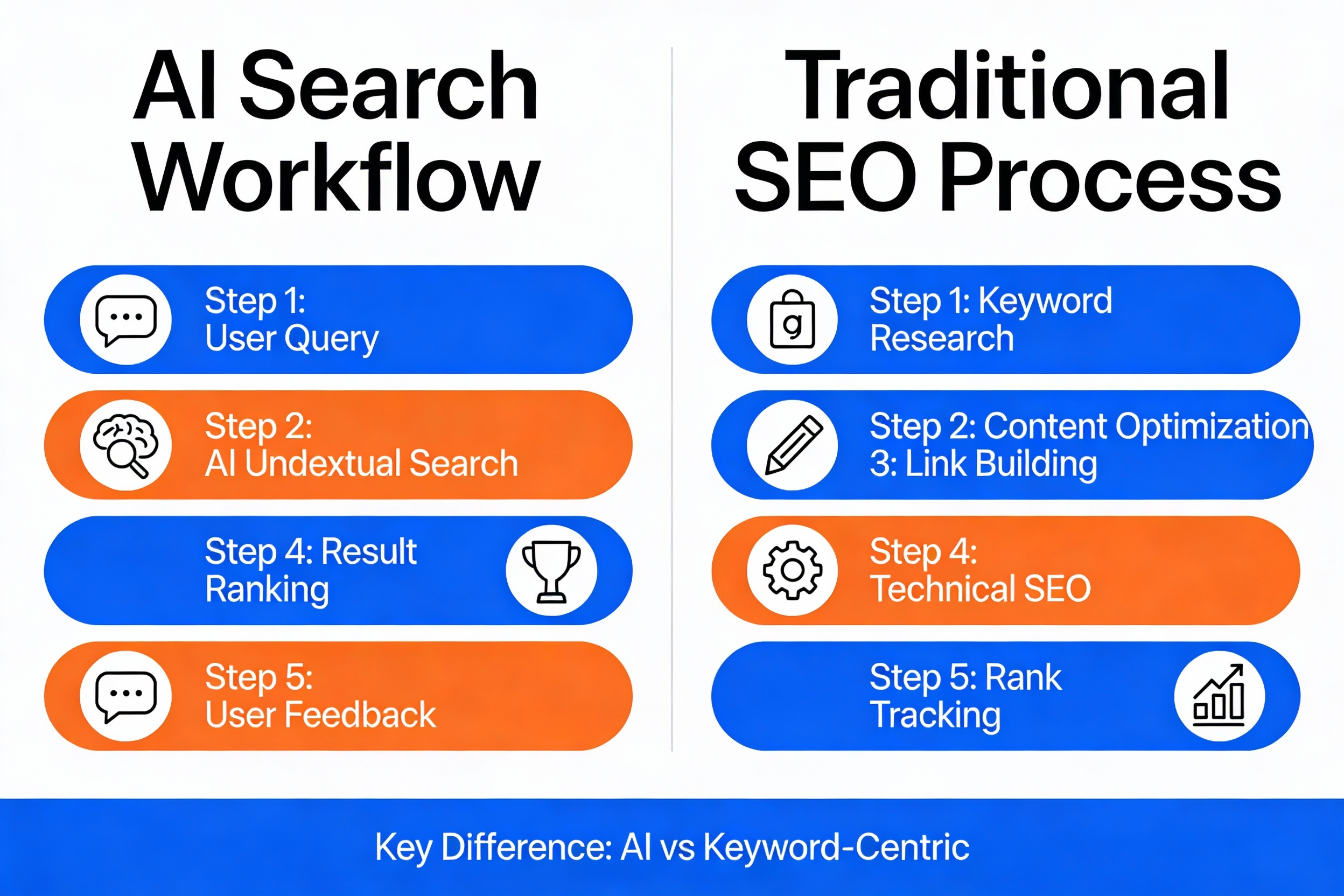
AI-driven query interpretation is shifting the focus of search engines from simple keyword matching to understanding deep user intent. This section explores how financial decision-makers must view the evolution of search as an opportunity for better targeting. While the methods of discovery are changing, the value of being the definitive source of information remains higher than ever.
AI‑driven query interpretation
Modern search algorithms now process natural language with incredible precision, allowing them to answer complex financial and technical questions. This means that content must be more than just relevant; it must be authoritative and structured in a way that AI models can easily digest. Organizations that adapt to these semantic requirements will see their visibility increase in AI-generated summaries.
Impact on keyword relevance and SERP features
The traditional list of blue links is being supplemented by direct answers and interactive search features that prioritize the most helpful content. CFOs should understand that while total click volume might fluctuate, the quality of traffic coming from these advanced features is often significantly higher. Investing in structured data ensures that your business remains the preferred source for these automated insights.
- Shift from keyword density to topical authority and semantic depth.
- Increased importance of structured data for AI model consumption.
- Higher intent traffic resulting from more precise query matching.
- Evolution of search result pages to include generative summaries and direct answers.
- Necessity of high-quality, original data to stand out in an automated environment.
| Feature | Traditional SEO | AI-Enhanced Search |
|---|---|---|
| Primary Goal | Keyword Ranking | User Intent Satisfaction |
| Content Focus | Search Volume | Authoritative Accuracy |
| Measurement | Click-Through Rate | Brand Citation & Conversion |
To learn about streamlining these processes, see [Internal: SEO automation] and review the findings in the [External: AI search study].
Hard Data Demonstrating SEO's Growing ROI
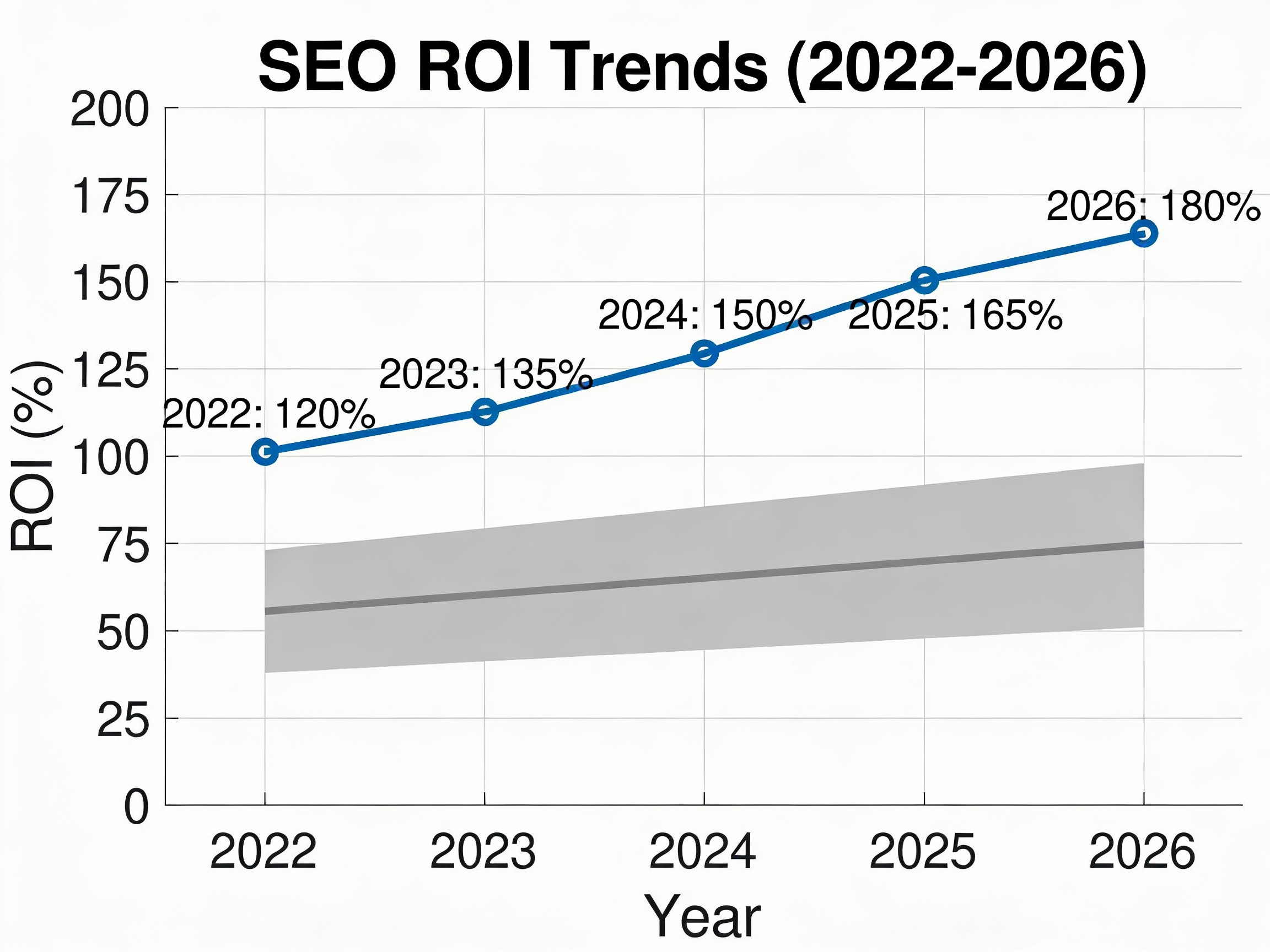
Long-term ROI trends demonstrate that organic search remains one of the most cost-effective channels for enterprise growth. This section presents the strategic case for continued investment by highlighting the measurable financial benefits observed in the current market. By analyzing data-backed outcomes, CFOs can confidently allocate resources toward search optimization.
Recent industry studies
Industry research suggests that organic search generates a significantly higher return on investment compared to other digital marketing channels over a three-year period. While initial setup costs can be higher, the maintenance cost of organic traffic is a fraction of paid alternatives. Analysts at leading research firms say that businesses prioritizing organic reach see more resilient profit margins during economic downturns.
Real‑world case observations
Observation of mid-size to enterprise companies reveals that those who maintain their SEO spend during technological shifts capture a larger share of the voice. These organizations benefit from a "moat" of content that competitors find expensive and time-consuming to replicate. The data indicates that organic visibility correlates strongly with overall brand health and customer trust.
- Compounding growth of organic traffic reduces the average cost per lead over time.
- Higher conversion rates from organic search users compared to social media referrals.
- Lower long-term maintenance costs for established organic rankings.
- Increased resilience against changes in the paid advertising landscape.
- Stronger brand equity through consistent appearance in high-value search queries.
- Evaluate current customer acquisition costs across all digital channels.
- Assess the lifetime value of users acquired through organic search.
- Compare the cost of scaling paid traffic versus the cost of organic content production.
- Project the long-term impact of search visibility on market share.
Explore the efficiency of modern tools at [Internal: SEO automation] and check the latest trends in the [External: AI search study].
Key Factors Driving SEO Value in the AI Era

Enhanced content efficiency is the cornerstone of modern search strategy, allowing brands to produce more high-quality material with fewer resources. This section outlines the specific technical and creative factors that drive value in an increasingly automated search environment. CFOs should focus on how these factors contribute to a scalable and defensible digital presence.
Content quality amplified by AI assistance
Artificial intelligence allows content teams to analyze vast amounts of search data to identify precisely what their audience needs. This doesn't replace human expertise but rather amplifies it, ensuring that every piece of content published is optimized for both users and algorithms. The result is a more efficient production pipeline that delivers higher value per dollar spent.
Technical SEO & structured data importance
The backend architecture of a website is more important than ever as search engines rely on structured data to interpret content accurately. Proper technical optimization ensures that search bots can crawl and index pages efficiently, reducing the waste of server resources. For the CFO, this means a more technically sound asset that performs better in the competitive digital marketplace.
User intent signals and personalization
Search engines are increasingly prioritizing pages that provide a superior user experience and direct answers to specific queries. By focusing on user intent, companies can ensure they are attracting qualified leads who are ready to engage with their services. This personalization leads to higher satisfaction and better utilization of the marketing budget.
- Integration of AI tools to accelerate content research and production cycles.
- Utilization of schema markup to facilitate better indexing by AI search engines.
- Optimization for "zero-click" searches to maintain brand presence in summaries.
- Focus on Expertise, Authoritativeness, and Trustworthiness (E-A-T) to build credibility.
- Prioritization of mobile-first and fast-loading pages for improved user retention.
The companies that win in the AI era are those that combine deep industry expertise with the speed and precision of automated content systems.
— Industry research reports
Review strategies for better production at [Internal: SEO automation] and see the [External: AI search study] for technical benchmarks.
Practical Steps CFOs Can Take Today

Strategic budget allocation is the most powerful tool a CFO has to ensure the company thrives during the AI search transition. This section provides a clear roadmap for financial leaders to transition from traditional marketing spend to a more efficient, AI-augmented model. Taking these steps now will position the organization for significant competitive advantages by 2026.
Allocate budget for AI‑augmented SEO tools
Modernizing the tech stack is essential for keeping pace with the volume of content required in today’s market. Budgeting for tools that automate planning and writing can significantly reduce the overhead associated with large-scale content campaigns. These investments often pay for themselves through reduced agency fees and faster time-to-market.
Set KPI dashboards aligned with finance goals
Moving beyond simple "rankings," financial leaders should demand dashboards that track the direct impact of SEO on the bottom line. KPIs should include organic lead value, cost savings compared to paid search, and the growth of the organic traffic asset. This ensures that every dollar spent on SEO is accountable to the company’s broader financial objectives.
Partner with automation platforms (e.g., Articfly)
Collaborating with specialized SaaS platforms like Articfly can help companies scale their output without a linear increase in headcount. These platforms provide the infrastructure needed to maintain consistent quality and SEO optimization across thousands of pages. This partnership allows internal teams to focus on high-level strategy while the platform handles the repetitive tasks of production.
- Audit current SEO and content marketing workflows for automation opportunities.
- Redirect a portion of underperforming paid media budget toward organic assets.
- Implement real-time reporting to monitor the ROI of search investments.
- Standardize content production using AI-powered planning and writing systems.
- Train staff on how to leverage AI tools to improve editorial efficiency.
- Review current digital marketing spend and identify high-cost, low-yield areas.
- Identify a pilot project for AI-powered content creation to test ROI.
- Establish a clear timeline for integrating automation into the SEO strategy.
- Meet with technology partners to evaluate scalable content solutions.
Discover how to optimize your budget at [Internal: SEO automation] and stay informed with the [External: AI search study].
Key Takeaways
- SEO is a long-term financial asset that offers a sustainable and compounding return on investment compared to paid media.
- AI is not replacing search but is instead refining it, making authoritative and structured content more valuable for business growth.
- Automation tools are essential for maintaining content volume and quality without increasing operational overhead.
- CFOs should prioritize SEO spend to lower customer acquisition costs and build a defensible digital market position by 2026.
FAQ

Is SEO still a viable investment with the rise of AI search?
Yes, SEO remains a vital investment because AI search engines still rely on high-quality, authoritative web content to provide answers. While the way users interact with results may change, the underlying need for a brand to be the primary source of truth is more critical than ever. Industry research suggests that organic visibility continues to drive the highest quality leads.
By investing in SEO now, companies ensure they are the ones being cited by AI models. This creates a new form of "citation equity" that replaces or supplements traditional click-through traffic, maintaining brand relevance in an automated world.
How can we measure the financial ROI of SEO accurately?
Measuring SEO ROI involves tracking the total cost of content production and technical maintenance against the revenue generated from organic traffic. CFOs should also calculate the "ad spend equivalent," which is the amount the company would have to pay in a PPC model to achieve the same volume of traffic. This provides a clear picture of the cost savings SEO provides.
Furthermore, monitoring long-term conversion rates and customer lifetime value from organic channels often reveals that these users are more loyal and profitable. This multi-metric approach ensures that the true value of the organic channel is recognized by the finance department.
Will AI-generated content hurt our search rankings?
Search engines generally do not penalize content simply because it was created with the help of AI, provided the content is helpful, accurate, and high-quality. The focus has shifted toward "helpfulness" rather than the method of production. Using AI to plan and structure content can actually improve rankings by ensuring all technical and topical requirements are met.
The key is to use AI as an augmentation tool that helps experts produce better work faster. When used correctly, AI content creation leads to a more consistent and optimized output that search engines are happy to index and promote.
What is the risk of reducing SEO spend in 2026?
Reducing SEO spend creates a significant risk of losing digital market share to more aggressive competitors who are leveraging AI to scale their presence. Unlike paid advertising, which can be turned on and off, organic visibility takes time to build and can be difficult to recover once lost. Analysts at leading research firms warn that a hiatus in SEO activity can lead to a permanent loss of authority.
In a landscape where AI is rapidly indexing and categorizing the web, being absent from the conversation means your brand will not be recommended by AI assistants. This can lead to a long-term decline in brand awareness and a total reliance on increasingly expensive paid channels.
Turn this into results
The transition to AI-driven search is an opportunity to redefine your company's growth strategy and achieve unprecedented content efficiency. By integrating Articfly into your marketing workflow, you can scale your SEO efforts while maintaining the professional quality your brand requires. This approach not only saves time but ensures your investment is focused on the most impactful, data-driven content possible.
Take the next step toward a more profitable digital future by scheduling a demo with Articfly today. See how our AI-powered platform can transform your ideas into high-performing articles that drive measurable ROI and long-term search dominance.