
Introduction: The CFO Perspective on Marketing Spend

Predictable and measurable returns are the cornerstone of any sound financial strategy, especially when evaluating marketing budgets. CFOs increasingly demand transparency and long-term value from every dollar spent on growth initiatives. SEO aligns with this mindset by offering a sustainable alternative to the volatile costs of traditional advertising channels.
"Marketing is no longer just a cost center; it is a revenue driver that must be held to the same rigorous ROI standards as any other capital investment." — CFO Magazine
Understanding the Articfly "Why AI-Driven SEO Matters" page provides insight into how modern technology bridges the gap between marketing effort and financial output. Reviewing external resources like a CFO.com article on marketing spend further emphasizes the need for this alignment.
Why CFOs Care About Marketing ROI
Definition of ROI in finance terms allows organizations to speak a common language across various departments. For a CFO, marketing success is measured by how efficiently capital is converted into long-term customer equity and recurring revenue. Clear attribution models ensure that every campaign is judged on its actual contribution to the bottom line.
The Shift Toward Data-Driven Decisions
Growing reliance on analytics has transformed how finance leaders approach business growth and resource allocation. Organizations now use sophisticated tools to interpret data and predict future performance with greater accuracy. AI plays a critical role in this shift, helping finance teams identify trends that manual analysis might overlook.
SEO’s Financial Advantages Over Other Channels
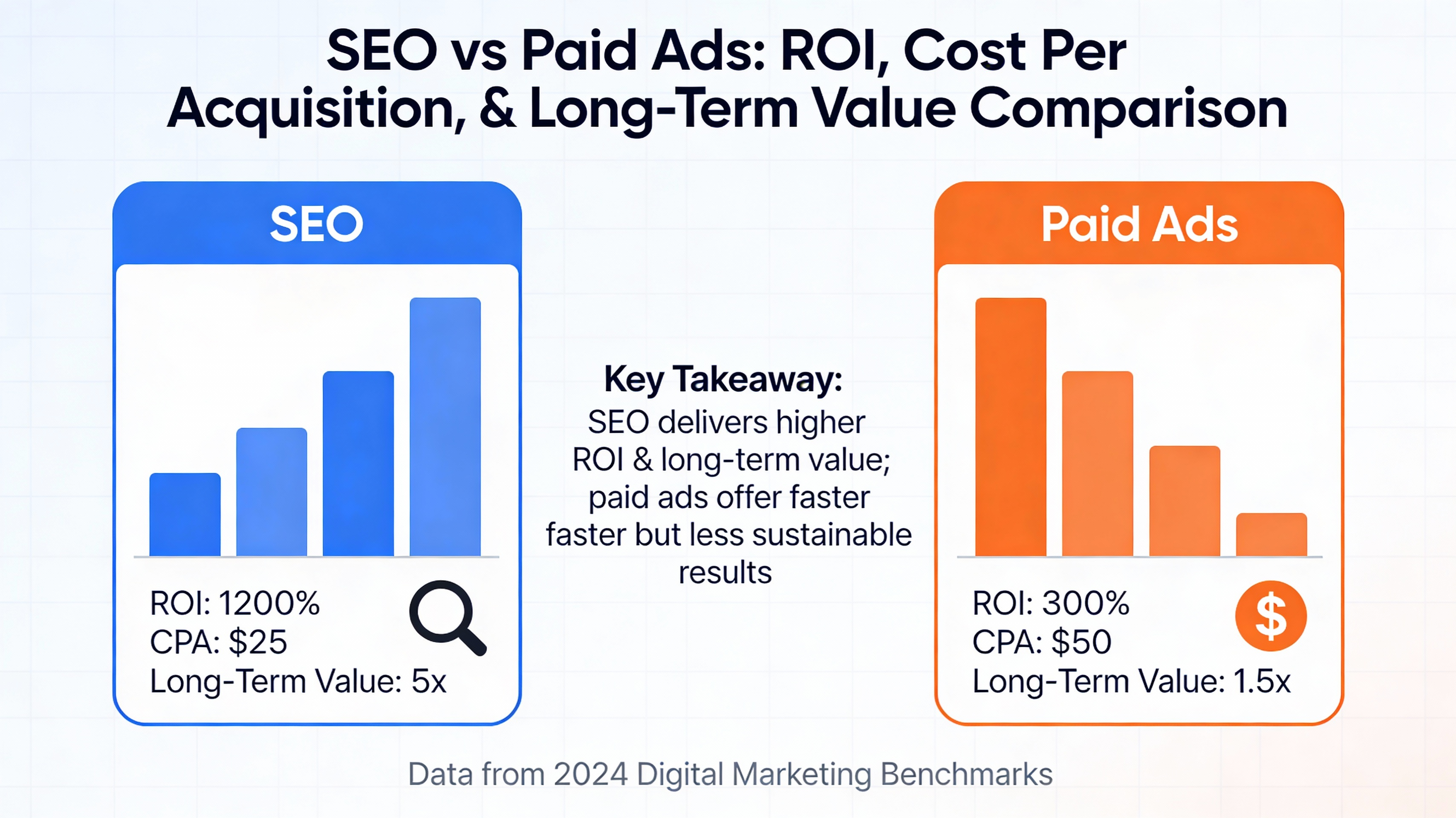
Predictable revenue growth is often the primary differentiator between organic search and paid media channels. While paid ads stop delivering traffic the moment the budget is exhausted, SEO assets continue to attract users over time. This compounding effect creates a more stable financial foundation for the entire business.
| Financial Metric | SEO (Organic) | Paid Advertising (PPC) |
|---|---|---|
| Cost Per Acquisition (CPA) | Decreases over time | Static or increases |
| Lifetime Value (LTV) | Generally higher due to trust | Variable |
| Asset Value | Appreciating company asset | No residual value |
Evidence of these benefits can be found in the Articfly case study, which highlights significant efficiency gains. Industry benchmarks from reports such as those by HubSpot or Moz confirm that organic search remains a top-performing channel for ROI.
Predictable, Long-Term Traffic and Revenue
Evergreen content generates ongoing leads without requiring a continuous infusion of fresh capital from the marketing budget. Once an article ranks well for a target keyword, it serves as a virtual salesperson that works around the clock. This durability reduces the pressure on monthly budgets to perform from scratch every 30 days.
Lower Cost Per Acquisition Compared to Paid Media
No ongoing ad spend is required to maintain organic rankings once the initial content is produced and indexed. While PPC costs are subject to bidding wars and platform algorithm changes, organic traffic remains relatively insulated from market fluctuations. This leads to a significantly lower cost per acquisition over the long haul for the organization.
Scalable Investment with AI-Powered Content
Automation reduces marginal costs for every new piece of content added to the digital library. By using AI-powered tools, businesses can scale their output without a linear increase in headcount or agency fees. This efficiency makes it easier to expand into new keywords and market segments profitably.
How AI-Powered Platforms Like Articfly Amplify SEO Value
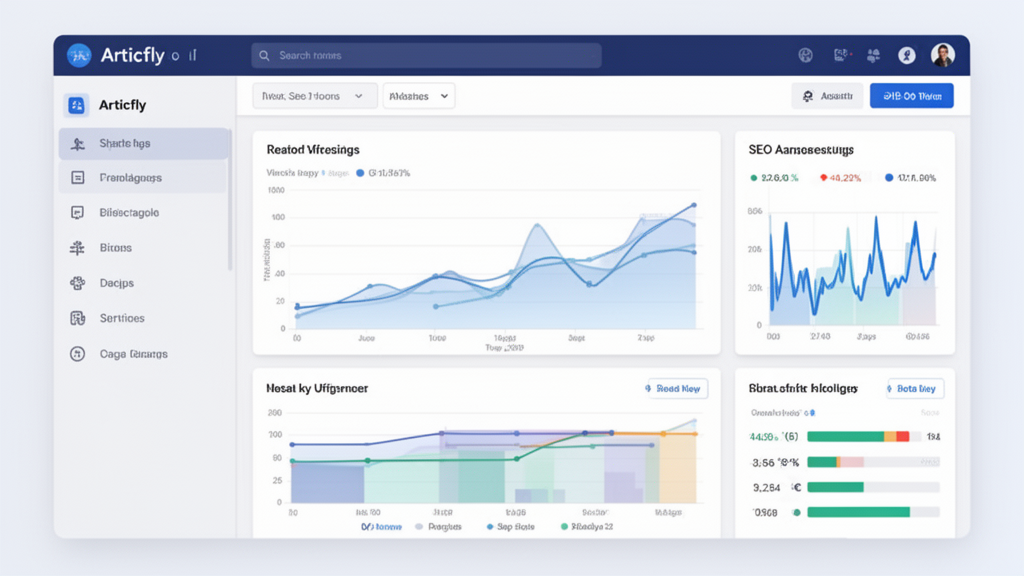
Automated content planning represents a massive shift in how marketing departments manage their limited resources. By leveraging platforms like Articfly, teams can move from manual research to execution in a fraction of the time. This reduction in labor hours directly improves the net ROI of every content asset produced for the brand.
Exploring the Articfly product page reveals how automation simplifies the entire publishing workflow. Furthermore, a study on AI impact on content production costs by Gartner suggests that technology is the primary driver of content efficiency in 2026.
Automated Content Planning Reduces Labor Costs
AI generates outlines and briefs instantly, removing the bottleneck of creative planning and keyword research. This allows marketing managers to focus on high-level strategy rather than getting bogged down in administrative tasks. Rapid planning ensures that the content pipeline remains full and responsive to changing market conditions.
Real-Time SEO Optimization Increases Efficiency
Built-in keyword suggestions and on-page checks ensure that every article is technically sound before it goes live. This efficiency reduces the need for expensive post-publication audits or manual rework by SEO specialists. Real-time feedback helps writers stay aligned with search intent and current best practices.
Consistent Brand Voice Saves Rework
Customizable tone settings ensure that AI-generated content reflects the professional identity of the business. This consistency prevents costly rewrites and maintains a unified message across all digital touchpoints. Reliable quality control is essential for building trust with sophisticated financial audiences and stakeholders.
Implementing an SEO-First Strategy for CFOs
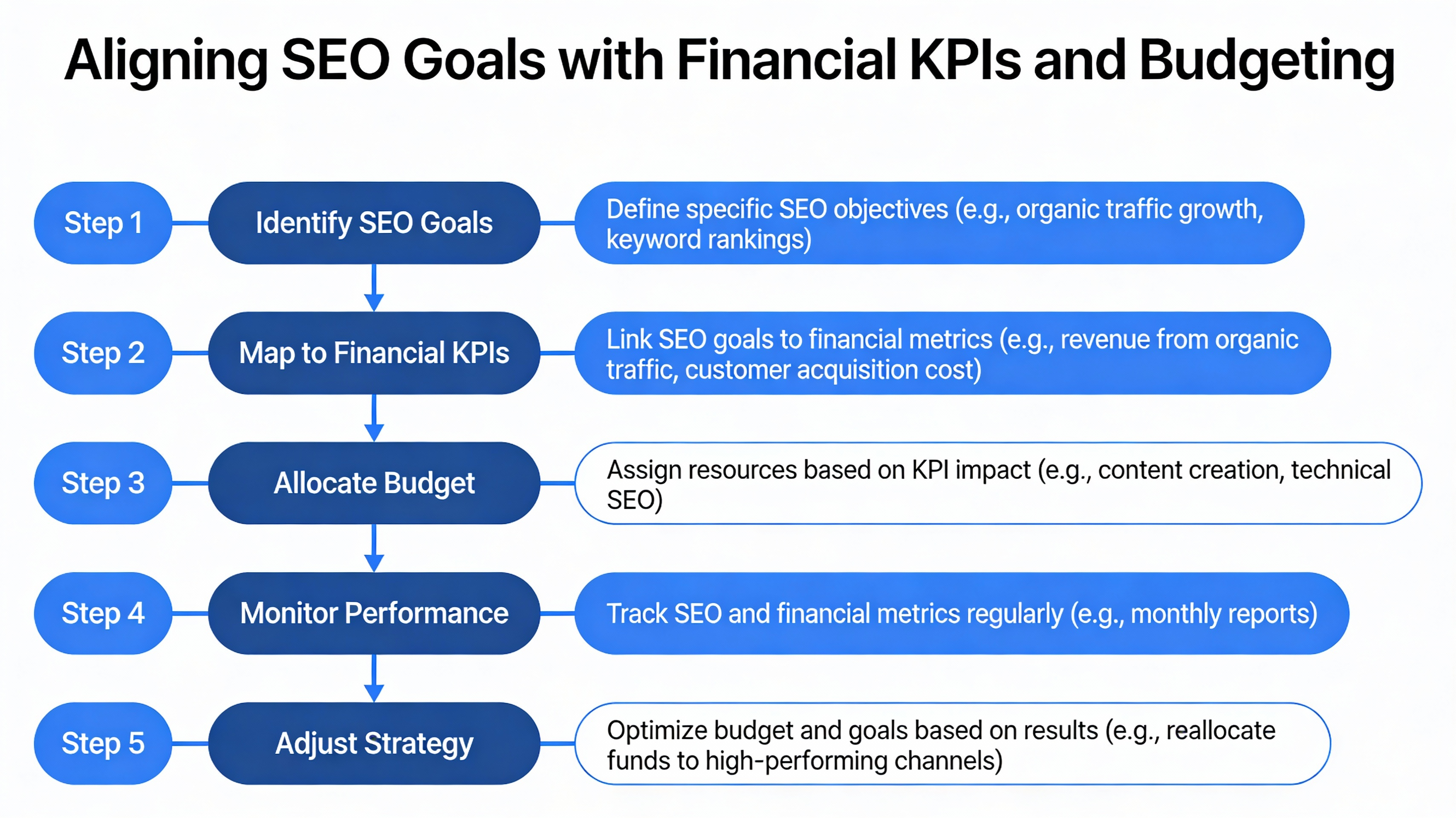
Aligning SEO goals with KPIs is the first step toward gaining executive-level buy-in for search initiatives. Finance leaders need to see how organic traffic translates into measurable Customer Acquisition Cost (CAC) and Lifetime Value (LTV). When these metrics are clear, the marketing department becomes a strategic partner in long-term business growth.
Use the Articfly pricing calculator to estimate the potential savings compared to traditional content methods. Following a finance-focused KPI guide from Deloitte can help ensure your metrics meet professional standards.
CFO Audit Checklist for Marketing Spend
- Identify the total spend on paid media versus organic channels.
- Calculate the historical Cost Per Acquisition for each primary channel.
- Assess the residual traffic value of content created over the last 12 months.
- Compare internal labor hours for content production against AI-automated alternatives.
- Evaluate the projected Lifetime Value of customers acquired through organic search.
Aligning SEO Goals with Financial KPIs
Mapping traffic to revenue helps CFOs understand the direct financial impact of organic growth on the balance sheet. By connecting search performance to actual sales data, teams can justify ongoing investment in high-quality content. This alignment ensures that the SEO strategy directly supports the company's broader financial objectives.
Budget Allocation Framework
Suggested budget percentages for SEO typically range between 10% to 20% of the total marketing spend for high-growth firms. This allocation allows for a healthy balance between immediate lead generation and long-term brand equity building. Scaling this investment based on performance data ensures minimal financial risk for the organization.
Measuring Success: Metrics That Matter to Finance
Metrics that matter to finance include conversion rates and the long-term ROI of specific content clusters. Unlike vanity metrics like "likes" or "shares," these figures provide a hard look at the efficiency of the marketing machine. CFOs value this data-driven approach to performance evaluation and capital allocation.
Key Takeaways
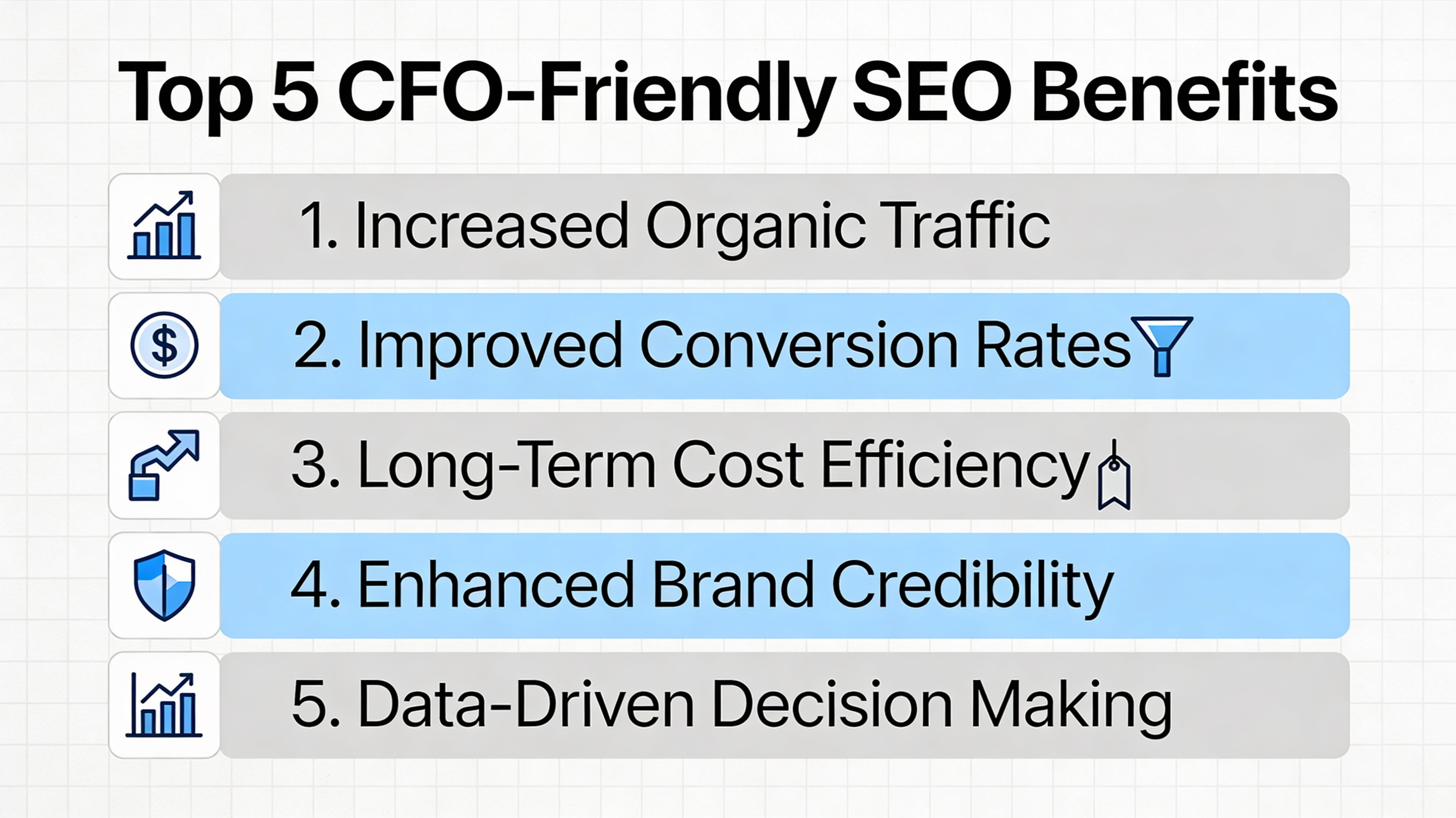
SEO delivers predictable growth that is far more sustainable than traditional paid channels that require constant funding. By integrating AI automation, companies can slash production costs while increasing both the quality and quantity of their output. Aligning these efforts with core financial KPIs ensures that search remains a top priority for the C-suite.
- SEO provides long-term, compounding returns that outlast paid advertising.
- AI tools like Articfly significantly reduce the labor hours required for content production.
- Successful implementation requires mapping search metrics directly to financial KPIs like CAC and LTV.
Refer to our downloadable one-pager for a summary of these points to share with your executive team.
FAQ

Commonly asked questions regarding the financial impact of SEO often revolve around timing, cost, and comparative risk. Understanding these nuances helps stakeholders set realistic expectations and plan for sustainable success. Transparency in reporting and data is key to maintaining executive confidence in marketing spend.
How quickly can SEO impact revenue?While SEO is a long-term play, initial results can often be seen within 3 to 6 months of consistent effort. AI-powered tools can accelerate this process by allowing for faster content production and real-time optimization.
What is the typical cost per article with AI automation?AI automation can reduce the cost per article by a notable margin compared to traditional manual writing and agency fees. This efficiency allows teams to produce high-quality content at a fraction of the usual labor cost.
How does SEO compare to paid media in terms of risk?SEO is generally considered lower risk because the assets you build are owned by the company and appreciate over time. Unlike paid media, where costs can spike unexpectedly, organic traffic provides a more stable and predictable return.
Can SEO performance be tied directly to financial reporting?Yes, by using proper attribution modeling, companies can tie organic traffic and conversions directly to revenue figures. This allows SEO to be reported as a standard financial performance metric for the board.
For more detailed answers, visit the Articfly FAQ page or consult a reputable SEO ROI analysis.
Next steps for marketing spend

Schedule a 15-minute ROI demo with Articfly to see exactly how automated content can transform your marketing efficiency. We offer a free SEO audit tailored specifically for finance teams to identify immediate savings and growth opportunities. Review a case study of a CFO-led SEO transformation to see the results in action.