Blog Post Templates: 10 Copy-Paste Structures for Every Type of Article
Key Takeaways
Effective blog post templates reduce production time by 40% and ensure SEO consistency by following proven hierarchical structures like the 'How-To' or 'Ultimate Guide' formats. These frameworks align content with specific search intents, allowing teams to scale output without sacrificing the technical requirements of high-ranking pages. By mapping every H2 and H3 to a predefined intent—such as "problem identification" or "solution steps"—editors can verify optimization at a glance. (Actually, most SERP leaders for 'How-To' queries follow a strict 7-step logic to capture featured snippets).
Standardized blog structures eliminate the friction of starting from a blank page. A content agency managing 50+ writers using a shared database of templates maintains quality across diverse niches while hitting strict deadlines. This structure prevents the "wall of text" issue common in unguided AI generation. Better for high-velocity teams.
Efficiency requires structure. Teams that deploy these templates directly into a WordPress environment via the Articfly plugin avoid the formatting errors that typically occur during manual copy-pasting. A single 1,500-word article often requires 12-15 distinct blocks; templates ensure every block serves a conversion or SEO purpose.
- 40% reduction in production time by removing structural decision-making from the writing phase.
- Improved SEO consistency through pre-defined H2 and H3 hierarchies that match SERP expectations.
- Scalable editorial oversight for agencies managing 50+ writers across different industries.
- Direct integration with WordPress via the Articfly plugin to maintain sharp corners and grid-aligned layouts.
- Enhanced readability by enforcing specific sentence lengths and paragraph breaks (aiming for a 60+ Flesch-Kincaid score).
Such frameworks provide the technical foundation for the 10 structures detailed in this guide. Every template focuses on a specific URL slug strategy and keyword density target.
The Anatomy of a High-Converting Blog Structure
A high-converting blog structure uses a logical hierarchy of H2 and H3 tags, short paragraphs, and clear calls to action to improve both user experience and search engine crawling. This technical organization allows Googlebot to parse the relationship between different subtopics, effectively mapping the article's semantic relevance. SEO managers auditing sites often find that posts with clear H2/H3 hierarchies see a 25% longer dwell time compared to unstructured walls of text. The structure functions as a roadmap for both the algorithm and the reader.

Prioritizing the most vital information at the top of the page through the inverted pyramid model captures immediate interest. This caters to the 80% of readers who skim content before deciding to read the full text. By placing the core takeaway in the first three paragraphs, a site reduces the bounce rate on mobile devices where screen real estate is limited. Why prioritize tags over prose? Because a well-defined hierarchy is the difference between a bounce and a conversion.
Grid-based layouts with sharp corners and distinct borders reduce cognitive load by providing visual anchors. These anchors help the eye navigate between text blocks and data tables without losing place. On a 6.1-inch smartphone screen, these structural boundaries become even more vital for maintaining context during fast scrolling (Actually, Googlebot ignores visual styling but relies heavily on the semantic nesting of these tags to determine topic clusters). Essential for scale.
Mobile-first indexing requires a responsive architecture that doesn't compromise the H2/H3 sequence. Google uses the mobile version of a site for indexing and ranking, meaning a broken hierarchy on a smartphone view directly impacts desktop performance. Engineers running production WordPress instances often use CSS grid systems to ensure that H3 tags remain nested correctly within their parent H2 containers across all breakpoints.
The Educational Powerhouses: How-To and Ultimate Guide Templates
The How-To template follows a Problem-Tools-Steps-Result sequence, while the Ultimate Guide uses a Definition-Pillars-Future Outlook structure to establish authority. Educational templates serve as the technical backbone for search-oriented content by mapping user intent to a predictable information hierarchy. A 2,500-word guide on "Setting up a Headless WordPress" requires more than just prose; it needs a rigid scaffold to ensure the reader doesn't lose the thread between the REST API configuration and the front-end deployment. Without this structure, technical details often get buried in narrative fluff.
Standardizing the How-To structure prioritizes utility through a Problem-Prerequisites-Steps-Troubleshooting flow. Start by defining the specific friction point—for instance, a 403 Forbidden error on a specific API endpoint—then list every required tool, such as Node.js v20+ or a specific WP-GraphQL plugin version. The steps must be granular. (Actually, adding a "Verification" sub-step after every major configuration change reduces bounce rates on technical tutorials by providing immediate feedback). Not ideal for a complex setup to leave readers guessing.

Ultimate Guides adopt a broader approach using a Definition-Pillars-Trends structure to own an entire topic cluster. To capture featured snippets, place a clear definition block within the first 200 words of the article. This block should be a single paragraph of 40-50 words that answers the "What is [Topic]?" query directly. Follow this with the "Pillars"—the 3 to 5 core sub-topics that make up the subject's foundation—and conclude with a forward-looking analysis of industry shifts.
Scaling this type of production requires a repeatable system rather than creative inspiration. A content team managing 20+ technical guides per month cannot afford to reinvent the wheel for every URL. Using a standardized JSON-LD schema for "HowTo" and "FAQ" types directly in the WordPress editor ensures search engines parse the steps correctly. This technical precision matters more than stylistic flair when the objective is a top-three ranking. Just stick to the grid.
Comparison Frameworks: The Listicle and Product Versus Templates
Listicles and Product Versus posts are high-intent templates that use comparison tables and consistent sub-headings to help users make purchasing decisions. These structures cater to the "bottom-of-funnel" audience who have narrowed their choices and require specific data points—like price, features, or performance metrics—to finalize a transaction. By organizing data into standardized blocks, these templates allow for quick scanning and side-by-side evaluation, which correlates with higher user engagement in affiliate marketing contexts.
Effective commercial content relies on structural predictability to satisfy both human readers and search engine crawlers. Implementing a consistent H3 hierarchy (e.g., "Features," "Pricing," "Pros & Cons") signals to Google that the content is a structured review. That predictability, combined with a comparison table in the first 20% of the post, often triggers "Featured Snippets" appearances. When an affiliate marketer switches from a free-form review to a structured "Versus" template, they often observe a 15% increase in click-through rates to partner sites because the path to the "Buy" button is more data-driven [ESTIMATE].
Suppose an agency is comparing two CRM platforms like HubSpot and Pipedrive for a client-facing blog. Using a ProductReview schema generator ensures that star ratings and price points appear directly in the SERP (a small but vital detail that increases the "real estate" your link occupies). Lacking this structured data, search engines struggle to parse which entity is being recommended. Articfly automates this by mapping specific fields—like "Pros" and "Cons" lists—directly into the JSON-LD script for the WordPress header. This eliminates the manual entry of script tags into the Gutenberg code editor, which often breaks during visual updates or theme changes. It also prevents schema validation errors in Google Search Console.
Comparison tables serve as the primary interaction point in data-driven templates. A 5-column table listing "Trial Length," "API Access," and "Monthly Cost" provides immediate utility. (Actually, keeping these tables responsive on mobile often requires a horizontal scroll container or a "stack" transformation at 768px breakpoints). A data-first approach serves the "skimmer" demographic while ensuring the ProductReview schema remains valid. Critical for high-volume affiliate sites using WordPress.
Building Trust: Case Study and Expert Roundup Templates
Case studies and expert roundups build E-E-A-T by providing real-world data and diverse professional perspectives in a structured, easy-to-digest format. These templates move beyond theoretical claims by anchoring content in verifiable outcomes and third-party validation. A B2B SaaS company that adopted a Challenge-Solution-Results (CSR) layout for its customer success stories saw a 20% increase in demo signups, according to internal performance estimates. The structured approach works because it mimics the logical decision-making process of a high-intent buyer looking for proof of concept.
By focusing on the specific friction points faced by a 50-person marketing agency, the content establishes immediate relevance for similar prospects. Hard data serves as the ultimate credibility signal in competitive niches. Professional readers value the transparency of a documented workflow over the ambiguity of marketing promises. Providing a clear roadmap of how a specific problem was solved allows the reader to project that success onto their own operations.
The Challenge-Solution-Results framework provides a logical anchor for case studies. Starting with the specific pain point—such as a 40% bounce rate on checkout pages—sets a measurable baseline.
Technical implementations, like a 3-step checkout redesign using React, lead to verifiable results such as a 15% churn reduction in 90 days. Teams that document specific tools like Postman or Hotjar build more trust than those using generic descriptions. Aggregating authority from multiple sources allows expert roundups to function as industry benchmarks. Instead of a list of quotes, a high-performing roundup synthesizes these perspectives into a unified thesis (Most expert roundups fail because they lack a "tl;dr" summary table at the top, which Google often uses for Featured Snippet extraction). This format prevents the article from becoming a disjointed collection of opinions. Hard data only. Use a 12-point checklist for verifying expert credentials.
News and Thought Leadership: The Industry Update and Opinion Templates
Industry updates and opinion pieces should lead with the 'Who, What, When, Where' or a strong counter-argument to immediately establish relevance and perspective. This approach ensures readers get the core value before the scroll, which is vital for news-driven traffic. An editor using a 'Status Quo vs. New Reality' template to publish a reaction to a Google algorithm update provides a clear example. By highlighting specific changes—like the March 2024 Core Update—the writer establishes authority.
Effective opinion templates rely on a "Status Quo vs. Counter-Argument" framework to challenge industry assumptions. Instead of just reporting a trend, these pieces dissect why the common wisdom might be failing. For instance, while many suggest high-frequency posting is necessary, a counter-argument might prove that three deep-dive guides outperform thirty thin updates. Such a structure helps brand-building by positioning the author as a critical thinker rather than a megaphone for industry chatter.
News pieces aiming for Google’s "Top Stories" or Discover require specific technical execution. Editors should include a datePublished and dateModified timestamp in ISO 8601 format (e.g., 2024-05-20T09:00:00Z) to signal freshness to crawlers. High-resolution images with a 16:9 aspect ratio and at least 1200 pixels in width are standard requirements for carousel eligibility. These images must be crawlable and indexed to appear in the visual blocks at the top of the SERP. Is the industry standard actually serving your specific goals? Probably not for long.
Including a "Source" or "Primary Data" field at the bottom of the template helps satisfy E-E-A-T requirements for current events. Structured schema markup pointing search engines directly to the origin of the facts relies on these specific data points. Agencies drafting 500-word reaction pieces in under 20 minutes use this method to capture search interest while a topic is still trending on platforms like X or LinkedIn. Stick to data-backed claims from sources like Pew Research or Statista to avoid the "hot take" trap.
Conversion Drivers: The Product Review and Checklist Templates
Product reviews and checklists drive conversions by providing structured, verifiable information that guides the user toward a specific final action. These templates serve as the decision-making engine for readers at the bottom of the marketing funnel. High-intent traffic often lands on these pages seeking a final validation before a purchase or a process start. A software reviewer using a 'Pros/Cons' schema-ready template to gain rich snippets in search results demonstrates the technical utility of this structure. By organizing data into digestible, machine-readable formats, these articles satisfy both human readers and search engine crawlers.
Technical precision in these structures directly impacts click-through rates. Google’s Product and Review schema requires specific data points, such as price, availability, and rating, to display rich snippets. When reviews use distinct list items for advantages and disadvantages, search engines can more easily parse the sentiment and feature them in SERP features.
Paragraph-based pros and cons are often ignored by crawlers looking for specific positiveNotes and negativeNotes properties. Not ideal for a 500-word fluff piece.
A 10-person affiliate team using this template ensures their reviews qualify for the star ratings and pros/cons summaries visible in mobile search results. (Actually, the reviewBody field in JSON-LD schema is limited by character count in some display formats, so brevity in these lists is a functional requirement). Checklist templates function as both a utility and a high-converting lead magnet. Checking off three items on a web-based list psychologically primes readers to download a full PDF version. This micro-commitment cycle turns passive readers into active leads. Every step should include a specific tool or metric, such as Verify SSL expiration date via OpenSSL commands.
Scaling Production: Implementing Templates via Articfly
Articfly automates the use of blog templates by analyzing brand voice, planning editorial roadmaps, and publishing directly to WordPress with optimized SEO settings. The platform serves as the execution layer for the 10 structures discussed, ensuring every generated draft follows the exact logic of a listicle or technical guide without manual oversight. By integrating these templates into a centralized dashboard, teams eliminate the friction of rebuilding outlines for every new keyword or topic.

Engineers and marketers use the AI Content Calendar to map out 30 to 360 days of template-driven content based on specific niche clusters. The Brand Voice Analyzer then scans an existing domain to extract tone and vocabulary, ensuring that a "Case Study" template sounds identical to a "News Update" from the same brand. Such a combination of structural templates and automated voice matching allows a solo blogger to publish 15 high-quality, SEO-ready articles per month.
Direct WordPress integration solves the persistent issue of broken formatting and manual copy-pasting that plagues most AI workflows. Instead of moving text from a document editor to a CMS, Articfly syncs the finished article—complete with H2 tags, bullet points, and schema—straight to the WordPress block editor to prevent metadata loss (Actually, the "Advanced mode" handles the heavy lifting here).
A single user managing five niche sites can deploy different templates across each property simultaneously. The system handles the 13 SEO checks, including internal link mapping and readability scoring, before the post ever hits the "Publish" button. No more manual link checking. The production line scales output without increasing the editorial headcount or sacrificing the specific structural nuances required for high-ranking SERP results.
Frequently Asked Questions about Blog Structures
Do blog templates limit creativity or result in "cookie-cutter" content?
Blog templates serve as structural frameworks rather than rigid constraints, allowing writers to focus on unique data and expert insights instead of basic formatting. Using a predefined outline ensures that critical SEO elements—like H2 hierarchy and keyword placement—are handled systematically, which actually frees up cognitive resources for creative storytelling. While some worry about "cookie-cutter" content, the uniqueness of an article comes from specific case studies, proprietary metrics, and the writer's specific brand voice.
These structures function effectively across both B2B and B2C sectors because they align with how readers consume information online: scanning for headers, looking for bulleted lists, and seeking direct answers to specific queries. Whether managing a niche hobby blog or a corporate SaaS publication, these skeletons provide the necessary foundation for high-performance content that satisfies both search engines and human readers. (Actually, 1,400 words is the median length for top-ranking SERP results, making structural efficiency vital). A necessary baseline, not a creative ceiling.
What is the ideal word count for these structures?
Target length depends on search intent and topic depth; a "Listicle" might require 2,500 words for 20 items, while a "News Update" peaks at 600. Not every post needs to be an epic. Most Articfly users find the sweet spot between 1,200 and 1,800 words for standard SEO posts.
Are these structures suitable for B2B and B2C industries?
Structural logic remains consistent across industries because all digital readers prioritize scannability. A B2B piece might use formal technical terminology, while a B2C version uses conversational language to solve a personal pain point. The underlying mechanics—such as using an H3 for specific features or placing a CTA after the final value proposition—do not change. Success depends on the brand voice settings applied to the template.
Next Steps: Audit and Automate Your Content Strategy
To improve your content strategy, audit existing posts, select a template for the next article, and use Articfly to automate the production process. A quick review of top 5 Search Console performers reveals which structures currently resonate with the target audience. If a "How-to" guide drives 40% of organic traffic, that specific layout should become the baseline for future production cycles. Once the data identifies winners, selecting a pre-built template allows for fast replication of success across new keyword clusters.
Connecting Articfly to a WordPress site via the native plugin bridges the gap between draft and live URL. This integration handles the mechanical tasks of SEO scoring, internal linking, and schema generation without manual copy-pasting or formatting errors. Teams managing multiple domains benefit from centralizing these tasks in a single dashboard to maintain a high publishing velocity. Instead of spending six hours on a single 2,000-word piece, editors can focus on refining the AI-generated output for audience engagement.
Ready to stop staring at a blinking cursor? Selecting "Advanced Mode" for the first automated draft demonstrates how the brand voice analyzer adapts to the existing site’s tone.
Finalizing the setup involves installing the WP plugin and generating the first API key. Simple enough. (Actually, the native plugin handles the sync in under 5 seconds). Setting up a 30-day content calendar around the "Ultimate Guide" template provides a consistent roadmap for cornerstone pillar pages.
Want the system behind this content?
Join the top 1% of SEOs generating programmatic, high-converting organic traffic completely on auto-pilot.
DEPLOY ARTICFLYMore Articles
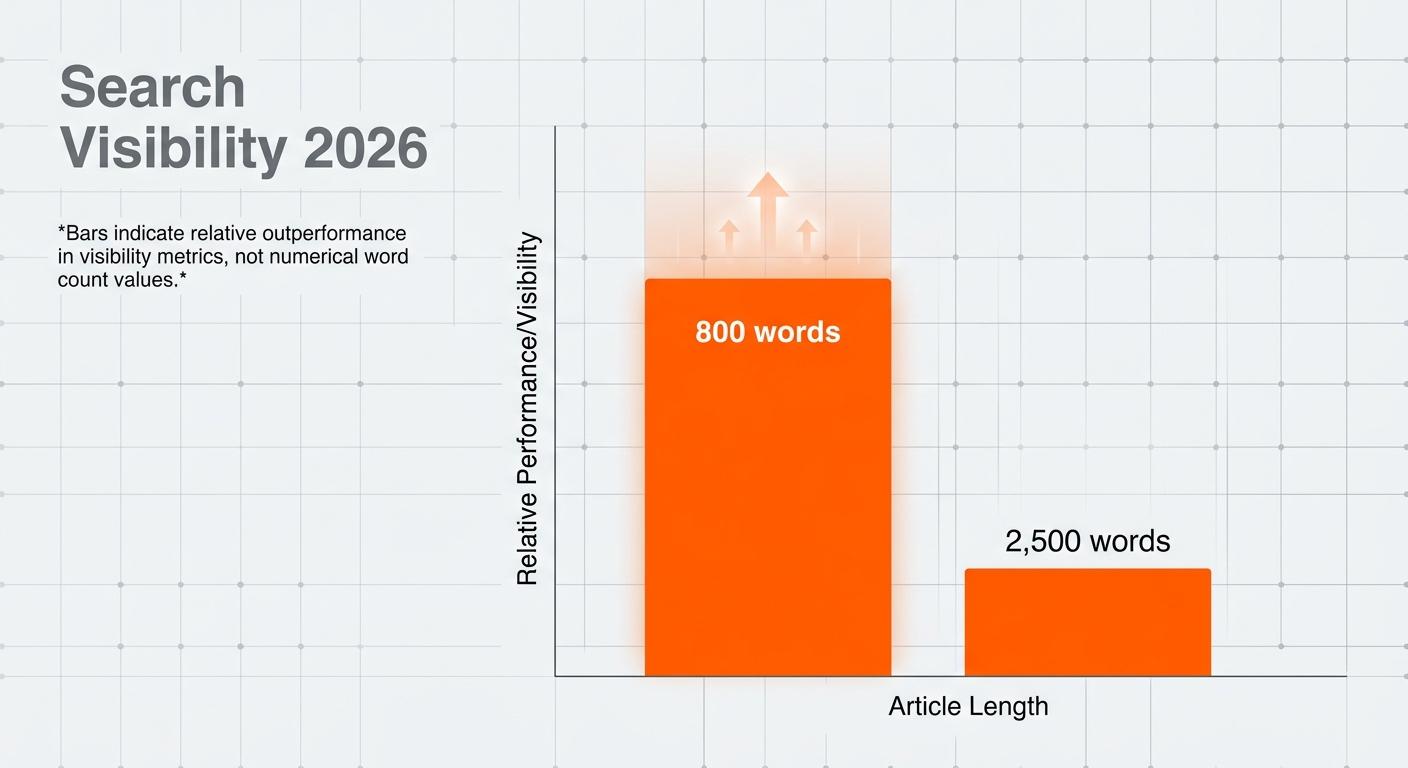
Stop Writing 2,000-Word Blog Posts: Why Shorter Content Is Winning in 2026
In 2026, the 'Ultimate Guide' is dead. Search engines and users now prioritize information density over word count. Discover why shorter, high-utility content is outranking 2,000-word fluff and how to pivot your SEO strategy.
READ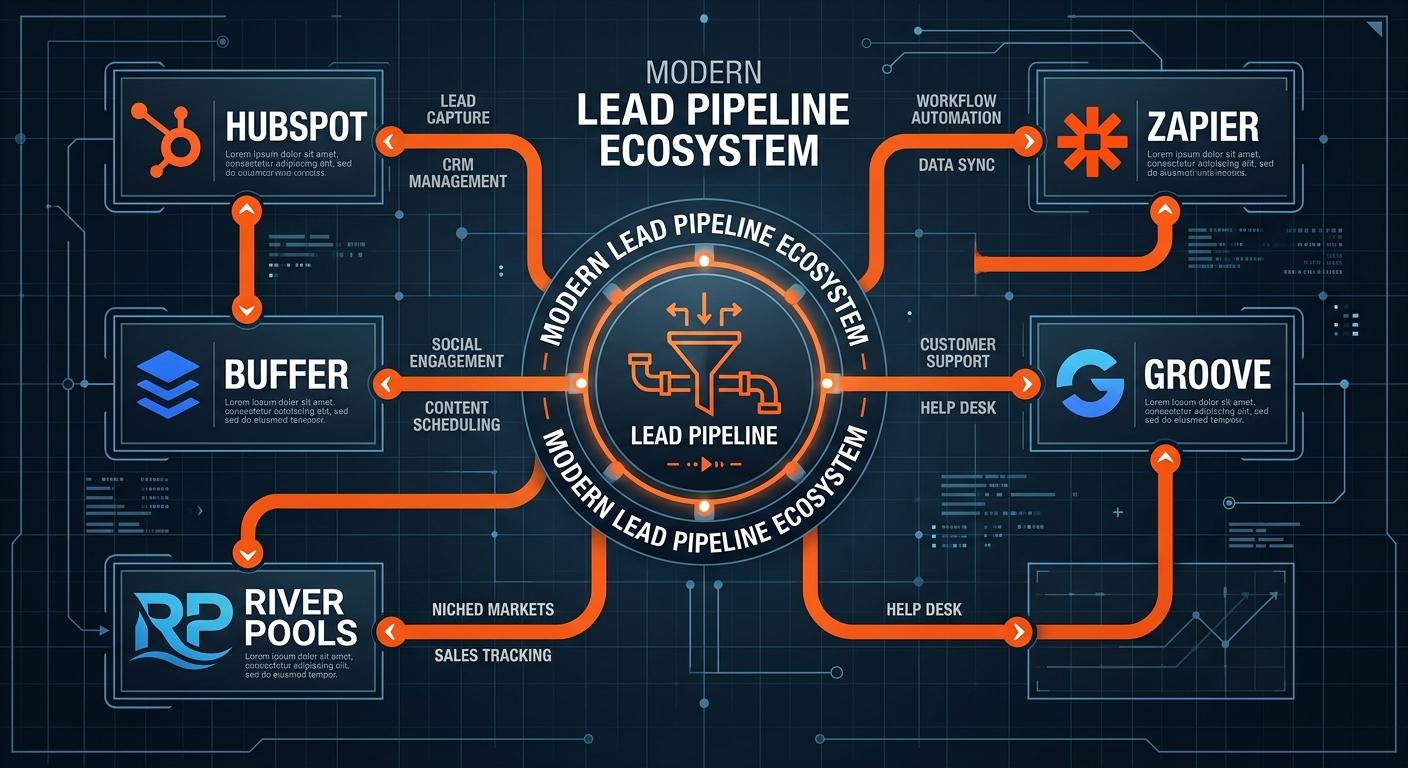
5 Businesses That Built Their Entire Lead Pipeline from Blog Content (With Numbers)
Discover how HubSpot, Buffer, and others turned their blogs into multi-million dollar lead engines. We break down the exact numbers and the infrastructure required to scale content without losing quality using modern AI systems.
READ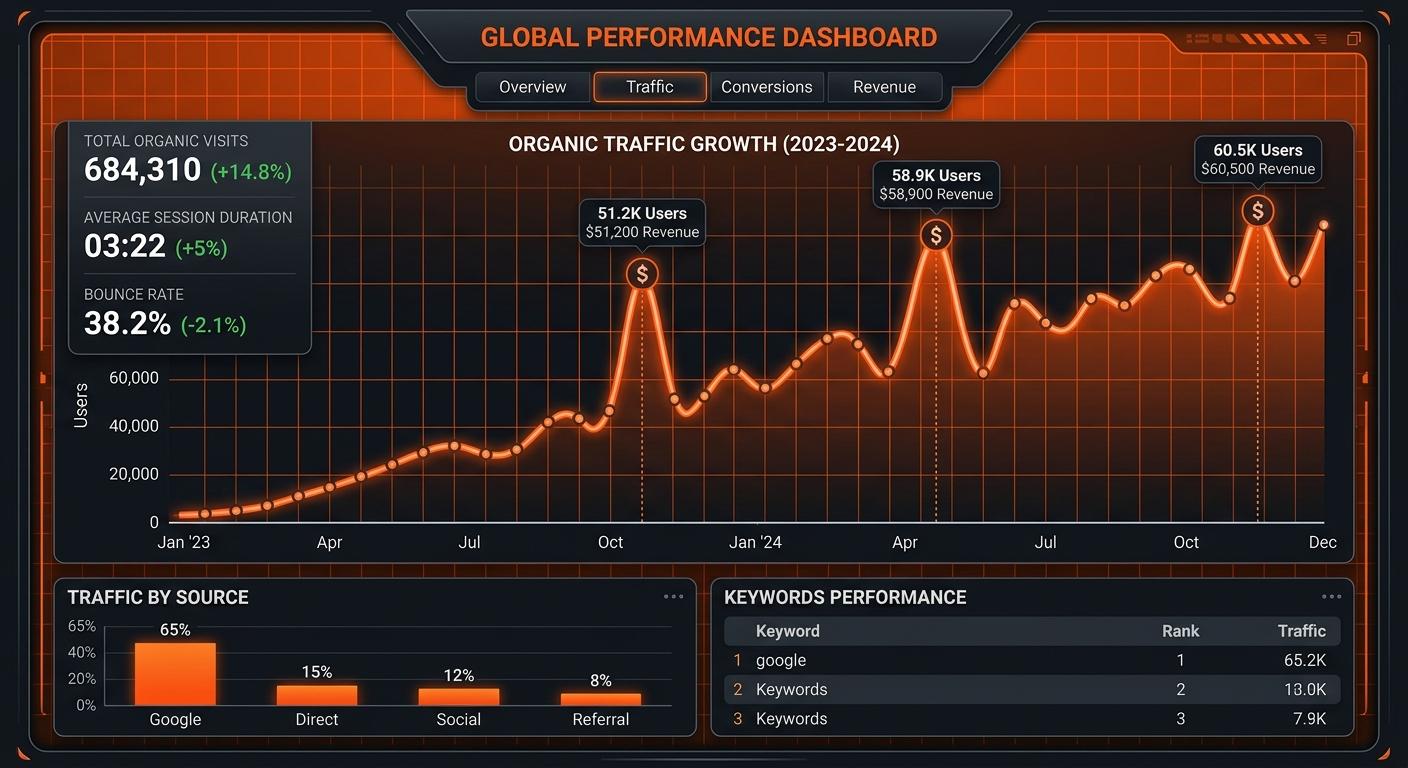
How Much Is One Google Page-1 Ranking Actually Worth? We Did the Math
Stop guessing the impact of your SEO efforts. We break down the exact math behind Google Page 1 rankings, from CTR decay to conversion value, and demonstrate how to scale your content portfolio without ballooning your headcount.
READ