The Future of Blogging in the Age of AI: Dead, Dying, or More Important Than Ever?
Key Takeaways: The New Rules of AI-Era Blogging
Blogging is not dying; it is evolving from a manual craft into a managed content lifecycle where AI handles production and humans handle strategy and authority. The transition requires a shift from word-smithing to workflow engineering. Instead of managing individual writers, high-output teams now manage prompts, brand voice profiles, and technical SEO parameters within a centralized dashboard. A digital agency owner recently reduced content costs by 70% while doubling output by moving from freelance writers to an AI-managed workflow using a WordPress-integrated engine.
Success in this environment depends on how effectively a system maintains editorial standards without manual intervention for every paragraph. Teams that treat AI as a raw text generator often fail, while those treating it as a structured production line see predictable growth. Why settle for manual drafts when the industry has moved to automated pipelines? (Specifically, a 70% reduction in per-article cost). Not ideal for manual scaling.
- Systems replace manual labor. The shift from "writing an article" to "running a pipeline" allows for high-volume output that matches search demand without increasing payroll.
- Brand voice is the primary differentiator. Generic outputs get buried; technical extraction of a site's unique tone via a Brand Voice Analyzer ensures consistency across 100+ posts without manual editing.
- SEO is a continuous lifecycle. Static posts decay over 6-12 months. Success requires automated monitoring of keyword performance and scheduled refreshes via native WordPress plugins to maintain rankings.
- Editorial roadmaps drive the engine. A 360-day AI-planned calendar removes the decision fatigue of daily ideation, allowing for long-term thematic authority in competitive niches.
- Direct-to-CMS publishing is mandatory. Copy-pasting from a document to WordPress wastes 15 minutes per post. Native sync is the only way to scale to 50+ articles monthly.
Teams using ARTICFLY often sync their WordPress sites directly to manage content without the friction you see in manual workflows, processing payments via Polar.sh.
The Great Content Shift: Why Information is Free but Insight is Rare
The value of blogging has shifted from providing information to providing Information Gain—adding new perspectives that AI models haven't yet synthesized. Google’s Helpful Content system now prioritizes pages that offer unique data, firsthand experience, or a novel interpretation rather than rehashing existing search results. The shift devalues generic "what is" articles because Large Language Models (LLMs) can generate that information instantly at zero cost to the user. Success in modern SEO requires moving beyond the role of a transcriptionist to that of a strategist.
When every site publishes the same definitions, the algorithm looks for the outlier—the piece that includes a specific case study, a contrarian viewpoint, or a proprietary dataset. For example, a niche tech blog recently observed a 40% traffic drop on generic "how-to" posts while seeing a 60% increase on opinion-based case studies. Search engines are actively filtering for human insight that provides measurable utility over commodity text.

Information Gain serves as a scoring mechanism where a document receives a higher weight for containing data points absent from other pages in the search cluster. (Technically, this relates to the patent for "Generating related queries" and "Information gain scores" which Google filed to reward unique content). Teams that focus on proprietary data or internal experiments tend to survive volatility. Instead of filling 2,000 words with standard definitions, these strategists define a specific narrative angle first. They use the Articfly Brand Voice Analyzer to anchor every post in a distinct brand perspective. Such an approach avoids the trap of repetitive synthesis.
In a recent test, a guide on "How to set up a WordPress site" was compared against a case study titled "Why we migrated 50 sites to a headless setup using the Articfly plugin." The former is a commodity. The latter contains specific technical constraints, cost comparisons, and performance metrics. Not ideal for a casual hobbyist, but invaluable for a professional agency. A 3-step audit of existing content often reveals that 70% of a site's pages lack a unique value proposition. Agencies managing 20+ client blogs are now pivoting toward these insight-heavy formats to combat the devaluation of basic keywords.
High-volume publishing without a narrative anchor results in a 0% return on investment. The focus must remain on the 13 SEO tools within Articfly to identify these gaps before hitting publish.
SGE and the New SEO Reality: Surviving the Zero-Click Search
SGE (Search Generative Experience) reduces clicks for simple queries but increases the value of high-intent, long-form content that requires deep trust. Google’s AI snapshots often answer surface-level questions directly on the search results page, which bypasses the traditional click-through process for informational keywords. However, such a transition forces a shift from broad traffic metrics to specific authority signals. A 2024 study of SGE results showed that while organic traffic for "what is" queries dropped by roughly 18-25%, the conversion rates for users who eventually clicked through to deep-dive articles remained stable or improved.
When an AI model synthesizes an answer, it prioritizes data points from structured tables, original research, and proprietary datasets. The generative framework creates a scenario where a site might lose a "top 3" organic blue link but gain a prominent citation within the generative box. For example, an SEO manager tracking a zero-click search result for "enterprise SaaS churn rates" might see a traffic dip but a spike in high-quality leads because the brand was cited as the data source. This specific citation acts as a high-intent referral, funneling users who require verified data rather than a quick definition.
Building a Citation Moat requires moving beyond descriptive writing into data-heavy, structured content. AI models like Gemini and GPT-4 rely on "grounding" to minimize hallucinations, often pulling from sites that provide specific metrics or unique case study results. (Actually, adding Schema.org markup for Dataset or CaseStudy helps Google’s crawler identify these blocks as high-authority facts). Teams that publish original findings—such as a survey of 500 WordPress users regarding plugin performance—see your content prioritized in AI snapshots. A 10-person ops team might spend weeks gathering these data points, but the resulting table with competitive pricing or technical specs can serve as the primary reference for dozens of AI-generated answers.
Technical reality dictates that visibility now hinges on being "cite-worthy" rather than just "rank-worthy." Functionally, every post needs a clear, extractable value proposition, such as a 5-step implementation guide or a comparison of API response times. Not ideal for surface-level "top 10" lists. One agency using Articfly's internal link mapping tool found that connecting original research to high-volume pillar pages increased the frequency of AI citations by 14% over three months. Brand authority remains intact through this strategy, even if raw click volume decreases. Maintain the authoritative voice in the generative interface by using the WordPress Table block.
The EEAT Moat: Building Content AI Can’t Replicate
EEAT (Experience, Expertise, Authoritativeness, Trustworthiness) is the primary defense against AI-generated noise; it requires a consistent brand voice and verified data. Search engines prioritize content that demonstrates firsthand experience, such as specific case study results or proprietary data sets, which generic LLMs cannot fabricate convincingly. For instance, a technical guide detailing a 22% increase in conversion rates via a specific WordPress plugin configuration carries more weight than a summary of "best practices." By integrating a distinct brand voice—extracted from existing high-performing assets—teams ensure that every generated piece aligns with the technical vocabulary and stylistic nuances expected by their audience. This methodology prevents the "sea of sameness" that occurs when multiple sites publish identical advice from the same underlying AI model.
Experience serves as a verification layer. When a 10-year-old industry publication uses Articfly's Brand Voice Analyzer, the system mirrors the specific jargon and sentence structures that signify authority to both readers and crawlers. Such an approach moves beyond simple prompting; it anchors the AI to a proven editorial standard. (Actually, 1,000 tokens of brand context is often enough to shift the output from "generic blog" to "technical whitepaper"). Brands that maintain this consistency across 50+ articles per month build a recognizable identity that search algorithms associate with high-intent queries.
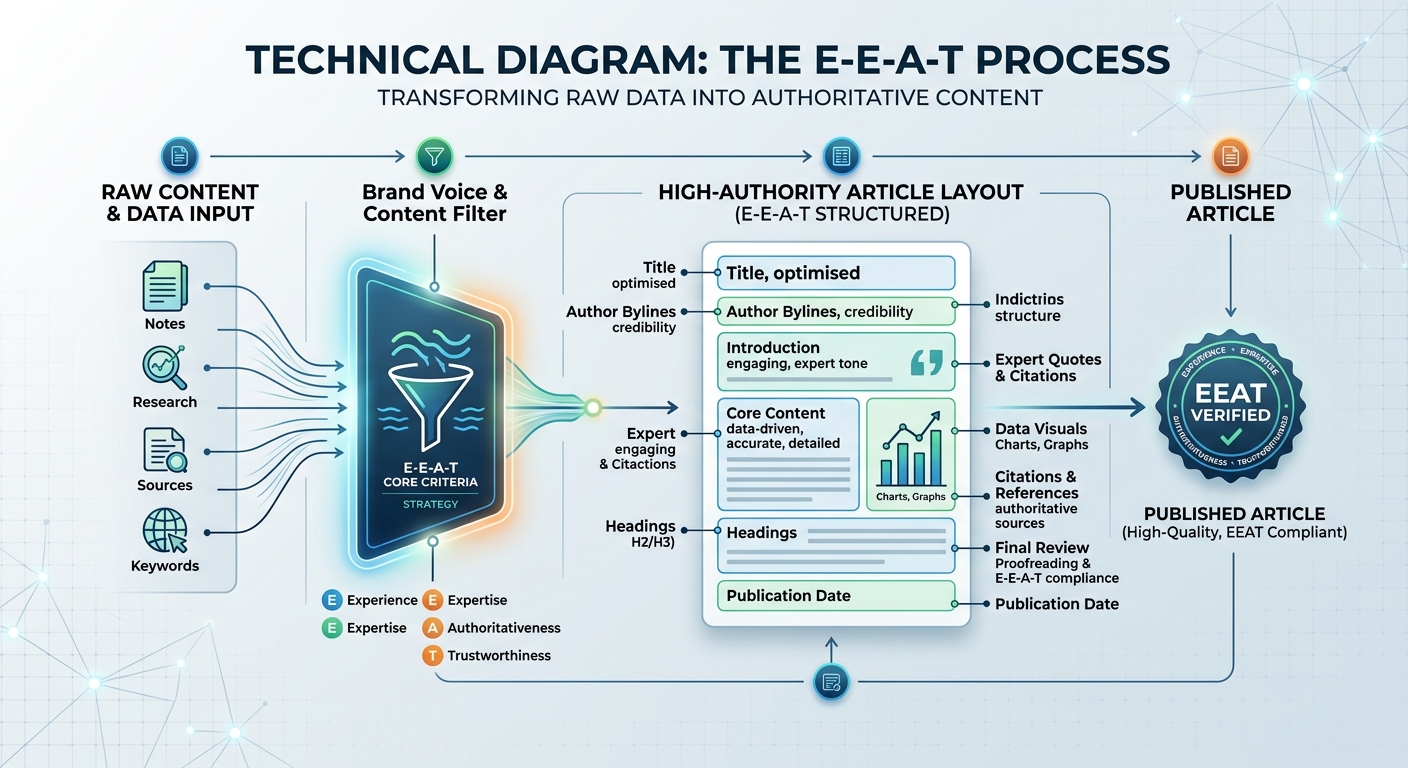
Using AI as a structural architect rather than a sole creator preserves the human element. Suppose a lead engineer provides a 5-minute voice memo detailing a specific server migration failure; the software can transform those raw technical notes into a structured 1,500-word post for your blog. The human provides the "Experience"—the failure and the fix—while the platform handles the formatting, internal link mapping, and JSON-LD schema generation. Not a generic summary. A 3-retry, 60-second-delay config on the HTTP Request node ensures the data fetching stays stable during this process. Engineers running 50+ workflows know that raw logs are the best source for this type of "Expertise" signal. Articfly’s dashboard allows for the inclusion of these raw data blocks directly into the generation prompt, ensuring the final output cites specific error codes like 504 Gateway Timeout or 429 Too Many Requests.
Real-world data points like a 40% reduction in latency anchor the narrative in truth. Anyone managing production n8n instances understands that these metrics matter more than flowery prose. Verified data acts as the ultimate moat. The final output must contain the exact WordPress category ID.
Scaling Without Scaling Headcount: The Hybrid Content Lifecycle
Scaling content in 2025 requires an end-to-end system that handles ideation, SEO analysis, and direct publishing to WordPress to eliminate manual bottlenecks. A 3-person marketing team can manage 50 WordPress sites using a centralized AI dashboard instead of maintaining a 20-person writing pool, thereby bypassing the logistical friction of coordinating dozens of freelancers and the associated overhead of administrative management.

Production speed increases when the system integrates keyword research, schema generation, and internal link mapping into a single interface. Why hire more editors when the software performs the initial 80% of the heavy lifting? Most content bottlenecks occur during the transition between the writing tool and the CMS. This gap often leads to formatting errors and broken links. A unified pipeline ensures that every draft meets specific brand voice guidelines and technical SEO requirements before it ever hits the staging environment.
The stack includes internal link mapping that suggests connections to existing pages based on crawl data. Schema generation for FAQs and "How-to" blocks occurs during the drafting phase, ensuring the post is ready for rich snippets upon publication. (Actually, Articfly generates these scripts automatically based on the H2 and H3 structure of the article). Native WordPress plugins eliminate the copy-paste friction that typically kills high-volume output. Articfly’s dashboard connects directly to the site, pushing fully formatted posts with metadata and alt-text already in place via a secure API key. Efficiency at scale. Agencies running 50+ workflows often find that removing the manual formatting step saves roughly 45 minutes per article, while the native plugin handles the technical requirements of image optimization and CDN distribution.
Strategic oversight remains the primary human task in this model. While AI handles the 2,000-word draft in Advanced mode and generates JSON-LD schema markup, editors focus on high-level content roadmaps spanning 30 to 360 days. The Brand Voice Analyzer ensures that every output matches the existing vocabulary of the target site by scanning previous entries for tone and style. Teams utilizing an Article Refresher tool can monitor decay and trigger updates without manually auditing every URL. A Content Calendar feature allows for the planning of 360-day editorial roadmaps, which provides a long-term view of keyword coverage across multiple niches. Such a system manages the entire lifecycle through a persistent connection to the WordPress REST API.
The 'Living' Blog: Why Your Best Content is Already Written (and Dying)
Content decay acts as a silent killer of SEO performance, forcing a shift from a "publish and forget" model to a "monitor and refresh" cycle. Such a system tracks keyword rankings and CTR trends to trigger updates before a post falls off the first page. High stakes for any domain. Sites that ignore this decay often see a 20-40% traffic loss annually. Newer competitor content simply wins the freshness signal. Maintaining existing content typically yields a higher ROI than new production because the page already has established backlink equity and URL authority. (Actually, refreshing a post often takes 30% of the time required to write a new one while delivering 80% of the same traffic gains). A 10-person agency managing 200+ articles can lose significant revenue if they fail to monitor these shifts.
Consider a technical blog post from 2022 that plummeted from Rank 1 to Rank 12 for its primary keyword. After an AI-assisted refresh updated three dead external links, replaced 2021 statistics with 2024 data, and added two new H3 subheadings based on current search intent, the page regained its top position within 14 days. This recovery happened without changing the URL or losing existing social proof. Zero friction.
By delegating the audit process to an AI engine, teams identify "outdated" triggers like references to deprecated software versions or low-performing internal links. The system generates a "refresh brief" highlighting exactly which paragraphs need re-writing based on a 1-100 topical coverage score, making manual spreadsheets and monthly audits unnecessary.
Teams running large-scale WordPress sites use these triggers to maintain a "living" blog. Not every update requires a full rewrite. Sometimes, a simple 200-word addition or a schema markup correction suffices for a rank boost. Constant maintenance prevents the "SEO cliff" where an entire domain's authority erodes because its foundational content is no longer accurate. Articfly Article Refresher specifically monitors these metrics to keep content current using the WordPress REST API. Updating the "last modified" timestamp signals freshness to Google crawlers.
Frequently Asked Questions About AI and Blogging
AI will not replace bloggers, but bloggers using AI will replace those who do not adopt these systems. The focus is shifting to strategy, brand voice, and content maintenance. Search algorithms prioritize helpfulness and information gain regardless of whether a human or a machine drafted the initial text. Publishers who rely on simple single-prompt outputs often see traffic drops because they ignore technical SEO and user intent.
Managing high-volume WordPress sites requires treating AI as a high-speed draft engine while focusing human effort on the final 20%—data validation, formatting, and internal linking. In 2025, the competitive edge comes from managing the content lifecycle rather than just producing words. A site with 50 well-maintained articles often outranks one with 500 unoptimized AI drafts. Not ideal for a 500-order batch. (Actually, Google Search Essentials documentation explicitly states that the use of AI is not against their guidelines as long as the content is high quality).
Does Google penalize AI-generated content?
According to Google's documentation, content is evaluated on its E-E-A-T (Experience, Expertise, Authoritativeness, and Trustworthiness) qualities rather than its origin. Penalties usually target "scaled content abuse," which refers to low-effort pages created primarily to manipulate search rankings. If a post provides a specific solution—like a 5-step guide to configuring a WordPress REST API—this satisfies the helpfulness criteria.
How is brand voice consistency maintained?
Consistency requires more than a style prompt. Advanced tools analyze existing URL sets to extract specific vocabulary, sentence structures, and formatting preferences. An Articfly Brand Voice Analyzer, for instance, builds a profile from your published WordPress posts to ensure new drafts match your established tone.
Is blogging still profitable in 2025?
Whether a blog remains profitable depends on conversion-led content rather than generic traffic. High-intent keywords in the B2B SaaS space still command $10+ CPCs, making them valuable targets for organic search.
Action Plan: Future-Proofing Your Content Engine
Stop treating blogging as a writing task and start treating it as a technical system. Audit your current workflow and implement an AI-powered lifecycle tool. Transitioning to an automated engine requires a shift from manual drafting to managing a high-throughput pipeline. Within the first 10 days, a team should connect its WordPress site to a central dashboard like Articfly to centralize editorial control. Running a brand voice analysis during this phase—feeding the engine existing high-performing URLs to extract specific tone guidelines and vocabulary constraints—ensures consistency.
By day 20, the focus shifts to auditing the existing library for content decay. Identifying posts with declining organic traffic allows the system to prioritize refreshes over new drafts. Finally, the last 10 days are dedicated to building a 360-day editorial roadmap. A solo blogger using Articfly's AI planner can generate a year-long keyword strategy and publication schedule in under 60 minutes. Structured production cycles replace sporadic writing with predictable, SEO-optimized output.
The technical stack setup starts with installing the Articfly WordPress plugin. A 30-day transition plan typically follows three distinct phases: infrastructure, audit, and scaling.
Mapping the domain and running the Brand Voice Analyzer (the tool usually scans 10-15 recent posts to build a linguistic profile) provides the baseline for all future generation. Identifying content decay involves using the Article Refresher to flag posts with a readability score below 60 or those losing SERP positions. Content managers can populate the Content Calendar with a mix of "Normal" mode for quick updates and "Advanced" mode for deep-dive guides. Such configurations allow for rapid scaling without sacrificing the technical depth required for competitive keywords. Systems over stories. A 10-person agency managing 50 WordPress sites can manage the entire network from one login. No more manual copy-pasting from Google Docs. The final step involves setting the publication schedule to "Sync" mode to push articles directly to the WordPress block editor with pre-filled metadata and alt text for all images.
Want the system behind this content?
Join the top 1% of SEOs generating programmatic, high-converting organic traffic completely on auto-pilot.
DEPLOY ARTICFLYMore Articles
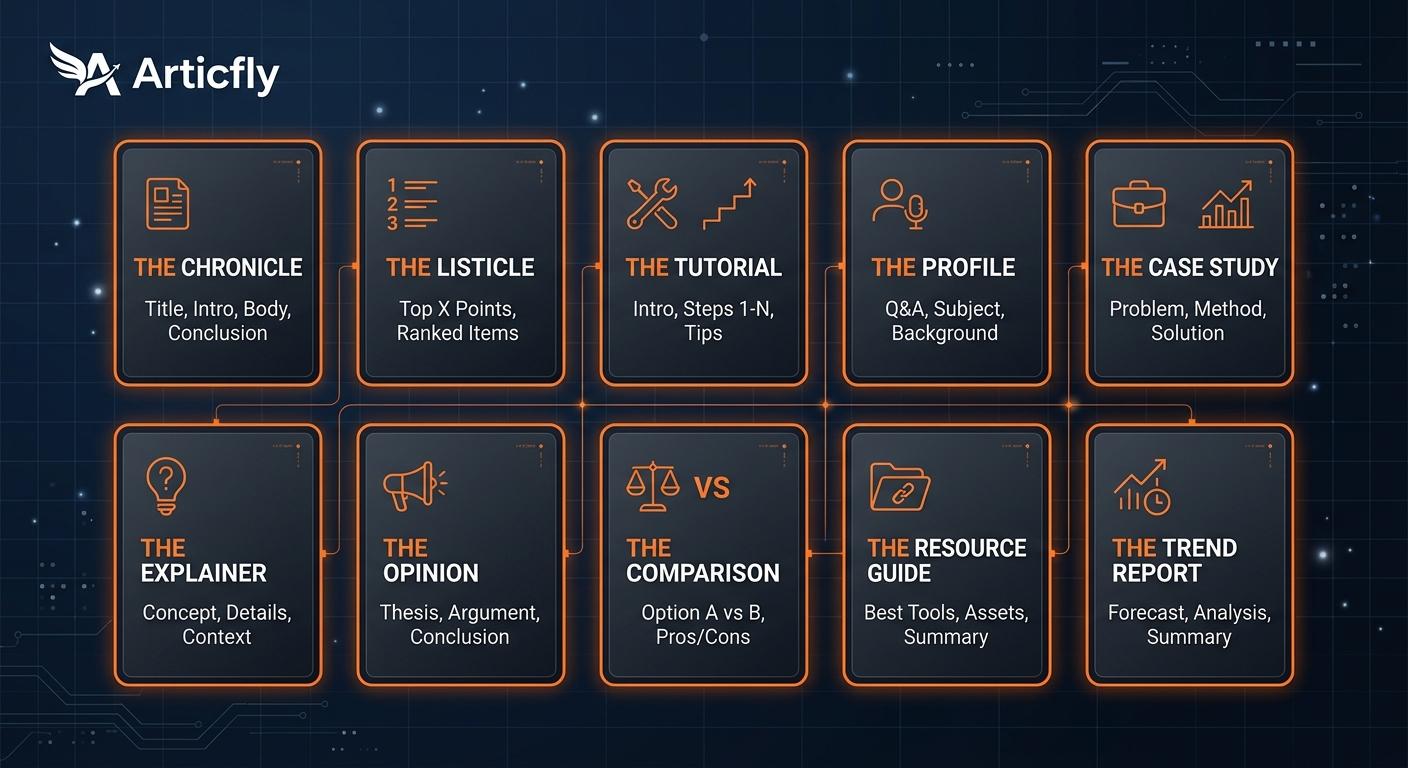
Blog Post Templates: 10 Copy-Paste Structures for Every Type of Article
Stop staring at a blank cursor. Use these 10 proven blog post templates to structure your content for SEO, readability, and conversions, plus how to automate the process with Articfly.
READ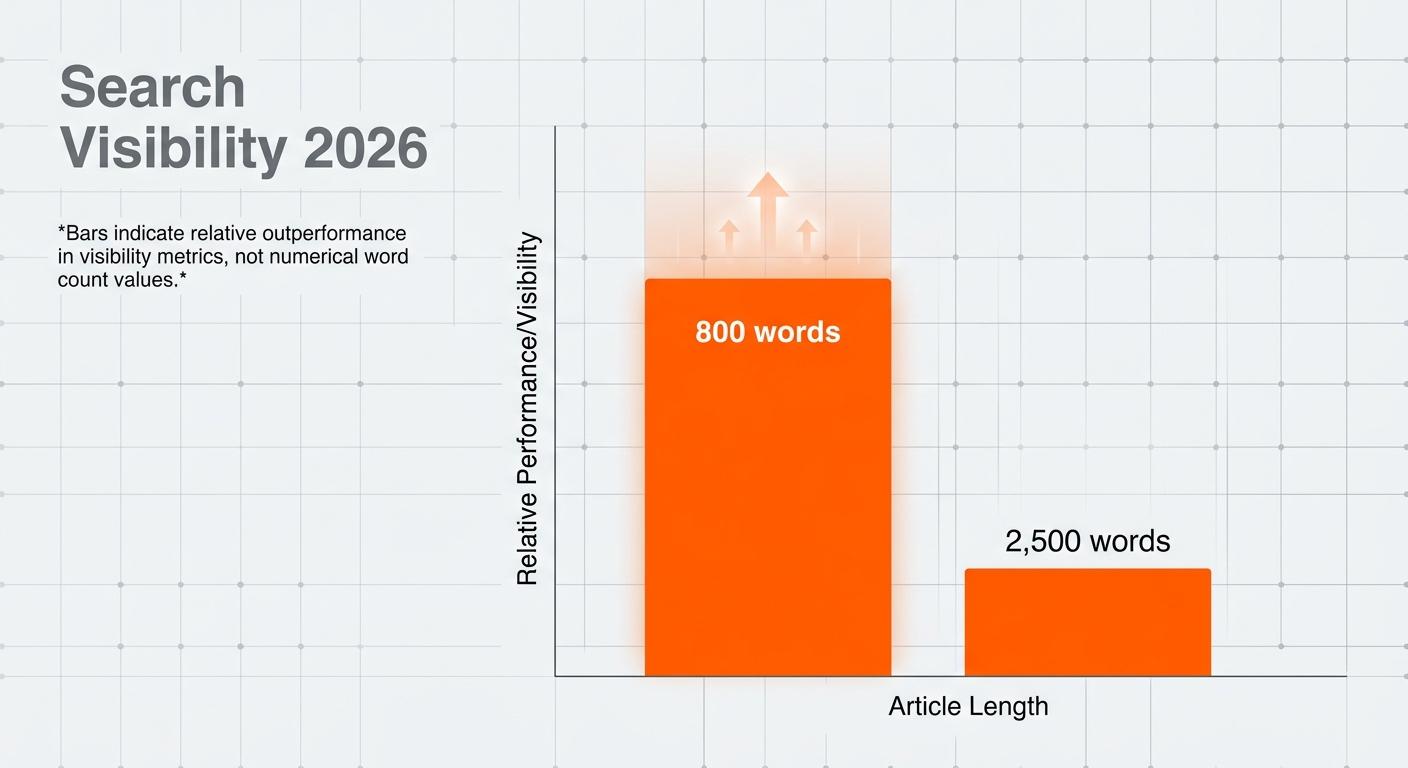
Stop Writing 2,000-Word Blog Posts: Why Shorter Content Is Winning in 2026
In 2026, the 'Ultimate Guide' is dead. Search engines and users now prioritize information density over word count. Discover why shorter, high-utility content is outranking 2,000-word fluff and how to pivot your SEO strategy.
READ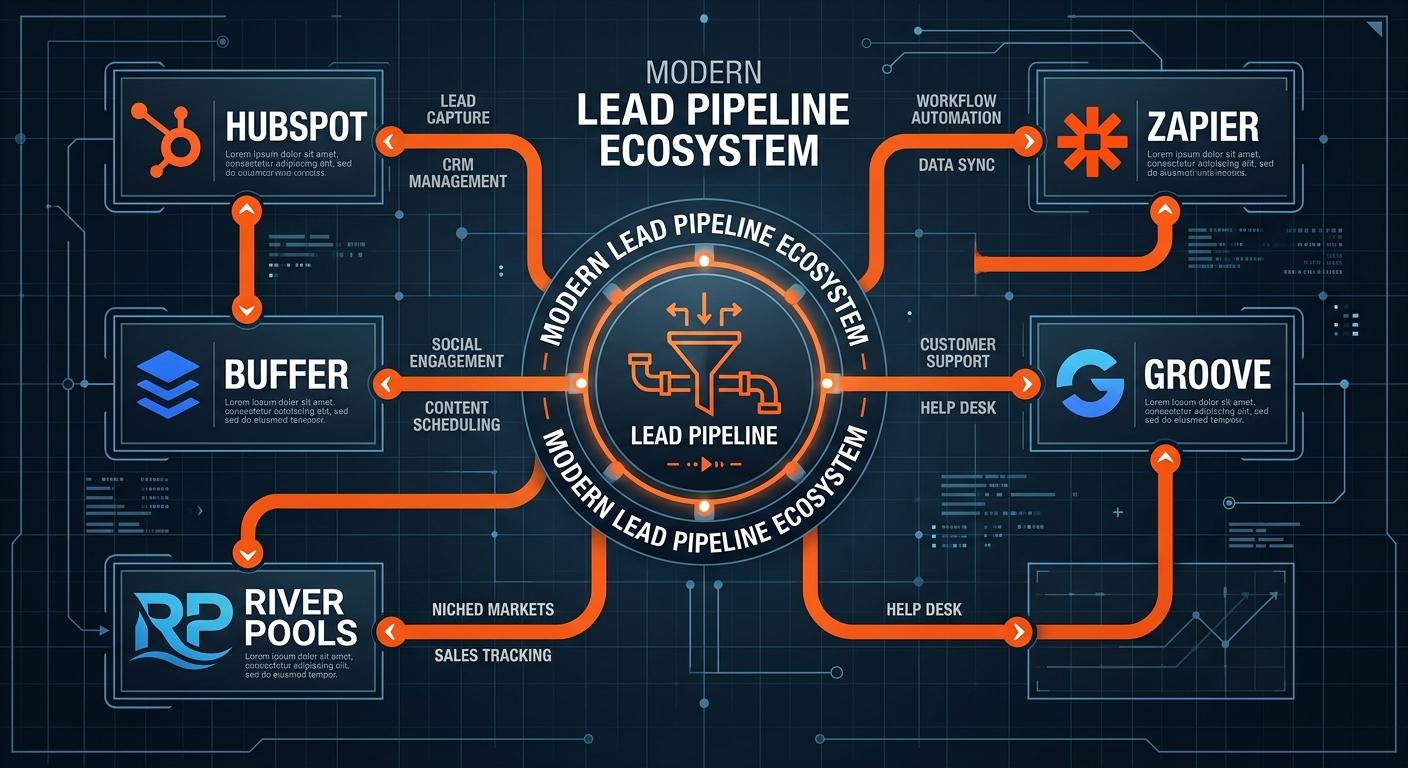
5 Businesses That Built Their Entire Lead Pipeline from Blog Content (With Numbers)
Discover how HubSpot, Buffer, and others turned their blogs into multi-million dollar lead engines. We break down the exact numbers and the infrastructure required to scale content without losing quality using modern AI systems.
READ