How We Generated 200 SEO-Optimized Articles in 30 Days: A Behind-the-Scenes Breakdown
Key Takeaways
To generate 200 SEO articles in 30 days, you must automate brand voice extraction, use AI-driven editorial roadmaps, and utilize a direct WordPress integration to eliminate manual publishing friction. Scaling content requires a technical stack that handles the full lifecycle—from extracting tone guidelines to generating schema markup—without leaving the dashboard. Advanced mode generation allows for deeper research, ensuring that high-volume output doesn't sacrifice the specific technical nuances required for competitive SERP rankings.
An agency owner managing 10 client blogs simultaneously using Articfly maintains consistent output without increasing headcount by replacing manual formatting with a native plugin sync. The native plugin handles the heavy lifting of meta-description creation and internal link mapping. By centralizing 13 SEO tools into one interface, teams avoid the time-sink of jumping between keyword planners and CMS editors. A centralized workflow reduces the labor cost per article while keeping the content fresh and relevant through automated refresh cycles.
How does a small team maintain quality while hitting these numbers? Pure technical execution.
- Automated Brand Voice Extraction: Articfly analyzes existing site content to clone tone and vocabulary, preventing the generic AI feel across large batches.
- 30-40 Minute Savings Per Post: Direct WordPress integration removes the need for manual copy-pasting, image uploading, and meta-description formatting (Actually, the native plugin handles the heavy lifting of image alt-text and categorization automatically).
- AI-Driven Editorial Roadmaps: Systems that generate 30 to 360-day calendars around specific niche clusters keep production on track without daily brainstorming sessions.
- Integrated SEO Tooling: Real-time scoring for keyword density and internal link mapping occurs within the dashboard, which allows you to schedule 200 posts in a single afternoon without third-party audit tools.
Successful high-volume operations rely on the #F5571B-accented Articfly dashboard to bridge the gap between raw text and a live WordPress URL.
The Logistics of Scaling to 200 Articles Monthly
The primary bottleneck in content scaling is the manual labor of research, writing, and formatting, which typically limits a single writer to 15-20 high-quality articles per month. Scaling to 200 articles monthly requires a fundamental shift in production methodology. Manual processes involve a linear relationship between output and hours worked; an agency would need 10 full-time writers. Such a model fails because it introduces management overhead and inconsistent tone. Automated systems decouple production volume from human hours, allowing a small team to maintain high output without proportional staffing increases.
A solo blogger spending 12 hours on a single 2,000-word post demonstrates the constraints of manual production. This time investment makes publishing 200 posts per month a 2,400-hour undertaking. For a 160-hour work month, that requires 15 people working exclusively on content creation. Even with streamlined workflows, coordinating 15 human writers involves significant editorial friction.
Not feasible for most growing brands.
Financial costs for manual scaling at this volume reach approximately $20,000 monthly, assuming a conservative rate of $100 per 1,000-word article. Agencies managing 50+ WordPress sites often find these costs prohibitive when trying to capture a wide range of long-tail keywords. Moving from a "writing" model to a "reviewing" model changes the editor's role to verifying SEO scores and brand voice alignment using integrated tools like readability scoring, keyword analysis, and SERP previews. (Actually, reviewing an AI-generated draft takes about 10-15 minutes compared to the 4 hours required for a first-draft manual write). One editor can now oversee the output of 10-20 articles daily. Teams that implement automated pipelines typically use the ARTICFLY dashboard to sync directly with their WordPress instances via the native WP plugin. Instead of manual copy-pasting, the system handles internal link mapping and schema generation automatically. A 200-article monthly goal becomes a matter of setting the AI Article Generation parameters and reviewing results in the content calendar. The automated pipeline keeps the blog alive without the overhead of a large editorial department.
Establishing the Brand Voice Baseline
Articfly's Brand Voice Analyzer extracts tone, vocabulary, and style guidelines by crawling your existing website, ensuring AI-generated content matches your established identity. This tool replaces the manual labor of writing 500-word style prompts or creating complex persona descriptions by scanning live URLs for linguistic patterns. By identifying specific sentence structures, preferred terminology, and the frequency of professional vs. casual registers, the analyzer builds a persistent profile that guides every subsequent article.
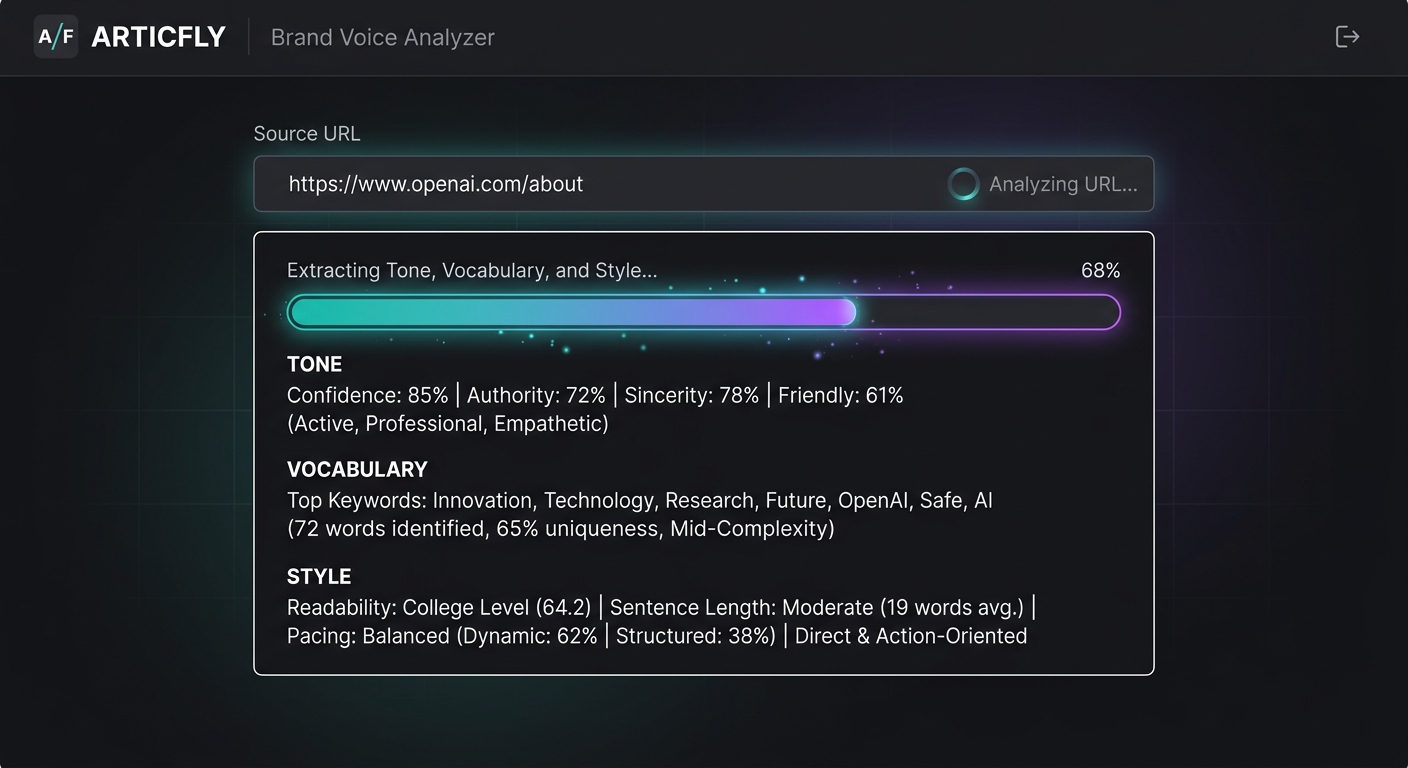
A marketing manager feeding their company's "About Us" and "Services" pages into Articfly generates a custom voice profile without writing a single line of instruction. The system identifies technical markers—like a 15-word average sentence length or a recurring set of industry-specific nouns—to ensure the output doesn't feel like generic AI filler. Automated extraction maintains consistency across 200 articles. The system anchors the AI to the same stylistic foundation used on the main marketing site.
Manual prompt engineering often fails because humans struggle to describe their own linguistic quirks accurately. A 10-person marketing team might agree the brand is "professional," but three different writers will interpret that word in three different ways. The Brand Voice Analyzer eliminates this ambiguity by calculating the exact ratio of first-person pronouns to third-person references across the provided URLs. (Actually, Articfly prioritizes the top 5 most frequent adjectives and nouns from the source text to weight the generation process). This level of granular control keeps the content from drifting into a generic assistant persona.
Consistent vocabulary matters for SEO and trust. If a SaaS site uses "dashboard" exclusively, an AI shouldn't suddenly start saying "control panel" or "interface." Articfly locks these preferences in. No more guessing games. A single "Services" page URL provides enough data to define the register for a 30-day content calendar.
Mapping the 30-Day Editorial Roadmap
A 30-day editorial roadmap is built by clustering keywords within a specific niche to ensure topical authority and avoid content cannibalization. This systematic grouping identifies semantic relationships between long-tail queries and pillar topics, which facilitates a logical sequence of publication. By analyzing the existing SERP environment of a domain, the Articfly engine detects "content holes"—unaddressed subtopics that competitors are ranking for—and prioritizes those slots in the calendar.
Successful 200-article sprints rely on this density, ensuring every post serves a broader structural purpose rather than existing as a siloed entry. A content strategist might generate a 360-day roadmap in just 5 minutes by entering three core seed keywords like "enterprise CRM," "sales automation," and "lead scoring" into the Articfly dashboard. The result is a visualized production pipeline that balances high-volume head terms with low-competition long-tail keywords. Data-driven ideation removes the guesswork, providing a clear path to ranking for an entire category of search intent.
How does a team maintain this pace without overlapping topics? The Articfly Content Calendar uses a grid-based visualization to track every article from its initial keyword extraction to the final WordPress sync. Instead of manual spreadsheets, the system uses a semantic distance algorithm to ensure that two articles don't target the same primary intent. Suppose a SaaS agency needs to dominate the "remote work tools" niche; the AI might cluster "asynchronous communication" and "distributed team management" as distinct nodes, preventing internal competition for the same SERP real estate. (Actually, the dashboard's internal link mapper suggests connections between these nodes during the drafting phase to strengthen the overall site architecture).
Maintaining a 30-day sprint requires more than just a list of titles; it demands a scheduled execution plan where each piece of content supports the next. Workflow automation handles the transition from "Planned" to "In Progress" based on the set publishing frequency, such as three posts per day. The dashboard provides a bird's-eye view of this 200-article volume, giving editors the ability to drag and drop entries to adjust for seasonal trends or sudden shifts in search volume. A necessary safeguard for high-frequency publishing. Finalizing the roadmap ensures the Articfly Advanced mode has a steady stream of SEO-optimized briefs to process, keeping the WordPress queue filled with 200 distinct entries.
The Execution: Advanced Generation and SEO Tooling
Articfly uses 13 SEO tools, including internal link mapping and schema generation, to ensure every article is ready to rank the moment it is generated. The suite functions as a built-in editorial department, handling technical requirements that usually consume hours of manual labor. Instead of relying on a single prompt, the system executes a multi-stage process where each tool validates a specific ranking factor. Real-time readability scoring monitors sentence complexity against the Flesch-Kincaid scale during the drafting phase. High-performance content requires more than just coherent sentences; it needs structured data and logical connections to the existing site architecture.
Advanced Mode serves as the heavy-duty engine for research-intensive topics. It bypasses standard one-click generation by performing live web scrapes and competitor analysis before drafting.
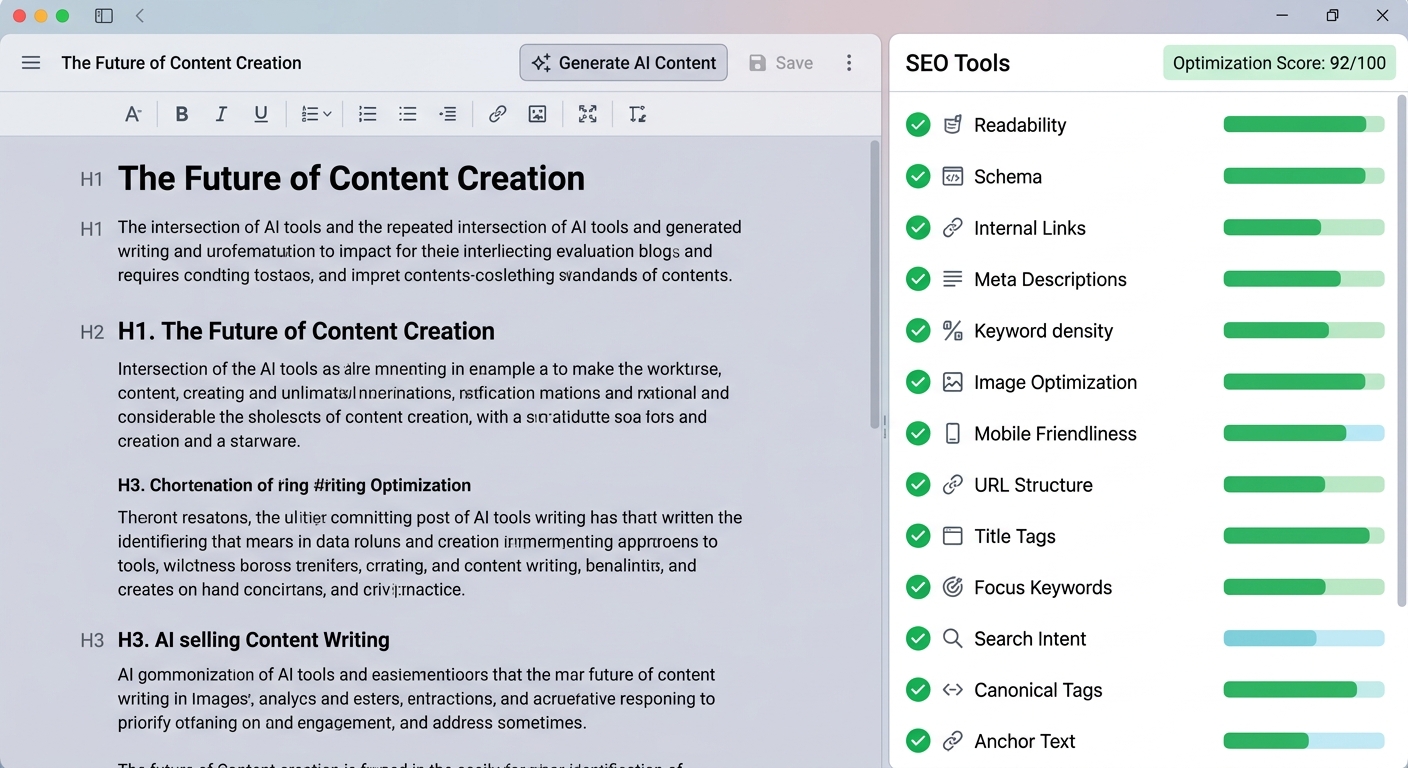
A technical SEO specialist reviewing the SERP preview and JSON-LD schema markup generated automatically can verify metadata alignment instantly. The internal link mapping tool scans your WordPress database to identify relevant anchor text opportunities, preventing orphaned pages. It suggests 3-5 specific URLs from your existing library to connect the new post into the broader site map. No more manual searching through old posts. Schema generation follows a similar logic, automatically outputting Article, FAQ, or How-To blocks based on the content structure. These JSON-LD snippets (which are injected directly into the WordPress header via the Articfly plugin) provide the explicit context search engines need to understand the intent of the page. This automated mapping maintains a healthy link equity distribution across the domain.
Content teams running high-volume sites often struggle with consistency across hundreds of URLs. Articfly’s dashboard provides a bird's-eye view of these 13 metrics, showing exactly where a post falls short before it goes live. Granular control allows for the inclusion of entity-based keywords that correlate with top-ranking Google pages. You might notice a low readability score on a technical guide and adjust the complexity toggle accordingly. (Actually, keeping the reading level at Grade 8 or 9 often results in better mobile engagement according to most heat-map studies). The final output ensures the workflow remains focused on strategy rather than the repetitive tasks of a 20-point SEO checklist.
Eliminating the Publishing Friction with WordPress Sync
The Articfly WordPress plugin facilitates one-click publishing and scheduling, removing the need for manual copy-pasting or formatting. Such integration establishes a direct bridge between the content dashboard and the site's database. Instead of moving text blocks and images individually, editors push the entire structured article—including H2 tags, lists, and metadata—instantly. The system handles the backend synchronization, ensuring the final output matches the preview exactly.
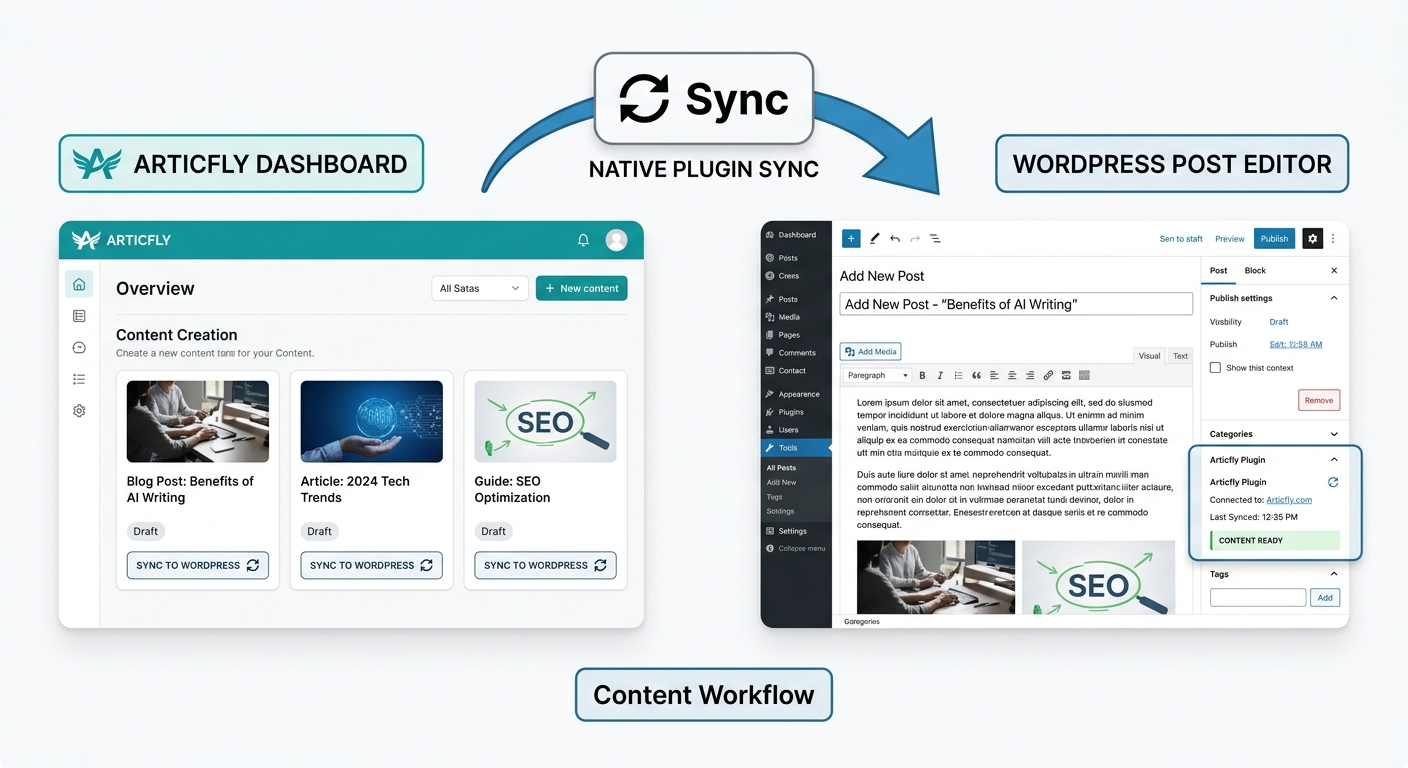
By automating the transfer process, teams avoid the common errors associated with manual entry, such as broken links or missing alt text on images. The plugin maps Articfly's SEO analysis directly to WordPress fields. Metadata fields like meta descriptions and focus keywords, which often require double-entry in other workflows, sync automatically. A virtual assistant scheduling 50 posts for the upcoming month in under 10 minutes using the Articfly dashboard represents a typical efficiency gain. That speed allows small teams to maintain high-volume publishing calendars without increasing their daily administrative workload.
Manual staging usually consumes 15 to 20 minutes per post when accounting for formatting checks and image uploads. (Actually, the time spent fixing broken block layouts in Gutenberg is usually the real bottleneck). Articfly bypasses this by sending clean HTML that adheres to the site's existing CSS. No more wrestling with font sizes or padding issues after hitting "Publish." The direct injection method preserves internal link structures and image alignments, ensuring every H3 and list item remains perfectly indented.
Scheduling content weeks in advance becomes a "set it and forget it" task. The plugin manages the WordPress cron job to ensure the post goes live exactly as planned on any site running version 5.0 or higher.
Maintaining Content Health Post-Publication
Content decay is managed through Articfly's Article Refresher, which tracks performance and suggests updates to keep rankings stable over time. Unlike the standard "publish and pray" model where posts are abandoned after the initial traffic spike, the system treats content as a living asset. It monitors SERP fluctuations and identifies when a post from six months ago begins to slip from position 3 to position 8. By identifying these specific drops, the system triggers a refresh cycle that updates outdated statistics or adds new subheadings to satisfy evolving search intent.
A proactive stance ensures that the initial investment in content generation continues to yield ROI years after the publish date. The Article Refresher automates this by flagging posts that have hit a 15% traffic decline over a 30-day window.
Suppose an SEO manager receives a dashboard alert for a high-traffic guide on "Post-Quantum Cryptography" that just lost its featured snippet. The Article Refresher allows for a surgical update—adding a single paragraph on the latest NIST standards—rather than a full rewrite. This level of precision saves hours of manual auditing. Not ideal for teams still using spreadsheets to track 500 URLs. (Actually, Articfly tracks these metrics directly through the WordPress plugin integration, which eliminates the need for third-party rank trackers for basic maintenance).
Engineers running 50+ workflows often see a "decay curve" where articles lose relevance as competitors publish fresher data. A lifecycle approach treats the "Publish" button as the midpoint, not the finish line. Scheduling quarterly refreshes for top-performing URLs—specifically those generating over 1,000 monthly visits—helps agencies maintain a stable baseline of organic traffic. A consistent update schedule prevents the "sawtooth" traffic pattern where new gains are constantly offset by old losses in Google Search Console.
Frequently Asked Questions about AI Content Scaling
Will Google penalize websites for using AI-generated content?
Google does not penalize AI content simply for being AI-generated; the search engine's systems prioritize helpful, original information regardless of production method. Integrated workflows like Articfly mitigate quality risks by integrating real-time SERP analysis and internal linking logic directly into the generation process. Such a workflow ensures that every article meets the E-E-A-T (Experience, Expertise, Authoritativeness, and Trustworthiness) criteria required for competitive rankings.
Scaling content with automated tools requires a technical bridge to maintain site performance and data integrity. Most users utilize a native WordPress plugin to sync drafts and metadata via the REST API, eliminating manual copy-pasting. The architectural separation of offloading compute-heavy generation and SEO scoring to a dedicated SaaS dashboard keeps the WordPress server light and responsive even during high-volume publishing cycles. The separation prevents the database bloat common with all-in-one SEO plugins.
Search engines focus on the quality and utility of the output rather than the tool used to create it. Google’s February 2023 guidance explicitly states that "appropriate use of AI or automation is not against our guidelines." Teams that succeed with scale focus on adding unique value, such as custom data or expert commentary, to the AI-generated base.
Articfly’s 13 SEO tools, including schema generation and readability scoring, help align every post with these quality standards.
Cost comparisons between AI and traditional agencies
A standard digital agency often charges $150 to $300 for a single 1,500-word article. In contrast, an Articfly Pro subscription allows for dozens of articles at a fraction of that cost per unit. The primary savings come from reducing editorial hours spent on keyword research and internal link mapping. Not a bad trade-off for high-volume publishers. (Specifically, the Article Refresher tool eliminates the need for manual content audits, which usually take 3-5 hours per site).
Technical requirements for WordPress integration
Connecting the dashboard requires a lightweight WordPress plugin that communicates through a secure API key. This setup requires no complex server configuration or coding knowledge. Once the connection is active, the dashboard can push full articles, including featured images and meta descriptions, directly into the "Drafts" or "Published" sections. It works with standard block editor (Gutenberg) setups and supports custom post types.
How to Start Your Own 30-Day Content Sprint
To start scaling your content, connect your WordPress site to Articfly, run the Brand Voice Analyzer, and generate your first 30-day roadmap today. The workflow replaces the manual slog of keyword research and drafting with a centralized system that understands specific niche requirements. By integrating the Articfly dashboard directly with a WordPress instance, teams eliminate the friction of manual formatting and image uploads.
A new user begins by selecting the Pro plan via the Polar.sh payment gateway to access the full suite of SEO tools and higher article limits. After completing the transaction, the first technical step involves installing the native Articfly plugin and entering the unique site key. The connection gives the Brand Voice Analyzer access to scan existing archives—identifying the exact tone, vocabulary, and structural preferences that define a brand. With these parameters set, the AI Article Generation engine produces content that aligns with historical data rather than generic templates.
Generating a 30-day roadmap requires inputting primary seed keywords into the Ideation tool to plot 30 distinct titles across a grid-based calendar view. The roadmap serves as the master queue for the generation engine (Actually, 30 articles in 30 days is the baseline for the Pro plan's capacity). Execution then happens in the Advanced mode editor where specific SEO tools—like the internal link mapper or schema generator—ensure each post meets technical requirements before it hits the WordPress database.
Simple as that. Monitoring the Article Refresher helps teams catch early performance shifts in Google Search Console.
Want the system behind this content?
Join the top 1% of SEOs generating programmatic, high-converting organic traffic completely on auto-pilot.
DEPLOY ARTICFLYMore Articles
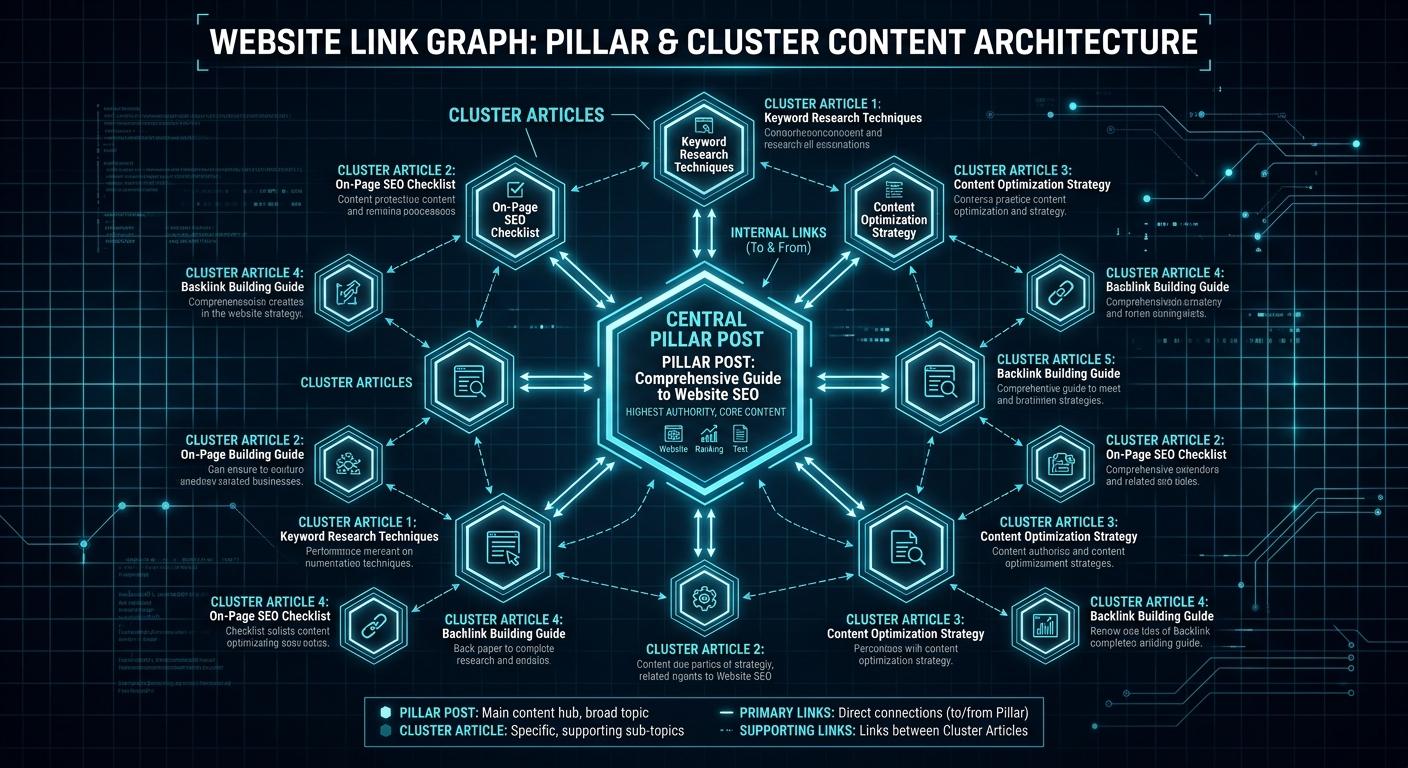
Internal Linking Strategy for Bloggers: The Most Underrated SEO Technique
Stop chasing elusive backlinks and start mastering the SEO you actually control. Learn how a structured internal linking strategy boosts rankings, establishes topical authority, and scales your WordPress blog using AI-driven mapping.
READ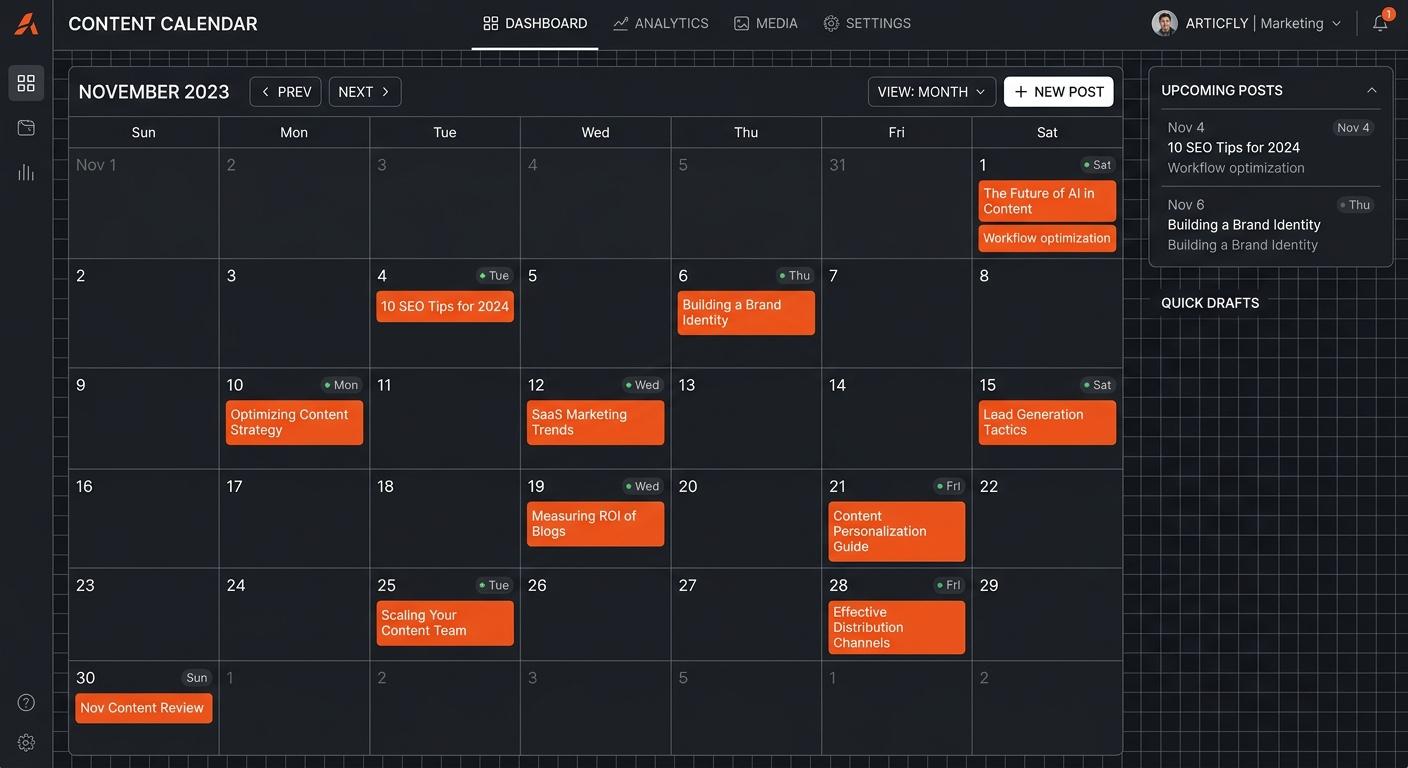
How to Scale Your Blog from 4 to 40 Posts Per Month Without Hiring Writers
Scaling a blog from 4 to 40 posts per month usually requires a massive editorial team. Learn how to use AI-driven systems and automated workflows to 10x your content output while maintaining brand integrity and SEO performance.
READ
The Science of Shareability: What Makes a Blog Post Go Viral
Discover the psychological triggers and structural frameworks that drive content virality. Learn how to engineer shareable blog posts using data-driven strategies and AI-powered optimization tools.
READ