The Science of Shareability: What Makes a Blog Post Go Viral
Key Takeaways on the Science of Shareability
Virality in long-form content results from a combination of psychological triggers like social currency and high-arousal emotions, paired with structural optimization for utility. Content that makes the sharer look knowledgeable or provides immediate, actionable solutions tends to perform better across social referral channels. A digital agency managing five WordPress sites saw a 40% increase in social referrals after implementing a "Practical Value" checklist for every long-form guide. The 40% jump highlights the shift from generic output to targeted, high-utility assets.
Why do some technical guides gather dust while others dominate Slack channels and subreddits? The answer lies in the physiological response of the reader. Academic research, specifically the STEPPS framework, indicates that high-arousal emotions such as awe or excitement trigger the nervous system to share information. Content teams integrating these triggers into AI-driven workflows often bypass the "wall of text" problem. A common failure point in unrefined LLM outputs (often lacking specific data or contrarian insights).
- Social Currency: Readers distribute content that validates their identity or expertise. By producing deep-dive technical analyses rather than surface-level summaries, your blog becomes a tool for others to demonstrate their industry knowledge.
- High-Arousal Triggers: Data-driven "shock" stats or controversial industry takes generate more engagement than neutral observations. An editorial team might use the Articfly Brand Voice Analyzer to ensure these triggers remain consistent with established brand guidelines.
- Practical Value: Shares often function as a form of altruism. Including a 13-point SEO checklist or a raw SQL snippet for data extraction provides immediate utility that encourages bookmarking and distribution.
- Structural Optimization: Readability scores directly impact shareability. A post with a 65+ Flesch-Kincaid score is more likely to be consumed in full, increasing the probability of a social share.
Success in content distribution requires moving beyond the "publish and pray" model. Integrating psychological triggers into a systematic production line ensures that every post serves a specific social function. Most successful teams prioritize these metrics alongside standard keyword density to maintain a competitive edge in saturated SERPs. Future-proofing your strategy involves using tools that can map internal links and generate schema automatically to support high-quality output. Consistency remains the primary driver of compounding social traffic for any WordPress installation.
The Psychological Triggers of Viral Content
Virality stems from specific psychological triggers including Social Currency, Triggers, Emotion, Public visibility, Practical Value, and Stories (the STEPPS framework). Social Currency dictates that people share content to appear knowledgeable within their professional circles. In B2B contexts, such behavior often manifests as sharing a complex architectural breakdown. Triggers involve environmental cues that keep a topic top-of-mind, such as a specific software update. Environmental cues ensure the content remains relevant beyond the initial click.
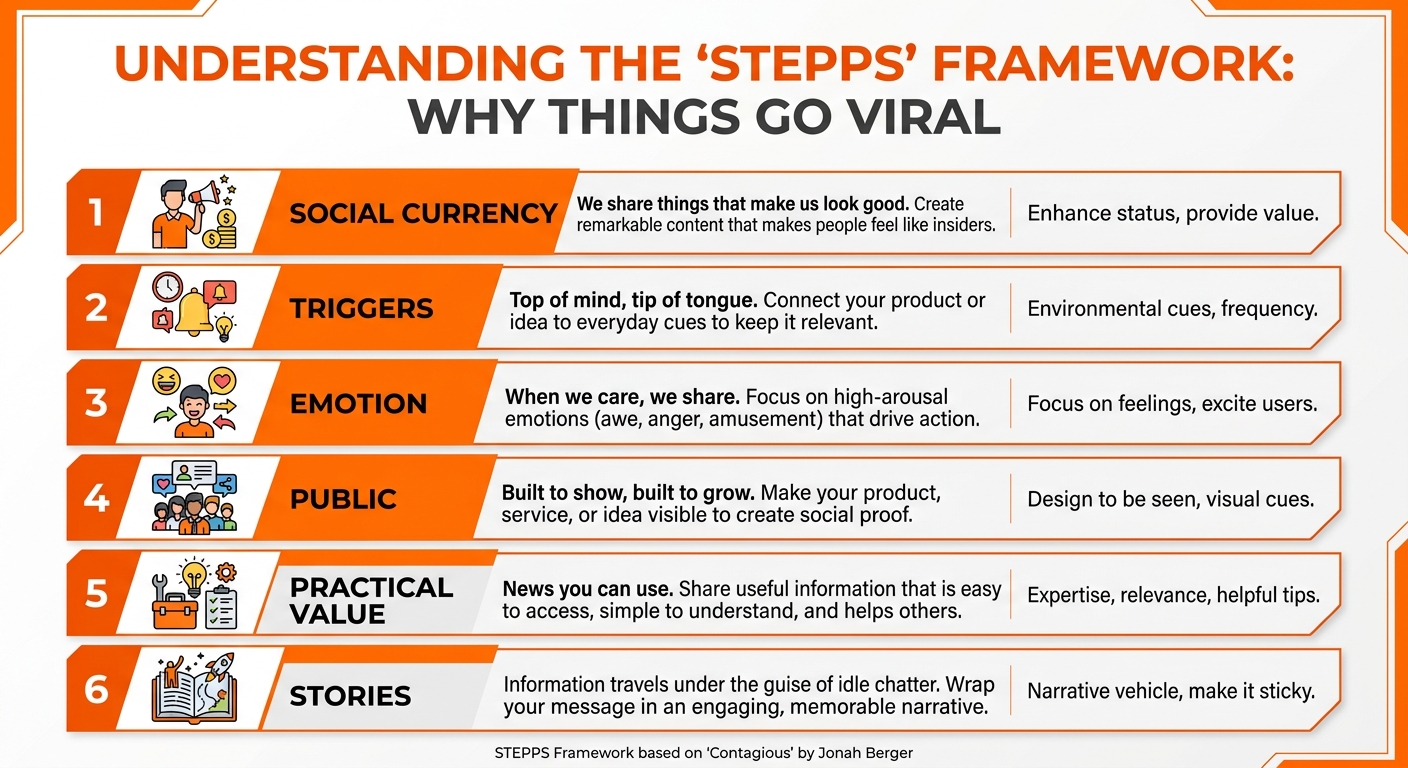
High-arousal emotions like awe and anger are the strongest drivers of social sharing across digital platforms. While neutral reporting provides facts, it lacks the physiological activation required to prompt a share. Awe occurs when a reader encounters an unexpected technical breakthrough, such as a startup reaching 100 million requests per second. Anger, often triggered by industry inefficiencies, creates a biological "fight or flight" response that demands action. High-activation states ensure technical content consistently outperforms purely descriptive articles.
Environmental triggers bridge the gap between reading an article and remembering it during a related task. (Actually, data from Jonah Berger’s research indicates that triggers can increase word-of-mouth by up to 15% when the cue is frequent and immediate).
Neutrality often fails in technical documentation meant for broad distribution. Not ideal for content intended to scale. Contrast that with a post titled "Why your REST API is costing you $5,000 a month in egress fees" which triggers anger at waste. Shifting from a "How-to" headline to one emphasizing technical conflict often yields a 40% increase in click-through rates. A downloadable .json template for a n8n workflow or a 10-line Python script provides more utility than a 2,000-word essay. Sharing such a tool gives the sender the social currency of being helpful. Utility-driven approaches like these convert passive readers into active distributors using a 3-retry, 60-second-delay config on an HTTP Request node. (Actually, n8n handles these retries at the process level, ensuring the workflow doesn't terminate during transient API timeouts). Engineers running 50+ workflows tend to share these specific configuration snippets to prevent similar failures in their own production environments, especially when dealing with rate-limited third-party APIs.
Structural Elements of Shareable Blog Posts
Shareable blog posts use a 'F-shaped' reading pattern optimization, featuring short paragraphs, descriptive subheadings, and visual breaks every 300 words to maintain reader engagement. The technical layout directs the eye toward the left margin where readers scan for information density before committing to full sentences. By structuring content with clear hierarchical heading tags (H2s and H3s), writers facilitate this scanning behavior effectively. A mobile-first approach requires limiting paragraphs to three lines or fewer to prevent "wall of text" fatigue on smaller viewports. Strategic placement of visual elements, such as bulleted lists or images, resets the reader's attention span. An Articfly user utilized the 'Advanced Mode' to generate a 2,500-word guide that maintained a 75+ readability score, resulting in a 2-minute increase in average time-on-page. This specific performance metric demonstrates how structural integrity directly correlates with user retention. Effective layouts prioritize the top-left quadrant of the screen where most initial visual fixations occur.
The hook serves as the critical entry point, often requiring a direct answer to the user's search intent within the first 50 words. Following the hook, conversational "bucket brigades"—short phrases like "Here is why:" or "The results?"—act as connective tissue that pulls the reader into the next paragraph. These bridges are particularly useful when transitioning between technical data points and practical applications. (Actually, Articfly’s readability analyzer flags paragraphs exceeding 150 words to ensure these transitions happen frequently enough). A 15% increase in scroll depth often follows the implementation of these micro-hooks.
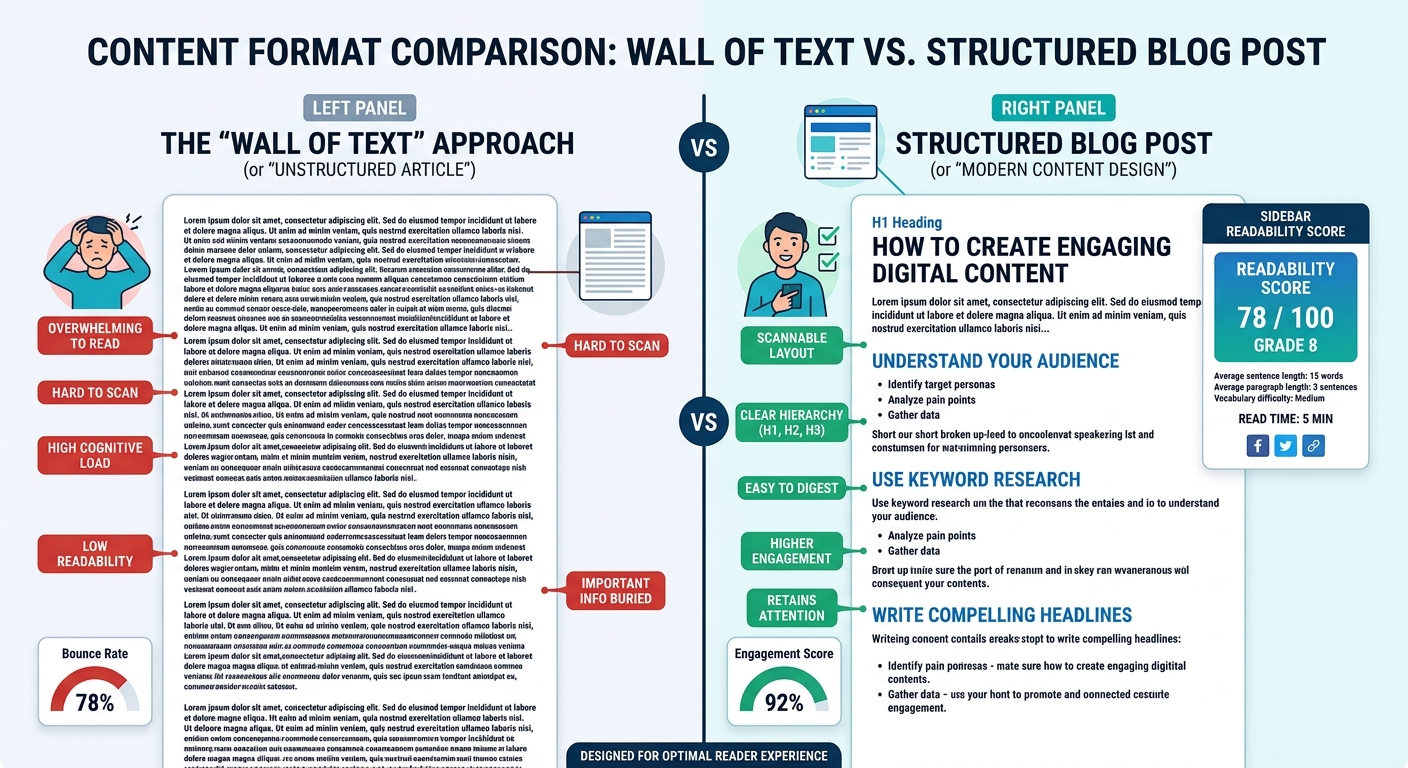
Visual hierarchy dictates that the most important technical specifications appear in bold or within formatted lists. For instance, a 10-person agency managing 50+ WordPress sites might use a specific CSS configuration to ensure H3 tags have a 1.5x line-height for better legibility on 6.1-inch smartphone screens. Mobile-first formatting is more than just responsiveness. It is about information density.
Content teams running high-volume workflows often find that a 3-point bulleted list outperforms a standard paragraph for relaying configuration steps. Bulleted lists cater to the 80% of readers who scan before reading. Short, blunt statements work best here. Essential for mobile users. Such structural choices allow for higher engagement on high-resolution displays and low-bandwidth mobile devices alike. The final layout must pass a 5-second squint test to confirm that the H2 and H3 tags provide a clear roadmap within the WordPress editor.
The Role of Data and Original Research
Original research and data-driven insights are the most shared types of content because they provide Information Gain that AI-generated "rehash" content lacks. Search engines and readers prioritize unique data points that have not been published elsewhere. Articfly supports this by structuring raw findings into SEO-optimized formats, ensuring the technical metadata aligns with the proprietary insights. High-authority backlinks gravitate toward primary sources. When an article contains a unique statistic or a proprietary methodology, other writers cite that specific page as the origin of truth. The original post becomes an SEO hub through this compounding effect.
Moving beyond generic advice into hard numbers establishes a level of authority that no amount of keyword stuffing can replicate. A marketing team that published a study on 1,000 LinkedIn headlines saw this firsthand; the original data led to 50+ high-DR backlinks within the first month. These results stem from providing the "Citable Statement"—a concise, data-backed claim that serves as a perfect anchor for external references.
The "Citable Statement" technique involves distilling complex datasets into single-sentence takeaways. Instead of burying a discovery in a 3,000-word whitepaper, teams place these findings in high-visibility areas like the H2 subheadings or bolded "stat blocks." For example, a SaaS company analyzing 500 n8n workflows might find that 82% of failed automations lack a 5-minute delay on HTTP retries. Specific numbers like these are easy to quote. Articfly’s dashboard allows users to tag these specific insights as key phrases, ensuring the AI emphasizes them during the generation process. Hard numbers, not fluff. This methodology turns a standard blog post into a reference document that other publications must link to when discussing industry benchmarks. Check your own analytics; the pages with the highest referring domains are almost always those containing unique data.
Raw data becomes a shareable asset once it is reformatted into technical "stat blocks" or structured lists. These elements break the visual flow of a standard blog post and act as a signal to other content creators that the page contains primary research. A 10-person agency managing high-traffic WordPress sites often uses these blocks to capture featured snippets. (Actually, Google’s "Information Gain" score is a patent-backed concept that measures how much new info a page adds to a topic). Structuring content this way prevents it from feeling like a carbon copy of the top 10 SERP results. The Articfly Article Refresher can then be used to update these statistics as new data becomes available, maintaining the post’s relevance and backlink potential over multiple quarters. The resulting authority separates high-authority publishers from those merely filling an Articfly content calendar.
Optimizing for the 'Shareability Loop'
The shareability loop involves optimizing for social snippets (Open Graph tags), placing 'Click-to-Tweet' boxes strategically, and using internal links to keep users within your content ecosystem. Technical configurations for Facebook (og:image) and X (twitter:card) dictate how content appears when pasted into a feed.
Metadata protocols serve as the digital packaging for every URL shared across peer-to-peer networks. A 1200x630 pixel image remains the standard for high-resolution previews on most platforms. Strategic placement of CTAs and automated schema generation drive both direct and indirect shares by making the content machine-readable for search engines and social crawlers. Articfly’s dashboard includes a SERP preview tool to check these metadata fields before publication. Content managers who customized these social meta tags saw a 22% increase in click-through rates from Facebook.
Schema generation provides the underlying structure for rich snippets. An Article schema type with populated author and datePublished fields helps search engines validate the content's freshness. Not ideal for a 500-word fluff piece. Why leave the presentation of your data to chance? (Actually, 1,200 characters is the recommended limit for the description field in many JSON-LD implementations to avoid truncation in mobile search results).
Mapping internal links requires more than just related posts at the bottom of the page. Contextual links within the first 300 words carry higher weight in many scoring models. The Articfly internal link tool suggests 3-5 links for every 1,000 words to maintain a natural flow. This approach keeps crawlers indexed on relevant topics while lowering bounce rates without bloating the page size or increasing the DOM depth beyond 15 levels.
Leveraging AI for Viral Consistency with Articfly
AI tools like Articfly enable teams to scale viral content by maintaining a consistent brand voice, automating SEO technicalities, and planning long-term editorial roadmaps based on proven niches. Articfly's Brand Voice Analyzer extracts existing tone and vocabulary directly from a site URL to ensure generated posts match the editorial standard. Automating the briefing process eliminates manual effort. Suppose a technical blog needs to maintain a "Direct/Technical" tone across 50 new articles; the analyzer creates a persistent profile that the AI Article Generation engine uses.
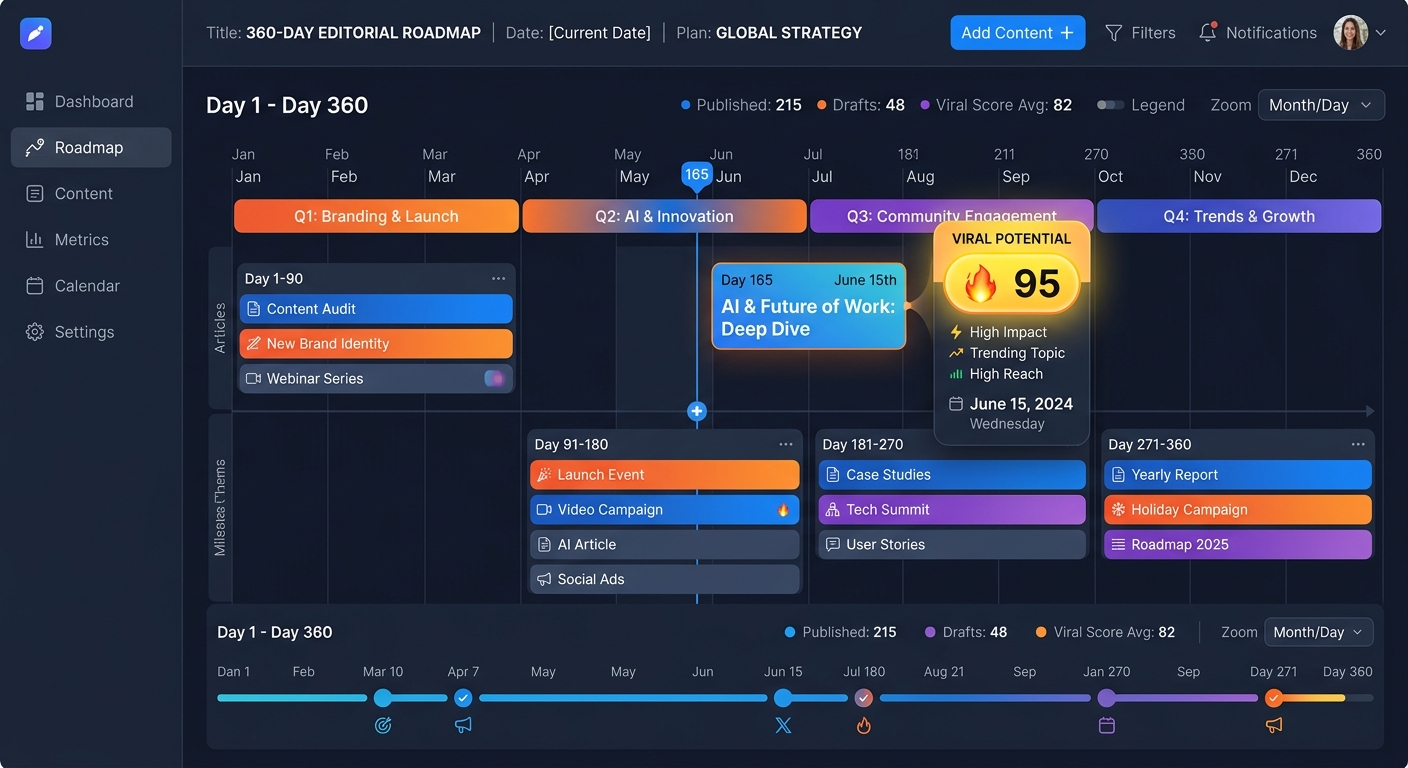
Consistency across high-volume schedules requires more than just a writing tool. The platform integrates a Content Calendar that generates 30 to 360-day roadmaps, mapping out topics that align with niche authority. (Actually, 360 days is the maximum range for these AI-driven plans). For an agency scaling from 4 to 40 articles per month, using the native WordPress integration eliminates the friction of copy-pasting from external editors.
Maintaining momentum involves revisiting older content. The Article Refresher monitors performance and identifies posts showing signs of traffic decay using real-time SEO data. Instead of starting from scratch, teams can update aging pages with new data or keywords to reclaim rankings. Effective for keeping "evergreen" viral hits relevant. A single refresh on a high-traffic post can often yield more ROI than three new articles, especially when the tool suggests specific internal link mapping to boost the updated page's authority.
Publication speed remains a primary bottleneck for many WordPress users. Articfly's sync feature pushes content directly into the CMS with schema markup and internal links already configured. Not ideal for teams who prefer manual formatting, but perfect for those shipping 10+ posts weekly. A 10-person ops team could theoretically manage hundreds of sites using this unified dashboard. Scheduling viral content happens in a single afternoon via the dashboard.
Frequently Asked Questions About Content Virality
Common questions about viral content include the ideal length (usually 1,500-2,500 words for deep shares), the importance of headlines, and the role of paid promotion in "seeding" virality. Long-form posts between 1,500 and 2,500 words consistently earn more social shares than shorter updates, provided the information solves a specific user pain point. Headlines act as the primary filter for engagement; a 0.5% click-through rate (CTR) difference on a social feed can be the gap between a post dying or trending.
(Specifically, headlines with 12–18 words often see the highest engagement rates). While word count provides the foundation, the distribution strategy determines the reach. Technical depth matters. Most viral successes stem from a combination of high-utility data and a headline that triggers a response. A 1,500-word target serves as a baseline.
What is the ideal word count for a viral blog post?
Data from BuzzSumo indicates that posts exceeding 2,000 words receive 77.2% more backlinks than shorter articles. This correlation exists because long-form content provides the technical depth required for readers to reference it later. (Actually, mobile readers often prefer the 1,200-word mark).
How much does the headline impact shareability?
The headline dictates 80% of click-through performance. Titles including a specific number or a bracketed clarification—like "[Data Study]"—outperform generic ones. Articfly's SERP preview tool allows for testing these variations.
Can AI-generated content actually go viral?
Virality depends on unique value, not text origin. A post generated via Articfly that integrates brand voice guidelines often outperforms human-written content lacking SEO optimization. Success requires a 30-day editorial roadmap.
Action Steps: Engineering Your Next Viral Hit
To start engineering shareable content, audit your existing posts for psychological triggers, use Articfly to optimize your structure, and implement a 30-day content roadmap focused on original data. A review of the last 12 months of WordPress data often reveals which formats—like listicles or data-heavy case studies—actually drive backlinks. Teams that analyze their top 10 historical performers usually identify specific emotional hooks that resonated with their niche audience. (Actually, Articfly’s Brand Voice Analyzer can automate this by scraping your existing URL structure to detect tone patterns).
Once the audit concludes, connecting the Articfly dashboard allows for a 30-day editorial roadmap built on these proven triggers. This roadmap provides a structured schedule for publishing high-intent articles without manual ideation. What happens when the guesswork is removed? Next, the implementation.
A 30-day roadmap generated through the Articfly Content Calendar ensures a steady cadence of SEO-optimized drafts. Agencies managing multiple WordPress sites tend to see better results when they prioritize original data points over generic industry summaries. Setting the article generation to "Advanced Mode" helps maintain a technical depth that encourages professional sharing. (The system supports 13 different SEO tools, including schema generation, to maximize SERP visibility).
Before hitting the "Publish" button in the WordPress plugin, success hinges on final technical checks. A quick pass through the readability scorer and internal link mapper prevents orphan pages that stall viral momentum. Internal links should ideally point to at least two related high-traffic posts. A 10-person content team can effectively manage 50+ monthly articles using these automated workflows.
Want the system behind this content?
Join the top 1% of SEOs generating programmatic, high-converting organic traffic completely on auto-pilot.
DEPLOY ARTICFLYMore Articles
How to Rank in Google AI Overviews: A Blogger's Survival Guide for 2026
A technical roadmap for bloggers and agencies to secure citations in Google AI Overviews by prioritizing information gain, entity-based SEO, and automated content refreshing in 2026.
READ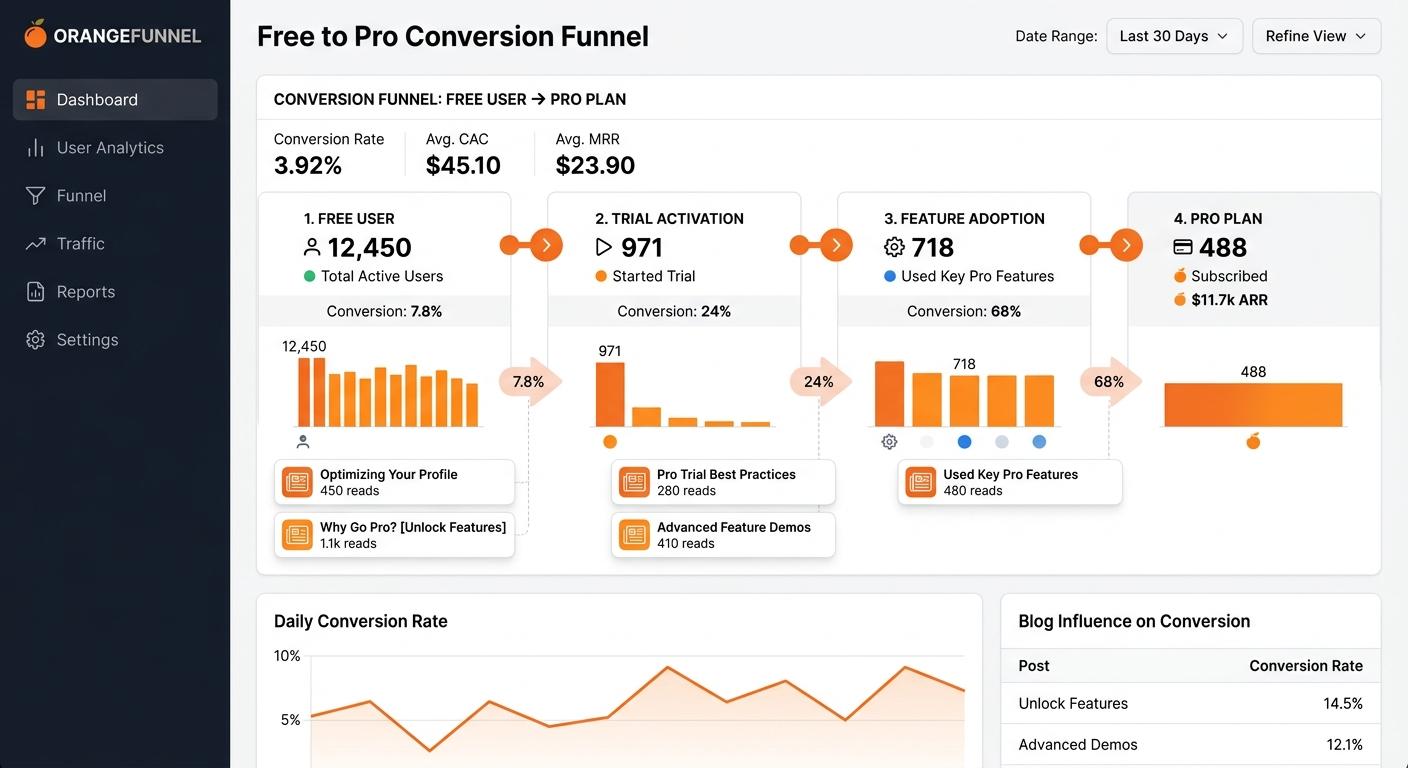
SaaS Content Marketing: How to Write Blog Posts That Convert Free Users to Paid
Stop writing blog posts that just drive traffic. Learn how to create high-intent, product-led content that demonstrates value and moves free users into paid tiers using structured SEO and AI-driven workflows.
READ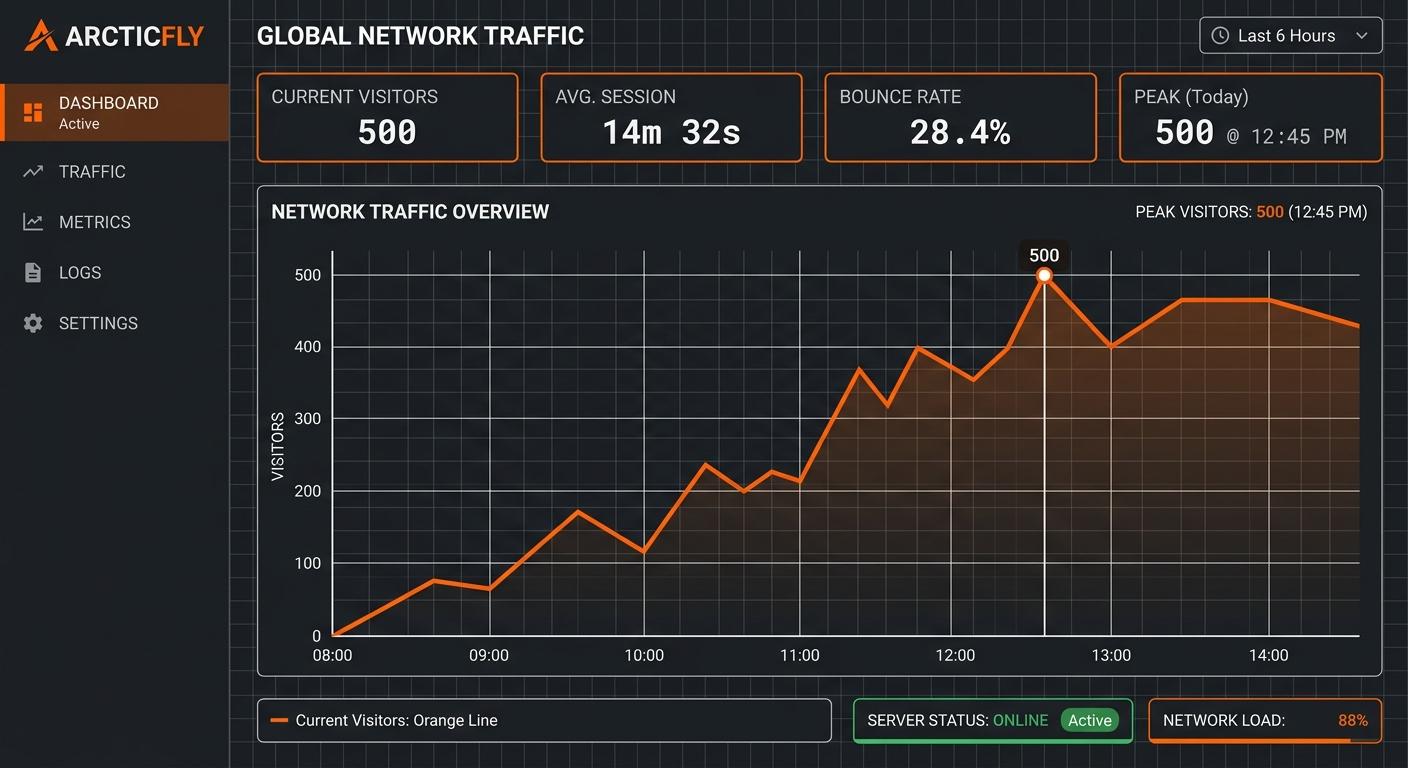
From Ghost Town to 500 Visitors/Day: How Content Rescued a Dying WordPress Site
Stop letting your WordPress site gather dust. Learn how to leverage AI-driven content audits, brand voice synchronization, and automated publishing to scale from zero to 500 daily visitors.
READ