SaaS Content Marketing: How to Write Blog Posts That Convert Free Users to Paid
Key Takeaways for SaaS Conversion Content
To convert free users to paid, SaaS content must shift from general education to product-led utility, focusing on 'upgrade triggers' where the product solves a specific limitation of the free tier. This strategy involves identifying the exact friction points within the free experience—such as seat limits, data exports, or advanced reporting—and creating tutorials that demonstrate the value of the premium solution. Why settle for high traffic if your conversion rate remains stagnant?
Content that bridges the gap between basic usage and advanced outcomes shortens the sales cycle for self-serve users. For example, a marketing manager at a project management tool noticed users upgraded when hitting a '5-project limit.' They responded by publishing guides on 'Managing 10+ Complex Projects' to highlight the necessity of the paid tier. High-intent search terms often signal these transition points, allowing teams to capture users exactly when they outgrow the free version. (Actually, 14-day history limits are a common churn point for dev-tools).
Shipping content that drives revenue requires a shift in focus from volume to velocity. Immediate impact over vague branding. If you manage a SaaS blog, these tactical adjustments help reclaim lost leads:
- Identifying "upgrade triggers" by analyzing usage data, such as a 1,000-row limit in a spreadsheet tool or a 14-day history cap.
- Prioritizing "How-to" guides for features locked behind the paywall, specifically targeting users who have already integrated the tool into their daily stack.
- Auditing existing high-traffic posts every 6 months when you need to ensure screenshots and feature descriptions reflect the current UI of the platform.
- Implementing "Content Decay" tracking to spot articles that have dropped from the top 3 spots on Google, as these are often the primary source of organic leads.
- Building internal linking maps that connect top-of-funnel educational posts directly to pricing tables.
Teams running these systems often see a 15% lift in trial-to-paid conversion by simply aligning their editorial calendar with the product's feature tiers.
The Product-Led Content Framework for SaaS
In a product-led content model, the product integrates directly into the narrative as the natural solution to a problem, rather than a tacked-on sales pitch at the end. The strategy focuses on the "Jobs to be Done" framework, where the reader is not looking for information for information's sake but for a specific outcome. Instead of a generic "Top 10 SEO Tips" post, a product-led approach might show exactly how to use the Articfly Internal Link Mapping tool to fix a site's architecture. By centering the narrative on the tool's utility, the content serves as both a tutorial and a conversion mechanism for the Pro plan.
The JTBD framework identifies specific struggles—like a 40-hour monthly manual internal linking process—and positions the software as the relief. Content teams often struggle to bridge the gap between high-traffic top-of-funnel guides and bottom-of-funnel product pages. Adopting the framework moves the blog from a library of advice to a showcase of functional workflows.
Transitioning users from free to paid requires highlighting the friction in manual workarounds. A post about content decay might contrast a manual audit of 200 URLs with the Articfly Article Refresher dashboard identifying a 15% traffic drop.
Agencies managing 10+ client sites require a centralized system where a 360-day editorial roadmap is generated based on niche-specific data points rather than gut intuition or guesswork. (Actually, Articfly tracks these metrics automatically via its native WordPress plugin). Comparing the two methods demonstrates the value of the Pro plan. Speed over manual labor. Marketing teams find that showing the exact workflow for a 13-tool SEO suite converts better than abstract promises. Such efficiency reduces the total time-to-publish for a 1,500-word article from six hours to under twenty minutes while maintaining a readability score of 80. Automation at this scale enables a single editor to manage the output of an entire department via the WordPress plugin.
Mapping Content to the 'Upgrade Trigger' Moments
Upgrade triggers are specific moments in a user's lifecycle where the free version no longer suffices, such as hitting a seat limit, needing advanced reporting, or requiring automation. These transition points occur when the manual effort of maintaining a workflow outweighs the cost of a premium subscription. In content marketing, mapping articles to these triggers involves identifying the technical friction points within a product. For a project management tool, such a shift often occurs when a team grows from three to ten members, necessitating cross-project dependencies. For an SEO platform, it often happens when a user moves from tracking five keywords to five hundred. By producing content that addresses the specific limitations of a free tier—like "How to Manage 50+ Client Sites with Bulk Updates"—marketers can capture users exactly when the pain of their current constraints becomes unbearable. This strategy converts by providing a solution to a problem that the free tier was never designed to solve.
When a user hits the 10-article threshold, the manual overhead of SEO optimization becomes a bottleneck. A solo blogger using a free SEO tool realizes they need "Bulk Keyword Analysis" once they start managing three sites—this is the moment to serve them a "Scaling Your Agency" article. Wait—identifying the trigger is only half the battle; the content must then bridge the gap to the Pro feature. Instead of generic advice, these posts focus on the technical limitations of manual entry. For example, a user manually refreshing 40 WordPress posts per week faces a time-sink that an automated "Article Refresher" tool eliminates. (Actually, the Articfly Brand Voice Analyzer requires at least 1,000 words of source text to generate a high-fidelity tone profile).

Content targeting "Expertise Triggers" shifts the focus from "what" to "how" at a sophisticated level. When a marketer moves from basic blogging to technical SEO, they start searching for "JSON-LD Schema for Review Snippets" or "Programmatic Content Architecture." Writing for this moment means providing the exact code snippets or workflow diagrams that the Pro version handles automatically. Not ideal for a 500-order batch.
Teams that manage 50+ workflows per month prioritize efficiency over exploratory learning. If a post demonstrates how a native WordPress plugin sync saves 4 hours of copy-pasting per week, the upgrade becomes a logical math problem.
Growth teams often analyze the conversion rates of users who visit the 13 SEO Tools landing page in the Articfly dashboard.
Show, Don't Just Tell: Integrating Product UI into Narratives
High-quality SaaS content uses technical design elements like grid backgrounds, sharp corners, and direct UI screenshots to build trust with a professional audience. When a technical reader encounters a blog post that mirrors the interface of a high-end dev tool, the psychological barrier to entry drops. This visual alignment signals that the content is a functional extension of the software rather than a generic marketing asset. Incorporating elements like + card decorations or /// badge prefixes provides a structured aesthetic that appeals to users who value utility over fluff.
Using Articfly's zero-border-radius design language to present data tables makes the content feel like a 'tool' rather than just a 'blog.' A table displaying a 30-day SEO performance audit with sharp 90-degree corners and a monochrome grid background conveys precision. Such a layout encourages the reader to treat the information as actionable data. (Actually, removing border-radius from CSS containers often increases the perceived density of information, which technical teams prefer for rapid scanning). Content that looks like documentation often performs better than content that looks like a brochure.
Look at your own analytics; users bounce when they see generic stock art. SaaS readers often skip the intro and scroll directly to visual evidence. If they find a 1200px wide annotated screenshot of an Article Refresher dashboard showing exactly how much traffic a specific keyword recovered, they stay. Direct UI integration proves the product exists. Not just aesthetics—pure utility.
A simple 1px solid #F5571B border around a code block or a badge prefixed with /// creates technical authority. Digital agencies managing 50+ WordPress sites tend to trust documentation-style layouts over standard WordPress instances.
Using SEO Data to Identify High-Intent Conversion Keywords
SaaS conversion keywords are often 'Bottom of Funnel' (BOFU) terms like 'alternatives to,' 'pricing,' or 'how to automate [task].' These terms signal immediate intent because the searcher is comparing options or looking for a specific workflow resolution. An agency switching from manual WordPress posting to Articfly's native integration saved 5 hours per week per client—a 'How to Automate WP Publishing' post targets this exact pain.

By filtering for keywords with a cost-per-click (CPC) above $5.00, teams can isolate terms where competitors are actively bidding, indicating high commercial value. (Actually, CPC is a proxy for intent, as high bids suggest a proven conversion path). This technical filter prioritizes revenue over raw traffic volume. Data-driven selection directs content production resources toward the sales pipeline rather than just inflating Google Search Console impressions. Furthermore, mapping these terms against a 360-day editorial roadmap provides a long-term view of how each BOFU post supports the overall customer acquisition strategy.
Identifying high-intent conversion keywords requires a shift from chasing search volume to analyzing commercial intent markers within SEO datasets. High-volume "how-to" guides often attract students or hobbyists, whereas BOFU terms like "alternatives to [Competitor Name]" signal a user ready to churn from their current stack. Why settle for 10,000 visitors who never buy? Content teams that focus on these high-intent clusters find that even a few hundred targeted visitors generate more pipeline than a million generic impressions.
Effective keyword research also utilizes "Solution-Specific" long-tail phrases that describe a technical hurdle. Not ideal for a 500-order batch. Articfly’s SEO tools assist by generating Article Schema to capture rich snippets for these specific queries, improving CTR for low-volume, high-value pages. Consistent readability monitoring keeps readers on the page long enough to see the call-to-action. (Actually, keeping the Flesch-Kincaid grade level around 8.0 helps maintain engagement for non-technical decision-makers). The editorial roadmap prevents keyword cannibalization across similar "alternative" pages, which is common in competitive SaaS niches. Articfly dashboard users can sync these high-intent posts directly to WordPress, maintaining a consistent publishing cadence for terms like "best [industry] automation tools 2024."
The Role of Content Decay in Churn and Conversion
Content decay is the gradual loss of traffic and conversion power as information becomes outdated; SaaS companies must refresh content to maintain their lead flow. This occurs when guides lose ranking to newer entries or software screenshots no longer match the platform UI. Maintaining a high-intent blog requires more than just publishing new URLs. It involves auditing top-performing assets to ensure every "Get Started" link points to an active landing page. A 2022 guide on 'AI Writing' became obsolete within 6 months; using an Article Refresher tool allowed the team to update it with 'Brand Voice' features, doubling its conversion rate.
Tracking these shifts is a technical necessity. When a post that previously drove 15% of monthly trials drops to 5%, the revenue loss is immediate. Teams monitoring the specific decay curve of their top 20 posts can intervene before the traffic floor collapses. (Actually, most SaaS blogs see a performance dip at the 14-month mark regardless of initial quality). Such a proactive approach prevents the "ghost town" effect.
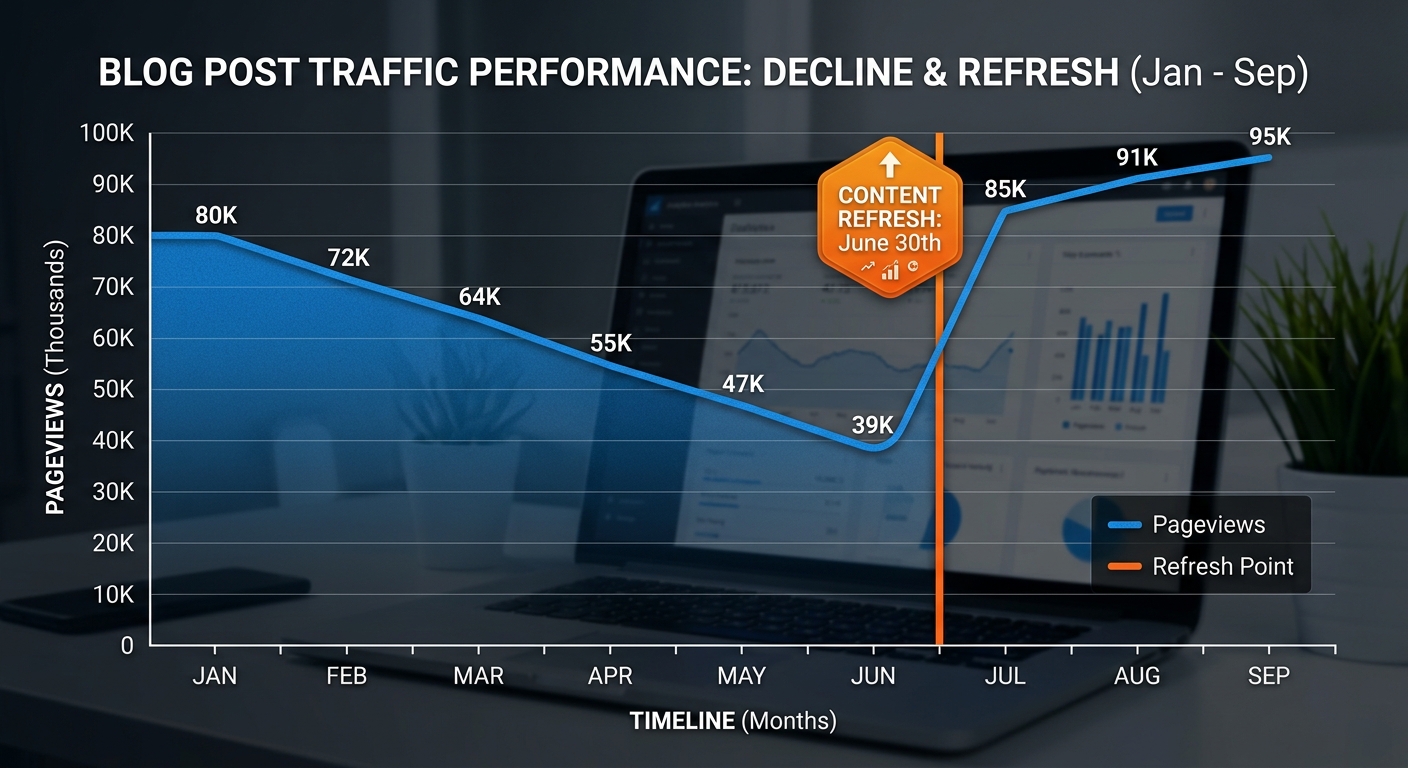
Automation handles the heavy lifting of identifying these declining assets. An Article Refresher tool connected to WordPress tracks metrics like impressions and click-through rates (CTR) to flag posts requiring an update. Instead of rewriting everything, a 15-minute pass to swap outdated screenshots for current UI elements preserves the original SEO authority. Not ideal for a 500-post backlog to do manually.
High-performance content often relies on specific SERP features like featured snippets. If a competitor updates their word count or adds a more relevant comparison table, your position will slip. Using a dashboard to sync these updates directly to the CMS ensures that the metadata and schema stay current. Keeping the "Last Updated" date accurate signals to both Google and potential customers that the technical advice remains valid for the current software version.
Scaling Conversion-Focused Content with AI and Brand Voice
AI allows SaaS teams to produce the volume of content needed for a full '360-day roadmap' without sacrificing the specific brand voice that converts users. By grounding generation in a Brand Voice Analyzer, Articfly extracts tone and vocabulary directly from existing site data to ensure output matches established styles. This technical alignment prevents the generic "AI feel" that often triggers reader bounce rates.
Maintaining this consistency across a 30-post-per-month schedule requires more than just a prompt; it requires a direct connection to the WordPress environment. Articfly’s Advanced Mode uses specific brand guidelines to structure articles, ensuring that every piece of technical documentation or marketing copy adheres to the defined persona. A digital agency used Articfly's Brand Voice Analyzer to ingest their client's site and generate 20 posts that sounded exactly like the founder, resulting in a 15% increase in trial signups.
Efficiency gains disappear if a human editor spends four hours fixing a "hallucinating" AI draft. Articfly addresses this by integrating 13 SEO tools, including readability scoring and internal link mapping, into the generation workflow. Instead of jumping between tabs, teams review the SERP preview and schema generation within the same dashboard (actually, schema generation in Articfly specifically targets JSON-LD format for better Google Rich Result eligibility).
One agency managing five WordPress instances found that moving from manual drafting to the Articfly lifecycle reduced their production time by 70%. The platform handles the transition from ideation to a scheduled WordPress post through a native plugin. No more copy-pasting from Google Docs.
Suppose a SaaS founder needs to pivot their content strategy to focus on a new feature set. They simply feed the new documentation into the Brand Voice Analyzer. The system updates the 360-day roadmap accordingly. Fast and precise.
Teams running 50+ workflows per month often struggle with content decay as much as new production. The Article Refresher tracks performance over time, flagging posts that need an update before they lose their ranking. This keeps the blog's conversion rate stable without adding to the editorial headcount.
Frequently Asked Questions About SaaS Content Conversion
How often should a SaaS blog publish to see conversion results?
Balancing search intent with product-led value is the primary driver for converting SaaS blog readers into users. Successful strategies often involve publishing 2–4 high-quality articles per week to maintain search engine visibility while providing enough touchpoints for a 30-day sales cycle. Benchmarks suggest that publishing 11 or more posts monthly correlates with a 3x increase in lead generation compared to teams posting once a week. Consistency over raw volume.
(Actually, a regular cadence prevents the 'content decay' that often hits blogs in sporadic bursts). Smaller teams usually require automation to hit these numbers without losing quality. Tracking the 'sign_up' event via GTM is the most reliable method for WordPress users to see which posts generate revenue. Using UTM parameters on internal banners helps differentiate between organic link clicks and intentional CTA engagement.
Should high-value content be gated or kept open for SEO?
Keeping content ungated yields better ROI as search engines index the full text for long-tail keywords. Providing a 2,000-word technical guide for free alongside a 1-page PDF checklist balances SEO with lead gen. This builds a retargeting audience via a Meta Pixel without a form submission. Hard gates often increase bounce rates by 40% or more on mobile devices.
How do I track which blog posts actually drive signups in WordPress?
Google Analytics 4 with conversion events tied to the "Sign Up" button click provides the necessary data. UTM parameters on internal banners help differentiate organic clicks from intentional CTA engagement. A "First User Source" report in GA4 reveals the URL that initiated the conversion path. Not ideal for 6-month sales cycles. Tracking via GTM remains the standard for WordPress users.
Action Steps: Start Converting Free Users Today
The first step to improving SaaS conversion is auditing existing content for 'product-led' opportunities and setting up a systematic refresh cycle. High-performing pages often lack clear upgrade paths for free users. A team starting with Articfly's Brand Voice Analyzer today can have a 30-day conversion-focused roadmap ready by tomorrow.
Why wait for organic traffic to stumble upon the pricing page? Actually, most teams find that fixing just five high-traffic posts yields faster results than a total site overhaul. Not ideal for a 500-post backlog. (Actually, focusing on the top 10 URLs usually captures 60% of potential leads). This speed allows for immediate testing of new CTAs across high-traffic URLs.
Content managers who run a full site crawl through the Articfly dashboard typically identify 15-20 "low-hanging fruit" articles that require simple CTA updates. Feeding three successful case studies into the Brand Voice Analyzer establishes the exact technical tone—often a 70/30 split between instructional and sales-focused language—required for the next month of production.
Generating a 30-day editorial calendar directly in the WordPress plugin provides the necessary structure to ensure every new post targets a specific pain point found in the Polar.sh billing data.
Want the system behind this content?
Join the top 1% of SEOs generating programmatic, high-converting organic traffic completely on auto-pilot.
DEPLOY ARTICFLYMore Articles

From Ghost Town to 500 Visitors/Day: How Content Rescued a Dying WordPress Site
Stop letting your WordPress site gather dust. Learn how to leverage AI-driven content audits, brand voice synchronization, and automated publishing to scale from zero to 500 daily visitors.
READ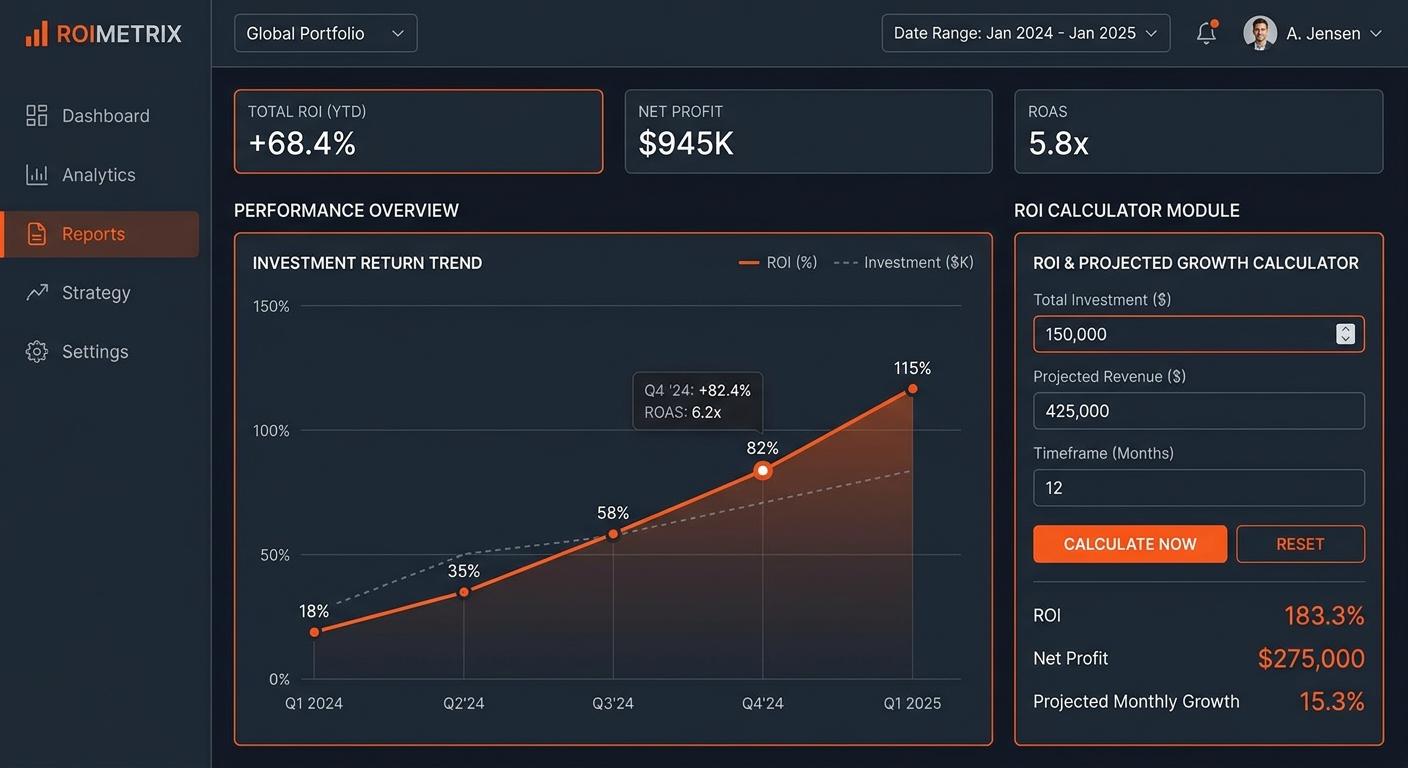
Content Marketing ROI Calculator: How to Prove Blog Posts Make Money
Stop guessing if your blog is profitable. Learn the exact formula to calculate content ROI, track assisted conversions, and use AI to slash production costs while increasing output.
READ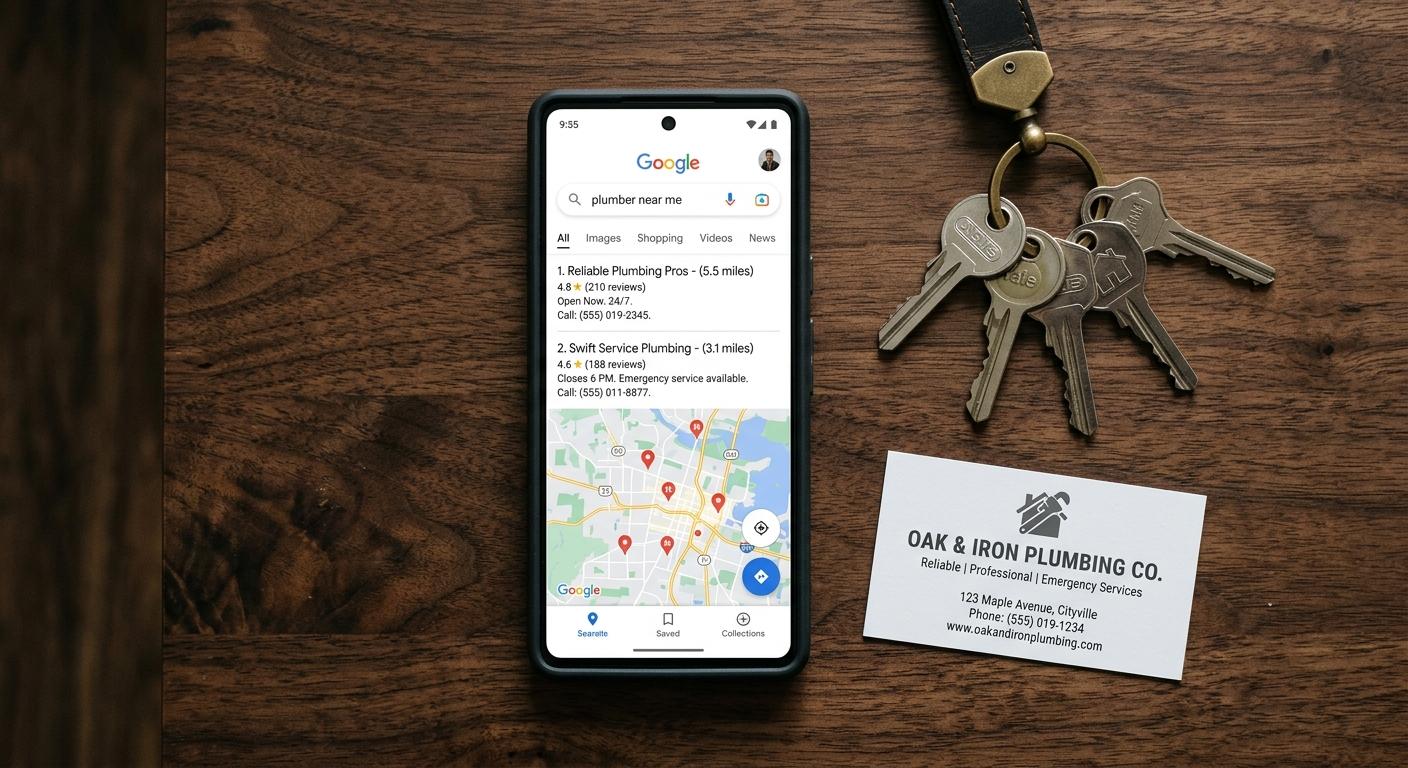
How Local Service Businesses Win Customers with 'Near Me' Blog Content
Discover how local service businesses can dominate 'near me' search results by moving beyond basic landing pages. Learn to scale hyper-local blog content that builds trust, captures high-intent leads, and leverages AI-driven automation for multi-location growth.
READ