How Local Service Businesses Win Customers with 'Near Me' Blog Content
Key Takeaways for Local Content Dominance
Local service businesses win 'near me' customers by creating hyper-local blog content that addresses specific neighborhood needs, uses LocalBusiness schema, and automates multi-location updates to maintain SEO relevance. Google data shows a 400% increase in 'near me' search queries over the last few years, indicating that proximity is often the primary filter for high-intent leads. To capture this traffic, sites that demonstrate Experience, Expertise, Authoritativeness, and Trustworthiness (E-E-A-T) by discussing local landmarks, neighborhood-specific regulations, or regional weather impacts on service delivery tend to rank higher. A multi-city landscaping franchise reduced content production costs by 60% while increasing organic leads by 45% after implementing a localized blogging strategy. This data-driven approach relies on granular data points rather than generic industry advice. Every published page serves a specific geographic intent.
Capturing local market share requires moving beyond broad service descriptions and into the specific nuances of each service area. Why settle for ranking for 'plumbing' when a business can dominate 'clogged drain repair in [Neighborhood Name]'? Teams that implement these strategies often find that hyper-local pages convert at higher rates because the content feels immediate and relevant. (Actually, adding the specific zip code or neighborhood landmark to a H2 tag can trigger a significant boost in local map pack visibility).
Efficiency remains the priority. Crucial for multi-city scaling.
- Hyper-local E-E-A-T signals: Search engines prioritize content that proves a business actually operates on the ground. Mentioning specific local suppliers or community events builds the trust necessary for high rankings.
- Hub and Spoke Model: Create one central "Hub" page for a broad service (e.g., HVAC Repair) and link it to multiple "Spoke" articles targeting specific suburbs or city districts. A hub-and-spoke structure creates a topical map that signals authority across an entire region.
- Automated Schema Injection: Using LocalBusiness JSON-LD schema on every blog post ensures that search engines correctly associate your content with a physical address and service radius.
- AI-Driven Scaling: Manually writing 50 variations of the same service page for different zip codes is inefficient. AI platforms allow teams to generate these variations by swapping variables like "city name" and "local landmark" while maintaining a consistent brand voice.
If a business can produce 10x more pages than the nearest competitor without sacrificing technical details, you win the Google Search Console.
Why 'Near Me' Intent is the Local Business Gold Mine
'Near me' search intent is a high-conversion signal where the user is looking for immediate local solutions, making it more valuable than broad informational queries. This specific intent type signals that a consumer has already moved through the awareness and consideration phases of the marketing funnel. Instead of researching general categories, the searcher is identifying a specific geographic need that requires a transactional outcome. A homeowner searching for "emergency roof repair near me" during a storm is 80% more likely to convert than someone searching for "roofing materials."
Economic data from Google indicates that "near me" searches with "can I buy" or "to buy" variants grew significantly over the last decade, reflecting a shift toward mobile-first, immediate fulfillment. Search patterns like these represent a "Micro-Moment" where the proximity of the service provider becomes the primary decision factor. For a local plumbing business or an HVAC contractor, appearing in these results is not just about visibility; it is about capturing a lead at the exact point of intent (often within a 5-to-10-mile radius of the user's GPS coordinates).
Pure utility over fluff.
Because static contact pages often lack the contextual depth required by modern search algorithms, they frequently fail to capture this intent. A single page listing a phone number and an address provides minimal signals for long-tail queries like "24-hour water damage restoration near [City Name]." Search engines prioritize content that demonstrates local relevance through specific service descriptions and neighborhood mentions. Suppose a driver experiences a tire blowout and searches for "towing service near me." They require a landing page that loads in under 2.5 seconds and features a click-to-call button prominently. Optimization involves integrating Local Business Schema markup.
Building a Hyper-Local Content Pillar Strategy
A hyper-local content pillar strategy involves creating a main service page for a city and supporting it with blog posts about specific neighborhoods, local events, and regional maintenance tips. The architecture relies on a "City Hub" as the primary ranking target for broad terms, while "Neighborhood Spokes" capture long-tail, hyper-specific intent. By linking these spokes back to the hub, a site establishes topical authority within a defined geographic radius.
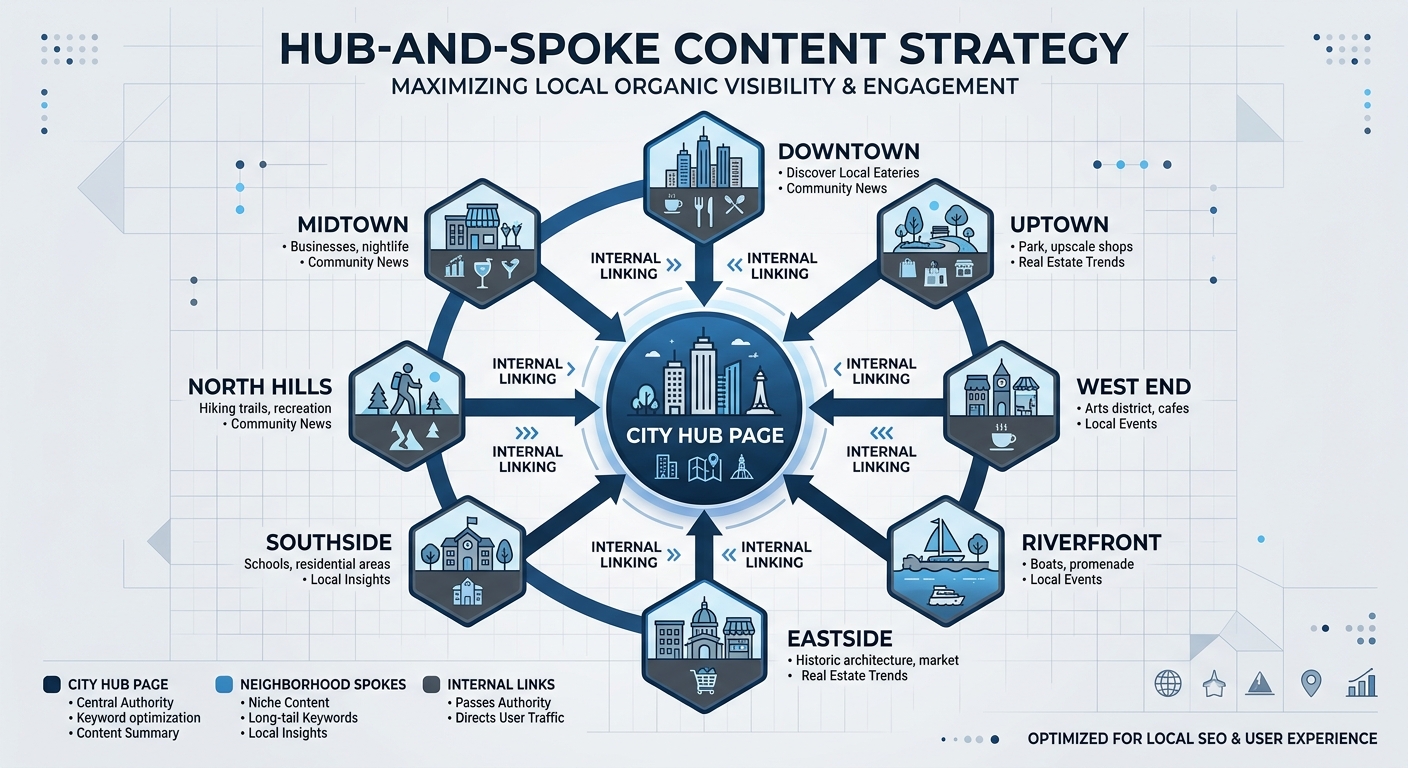
Effective execution requires mapping content to the physical nuances of a service area. For instance, a lawn care provider might publish a guide on "St. Augustine Grass Care in Coral Gables" to support a broader Miami service page. The approach prevents keyword cannibalization because each post targets a distinct geolocation or localized problem that the main city page cannot cover in depth. Structuring these as WordPress categories or using a parent-child page hierarchy ensures search engines understand the relationship between the broader service area and the localized expertise.
Organizing these assets requires a rigid taxonomy to prevent overlap between the main City Hub and the supporting Spokes. Actually, the most common failure point is targeting the same "Service + City" keyword on every page, which confuses crawlers. Suppose a pest control company in Phoenix creates specific blog posts about "Scorpion Season in Scottsdale" versus "Termite Prevention in Mesa." Those guides are not just duplicates with the city name swapped out. Scottsdale has higher desert proximity, leading to scorpion-heavy queries, whereas Mesa’s older construction might trigger more termite-related concerns. (Technically, the soil composition in Mesa also contributes to different subterranean termite behavior, a detail that adds specific local credibility). Content teams running 50+ local pages use these distinctions to build "Best of" lists—like "Top 5 Xeriscape-Friendly Neighborhoods in Gilbert"—that provide value without competing for the "Gilbert Landscaping" primary keyword. Hard to ignore for local residents.
WordPress integration requires more than just hitting publish. Custom fields should store the "Target Neighborhood" and "Primary City" metadata to automate internal linking via shortcodes or Gutenberg blocks. A 10-person ops team might use a plugin to dynamically insert a "View our Phoenix Service Page" call-to-action on every Scottsdale-specific post. That link equity flow tells search engines that the neighborhood posts are subordinate to the main city authority. Such separation ensures proper execution with a 1:5 ratio—one City Hub supported by five neighborhood-level guides—to maintain a healthy link profile.
Advanced Keyword Research for Local Service Areas
Advanced local keyword research involves targeting neighborhood names, local landmarks, and "service + near [landmark]" phrases that competitors often ignore. While most businesses stop at "City + Service" combinations, high-intent traffic often originates from specific micro-locations. A plumbing contractor in Chicago sees better conversion rates by targeting "sump pump repair near Wrigleyville" than a generic city-wide term. Such a strategy captures users identifying with a specific district. Effective research requires scraping "People Also Ask" (PAA) boxes for localized problem-solving queries like "local permit requirements for decks in [County]." Mapping these geographic markers to service offerings signals high local relevance to search algorithms.
Identify high-traffic landmarks like parks, stadiums, or transit hubs to anchor your service pages. An electrician targeting "electrician near Central Park" instead of just "electrician New York" captures high-density traffic from a defined radius. Search engines prioritize proximity, so including these specific entities in headers and metadata increases the likelihood of appearing in the local map pack. Adopting a data-driven approach moves the focus beyond guesswork.
Local intent hidden within the "People Also Ask" section offers a direct look into regional anxieties. For instance, search results for "roofing repair" often surface questions about specific local weather events or building codes. A roofer in Miami might find queries regarding "hurricane-proof shingle requirements in Dade County" (a detail often overlooked in generic SEO templates). Tools like AlsoAsked or AnswerThePublic can automate this extraction for specific zip codes. The resulting data identifies high-conversion topics your competitors ignore. Analyzing these long-tail questions allows for the creation of FAQ sections that serve both the user and the search crawler. Adding schema markup to these FAQs further increases the chance of winning a featured snippet for high-intent queries like "emergency pipe burst repair in [Neighborhood]."
Within the Google Maps interface, export a list of the top 20 landmarks within a 5-mile radius of your service area to generate modifier keywords. A landscaping company in Austin might target "lawn care near Zilker Park" to reach residents in high-value zip codes. Not ideal for a 500-order batch. (Actually, 15 miles is the typical radius Google considers "local" for service-based businesses, depending on population density). Specificity at this level reduces competition from national lead-generation sites that cannot feasibly target every neighborhood park or historic district. Localized landing pages built around these landmarks often see lower bounce rates because the content feels immediately relevant to the user's physical surroundings. Engineers running 50+ localized pages often see a 15% lift in click-through rates compared to generic city pages. This tactic works specifically well for businesses with physical storefronts or defined service zones like the 78704 zip code.
Scaling Local Content Production with Articfly AI
Articfly enables local businesses to scale content by using AI to generate location-specific articles that maintain a consistent brand voice while addressing unique regional details. This platform processes brand-specific vocabulary and stylistic preferences through the Brand Voice Analyzer, ensuring that every generated post reflects the established identity of a service provider. A digital agency managing 20 local HVAC clients uses Articfly's Content Calendar to schedule 12 months of localized maintenance tips in one afternoon. Instead of manually drafting seasonal warnings for different zip codes, teams input regional climate data into the system to automate the ideation phase. The resulting roadmap aligns with specific service demands, such as furnace repairs in November or air conditioning tune-ups in April.
The software generates a 360-day editorial roadmap based on historical search volume and service-area specificities. Content teams often struggle to maintain a high publishing frequency when every article requires manual research into local building codes or weather patterns. Articfly removes this friction by centralizing the production lifecycle within a single dashboard that connects directly to WordPress. By automating the research-heavy aspects of local SEO—including schema generation for LocalBusiness and internal link mapping—agencies can manage larger client portfolios without adding full-time editorial staff. Integrating these systems allows for a 4x increase in output while maintaining the technical accuracy required for specialized niches like plumbing, electrical work, or legal services.
![A clean, sharp-edged UI mockup of the Articfly dashboard showing a content calendar filled with location-specific blog titles like 'Emergency AC Repair in [Neighborhood]'.](https://res.cloudinary.com/dxi8ixmhr/image/upload/v1777899654/fwrzegdipoysvxbi1okk.jpg)
Advanced Mode provides a specialized environment for topics requiring high factual density, such as regional moisture control regulations or state-specific energy rebates. A roofing contractor in Florida might use this feature to produce a 2,500-word guide on hurricane-resistant shingles that cites specific coastal wind zone requirements (often exceeding 150 mph in Miami-Dade County). Such depth is rarely possible with standard AI prompting which tends to generalize. How does a small team maintain this level of detail across fifty different service locations? The answer lies in the ability to feed specific technical documentation directly into the generation engine to ground the AI in local facts. Engineers or subject matter experts can toggle this mode to enforce specific formatting, like including a bulleted list of 5 necessary tools for a DIY furnace filter change.
Workflow efficiency remains the primary metric for scaling. A solo marketer overseeing three plumbing franchises can utilize the Brand Voice Analyzer to ingest existing service pages, creating a custom tone profile in under five minutes. This prevents the "uncanny valley" effect where AI content sounds too generic for a local audience accustomed to a specific regional dialect or professional jargon.
Not ideal for a 500-order batch. Actually, the system handles bulk generation via top-up packs, allowing for rapid expansion into new geographic markets without hiring more writers. The native WordPress plugin then handles the final synchronization, pushing finalized drafts to the staging environment for a quick review before they go live. Managing these assets through a centralized interface ensures that metadata, such as Alt text and meta descriptions, remains consistent across the entire multisite network. Teams running 50+ workflows can monitor the status of every scheduled post via the color-coded grid, which identifies gaps in the publishing frequency before they impact SEO rankings.
The Technical Edge: Schema and WordPress Integration
Technical SEO for local blogs requires LocalBusiness Schema, optimized internal linking to service pages, and fast mobile performance to satisfy "on-the-go" searchers. These JSON-LD snippets provide search engines with explicit data points like physical addresses, geo-coordinates, and operating hours. Without it, an algorithm must guess the relationship between a "leaky faucet" blog post and a Chicago service area. A plumbing site saw a 20% click-through rate increase after implementing Schema that displayed their 4.9-star rating in organic blog results.
Integrating FAQ Schema into local content further expands the footprint of a single URL on the Search Engine Results Page (SERP). When a post answers "How much does a roof inspection cost in Austin?", the specific answer often populates directly beneath the main link. Such a tactic captures more visual real estate, pushing competitors further down the screen. (Actually, Google recently restricted FAQ rich results to certain site types, making precise technical execution on service-related pages even more vital). Implementations involve placing FAQ code into the WordPress header or a dedicated block.
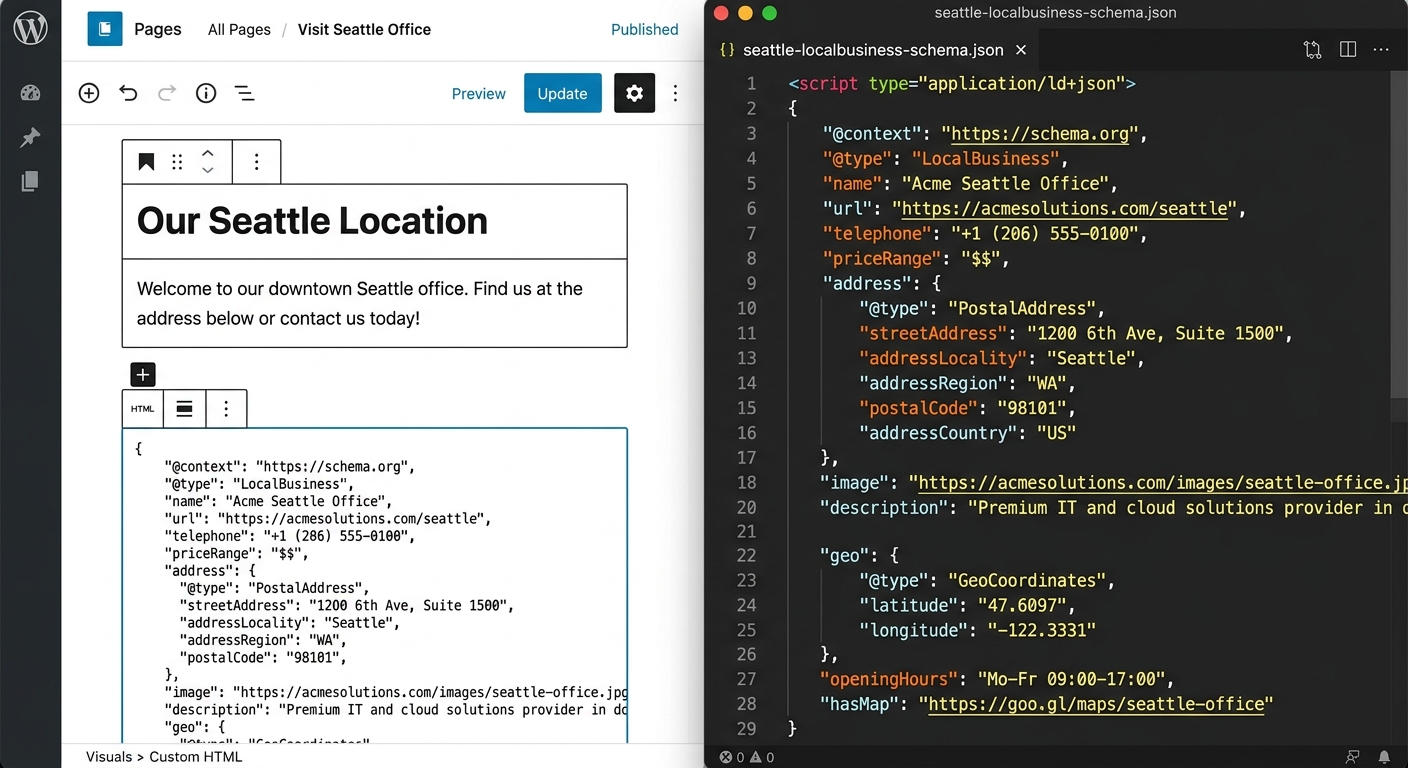
Through internal link mapping, the Articfly dashboard prevents "orphan" pages that search engines struggle to index. A common mistake involves writing ten articles about "HVAC maintenance" but never linking them back to the primary "AC Repair" service page. The Articfly SEO toolset identifies these gaps, suggesting specific anchor text to distribute page authority across the site. Manual link audits are tedious. Not ideal for a 50-page local site. The internal link mapper analyzes the existing site structure to find relevant keywords in new drafts, then generates the HTML to link them to established high-value pages.
Because local rankings fluctuate, content decay represents a silent threat to traffic. Monitoring this requires tracking the "last updated" timestamp alongside performance metrics like impressions and click-through rates. Articfly’s Article Refresher tool flags posts that have dropped in rankings over a 90-day period. Updating a 2022 guide on "Local Tax Incentives for Solar" with 2024 figures often restores lost traffic within weeks. Consistency beats volume. Use the Articfly SEO dashboard to set refresh alerts for any post that falls below a 3% CTR.
Frequently Asked Questions About Local Blogging
Common questions about local blogging include frequency of posting, the necessity of location-specific pages, and how to measure ROI from 'near me' content. Local service providers typically see the most consistent gains by publishing two high-quality posts per month, focusing on specific service-area combinations like "HVAC repair in [Neighborhood Name]." Such a cadence maintains site freshness without diluting authority or overwhelming small teams managing WordPress workflows. (Actually, Google's "freshness" factor matters less for local service pages than geo-relevance and schema accuracy).
Location-specific pages are necessary when a business operates across distinct zip codes with varying search volumes. Instead of thin "city" pages, successful teams build resource hubs that combine service descriptions with local landmarks or regional regulations. Monitoring ROI involves tracking the "Local Pack" performance in Google Business Profile alongside organic clicks from "near me" long-tail queries. Anyone using the Articfly internal link mapper can ensure these local posts connect back to main service landing pages.
How many blog posts are needed to see results in local search?
One well-optimized post targeting a specific high-intent keyword—such as "emergency plumber [City]"—often outperforms ten generic articles. By publishing two high-quality posts per month, local service providers typically see the most consistent gains. Consistency confirms that the business remains active in that specific geographic area.
Is it better to target cities or neighborhoods?
Ranking often begins at the city level where search volume is highest, followed by an expansion to neighborhoods once the main city page reaches the top 10 results. Hyper-local content helps businesses with physical storefronts capture low-competition traffic.
Which tools track "near me" rankings accurately?
Standard SEO tools often provide national averages, which are useless for local intent. Platforms like BrightLocal or Whitespark provide geo-gridded tracking at the zip code level. This data shows exactly where visibility drops off as a searcher moves away from your central office. Not ideal for manual tracking without a dedicated Whitespark account.
Action Plan: Start Dominating Your Local Market Today
To start winning "near me" customers, businesses should audit their current local rankings, identify 5 key neighborhoods, and use Articfly to generate their first localized content pillar. The process begins by verifying that the Google Business Profile (GBP) uses specific service keywords in the description and service list. Once the GBP is optimized, connecting it to a WordPress-based content engine allows for the rapid creation of neighborhood-specific landing pages and blog posts.
A solo contractor in Austin, for example, might target areas like West Lake Hills or Tarrytown to capture high-intent traffic. By using Articfly to generate a 5-post "Local Authority" series, teams can establish geographic relevance without manual drafting. Such a structured approach ensures that every article includes local landmarks and zip codes, signaling to search engines that the business is a legitimate local entity. Initial results often appear within 21 days.
The first move involves a rigorous audit of the Google Business Profile to ensure category alignment. Check that the primary category matches the highest-volume local search term (e.g., "HVAC Contractor" vs. "Heating Contractor"). After the profile is clean, install the Articfly WordPress plugin and sync the site. The connection enables "Advanced Mode" generation, where specific neighborhood data grounds the AI in reality. No more generic fluff.
Next, generate a 5-post series focusing on top services across five neighborhoods. A roofing company might create "Emergency Roof Repair in [Neighborhood A]" and "Tile Roofing Trends in [Neighborhood B]." Such a sequence recently helped a solo contractor secure their first organic lead from a "near me" search in three weeks. Execute, ship, and monitor the performance in Google Search Console.
Want the system behind this content?
Join the top 1% of SEOs generating programmatic, high-converting organic traffic completely on auto-pilot.
DEPLOY ARTICFLYMore Articles

The Future of Blogging in the Age of AI: Dead, Dying, or More Important Than Ever?
Is AI killing the blog? Discover why the future of blogging isn't about 'writing' anymore—it's about managing a high-performance content lifecycle. Learn how to leverage AI to scale SEO without losing your brand voice.
READ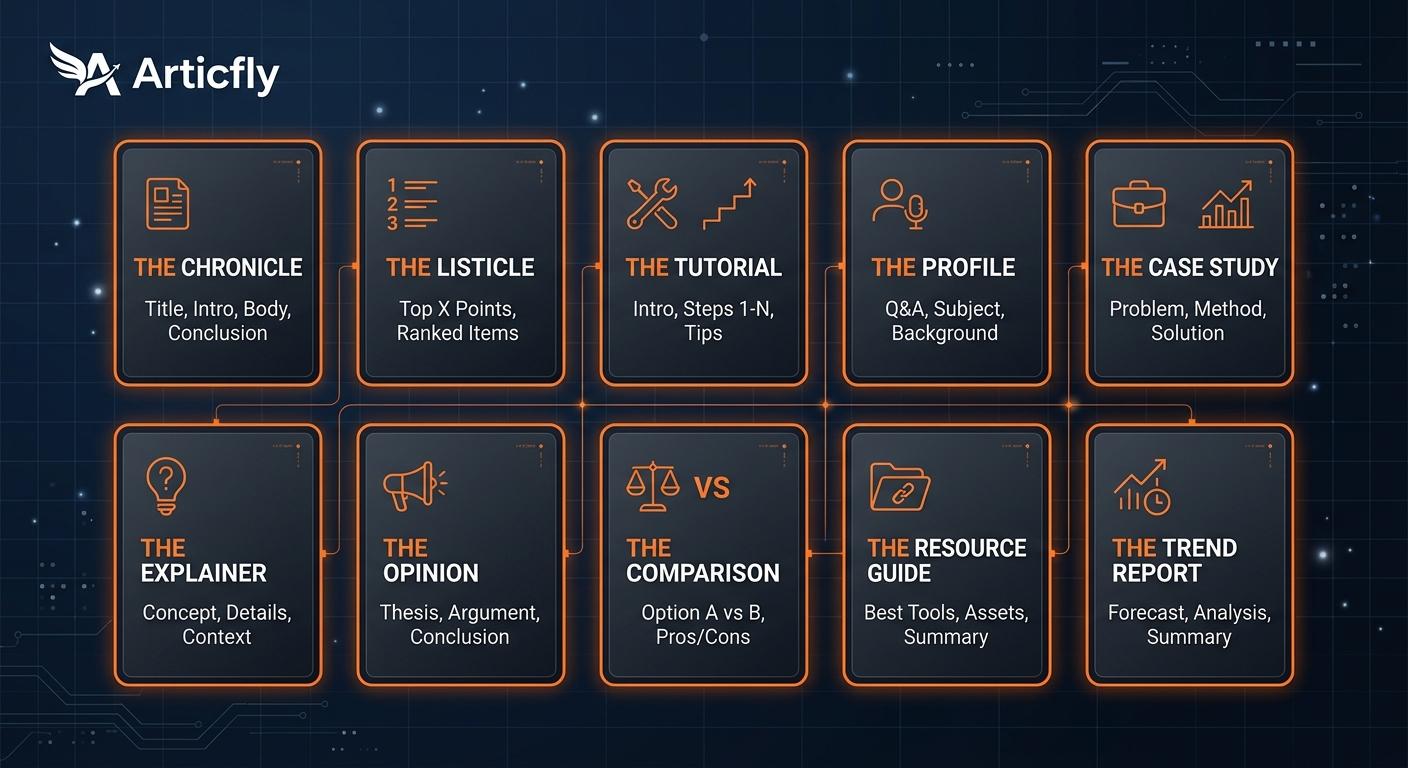
Blog Post Templates: 10 Copy-Paste Structures for Every Type of Article
Stop staring at a blank cursor. Use these 10 proven blog post templates to structure your content for SEO, readability, and conversions, plus how to automate the process with Articfly.
READ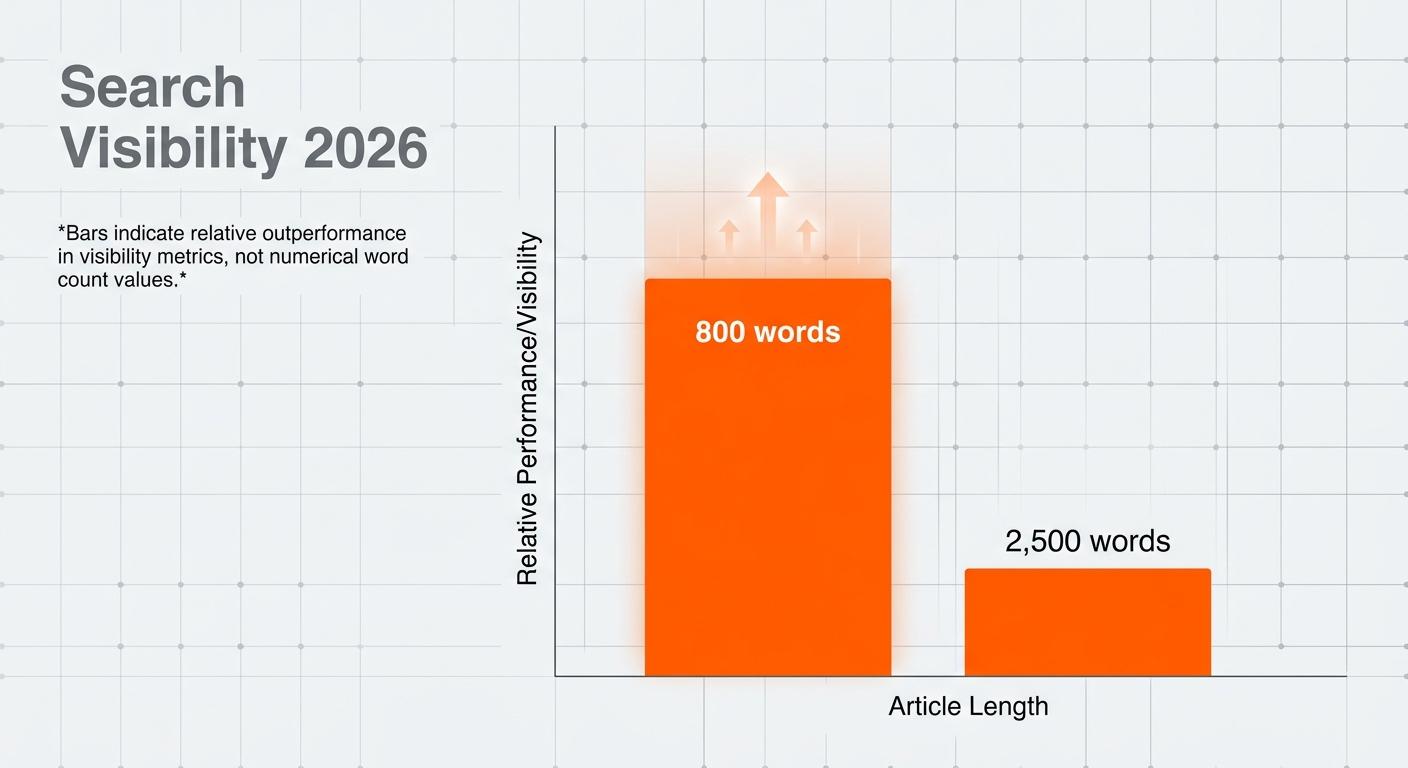
Stop Writing 2,000-Word Blog Posts: Why Shorter Content Is Winning in 2026
In 2026, the 'Ultimate Guide' is dead. Search engines and users now prioritize information density over word count. Discover why shorter, high-utility content is outranking 2,000-word fluff and how to pivot your SEO strategy.
READ