The 30-Day Blog Challenge: Scaling to Your First 1,000 Organic Visitors
Key Takeaways
To reach 1,000 organic visitors in 30 days, you can publish 20-30 high-intent articles, optimize for long-tail keywords, and use automated internal linking to accelerate indexing. A solo blogger using Articfly to scale from 0 to 30 posts in a month without hiring a writer can achieve this by targeting keywords with a Difficulty score below 20. A volume of 30 posts creates a "topical authority" signal that search engines recognize faster than sporadic posting. The strategy relies on a WordPress-integrated pipeline where the Articfly dashboard pushes content directly via a native plugin.
By automating the internal link mapping, the site structure becomes crawlable within hours of publication. Such an approach removes the manual bottleneck of formatting and interlinking, allowing a single user to manage the output of an entire editorial team. Success depends on maintaining a consistent Brand Voice profile to ensure the AI output aligns with existing site data. (Actually, Articfly’s Brand Voice Analyzer can extract these parameters from a single URL in under 60 seconds). This setup facilitates a 30-day sprint without compromising the technical SEO integrity of the WordPress database.
Scaling a WordPress site to 1,000 monthly organic visitors within a 30-day window requires a shift from sporadic writing to a high-frequency production system. Can a single person actually manage a daily publishing schedule without burnout? Precision over volume. The answer lies in offloading mechanical SEO tasks—like schema generation and SERP previews—to a dedicated engine.
- Publishing Frequency: Target 20 to 30 articles per month to build rapid topical authority.
- Low-Difficulty Keywords: Focus exclusively on long-tail queries with a Keyword Difficulty (KD) under 15 to bypass established competitors.
- Automated Internal Linking: Use Articfly’s internal link mapping to connect new posts to existing pillar pages automatically (the internal link mapping prevents "orphan pages" that Google ignores).
- Brand-Voice-trained AI: Feed your existing URL into a Brand Voice Analyzer to extract tone and vocabulary for consistent output.
Set your Articfly dashboard to Advanced mode to ensure every post includes the necessary 13 SEO tool checks before syncing to the WordPress plugin.
Phase 1: The Technical Foundation and Niche Mapping (Days 1-5)
Phase 1 focuses on technical SEO readiness and niche mapping using AI-driven keyword analysis to ensure every post has a clear ranking objective. During these initial five days, the system establishes the data-driven guardrails for the entire 30-day sprint. An agency onboarding a new client site begins by connecting the Articfly WordPress plugin. This link bridges the gap between the SaaS dashboard and the live environment. Synchronizing metadata, category structures, and existing content history happens immediately via this connection. High-speed alignment.
Style profiles emerge after the Brand Voice Analyzer scans at least 5-10 existing articles to identify specific linguistic patterns and preferred terminology. Such precision prevents the generic "AI feel" that often plagues automated content. (Actually, the system requires a minimum of 2,000 words of source text to generate a high-confidence voice profile). Engineers managing multiple domains can toggle between these profiles to ensure a B2B SaaS site sounds distinct from a lifestyle blog. The analyzer locks preferences like specific industry terminology into the generation engine to maintain consistency across the 30-day window.
Establishing the foundation requires installing the Articfly plugin and entering the unique site key provided in the dashboard. This handshake allows the system to read the site's XML sitemap and current search performance data. A 10-person ops team might spend hours manually auditing a site, but the automated crawl completes this task in under five minutes. Data from the crawl informs the technical SEO basics, including the automatic generation of Schema.org markup for every new post. Not just a list of titles.
The 30-day roadmap emerges from a scan of underserved keyword clusters—terms with high intent but low competition from established domains. The system prioritizes clusters where the site has existing topical authority or keywords with a Keyword Difficulty (KD) score below 30. A typical 30-day plan includes 12 to 15 targeted articles, each mapped to a specific internal link parent page. Anyone managing production n8n instances or WordPress nodes can see the logic in this structured approach. Every new post contributes to the site's overall topical depth by targeting the Ahrefs-verified KD 20-35 range.
Phase 2: High-Velocity Content Production (Days 6-15)
Phase 2 involves generating 15-20 high-quality articles using Advanced AI modes that follow SEO best practices and brand guidelines. This period shifts focus from planning to execution, requiring a steady output of roughly two articles per day to maintain the 30-day trajectory. By utilizing the Advanced Mode in Articfly, users can input specific LSI keywords that prevent the generic "AI feel." The goal is to produce content that ranks by addressing specific search intents discovered during the initial niche mapping phase.
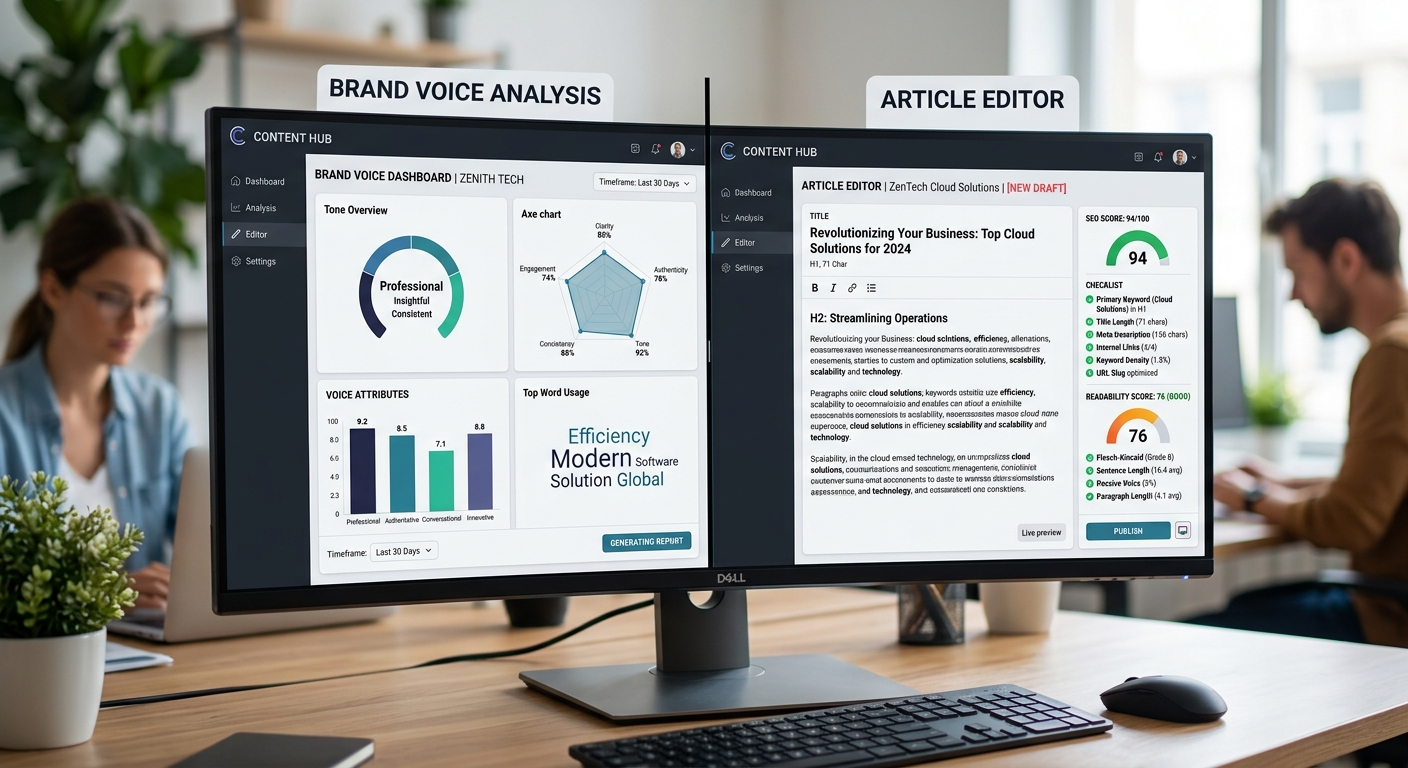
A 10-person ops team or a solo blogger producing 2 articles per day often relies on the Advanced Mode to handle complex formatting requirements. The Advanced Mode setting allows for the integration of 15-20 LSI keywords per post, ensuring the semantic density matches top-ranking competitors. Instead of manual keyword stuffing, the engine weaves these terms into subheadings naturally. (Actually, Articfly’s LSI engine prioritizes terms found in the top 10 SERP results). The system checks for keyword clustering, where related terms like "search intent" and "organic traffic" are grouped to satisfy the Helpful Content Update requirements.
Efficiency depends on the built-in SEO checklist and readability scoring. Each generated draft undergoes a real-time scan against 13 distinct SEO factors, including title tag length and image alt text presence. If the readability score drops below 60—indicating the text is too dense for a general audience—the editor highlights specific blocks for simplification. No, wait, it’s better to say the tool identifies passive voice and complex sentences that bloat the word count without adding value. High-velocity production requires these automated guardrails so speed does not compromise the quality needed to hit the 1,000-visitor milestone. Data doesn't lie. (The Flesch-Kincaid Grade Level is the specific metric used here, targeting a score of 7.0 to 8.5 for most B2B blogs). The checklist also flags missing H2 and H3 tags, which are necessary for the automated Table of Contents generation in the WordPress plugin.
The final step before pushing to WordPress involves the SERP preview tool. The preview feature displays exactly how the meta title and description will appear on mobile and desktop screens, preventing truncated text that kills click-through rates. Teams managing 50+ keywords use these previews to align the "hook" of the article with the search query. Once the SEO score hits the green zone—usually above 80/100—the article is ready for one-click sync to the WordPress dashboard. Such a workflow reduces the time spent on manual formatting by approximately 40 minutes per post. Not ideal for a manual 500-order batch. The Articfly WP plugin handles the final 2-second sync.
Phase 3: Internal Linking and Schema Optimization (Days 16-20)
Phase 3 focuses on the 'connective tissue' of the blog, using automated internal link mapping and schema generation to improve crawlability. A technical SEO specialist running Articfly's internal link mapping can identify "orphan" pages—posts with zero incoming links—and fix them by inserting relevant anchors into existing high-performing content. The mapping stage ensures that search engine crawlers process the site architecture efficiently, distributing page authority from cornerstone articles to newer, long-tail posts.
Beyond link mapping, generating JSON-LD Schema for every article creates rich snippets in search results, increasing visibility for specific data points like FAQ sections or product ratings. Articfly’s schema generator injects this structured data directly into the WordPress header (using the standard application/ld+json format), which helps bots categorize content without manual tagging. Such a logic-driven approach to site structure stops the loss of link equity and prepares the domain for the final 10 days of the challenge.
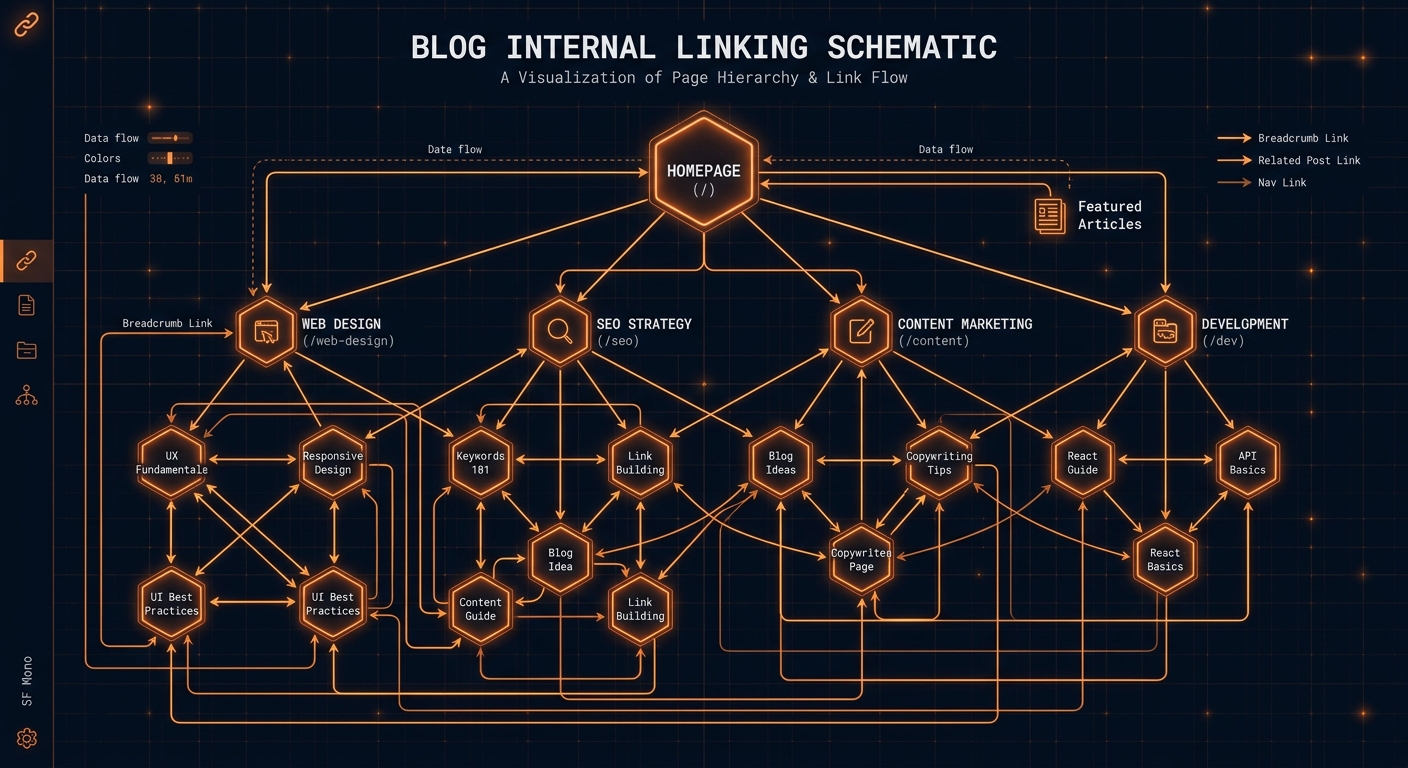
Auditing for orphan pages often reveals content that exists in a vacuum. Suppose you manage a 50-post blog; it likely contains 5-8 articles that lack a single internal backlink, effectively hiding them from Google’s discovery index. Teams that use Articfly’s link suggestions often find that linking a new guide to a 2-year-old pillar page stabilizes the older page's rankings while boosting the new one. Image alt text also serves as a secondary link layer. (Actually, alt text should remain under 125 characters to ensure compatibility with screen readers like JAWS or NVDA). Adding descriptive, keyword-rich alt tags to every .webp or .jpg file improves image search rankings and overall accessibility.
The goal is a flat architecture where no page is more than three clicks away from the homepage. A standard JSON-LD Article schema includes specific properties like "datePublished" and "author" which Articfly pulls directly from the WordPress database. Precise metadata helps avoid crawl errors. Not ideal for a messy site. By Day 20, the site should function as a cohesive network rather than a collection of isolated files. The technical foundation supports the upcoming promotion phase and the WordPress 6.x block editor environment.
Phase 4: Distribution and Initial Referral Traffic (Days 21-25)
Phase 4 shifts from creation to promotion, focusing on social signals and niche-specific distribution to trigger faster indexing. Seeding AI-generated snippets across LinkedIn, Reddit, and Quora creates the initial referral traffic required for search engines to recognize content relevance. This phase prioritizes visibility through engagement in professional communities rather than waiting for passive discovery. A marketer sharing technical blog snippets on LinkedIn and Reddit often drives the first 100 referral visitors within 48 hours.
Instead of generic "check out my blog" posts, distribution at this stage relies on high-utility fragments extracted directly from the core articles. Teams use Articfly to generate platform-specific summaries that answer a specific community question or provide a data-backed insight. For instance, a 200-word breakdown of a technical configuration posted to a relevant subreddit provides immediate value to developers. Active interactions signal to crawlers that the destination URL is a live, high-traffic resource. A strategy like this bypasses the slow "sandbox" period by demonstrating immediate utility to human users.
Beyond social shares, backlink identification involves finding unlinked brand mentions or broken links on niche resource pages using tools like Help a B2B Writer or Featured.com. For example, a "Best WordPress Plugins" list with a 404 error is a prime target for a replacement link to an Articfly-optimized tutorial.
Monitoring these efforts requires a close eye on the "Real-time" report in Google Analytics 4 (actually, a referral from a DA 50+ site often triggers a re-crawl in under 12 minutes). Not ideal for a 500-order batch. How does one sustain this momentum without manual burnout? Teams that monitor the "Pages and screens" report for high bounce rates on social traffic can adjust their snippets to better align with reader expectations. Successful distribution ends when the first 100 unique visitors appear in the dashboard.
Phase 5: Monitoring Performance and Content Refreshing (Days 26-30)
Phase 5 uses the Articfly Refresher to update early posts based on initial performance data, ensuring the blog stays "fresh" in Google's eyes. Such a stage focuses on content decay and the identification of "hidden" keywords within Google Search Console (GSC). When an article published in week one starts ranking for terms not originally targeted, the Refresher tool allows for the injection of these specific phrases into headers and body text. The final week prioritizes signalling to search crawlers that the information remains current and detailed.
Sustaining growth beyond the first 1,000 visitors requires a shift from pure creation to strategic maintenance. By analyzing the average position of posts in the Articfly dashboard, teams can pinpoint which content sits on page two of search results. Strategic refinement reduces the risk of traffic plateaus by maximizing the value of existing assets.
Google Search Console often reveals search queries that the original draft missed. I initially thought my Day 7 post on "SaaS SEO" was a winner, but it stalled at position 12. Using the Articfly dashboard, I saw it was picking up impressions for "SaaS content audit"—a topic I barely touched. Adding a 300-word section on audits fixed it. Not a minor tweak. Suppose a 10-person agency sees this pattern; they would expand the existing article rather than writing a new one. The Articfly Article Refresher automates this by suggesting where to insert the missing context. (Actually, adding a single FAQ block with three specific questions is often enough to capture a featured snippet).
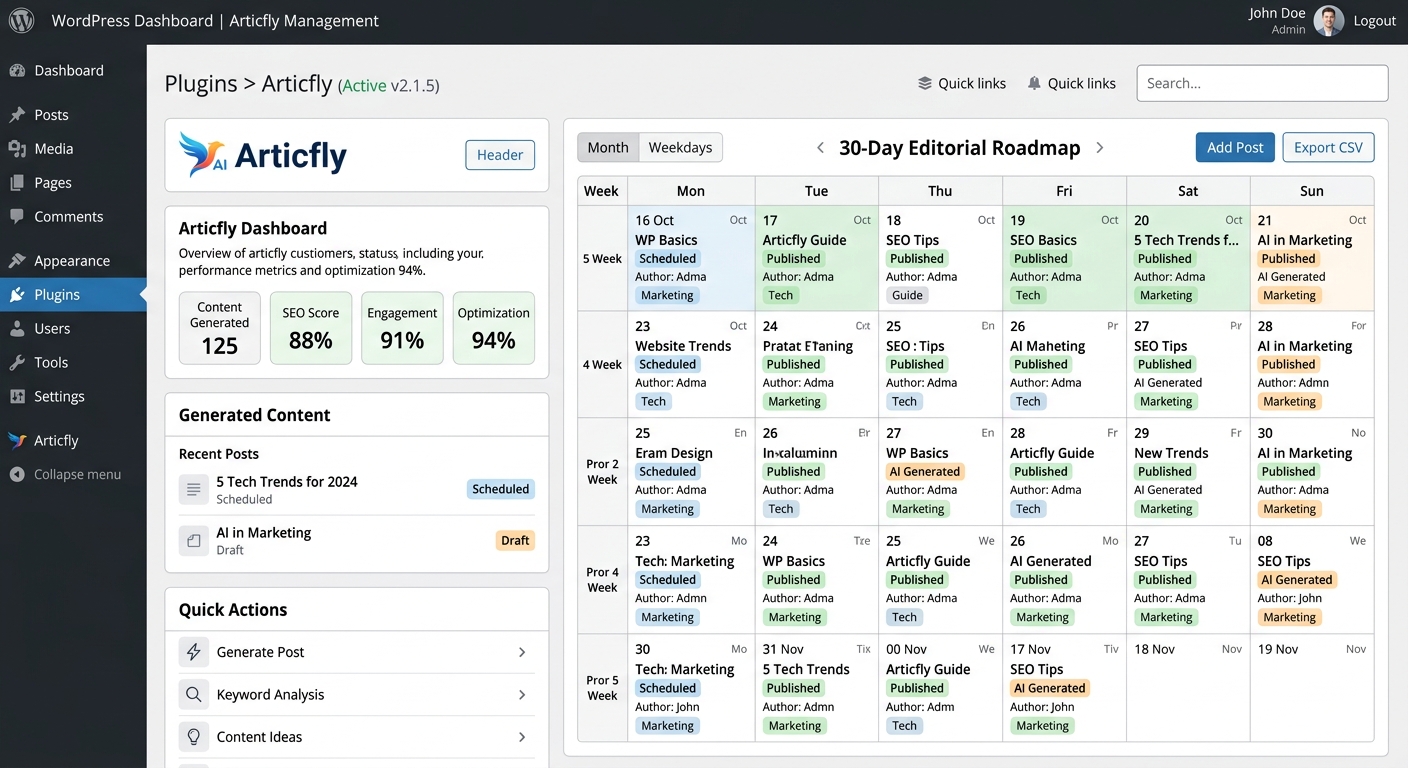
Instead of guessing, roadmaps for month two involve setting a 90-day editorial roadmap within the Articfly Content Calendar. Teams that analyze their first 30 days of data often find that 20% of their posts drive 80% of the traffic. Focusing the next batch of content around these high-performing clusters ensures the internal link graph stays tight. Data-backed planning prevents the "content treadmill" effect where volume replaces quality. Maintenance is the secret to scaling the Articfly Content Calendar. Consistent updates keep the 1,000-visitor milestone as a floor rather than a ceiling.
Common Pitfalls That Kill Blog Growth Before Day 30
Common mistakes include choosing keywords that are too competitive, ignoring search intent, and failing to maintain a consistent publishing schedule. Targeting high-volume head terms like "CRM software" with zero domain authority creates a ceiling that no amount of AI-generated text can break through without a backlink profile to match.
If a content strategy prioritizes information-gathering keywords for a sales-focused page, search intent mismatch occurs. When the SERP for "best running shoes" shows listicles and the blog post is a single product review, Google will likely ignore the page. Keyword cannibalization happens when multiple posts compete for the same query, splitting the ranking power. These overlaps often result in two pages fluctuating between positions 20 and 50 instead of one page reaching the top five. Maintaining a strict editorial cadence ensures the crawl bot returns frequently to index new URLs.
Regarding site performance, technical bloat often stems from a "more is better" approach to WordPress plugins. A site running 45 active plugins will see its Largest Contentful Paint (LCP) exceed 2.5 seconds. Not ideal for mobile users. This lag signals poor user experience. (Actually, most sites function on fewer than 15 plugins). Stripping back to essentials—caching, SEO, and security—improves the crawl budget.
Teams that overlook keyword cannibalization often find their traffic flatlines despite a high publishing volume. If three separate articles target "how to start a blog," Google struggles to pick a winner. Consolidating these into a single 2,500-word pillar page often yields better results than maintaining thin, overlapping posts. Check the Google Search Console "Performance" tab to see if multiple URLs are appearing for the same query. Fix the issue by using a 301 redirect. No one likes a messy sitemap.
FAQ
Is 1,000 organic visitors in 30 days a realistic target?
Achieving 1,000 organic visitors within 30 days requires targeting low-competition, long-tail keywords with a monthly search volume between 100 and 500. A domain with existing authority hits this milestone faster, while new sites often require 30 to 60 high-quality posts to trigger initial indexing and ranking movements. Google prioritizes helpful, information-rich content regardless of the production method, provided it meets E-E-A-T standards and solves specific user intents.
Does Google penalize AI-generated content?
Google Search guidelines explicitly state that using AI-generated content is not against their policies, provided the material is not created primarily to manipulate search rankings. Content must demonstrate original thought or unique data to avoid being flagged as "spammy automatically-generated content" under the March 2024 core update. (Actually, the quality of the final output matters more than the tool used to generate the first draft). High-quality results come from human-in-the-loop workflows that prioritize factual accuracy and readability over raw output volume.
How many posts does a new domain need to start ranking?
New domains typically require a minimum of 20 to 30 articles to establish topical authority in a specific niche. Publishing three times per week creates a consistent crawl frequency for Googlebot, leading to faster discovery of new URLs. A concentrated cluster of related articles—such as five posts covering different aspects of "WordPress SEO"—signals expertise more effectively than 50 unrelated topics.
Not always guaranteed for every niche. Success depends on the data reflected in Google Search Console.
Action Steps: Start Your 30-Day Challenge Today
The first step to hitting 1,000 visitors is setting up your AI content engine and mapping your first 30 days of content. Functional workflows begin by connecting Articfly to a WordPress site via the native plugin to establish a direct bridge for data syncing. Users then run the Brand Voice Analyzer on an existing URL to extract tone and vocabulary parameters (a process that typically takes less than 60 seconds). This configuration allows the AI Article Generation tool to produce drafts that align with previous editorial standards without manual editing. Setting the Content Calendar to a 30-day roadmap then populates a queue of topics based on niche relevance. For instance, a tech blog might schedule 15 comparisons and 15 tutorials to saturate its category. Such a setup keeps the engine running autonomously while the user focuses on high-level strategy.
Once the voice is locked, moving from draft to live happens in the Advanced Mode editor. Here, SEO tools like the SERP preview and internal link mapper finalize the post before it hits the WordPress database. (Actually, setting the "Auto-publish" toggle is what maintains momentum during busy weeks). Execution beats planning. A 10-article-per-week pace on Articfly requires roughly 2 hours of oversight, mostly for reviewing the AI-generated schema and meta descriptions. Consistency over 30 days builds the indexable footprint required for organic growth. Pro plan subscribers get full access to the Article Refresher tool.
Want the system behind this content?
Join the top 1% of SEOs generating programmatic, high-converting organic traffic completely on auto-pilot.
DEPLOY ARTICFLYMore Articles
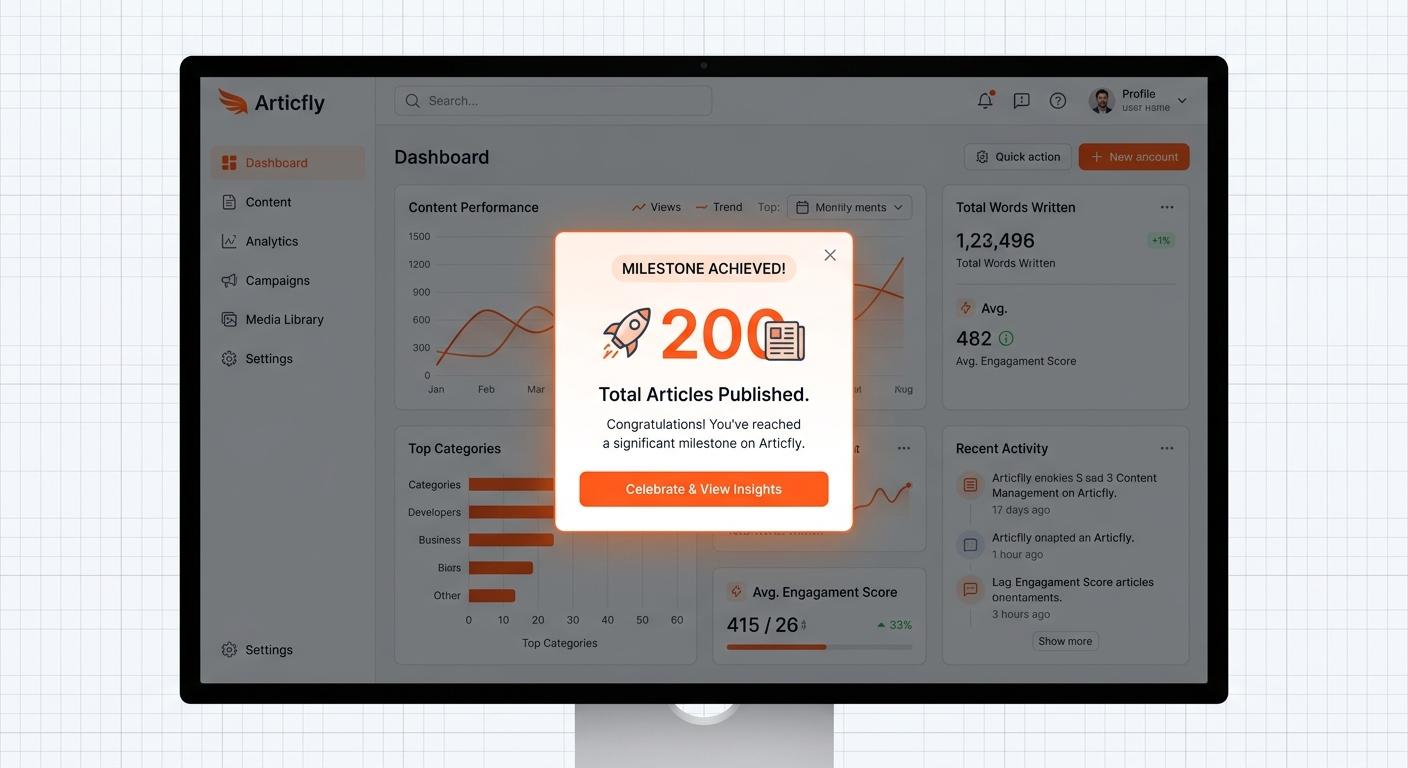
How We Generated 200 SEO-Optimized Articles in 30 Days: A Behind-the-Scenes Breakdown
Discover the exact workflow we used to scale content production to 200 SEO-optimized articles in just 30 days using Articfly. No fluff, just the technical breakdown of brand voice extraction, AI-driven roadmaps, and automated WordPress publishing.
READ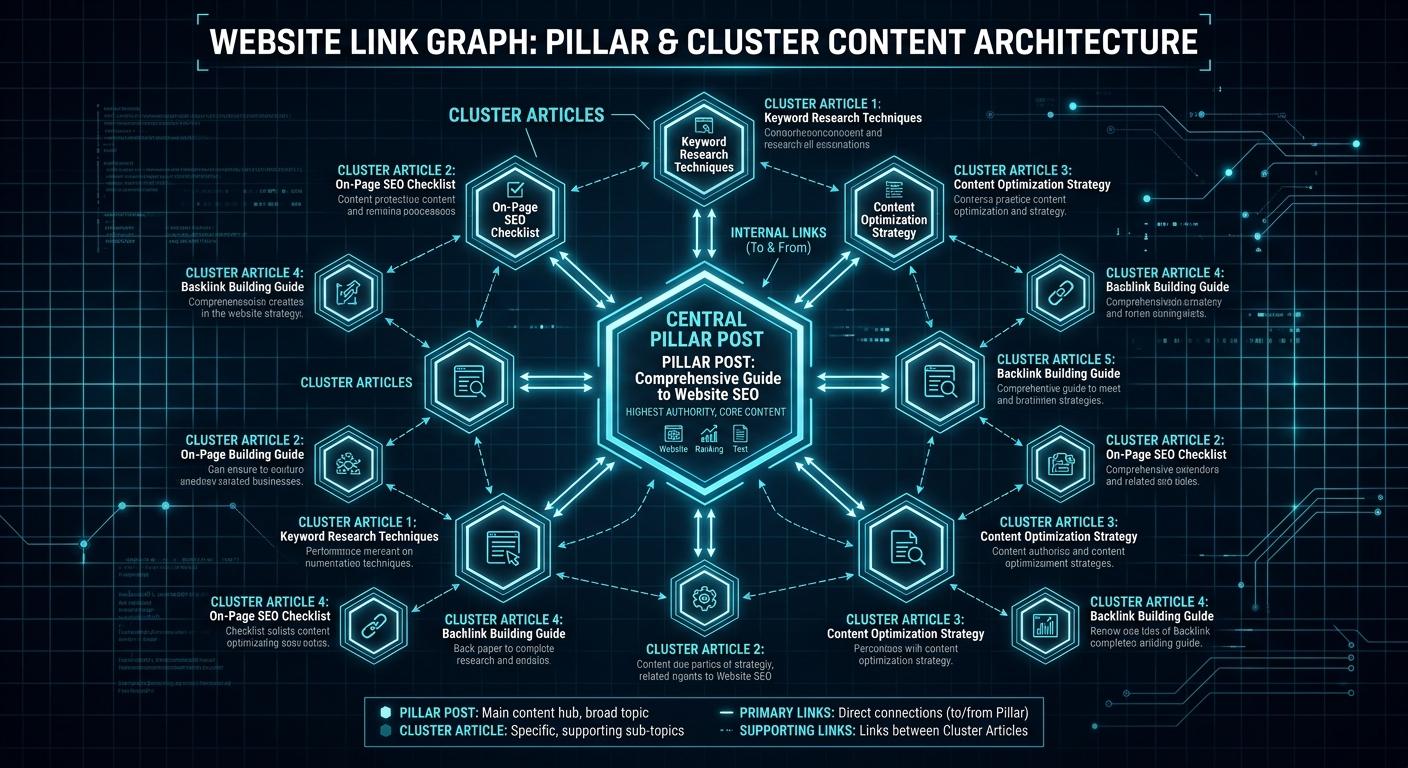
Internal Linking Strategy for Bloggers: The Most Underrated SEO Technique
Stop chasing elusive backlinks and start mastering the SEO you actually control. Learn how a structured internal linking strategy boosts rankings, establishes topical authority, and scales your WordPress blog using AI-driven mapping.
READ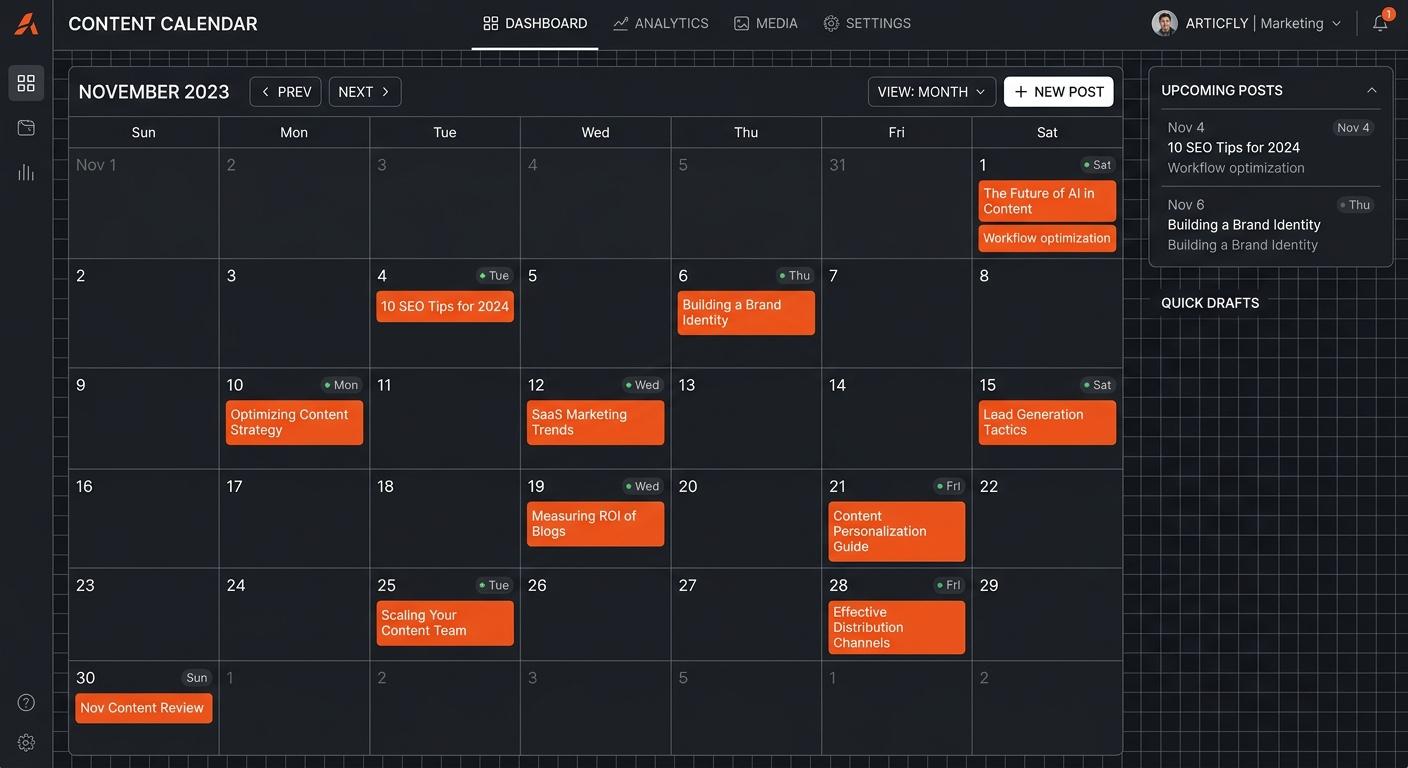
How to Scale Your Blog from 4 to 40 Posts Per Month Without Hiring Writers
Scaling a blog from 4 to 40 posts per month usually requires a massive editorial team. Learn how to use AI-driven systems and automated workflows to 10x your content output while maintaining brand integrity and SEO performance.
READ