7 Types of Blog Posts That Generate B2B Leads (Not Just Traffic)
Key Takeaways for B2B Lead Generation Content
B2B lead generation through blogging requires shifting focus from high-volume keywords to high-intent frameworks like product comparisons, original research, and problem-solving tutorials. Most editorial teams fail because they optimize for traffic volume rather than pipeline velocity. A SaaS marketing lead recently reported a 40% increase in demo signups after pivoting from broad guides to granular "SEO Tools for Enterprise" comparisons. This outcome demonstrates that a smaller, targeted audience often yields higher revenue than a broad crowd.
Why chase 10,000 visitors who will never buy when 100 qualified leads are within reach? Content that solves a specific technical bottleneck filters out the noise. Effective B2B blogs function as a sales enablement tool. They provide the specific data points—pricing tiers, API limitations, or security certifications—that stakeholders need to justify a purchase decision.
Successful teams prioritize keywords with a Difficulty Score above 40 if the intent aligns with a specific purchase stage. Forget the raw clicks. (Actually, targeting keywords with a volume as low as 50 per month can work if those 50 users are searching for a specific alternative to a competitor). High-intent content reduces the burden on sales teams by answering technical objections before the first call.
- Focus on "Jobs to be Done" frameworks rather than broad educational topics.
- Prioritize bottom-of-funnel (BOFU) assets like "Alternative to [Competitor]" or "How to use [Tool] for [Specific Task]."
- Use original data or internal case studies to build authority and earn backlinks from industry peers, targeting a Domain Rating increase over 6 months.
- Integrate specific calls-to-action (CTAs) that lead to product trials or demo bookings rather than newsletter signups, tracking these via Google Tag Manager events.
Engineers running high-conversion blogs often sync lead data directly into a HubSpot workflow.
The Strategic Shift: Traffic-First vs. Lead-First Content
Traffic-first content focuses on broad educational topics to maximize reach, while lead-first content targets specific pain points and purchase intent to drive conversions. This distinction separates top-of-funnel awareness from bottom-of-funnel revenue generation. High-volume keywords like "what is marketing" often lead to the traffic trap, where vanity metrics mask a lack of commercial value. Lead-first strategies prioritize smaller, high-intent audiences over large, uninterested crowds. Instead of chasing a million views from users who will never buy, this approach focuses on the 1,000 users searching for a technical solution to a painful bottleneck.

A successful lead-generation strategy relies on identifying "Money Keywords" that signal a reader is already solution-aware. These terms often include comparisons, pricing queries, or specific integration requirements like "Salesforce to WordPress sync automation." While a broad guide on "digital transformation" might attract thousands of students, a specific article on "handling REST API errors in n8n" attracts a senior developer with a budget. Shifting the target ensures that every visit has a higher probability of entering the sales pipeline and contributing to the bottom line.
Suppose an agency owner reviews a Google Search Console report and finds a technical guide with 500 monthly visits generates more revenue than a viral listicle with 50,000 visits. (Solution-aware readers already understand their problem and are actively comparing vendors or technical implementations).
The viral post attracts "tourists" seeking free information, while the technical guide captures professionals looking for a specific tool or methodology. Identifying these high-intent segments requires moving beyond search volume as the primary success metric. Broad keywords often serve as a distraction from the actual sales cycle. A 10-person ops team searching for "API rate limit handling in WordPress" has a higher probability of converting than 1,000 students searching for "what is an API." Not ideal for a general audience. Instead of broad definitions, the focus shifts to implementation details, integration capabilities, and ROI calculations. A technical breakdown of a custom WordPress plugin's database schema provides more value to a CTO than a generic "Top 10 Plugins" list. Precision converts searchers into qualified leads by answering the specific questions that arise during the final 20% of the buyer journey in a WordPress-based tech stack.
Type 1: The High-Intent Comparison Post (X vs. Y)
Comparison posts generate leads by capturing users who are actively choosing between solutions, providing a neutral but persuasive analysis of features, pricing, and use cases. Such content targets the bottom of the funnel where search intent shifts from "how to solve X" to "should I buy Product A or Product B?" By mapping specific technical features to business outcomes, these articles serve as a decision-making tool for stakeholders. A procurement officer searching for "Salesforce vs HubSpot for mid-market" expects a detailed breakdown of API limits, seat pricing, and implementation timelines rather than marketing fluff. Breakdowns of this nature directly influence the trial signup rate by reducing the friction of manual research.
High-intent readers often enter these pages with a budget approval already in hand. They require a side-by-side evaluation of integration capabilities, such as native Zapier support or REST API documentation, to finalize their choice.
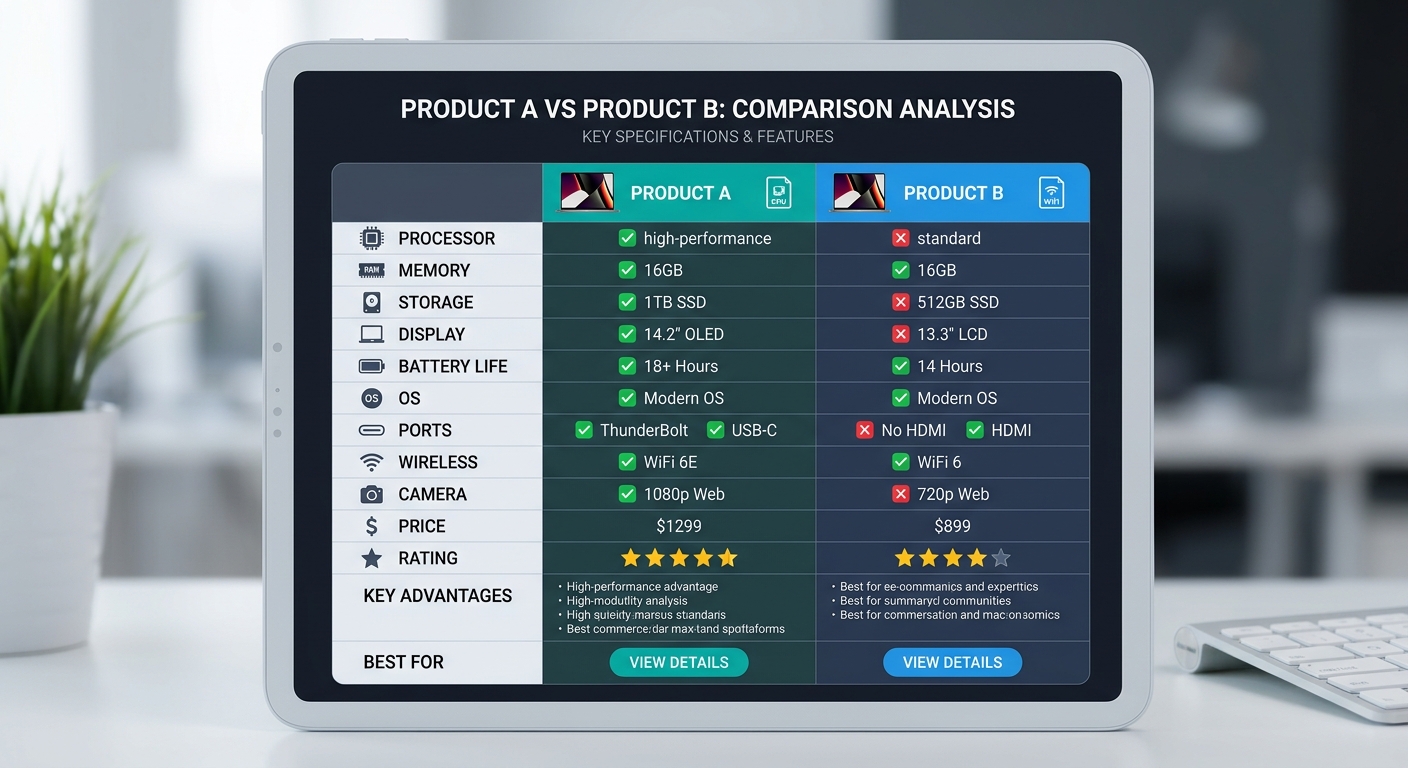
The "Versus" framework relies on a three-pillar structure: the technical overlap, the unique differentiators, and the ideal user profile. Instead of claiming one tool is faster, a writer might specify that Tool A uses a Go-based architecture to handle 50,000 concurrent requests while Tool B uses a Node.js setup optimized for 10,000. Granularity at this level appeals to the technical buyer who needs to verify if a solution can scale with their existing infrastructure. Most BoF traffic consists of users who have already narrowed their search to two or three candidates and are looking for a reason to disqualify one.
Detailed tables comparing $50/user pricing tiers against $1,200/month flat-rate models help buyers justify the spend to their CFOs. Teams that prioritize objective comparisons over biased praise often see higher conversion rates on their demo request forms. It is better to admit a software lacks a built-in CRM than to let a lead discover it during a discovery call. (Actually, 15% of B2B buyers cite "lack of pricing transparency" as a primary reason for abandoning a vendor's website). Not ideal for a casual browser, but perfect for a buyer with a deadline. Transparency filters weary procurement officers. Feature-benefit mapping connects a technical specification, like a 10ms database latency, to a business result like reduced cart abandonment. A lead scoring system might prioritize users who spend more than 4 minutes on a comparison table for a PostgreSQL vs MongoDB breakdown.
Type 2: The Data-Driven Industry Report
Original research generates B2B leads by establishing authority and earning high-quality backlinks from industry decision-makers who value proprietary data. When a marketing team surveys 500 CMOs to publish a "State of AI Content 2024" report, they transform their blog from a secondary commentary source into a primary reference point for industry news.
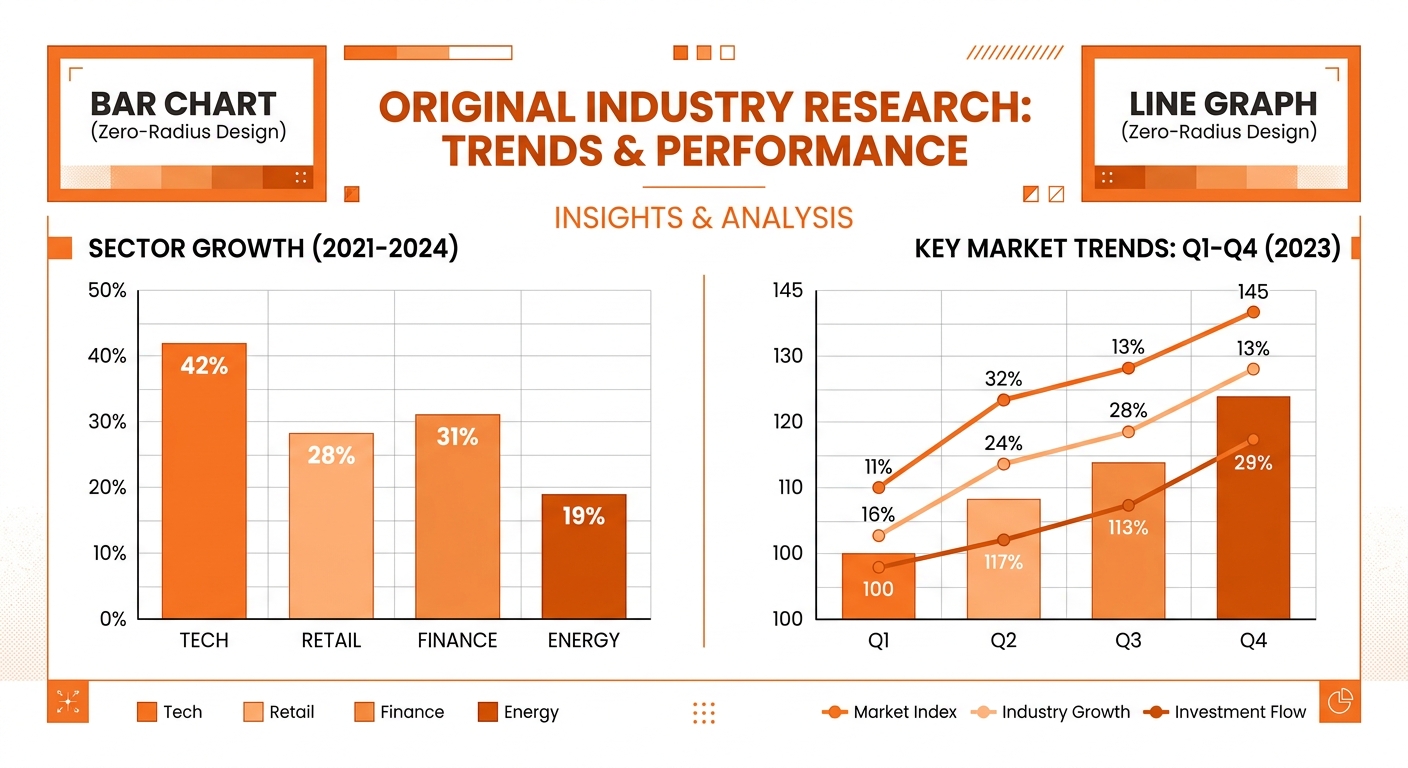
High-intent leads often trade contact information for access to these insights, making the industry report a high-converting gated asset. Such strategies create a unique data moat because competitors cannot replicate the specific findings derived from internal datasets or custom surveys. Unlike generic listicles, a 25-page PDF containing 15 original charts and 10 expert interviews serves as a middle-of-the-funnel magnet that signals deep expertise. Original research naturally attracts links from tier-1 publications, which improves domain authority and drives organic traffic from qualified professionals searching for benchmarks. By providing the raw numbers that others only speculate on, your brand becomes the definitive voice in the niche.
Precision in presentation validates the data. Technical audiences dismiss "fluffy" infographics in favor of grid-based visualizations and sharp-edged charts that mirror professional business intelligence tools. Suppose a SaaS provider analyzes 1.2 million anonymized API calls to identify latency trends; the resulting report needs a clean, structured layout to maintain credibility. Pure signal. (Actually, using a 1px solid border on chart containers often reinforces this technical aesthetic). This level of detail makes the content "saveable," increasing the likelihood that a VP of Engineering bookmarks the page or shares it internally via Slack.
Converting this traffic requires a strategic gating mechanism. Instead of locking the entire report, teams often provide a "TL;DR" executive summary or an interactive dashboard on the blog while requiring an email for the full dataset or the raw CSV files. A hybrid gating strategy balances SEO visibility with lead capture. A B2B agency might see a 12% conversion rate on a report landing page compared to the standard 1-2% on a generic newsletter signup. Data-driven reports aren't just content; they are proprietary assets that build a barrier to entry for any competitor lacking the resources to conduct similar primary research data.
Type 3: The 'Best Alternative' Guide
Alternative posts target users dissatisfied with a current solution, offering your product as the better-fit replacement for their specific needs. Such guides capture "switching intent" from users actively looking to leave a competitor due to pricing hikes or feature bloat. Why fight for broad keywords when specific "Alternative to [Competitor]" queries signal a buyer ready to move? A user frustrated with a legacy tool's $500/month starting price searching for "Best Tool A alternatives" often discovers more cost-effective, specialized solutions like ARTICFLY.
Effective guides categorize alternatives by specific use cases rather than just listing features. An enterprise-grade platform like Jasper might be the best fit for a 50-person agency, while a lightweight plugin serves solo bloggers better. Grouping solutions by "Best for WordPress Automation" or "Best for Content Decay Tracking" helps the reader self-qualify. (Actually, categorizing by the specific pain point—like "Best for teams needing a native WP plugin"—converts better than generic lists). A 3-column table comparing ARTICFLY, Jasper, and SurferSEO on "Direct-to-WP Publishing" and "Auto-Refresh" capabilities allows users to see technical gaps immediately.
High-intent articles perform best when paired with direct calls-to-action that lower the friction of switching. Migration discounts or "switch-and-save" offers specifically target the sunk cost fallacy. Offering a "30% off for the first 3 months" coupon for users moving from a legacy competitor can bridge the gap between interest and a signed contract. A specific discount code applied at checkout reduces the perceived risk of abandoning an existing subscription. Not a bad way to capture a lead.
Teams managing 20+ WordPress sites often find that a direct comparison table highlighting API limits or seat costs provides the most value. Engineers comparing ARTICFLY to Copy.ai need to see the exact workflow savings, such as the 15-minute reduction in manual formatting per post. Comparing the $0.15 per-article cost against a $2.00 manual editing fee provides a clear ROI for procurement teams. The final decision often rests on a single feature like the Polar.sh payment integration.
Type 4: The ROI-Focused Case Study (The Blueprint)
B2B case studies generate leads by providing social proof and a repeatable blueprint for success that prospects can visualize for their own business. A project manager at a mid-sized agency might see how a peer reduced content production costs by 60% using Articfly, providing the necessary evidence to justify a demo request. The format works because it moves past vague promises into verifiable data points that stakeholders can present to their leadership teams. High-performing case studies combine a "how-it-was-built" guide with a results dashboard.
Instead of just stating that a client grew, these posts detail the exact workflow—such as using the Articfly Brand Voice Analyzer to sync five different writers—and the resulting 45% increase in organic traffic over 90 days. Technical transparency of this nature builds trust that a generic testimonial cannot. (Actually, the Articfly Content Calendar allows for a 360-day roadmap, which is the specific detail that often convinces a skeptical Ops Lead). The goal is to turn a success story into a manual.
Actually, the technical "how" is often more persuasive than the "result" itself. A 10-person marketing team doesn't just want to see a 2x output; they want to see the 13 SEO tools inside the Articfly dashboard that made it happen without doubling their full-time staff. Repeatable and measurable. One agency recently documented how they used the Advanced mode to generate 50 articles in 14 days, resulting in a 22% jump in indexed keywords. Such data points act as a risk-mitigation tool for the buyer.
Strategy dictates that these blueprint posts serve as the destination for top-of-funnel content. If a blog post identifies "High Content Production Costs" as a pain point, the internal link should point directly to a case study titled "How Agency X Reduced Per-Article Cost from $150 to $45." This creates a logical bridge from a known problem to a proven solution. Engineers managing WordPress clusters can then see the exact integration points, such as the Articfly native WP plugin.
Type 5: The 'Jobs-to-be-Done' Technical Tutorial
Problem-solving tutorials generate leads by demonstrating a product's utility in solving a specific, recurring technical challenge for a target audience. High-intent users often search for granular solutions—like "how to fix content decay in WordPress"—rather than broad industry trends. By providing a step-by-step resolution, a brand establishes immediate technical authority before the reader even considers a purchase.
Such content focuses on the "Jobs-to-be-Done" framework, where the article serves as a functional blueprint for a specific workflow. For instance, an Articfly tutorial might detail how to use the "Article Refresher" tool to identify posts with a 20% traffic drop over 90 days. When the reader realizes the manual alternative involves hours of Google Search Console exports and manual audits, the software becomes the logical efficiency play. Moving from a manual spreadsheet to an automated dashboard provides the tangible proof needed to convert a skeptical technical lead into a trial user.
Consider a developer tasked with managing internal linking across a 500-page WordPress site. Tedious work.
A technical tutorial would instead outline a three-step automation: first, use Articfly’s internal link mapping tool to scan the database; second, review the AI-suggested anchors; and third, push the updates directly via the native WordPress plugin. (Actually, Articfly processes these link suggestions based on semantic relevance rather than just exact-match keywords, which prevents over-optimization penalties). Teams managing high-volume SEO often hit a bottleneck during the schema generation phase. This specific configuration cuts the manual JSON-LD coding time from 15 minutes per post to roughly 4 seconds. Pinpointing the exact friction point requires analyzing search queries that include "how to" or "automation for." If a keyword tool shows 400 monthly searches for "bulk update WordPress meta descriptions," that is a prime candidate for a tutorial. Success here looks like a reader bookmarking the page because the provided regex or workflow is genuinely useful even without an Articfly subscription.
Scaling Lead-Gen Content with Articfly’s AI Engine
Articfly enables B2B teams to scale lead-generating content by automating the research, SEO optimization, and publishing workflow directly in WordPress. The platform centralizes the production cycle into a single interface. It moves a post from an initial keyword to a live, schema-optimized article without manual formatting. By integrating 13 SEO tools—including internal link mapping—the engine verifies that every piece of content aligns with technical requirements.
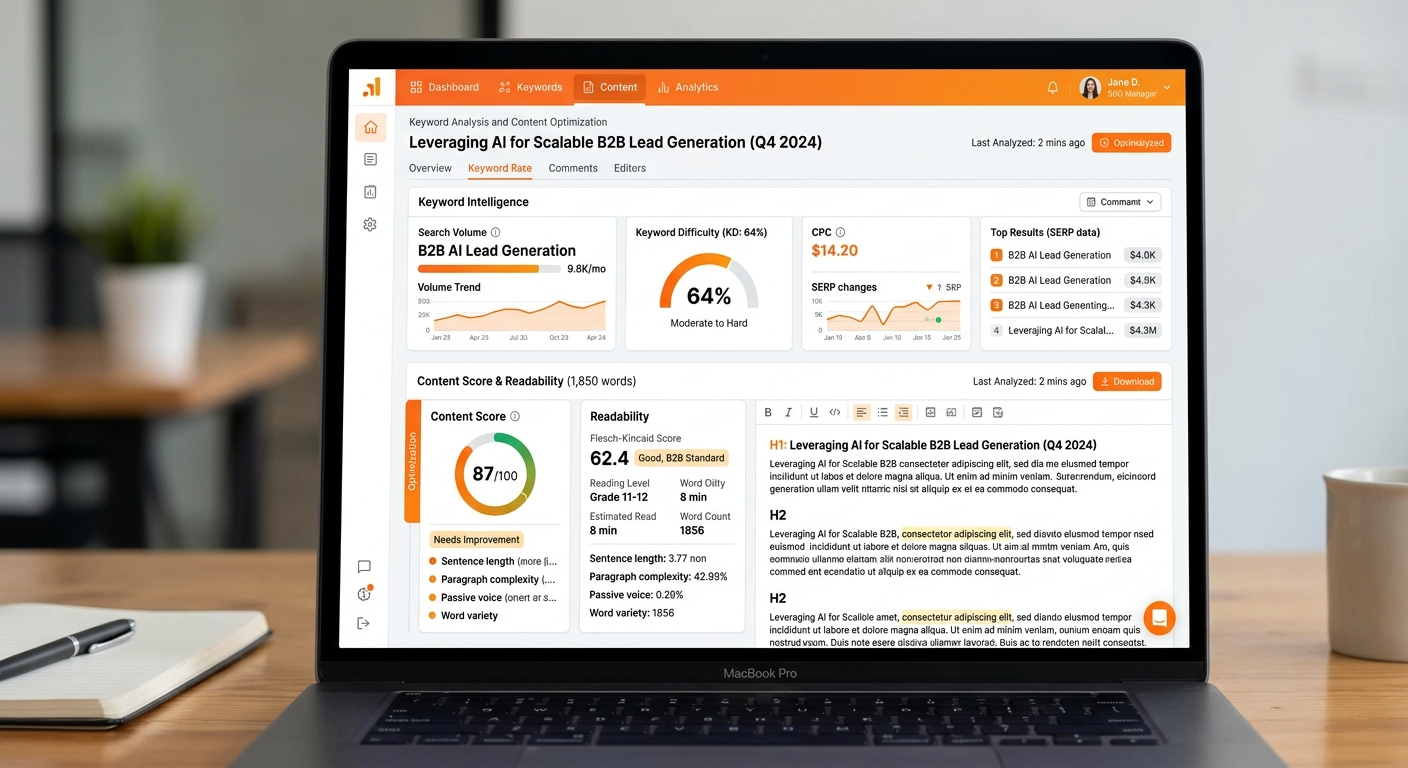
A content team of two using Articfly can produce 20 high-intent articles per month. This output previously required five full-time writers to manage the same volume and quality. The efficiency gain stems from the Advanced Mode generation, which uses a Brand Voice Analyzer to match existing company tone. (Actually, the analyzer scrapes a specific URL to extract vocabulary and style guidelines in under 60 seconds). Such automation allows smaller teams to compete with larger editorial departments by removing the bottleneck of manual drafting.
The Content Calendar provides a structured roadmap by planning 30 to 360 days of editorial topics centered on a specific niche. It removes the guesswork from lead generation by identifying clusters of search intent that map to the sales funnel. Consistency without the headcount. A structured planning approach prevents the common "content gap" that occurs when manual ideation stalls or internal resources shift to other projects.
Since maintenance matters as much as creation, the Article Refresher identifies lead decay by monitoring performance trends. Teams push updates via the native WordPress plugin to maintain rankings for high-value keywords like 'B2B SaaS automation'.
Frequently Asked Questions About B2B Content Strategy
Common questions about B2B lead generation blogging include how to measure ROI, how often to publish, and how to balance SEO with brand voice. Measuring ROI involves tracking specific conversion events like whitepaper downloads or demo requests rather than just raw pageviews. Most B2B teams see measurable organic results within 4 to 6 months of consistent publishing. Consistency usually means 2 to 3 high-quality posts per week. Balancing SEO with brand voice requires a structured approach where keyword requirements do not override the technical accuracy of the content.
Many marketers wonder if gating content still works for lead gen. Data suggests that ungating top-of-funnel content improves SEO reach while reserving gates for high-intent assets like pricing guides or case studies. Using AI to maintain voice is possible when the tool analyzes existing prose to extract specific linguistic patterns. This prevents the generic "AI feel" often found in unedited outputs.
How long does it take to see leads from a new blog?
Lead generation typically lags behind traffic growth by several weeks. A typical B2B blog post targeting a middle-of-funnel keyword might take 90 days to reach the first page of Google. Once ranked, the conversion rate depends on the CTA relevance. Teams running 10+ active workflows often see a steady stream of leads once the domain reaches a certain authority threshold. (Actually, a Domain Authority of 30 is often the tipping point for faster indexing in competitive niches).
Should all lead-gen content be gated?
Gating every resource creates friction that drives prospects toward competitors with open documentation. A 2023 study showed that ungated "how-to" guides receive 7x more backlinks than gated ones. High-intent assets like a custom ROI calculator or a proprietary industry report remain effective behind a form. Total access for educational content builds the trust necessary for a conversion later.
Can AI really capture a specific brand voice?
Generic AI tools fail here, but systems trained on specific datasets succeed. The Articfly Brand Voice Analyzer scans your existing WordPress posts to identify sentence length preferences and specific jargon. Does a tool that ignores your style guide actually save time? Likely not. Efficiency comes from the tool adapting to the specific parameters of the Articfly Brand Voice Analyzer.
Your 30-Day Lead Generation Roadmap
To start generating B2B leads, audit your current content for intent, identify 5 'versus' or 'alternative' keywords, and use Articfly to build a 30-day lead-gen content calendar. A structured roadmap transitions a blog from a vanity metric archive into a lead engine by focusing on high-intent search queries. Week one involves filtering existing URLs through a 'conversion vs. traffic' lens. Content that earns views but zero clicks to sign-up pages requires immediate internal link mapping or a CTA overhaul.
During week two, focus shifts to identifying five direct-comparison keywords—such as 'Articfly vs. Jasper'—to capture users at the bottom of the funnel. Week three utilizes the Articfly AI Article Generation tool to draft these high-intent posts using the Advanced mode for brand-specific tone. Finally, week four centers on publication and performance tracking within the WordPress dashboard.
A marketer closing this article might immediately open their Articfly dashboard to run a keyword analysis on their top three competitors. This analysis pinpoints where rivals capture high-intent traffic that your own site currently misses. Focus on the Article Refresher tool to update posts that have dropped in SERP rankings (specifically those targeting 'Best [Category] Software' terms). Not ideal for a 500-order batch. Perfect for a surgical strike on high-value keywords.
If the goal is immediate pipeline impact, prioritize the first four comparison guides. Success depends on moving from abstract planning to clicking the 'Publish' button on an 'Alternative to Salesforce' post.
Want the system behind this content?
Join the top 1% of SEOs generating programmatic, high-converting organic traffic completely on auto-pilot.
DEPLOY ARTICFLYMore Articles
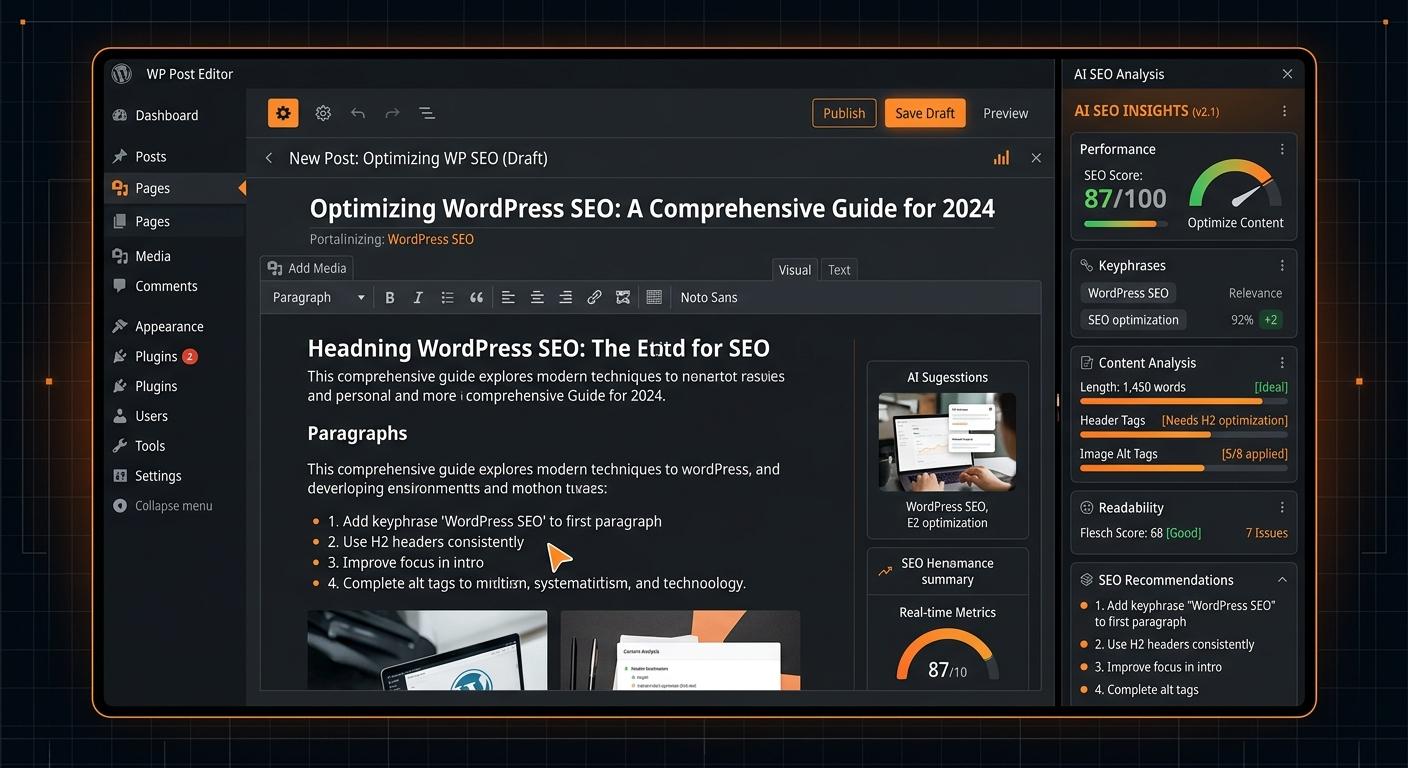
The 2026 WordPress AI Stack: Why Content Engines Beat Writing Tools
Stop copy-pasting from ChatGPT. Discover why the best AI writing tools for WordPress in 2026 are full-lifecycle engines that handle SEO, publishing, and content refreshing automatically.
READ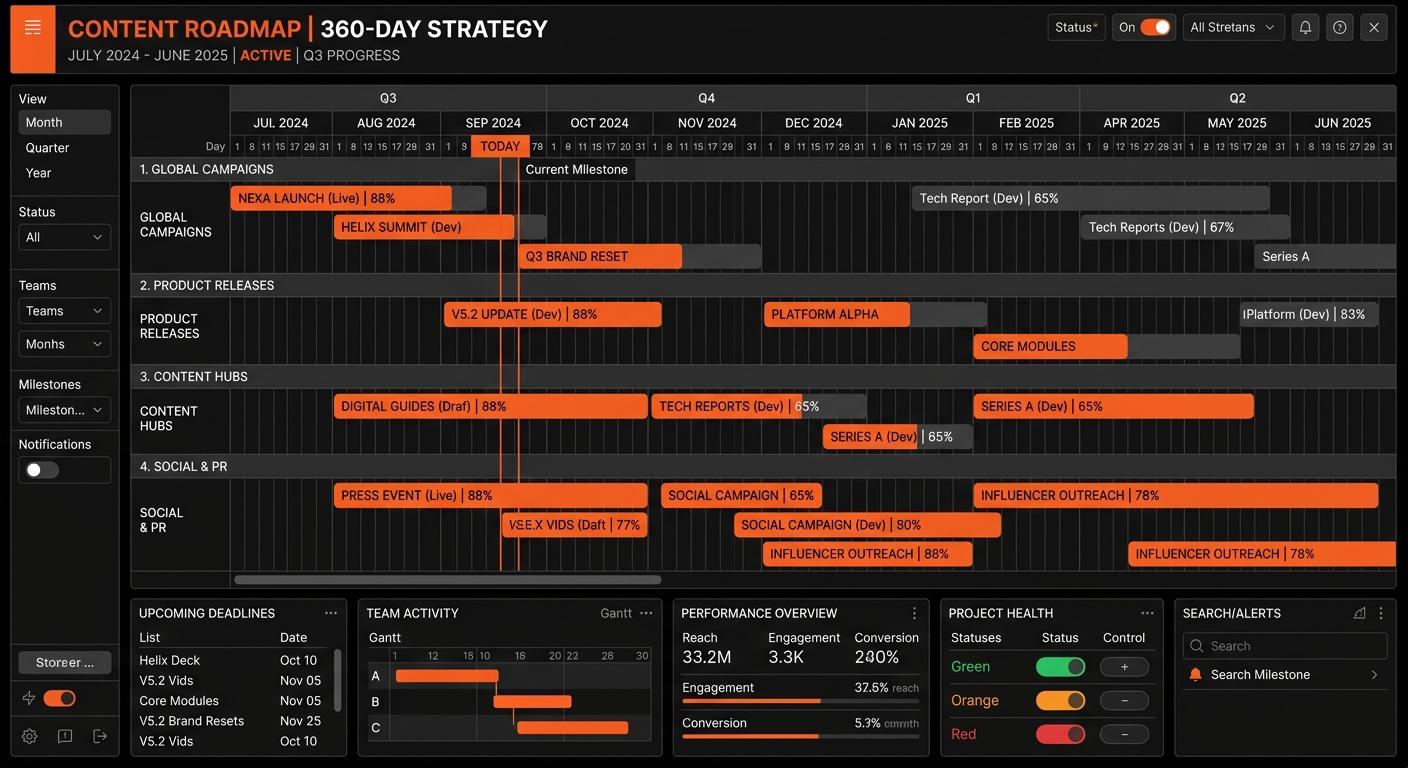
How to Write a Blog Post from Scratch: The Complete Step-by-Step Guide for 2026
Stop guessing and start shipping. Learn the exact framework for high-performance blog content in 2026, from AI-assisted ideation to automated WordPress publication and long-term SEO maintenance.
READ
The 30-Day Blog Challenge: Scaling to Your First 1,000 Organic Visitors
A technical, step-by-step roadmap to hitting 1,000 organic visitors in 30 days using AI-driven content production, SEO-first workflows, and Articfly's automation engine.
READ