How to Build a Sales Pipeline with Nothing but Blog Content and Zero Ad Spend
Key Takeaways
Building a sales pipeline with zero ad spend requires shifting from 'expense-based' marketing (ads) to 'asset-based' marketing (SEO content). Success depends on three pillars: high-intent keyword targeting, consistent publication volume, and automated content maintenance. Unlike paid search, where traffic stops when the credit card is pulled, a library of technical guides and comparison pages continues to capture intent indefinitely. Why rent visibility when the same resources can build permanent digital equity? A solo founder using Articfly to scale from 2 posts a month to 20 saw a 400% increase in organic demo signups within 90 days. Transitioning from manual drafting to an automated engine changes the unit economics of lead generation. Efficient.
High-volume publishing acts as a moat against competitors with larger ad budgets. When a WordPress site moves from one post a week to five, the indexation rate typically climbs as Google’s crawlers identify the domain as an active authority. This volume signals authority to search engines. Managing this output manually often requires a 3-person editorial team, but technical workflows allow a single operator to oversee the entire pipeline. The goal is a self-sustaining system where content grows over time.
- Asset-Based Growth: Treating every blog post as a long-term lead generator rather than a one-time social share.
- Volume as Strategy: Scaling to 20+ SEO-optimized articles per month to dominate niche clusters and long-tail keywords.
- Full Lifecycle Automation: Using Articfly to handle keyword analysis, brand voice alignment, and direct WordPress publishing.
- Data-Driven Refreshes: Monitoring content decay and updating aging posts to maintain top-3 SERP positions.
- Conversion-First Ideation: Prioritizing bottom-of-funnel topics that drive direct demo signups instead of top-of-funnel fluff.
By automating the technical aspects of SEO—like internal link mapping and schema generation—teams recover hours of manual labor per week. (Actually, consistent publishing at this scale typically requires a 15-hour weekly commitment when handled manually). Reinvesting these hours allows for deeper focus on product-led storytelling and conversion optimization. The Articfly dashboard bridges the gap between raw AI drafts and production-ready WordPress articles. Success in organic growth relies on a 30-day roadmap.
The Economics of Content-Led vs. Ad-Driven Growth
The economics of content-led growth center on the "Content Half-Life." While an ad has a lifespan of seconds, a well-optimized blog post can generate leads for 24-36 months. Longevity of this scale transforms content from an operational expense into a capital asset. Paid advertising operates on a rental model where lead flow terminates the moment the daily budget is exhausted.
In contrast, an organic article hosted on a WordPress site remains accessible indefinitely, accruing backlinks and domain authority over time. Such a structural difference creates a compounding effect where the cost per acquisition (CPA) decreases as the library grows. Teams that prioritize organic production see their total marketing ROI improve as older posts continue to attract traffic without additional investment. This creates a break-even point where the initial cost of production—whether in time or software fees—is fully amortized, leading to a "free" lead generation engine that persists for years.
Consider a B2B agency that transitioned from a $5,000 monthly LinkedIn ad spend to a $500 monthly content automation budget using Articfly. After six months of consistent publishing, the organic traffic volume matched the previous ad-driven lead flow. The agency effectively reduced its CAC by 90% while building an evergreen asset library. Pure profit potential.
Ad platforms like Google Ads or Meta function as a tax on visibility. Every click has a fixed price floor determined by auction competition (often $10+ in B2B niches). Content ownership removes this floor. Once a post is indexed, the marginal cost of the 1,001st visitor is zero.
Organic leads often convert at higher rates because the content serves as proof of competence. A prospect who finds an Articfly-optimized guide on "Internal Link Mapping" views the brand as a subject matter expert before the first sales call. Articfly’s Brand Voice Analyzer ensures these posts maintain the specific technical vocabulary required to build that trust instantly. Authority bias of this nature shortens sales cycles. High-intent searchers are usually solving a problem, not scrolling a feed.
Break-even points typically occur when the cumulative organic traffic value—based on equivalent PPC costs—exceeds the total software and labor investment. For a WordPress site publishing 10 articles monthly, this crossover often arrives by month four or five.
Engineering the High-Intent Content Funnel
To build a pipeline, content must be mapped to the buyer's journey: TOFU (Top of Funnel) for awareness, MOFU (Middle) for consideration, and BOFU (Bottom) for conversion. Mapping content this way ensures every published URL serves a specific commercial purpose rather than just accumulating impressions. TOFU assets address broad problems, while MOFU content compares solutions, and BOFU pages target ready-to-buy queries.
A SaaS company mapping their 'Best Project Management Tools' (BOFU) articles to direct trial signups while using 'How to manage remote teams' (TOFU) for newsletter growth illustrates this model. Such a scenario focuses on capturing users at different levels of intent. The BOFU article targets high-intent keywords like "Jira vs. Asana comparison," which typically yield lower volume but 5x higher conversion rates than informational guides. Meanwhile, the TOFU piece captures broad traffic, feeding the top of the funnel before lead nurturing takes over.
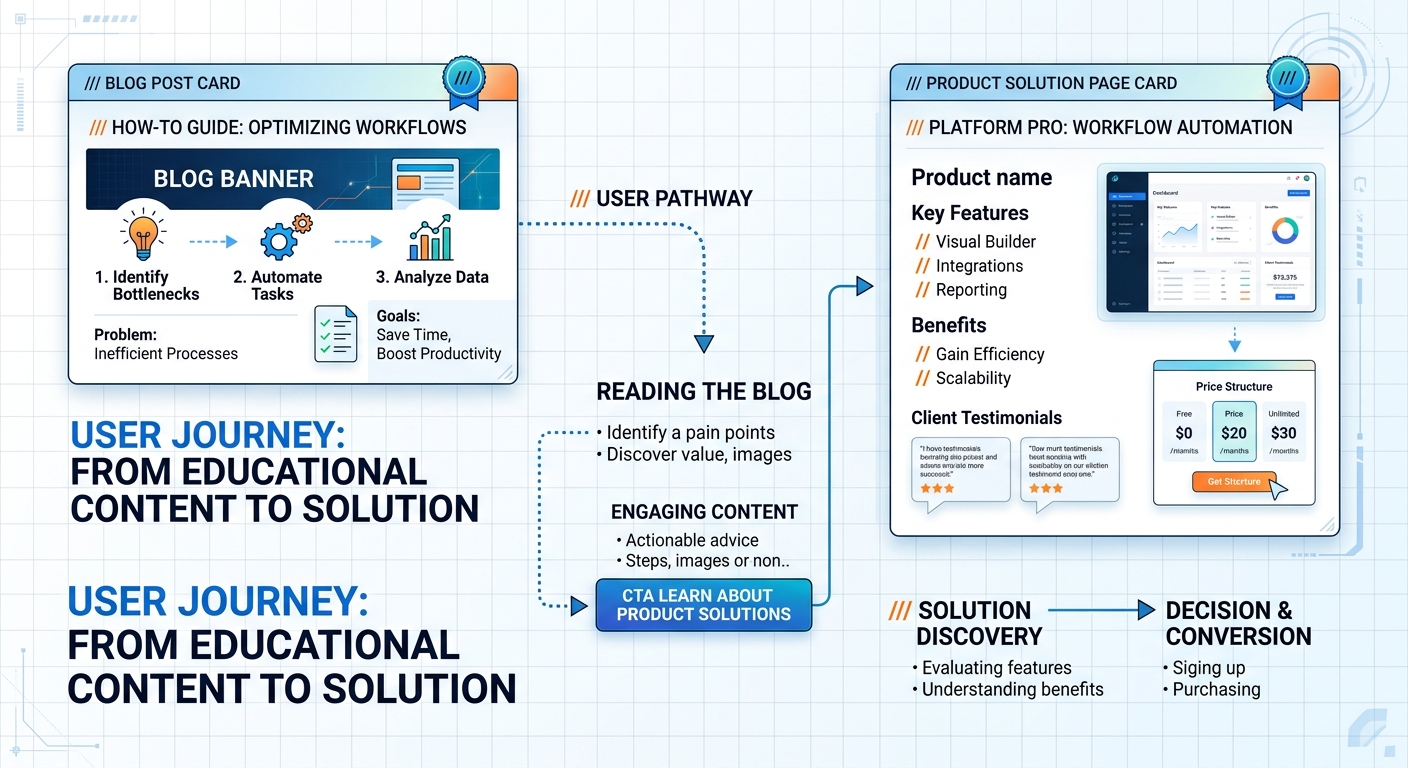
Middle-of-funnel (MOFU) content bridges the gap by educating users who already understand their problem but haven't chosen a solution. A technical white paper or a "How to automate X with Y" guide serves this purpose. These assets often see a 2-3% click-through rate (CTR) to pricing pages when placed strategically within the copy. For instance, a comparison table pitting three competitors against a proprietary solution often captures the remaining intent of a hesitant buyer.
Intent-based keyword selection prioritizes the user's likely next action over raw Search Engine Results Page (SERP) volume. A 200-volume keyword like "automated content production for agencies" is often more valuable than a 5,000-volume generic term like "writing tips." The former signals a specific business pain point that a tool can solve immediately. Teams managing these funnels often assign a "conversion weight" to each keyword: 0.1 for awareness and 0.8 for product-led BOFU terms. (Actually, assigning these weights in a spreadsheet helps prevent the common mistake of over-investing in low-intent traffic). Internal link mapping then guides this traffic toward high-conversion endpoints. A WordPress site might use manual contextual links to push readers of a "remote work" guide toward a "best tools for remote teams" list. This isn't just about SEO juice; it creates a logical path. Simple. Using a native WordPress plugin to automate link suggestions based on semantic relevance saves roughly 10 hours of manual audit time per month.
Scaling Output to 30+ Articles Monthly Without a Full Team
Scaling content production requires moving from manual writing to an AI-assisted lifecycle that includes ideation, brand voice alignment, and direct-to-WordPress publishing. A content manager using Articfly's Brand Voice Analyzer to train the AI on 50 existing high-performing posts ensures new output matches the company's technical tone. Such a transition replaces the traditional bottleneck of drafting with a structured pipeline where the AI Article Generation engine handles the heavy lifting. Instead of starting from scratch, teams deploy a 30-day editorial roadmap generated by the AI-planned calendar.
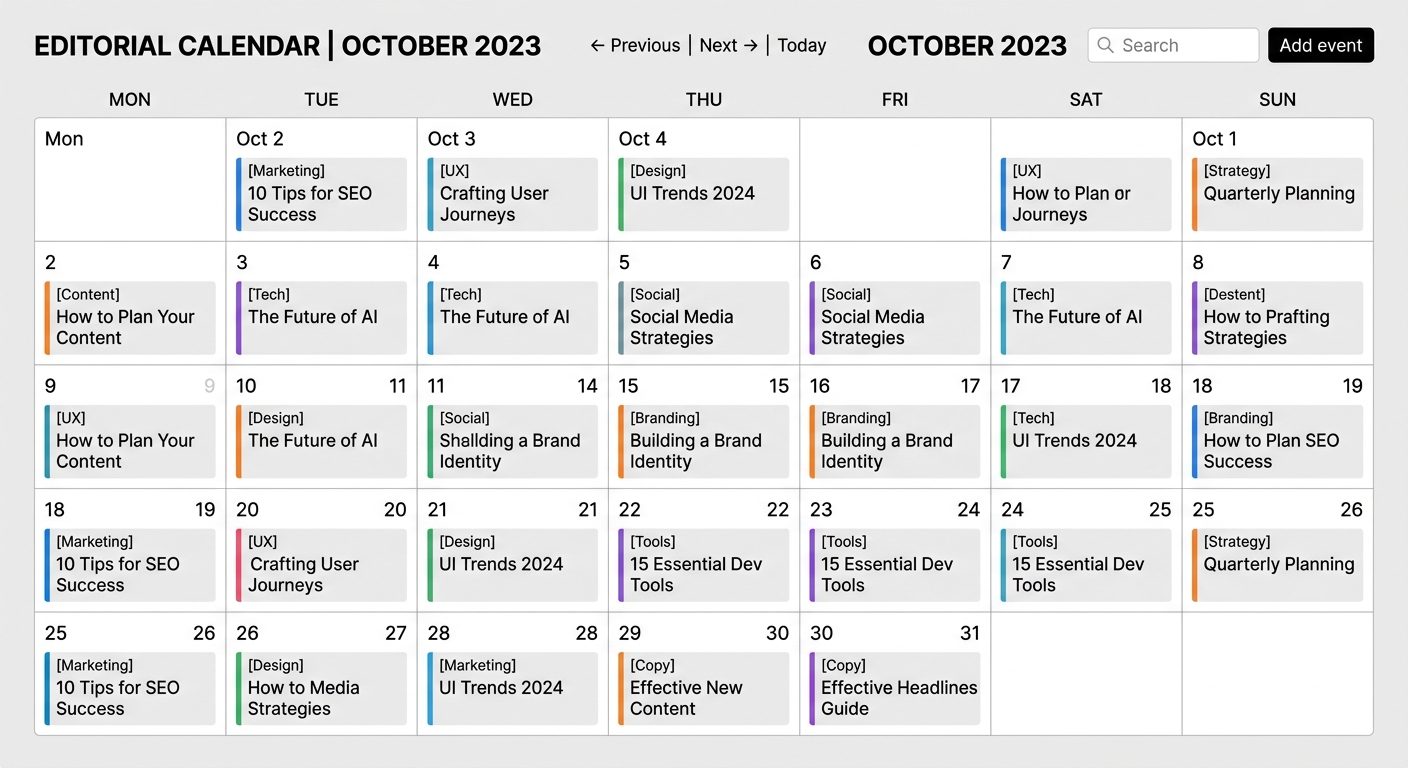
Roadmap tools analyze niche-specific search volume to populate a 360-day calendar, ensuring the 30 articles produced each month align with high-intent clusters. Automating the research phase allows a single operator to maintain high volume without sacrificing the strategic relevance of the content. (Actually, 360 days is the maximum look-ahead for the roadmap tool, providing a long-term buffer against content gaps). Every generated post serves a specific SEO goal rather than filling space.
How does a single operator manage a daily publishing schedule without quality degradation? Achieving a "Zero-Edit" objective depends on the Articfly Brand Voice Analyzer, which extracts specific tone markers and vocabulary from existing site content.
By feeding the system 50 high-performing URLs, the engine builds a stylistic profile that prevents generic outputs. This profile guides the Advanced Mode generator to produce 2,000-word drafts that require only a quick verification rather than a full rewrite. One person, zero burnout. Quality control happens through a suite of 13 SEO tools that run concurrently with the generation process. Each article receives a readability score and keyword density analysis before it ever hits the CMS. (Actually, the internal link mapping tool identifies relevant anchor text within the existing WordPress database, which saves roughly 10 minutes of manual search per post). Schema generation and SERP previews provide a real-time feedback loop. Not ideal for teams that prefer manual HTML tweaking, but perfect for those prioritizing throughput. Direct WordPress integration via a native plugin eliminates the friction of copying, pasting, and reformatting images. Once an article passes the internal scoring threshold, it syncs to the WordPress dashboard as a scheduled post. Agencies managing multiple sites use this to maintain a 30+ article monthly cadence across several domains simultaneously. The Polar.sh-backed subscription model allows for à la carte article top-ups when a specific campaign requires a 50-post surge, keeping every feature active, including the 13 SEO tools.
Maintaining Pipeline Health with Content Refreshing
Content decay is the primary reason sales pipelines stall. Regularly refreshing aging posts is 3x more cost-effective than writing new ones for maintaining rankings. Google prioritizes accuracy, meaning a post from 2022 containing outdated statistics or dead links will inevitably slide down the Search Engine Results Pages (SERPs). The resulting decline creates a leaky pipeline where traffic simply vanishes.
Auditing posts that have dropped by 10-15% in clicks over a 90-day period is the first step. Instead of starting from scratch, you can use the Articfly Refresher tool to scan these declining URLs to identify missing subheads, outdated data points, or new competitor keywords that have gained traction since the original publish date. By updating the lastmod timestamp and injecting current insights, the system signals to crawlers that the content remains an authoritative source. A blog seeing a 40% traffic drop in its top-performing post, for instance, recovered to a new all-time high after using the Articfly Refresher tool.
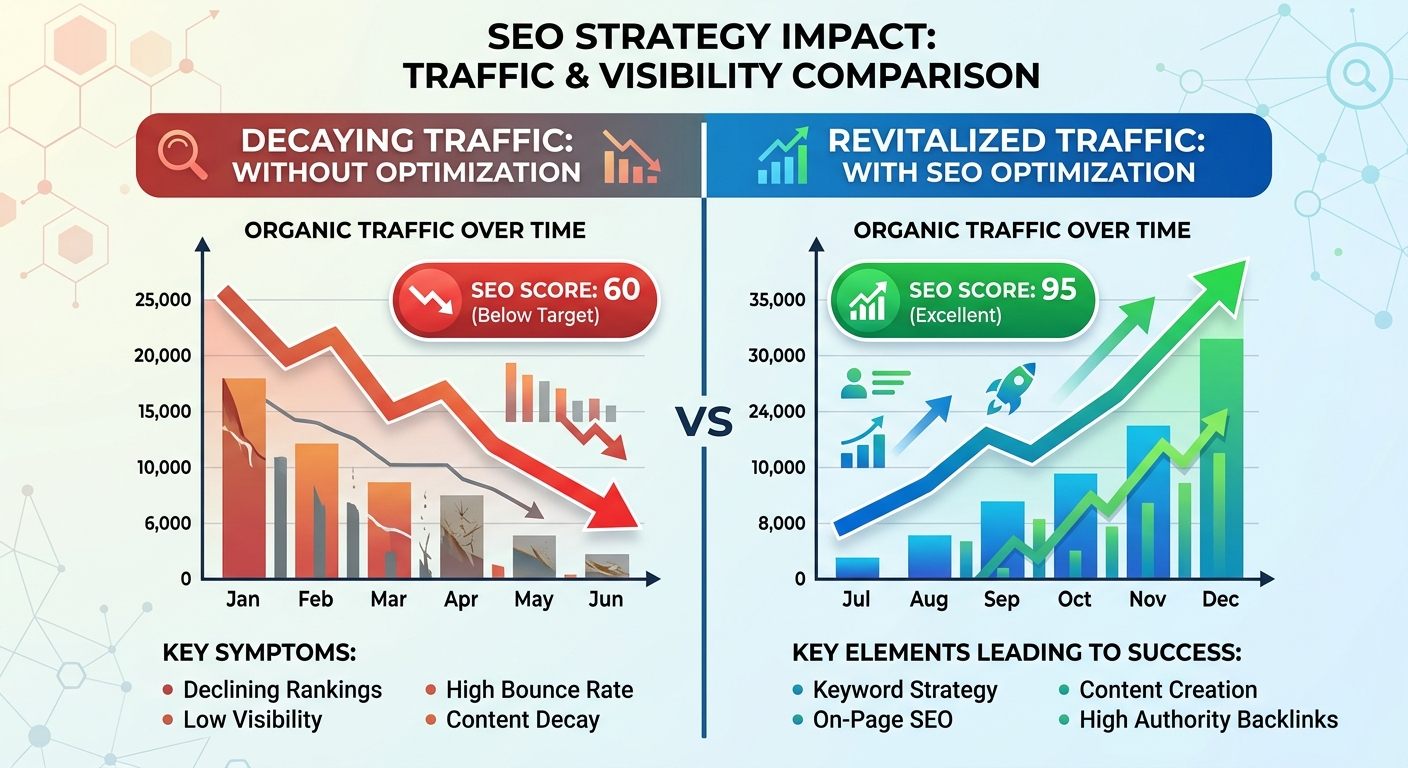
Cost-efficiency remains the strongest argument for maintenance. While a new 2,000-word article requires fresh research, briefing, and formatting, a refresh often only needs 500 words of new context or updated API documentation links. Refreshing a post that already has 50 backlinks is significantly more effective than launching a brand-new page with zero authority. Engineers running 50+ workflows know that maintaining an existing asset is cheaper than building a replacement. Pure technical hygiene. (Actually, Google’s "Search Quality Rater Guidelines" explicitly reward the "Main Content" being updated to reflect current reality). If you manage a WordPress site with over 100 posts, the decay is likely already happening in the background.
The Articfly dashboard tracks performance dips automatically by syncing with Search Console data. Once a post hits a predefined decay threshold, the system suggests specific SEO tweaks—like adding a FAQ schema or updating a comparison table with 2024 pricing. Such a workflow prevents the "publish and pray" cycle that kills most sales pipelines. High-performing blogs operate like software. Patching, not just building. A single 15-minute update can often reclaim thousands of monthly impressions.
FAQ: Navigating the Content-Led Sales Model
Common questions about building an organic pipeline include the timeline for results (usually 3-6 months), the efficacy of AI content (it ranks if it provides value), and the ideal posting frequency (3-5 times per week for growth). A 10-person marketing team switching to an automated engine like Articfly often observes indexable results within 90 days. Google's systems prioritize helpful content regardless of its origin, provided it meets specific E-E-A-T criteria.
Consistency matters more than raw volume. Publishing 3-5 high-quality articles per week allows the algorithm to crawl and categorize a site's niche authority more effectively than sporadic bursts of content. This frequency builds a predictable data stream for search engines to analyze. By maintaining this pace, sites often see a compounding effect on their domain rating.
How long does it take for a content-led pipeline to generate leads?
Initial keyword movement usually occurs within 90 days—actually, let's call it 12 weeks to align with quarterly reporting—for new domains. Established sites with existing authority might see shifts in 45 days. Lead generation follows traffic as the blog builds a "moat" of information that captures users at different stages of the funnel. Not ideal for those seeking overnight spikes.
Does using AI content production negatively impact SEO rankings?
Google's Search Essentials documentation clarifies that the system rewards high-quality content, however it is produced. The risk lies in "thin" content, not the tool itself. (Actually, Google's 2024 updates reinforced that 'originality' is measured by information gain, not the presence of silicon-based drafting). Articfly handles these technical risks by integrating 13 SEO tools—including internal link mapping and schema generation—to ensure every post satisfies requirements that manual writers often overlook.
What is the optimal publishing frequency for a new WordPress site?
Teams running 50+ workflows per month find that 3-5 articles per week strike the best balance between authority building and resource management. A structured calendar prevents overlap between high-intent keywords.
Action Plan: Launching Your Organic Sales Engine
To start building your pipeline today, teams audit existing content, define your brand voice in Articfly, and commit to a 30-day high-volume publishing schedule. Integration begins with the Articfly WordPress plugin installation, which establishes a bi-directional sync for metadata and content blocks. Once the Brand Voice Analyzer processes 10,000 words of your site data, the generation engine aligns with specific technical vocabulary and tone. Teams then populate the Content Calendar with 15–20 high-intent keywords targeting the middle and bottom of the funnel.
A marketing lead might set a recurring 9:00 AM Monday calendar reminder to review the Articfly Content Decay report, ensuring no high-ranking page slips below its target SEO score. Such monitoring identifies articles where SERP positions have dropped by 3 or more spots, signaling a need for the Article Refresher tool. By focusing on these specific technical triggers, the engine maintains its organic momentum without manual oversight.
Connecting a WordPress instance via the native Articfly plugin enables immediate synchronization of schema data and internal link maps. After the Brand Voice Analyzer extracts stylistic markers from live URLs (actually, the tool requires at least 2,000 words for a high-fidelity profile, though 10,000 is the benchmark for agency-level accuracy), the Advanced mode editor produces drafts that mirror established editorial standards. This 30-day roadmap targeting "how-to" and "best of" keywords provides the initial traffic surge. Scheduling 5 articles per week through the dashboard automates the distribution phase while maintaining a steady crawl rate from search engines.
Consistency beats intensity. Monitoring the Content Decay report identifies which assets require a refresh to maintain 1st-page positions. A marketing lead reviewing these metrics every Monday morning prevents the slow traffic erosion common in unmanaged blogs. The system flags any post with an SEO score below 80 for immediate optimization through the Article Refresher.
Want the system behind this content?
Join the top 1% of SEOs generating programmatic, high-converting organic traffic completely on auto-pilot.
DEPLOY ARTICFLYMore Articles
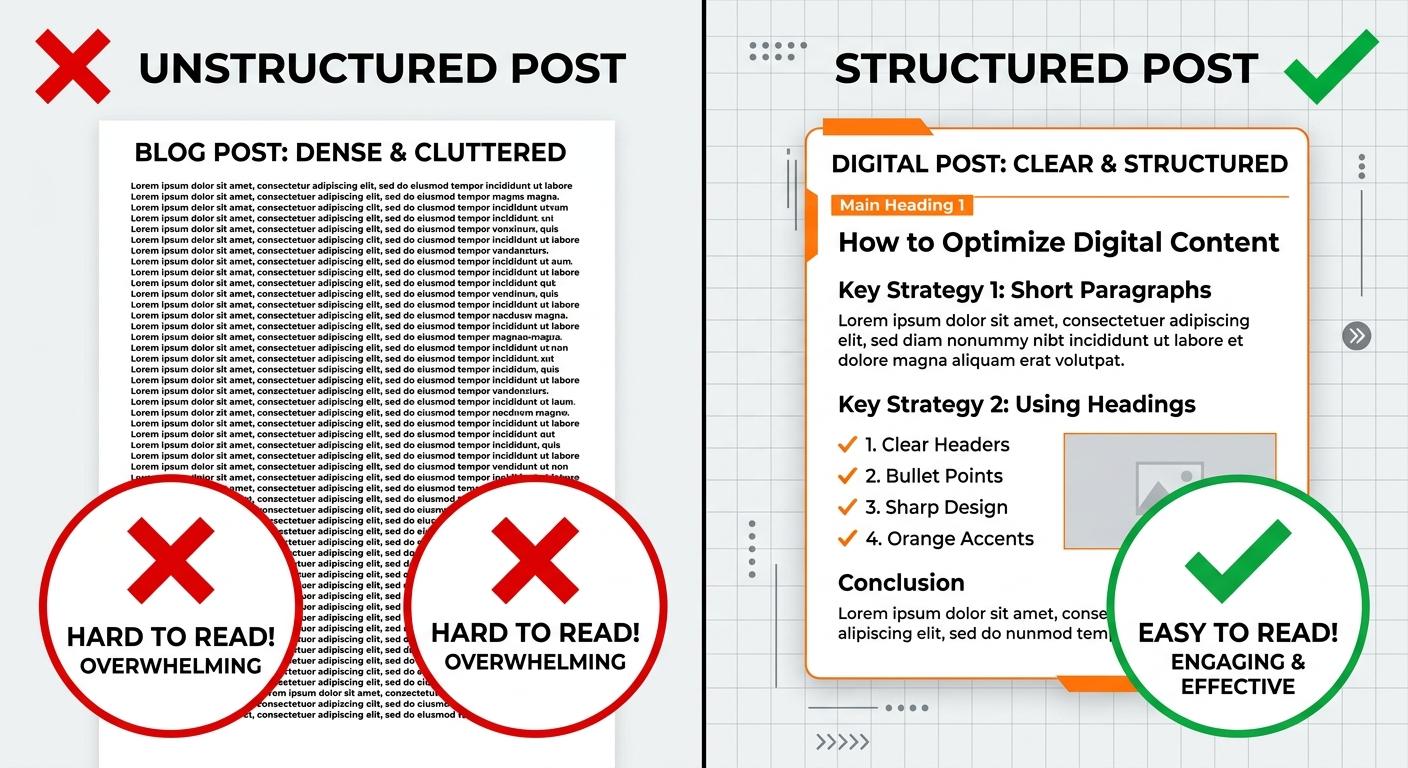
Why People Stop Reading Your Blog Post After 30 Seconds (and How to Fix It)
Most readers decide to stay or leave a blog post within the first 30 seconds. If your bounce rates are high, it's likely due to structural friction, poor hooks, or a lack of immediate value. Learn how to diagnose engagement killers and use AI-driven optimization to keep readers scrolling.
READ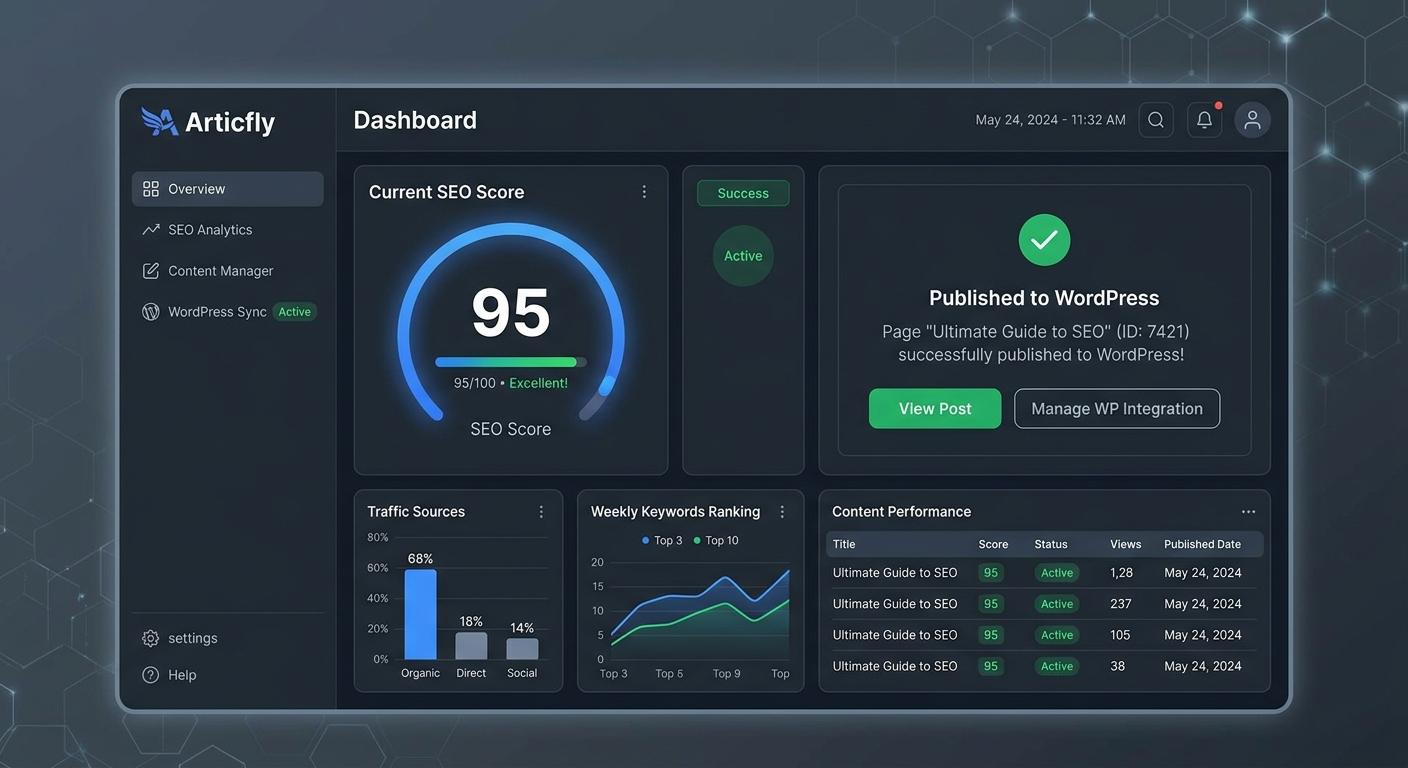
The $15 Blog Post That Brings in $2,000/Month: How AI Content Delivers 130x ROI
Discover the unit economics of high-scale AI publishing. Learn how to leverage Articfly to produce $15 blog posts that generate $2,000 in monthly recurring revenue through SEO optimization, automated publishing, and strategic content refreshing.
READ
Brand Voice in AI Content: How to Stop Your Blog from Sounding Like a Robot
Generic AI content is killing brand authority. Learn how to use Articfly’s Brand Voice Analyzer and Advanced Mode to produce high-scale, SEO-optimized content that sounds like your team, not a machine.
READ